 Semiahmoo Exterior
 Siding in Custer Has to Answer to a Specific Climate
Custer sits in that stretch of Whatcom County where the weather off the Salish Sea shapes everything you build. Homes here deal with salt-laden air drifting in from Semiahmoo Bay, long stretches of driving rain that come in sideways during the fall and winter storm cycles, and a moss and algae season that can run most of the year on north-facing walls and anything shaded by fir and cedar trees. That combination is hard on siding. Salt air accelerates corrosion on fasteners and trim metal. Wind-driven rain finds every gap in flashing and caulk. And moisture that never fully dries out between rain events is exactly what moss, mildew, and rot organisms need to get established.
This isn't a page about siding in general — it's about what fiber cement siding needs to do specifically for a Custer home, and what a correctly installed job looks like when the person doing the work already knows this climate instead of learning it on your house.
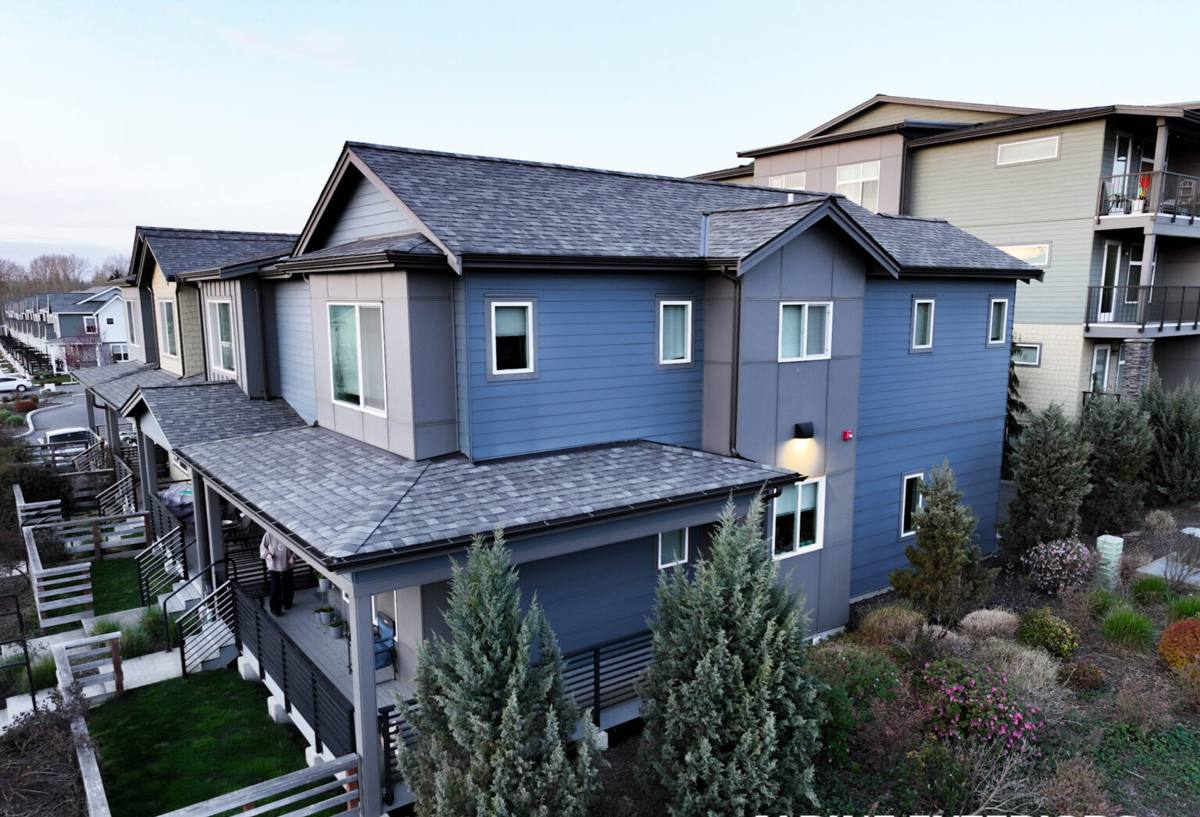
Why Fiber Cement Is the Right Call Here
Wood-based sidings — cedar, primed spruce, LP SmartSide — are wood products at their core, and wood is dimensionally reactive to moisture. In a climate that stays damp for months at a stretch, that reactivity shows up as swelling, checking, and eventually rot at seams and butt joints, especially where moss holds moisture against the wall longer than it should. Vinyl handles moisture fine on its own, but it's a thin, flexible material that expands and contracts significantly with temperature swings, and wind-driven rain events common to this area can drive water behind panels through gaps that vinyl's lap-and-lock design was never built to fully seal.
Fiber cement is cement, sand, and cellulose fiber, cured into a rigid board. It doesn't feed moss or mildew the way wood does, it doesn't soften when it stays wet, and it holds paint and factory finish far longer than either alternative because it isn't expanding and contracting on the same scale. That's the core reason we standardized on it — not because every other product is bad, but because this specific climate rewards a siding that doesn't move much and doesn't rot.
Why James Hardie Specifically
We install James Hardie exclusively, not other fiber cement brands. Hardie's HZ5 product engineering is built for climates with freeze-thaw cycling and sustained damp conditions — which describes western Whatcom County well. The ColorPlus factory finish is baked on under controlled conditions rather than field-applied, which matters in a place where you can't always count on a stretch of dry days to cure paint properly on site. And Hardie backs the product with a long, transferable warranty that's meaningful specifically because the company has decades of installed product in wet coastal climates to stand behind it.
What a Correct Installation Actually Involves
Fiber cement is forgiving material, but it's not forgiving of bad installation — and in a high-moisture climate, installation mistakes show up faster than they would somewhere dry. A correct job on a Custer home includes:
- A drainable weather-resistive barrier behind the siding, not just felt or house wrap alone, so any water that gets past the cladding has somewhere to go
- Proper flashing at every window, door, and roof-to-wall intersection, integrated with the WRB in the right shingle-lap order so water sheds outward, not into the wall cavity
- Correct fastener spacing and type — corrosion-resistant fasteners matter more here because of the salt air, and under- or over-driven nails compromise both the seal and the board's fire and warranty rating
- Minimum clearance from grade, decks, and roof lines per Hardie's install specs, so splashback and snowmelt don't sit against the bottom edge of the board
- Caulking only where Hardie's install guide calls for it — over-caulking traps moisture just as often as under-caulking lets it in
- Field-cut edges properly sealed and primed before they're closed up, since a factory-finished edge is protected but a fresh cut isn't
Every one of these steps is a place where a rushed or unfamiliar crew can create a callback two winters down the road — usually right around a window head or a deck ledger, where wind-driven rain concentrates.
Our Process on a Custer Job
1. Walk the House First
We look at existing siding condition, moss and staining patterns, trim and flashing condition, and any soft spots at grade or around penetrations before we quote anything. Moss patterns especially tell us which walls take the most moisture load and need extra attention at the barrier and flashing stage.
2. Tear-Off and Sheathing Check
Old siding comes off and we check the sheathing underneath for rot or soft spots before anything new goes up. Covering a wet or compromised wall with new siding just hides the problem — we address what's underneath first.
3. Weather Barrier and Flashing
This is the step that determines whether the job holds up through a real Whatcom County winter. A drainable barrier goes on, then flashing at every opening and transition, installed in the correct water-shedding order.
4. Hardie Installation to Spec
Boards, fasteners, and clearances installed to James Hardie's published specifications — not shortcuts, not "close enough." This is also what keeps the manufacturer warranty intact if you ever need it.
5. Trim, Caulk, and Touch-Up
Factory-finished trim, correct caulk joints only where specified, and touch-up paint matched to the ColorPlus finish on any field-cut edges.
6. Final Walkthrough
We walk the exterior with you before we consider the job done, not after we've already moved the crew to the next site.
Fiber Cement vs. the Alternatives, for This Climate
| Factor | James Hardie Fiber Cement | Vinyl | Wood / Primed Spruce / LP SmartSide |
|---|---|---|---|
| Moisture resistance | High — cement-based, doesn't absorb and swell | Moisture-proof itself, but seams and panel gaps are vulnerable in wind-driven rain | Absorbent; prone to swelling and rot without diligent maintenance |
| Moss/algae resistance | Doesn't feed organic growth; cleans off the surface | Doesn't feed growth, but can trap moisture behind panels | Wood fiber content can support moss and mildew growth over time |
| Salt air / corrosion exposure | Board itself unaffected; use corrosion-resistant fasteners | Board unaffected; trim screws and fasteners still need to be corrosion-rated | Fasteners and any exposed metal trim need ongoing attention |
| Finish longevity | Factory-baked ColorPlus finish, long repaint intervals | Color is through-body but can fade and chalk over time | Field-applied paint/primer; repaint cycle shorter in wet climates |
| Fire resistance | Non-combustible core material | Combustible | Combustible |
Signs a Custer Home's Siding Needs a Closer Look
A lot of siding problems here start small and stay hidden behind moss or trim until they're expensive. Worth checking for:
- Persistent moss or dark staining that comes back within weeks of cleaning
- Soft or spongy spots when you press on siding near grade, decks, or downspouts
- Paint that's peeling or bubbling rather than just fading, especially near seams
- Visible gaps or separation at butt joints and around window trim
- Rust streaks below nail heads or trim fasteners
- Any warping, cupping, or bowing of individual boards
None of these automatically mean full replacement — sometimes it's a flashing repair or a section of compromised sheathing. But they're worth a professional look before the next wet season, not after.
Maintenance and What the Warranty Actually Covers
James Hardie siding installed to spec needs less maintenance than wood alternatives, but "less" isn't "none." Rinsing off moss and salt residue periodically, keeping gutters clear so water isn't overflowing onto the wall below, and having caulk joints checked every few years keeps the system performing the way it's designed to. Hardie's warranty covers the product itself against manufacturing defects and, on the ColorPlus line, the factory finish — but it's a warranty on the product, not a substitute for correct installation. That's why installation quality and product choice have to be treated as one decision, not two.
Why a Crew That Already Works Custer Matters
A siding crew that's worked this part of Whatcom County has already seen how the local weather pattern plays out on a wall over several seasons — which elevations take the worst of the wind-driven rain, where moss tends to establish first, and which flashing details actually hold up against the salt air coming off Semiahmoo Bay versus which ones look fine on paper but fail in year three. That's not something a crew unfamiliar with the region picks up on the first job. It's also practical: local crews know the permitting expectations in Whatcom County and don't need to relearn code requirements on your project.
We install one product — James Hardie fiber cement — because we'd rather stand behind one system we know inside and out than offer a menu of products with different failure modes and different warranty fine print. For a Custer home dealing with salt air, sustained rain, and a long moss season, that's the combination we trust to actually hold up.
If you're weighing a siding replacement or just want an honest read on what your current siding is telling you, we're glad to take a look. Estimates are free, there's no pressure, and you'll get a straight answer about what your home actually needs — use the form below to get started.