 Semiahmoo Exterior
 Why Windows Wear Out Faster in Custer
Custer sits close enough to Semiahmoo Bay and the Strait of Georgia that salt-laden air is a daily fact of life, not an occasional event. Add Whatcom County's long wet season, wind-driven rain off the water, and months of shade and moss growth on north-facing walls, and you have a climate that is genuinely harder on windows than most of the country deals with. Aluminum hardware pits and corrodes faster here. Wood sashes that aren't sealed and maintained take on moisture and start to swell or rot from the inside out. Seals on older insulated glass units break down sooner, and once that seal fails, fogging and heat loss follow.
None of this means windows in Custer need to be exotic or expensive. It means the material choices, the installation details, and the flashing work all have to account for salt exposure, sustained moisture, and a marine climate that never really dries out for long. A window that performs fine in a dry inland climate can underperform here within a few years if it wasn't specified or installed with that in mind.
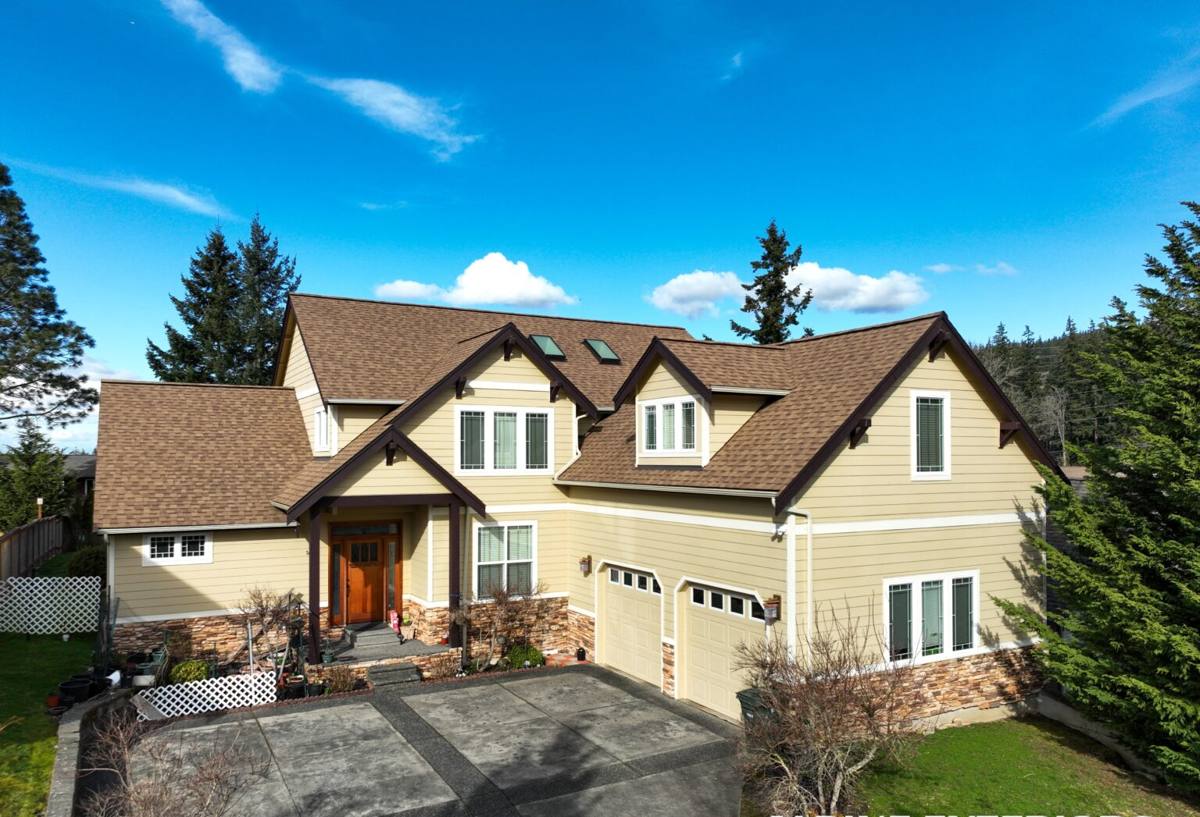
What "Energy-Efficient" Should Actually Mean for a Home Near Semiahmoo Bay
Energy-efficient windows are usually marketed around U-factor and solar heat gain coefficient, and those numbers matter. But in this climate, efficiency is just as much about keeping water and moist air out of the wall cavity as it is about the glass package. A window with excellent glass but a poorly flashed installation will still cause drafts, moisture damage, and rising heating bills — the insulation value on paper doesn't help if wind-driven rain is finding its way behind the trim.
The Two Halves of Efficiency
Think of it as two separate jobs that both have to be done right:
- The window unit itself — frame material, glass package, and weatherstripping quality
- The installation — flashing, sealant, shimming, and integration with the existing siding and moisture barrier
A homeowner shopping for "energy-efficient windows" in Custer should be asking about both, because a contractor who only talks about glass ratings and skips the installation details is leaving out the half of the job that determines whether the window actually performs over the next 15-20 years in this climate.
Frame and Glass Options: What Holds Up in Salt Air and Rain
There's no single "right" window material for every home, but some hold up more predictably than others under Whatcom County's coastal conditions. Here's how the common options compare for this specific climate.
| Material | Salt Air Resistance | Moisture Behavior | Maintenance |
|---|---|---|---|
| Vinyl | Good — won't corrode or pit | Doesn't absorb moisture; seams need periodic inspection | Low — occasional cleaning |
| Fiberglass | Very good — dimensionally stable, resists pitting | Handles humidity swings well, minimal expansion/contraction | Low |
| Aluminum (uninsulated) | Poor — prone to pitting and corrosion near the coast | Conducts cold and condenses easily | Higher — hardware and finish need attention |
| Wood (unclad) | Fair, but exposed wood suffers in constant damp | Absorbs moisture if seals or paint fail | High — regular refinishing needed |
| Wood, aluminum or fiberglass clad | Good — cladding shields the wood | Good if flashing and cladding seams are sound | Moderate |
We generally steer Custer homeowners away from bare aluminum frames and unclad wood on exposed or water-facing walls — not because either product is inherently bad, but because both demand a level of upkeep that most homeowners don't want to sign up for in a climate this consistently wet. Vinyl, fiberglass, and properly clad wood units give you the durability without the maintenance burden.
Glass Packages
Double-pane windows with a low-E coating and an argon or krypton gas fill are the standard baseline for this region and, for most homes, they're the right call. Triple-pane glass adds real insulation value and sound dampening, which can be worth it on a north- or west-facing wall that takes the worst of the weather, but it also adds weight and cost. For most Custer homes, a quality double-pane low-E window installed correctly will outperform a triple-pane window installed poorly — the installation is usually the bigger factor.
Signs Your Current Windows Are Costing You Money
Older or failing windows rarely announce themselves with an obvious leak. More often it's a slow accumulation of small problems. Watch for:
- Condensation or fogging between the panes — this means the seal has failed and the insulating gas is gone
- Visible moss or dark streaking on the sill or exterior trim, even where the wall itself looks fine
- Drafts you can feel near the frame on a windy day, especially during winter storms off the bay
- Sashes that stick, won't latch fully, or have swollen or soft wood at the corners
- A noticeable jump in heating costs without a change in usage
- Paint or finish that's bubbling or peeling on interior trim near the window — often a sign moisture is getting into the wall
Any one of these on its own might not mean full replacement is urgent. Several of them together, especially on the same wall, usually mean the window and its flashing are past the point where caulk and weatherstripping will fix the problem.
What a Correct Installation Involves
This is the part of the job that determines whether a window lasts 20 years or starts failing in five, and it's also the part that's invisible once the trim goes back on. A proper installation in this climate includes:
Moisture Management First
Before the new window ever goes in, the opening gets checked for existing rot or water damage, and a weather-resistant barrier and flashing tape are installed so that any water that does get past the window sheds down and out, not into the wall cavity. This step matters more here than almost anywhere else in the state, given how much sustained rain and humidity the area sees.
Proper Flashing Sequence
Sill pan flashing, side flashing, and head flashing need to go on in the right order — sill first, then sides, then the head flashing laps over the top so water is always directed outward and downward, never trapped behind a layer. This is a detail that's easy to shortcut and hard to inspect after the fact, which is exactly why it's worth asking about before work begins.
Air Sealing and Insulation
The gap between the window frame and the rough opening should be sealed with a low-expansion foam or backer rod and sealant, not stuffed with fiberglass insulation alone, which does little to stop air movement. Poor air sealing here shows up later as drafts and higher heating bills even with a high-efficiency window installed.
Exterior Sealant and Trim
The right sealant for this climate needs to stay flexible through temperature swings and resist UV and salt exposure without cracking. Trim and caulk joints are the first line of defense against driving rain, and they're also the first thing to fail if the wrong product was used or it was applied to a dirty or damp surface.
Our Process for Custer Window Projects
We keep the process straightforward because homeowners deserve to know what's happening to their house and why:
- On-site assessment — we look at existing windows, check for hidden water damage around openings, and evaluate wall orientation and exposure
- Product recommendation — we recommend materials and glass packages based on that specific wall's exposure to wind, rain, and salt air, not a one-size-fits-all package
- Written estimate — clear pricing and scope, including what's involved in the flashing and moisture-barrier work, not just the window units
- Installation — old windows removed, openings inspected and repaired if needed, new flashing and moisture barrier installed, then the new windows set, sealed, and trimmed
- Final walkthrough — we check operation, sealing, and appearance with you before we consider the job done
Cost Factors to Expect
Every home is different, but a few factors consistently move the price on a Custer window project:
| Factor | Why It Matters |
|---|---|
| Frame material | Vinyl is typically the most budget-friendly; fiberglass and clad-wood cost more up front but often less in upkeep |
| Glass package | Double-pane low-E is standard; triple-pane or specialty coatings add cost per unit |
| Window size and type | Large picture windows, bays, or custom shapes cost more than standard single- and double-hung sizes |
| Condition of the existing opening | Hidden rot or water damage found during removal adds repair time before the new window can go in |
| Wall exposure | Walls facing prevailing wind and rain off the bay may need extra flashing detail, which adds labor |
| Number of windows | Whole-house replacement typically brings a better per-window cost than one-off replacements |
As a general guide, many homeowners in this region see installed costs for a standard vinyl double-pane replacement window land in the low-to-mid four figures per opening range on the low end, with larger units, premium materials, or extra flashing work pushing individual windows higher. The only way to get a real number is a walkthrough of your specific home — broad averages don't account for your wall exposure or the condition behind your current windows.
Why Hiring a Crew That Already Works in Custer Matters
Window installation looks similar on paper everywhere in the country, but the details that matter — how much flashing overlap you need, which sealants actually stay flexible through a Whatcom County winter, which walls in a Custer home tend to take the worst weather — come from doing this work repeatedly in this specific area. A crew that mostly installs windows in drier inland climates isn't wrong about window basics, but they may not default to the moisture-management steps that make the difference here over a 15-20 year window lifespan.
We work throughout the Semiahmoo area, including Custer, and we size up every project against what this coastline actually does to a house: salt air on hardware and finishes, driving rain against exposed walls, and a moss season that tells you a lot about which parts of a home stay damp longest. That's the lens we bring to every window recommendation, not just a catalog of options.
If your windows are drafty, fogging, or just old enough that you're wondering whether it's time, we're happy to take a look and give you an honest, no-pressure assessment. Use the form below to request a free estimate for your Custer home.