 Semiahmoo Exterior
 Siding Repair Built for Custer's Climate
Custer sits in a stretch of Whatcom County where marine air off the Salish Sea, long stretches of driving rain, and shaded, slow-drying yards all combine to put real stress on exterior siding. Homes here don't fail because owners neglected them — they fail because the climate is genuinely harder on wall systems than most of the country, and siding that was installed without that in mind starts showing problems years before it should. Salt-laden air corrodes fasteners and trim hardware faster than inland areas. Driving rain finds its way into any gap, seam, or failed caulk joint and pushes water sideways into wall assemblies. And moss and algae, which thrive in the mild, wet, low-sun conditions common to this part of Whatcom County, hold moisture against siding surfaces for months at a stretch. Repairing siding correctly in Custer means understanding all three of these forces, not just patching whatever is visibly broken.
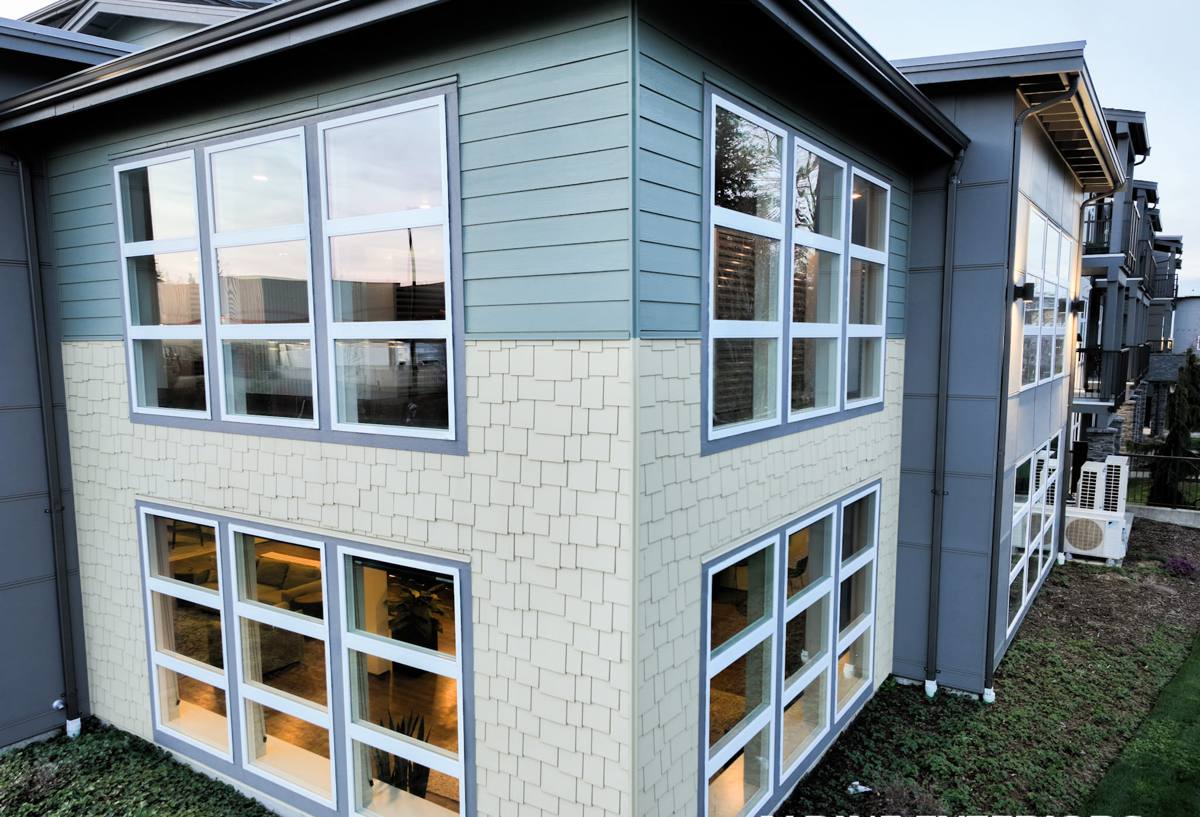
Signs a Custer Home Needs Siding Repair
Siding damage is rarely sudden. It shows up as a handful of small warning signs that homeowners often notice but don't connect to a bigger moisture problem. Watch for these:
- Soft or spongy spots when you press on siding, especially near the bottom courses and around windows
- Visible moss or algae growth that keeps returning even after cleaning
- Cracked, bubbling, or peeling paint concentrated on the north- or shade-facing walls
- Rust streaks below nail heads or trim fasteners
- Gaps opening up at seams, corners, or where siding meets window and door trim
- Warping, buckling, or boards that no longer sit flat against the wall
- A musty smell or visible staining on interior walls that share an exterior wall with damaged siding
Any one of these on its own might be minor. Several appearing together, especially on the same section of wall, usually means water has been getting behind the siding for a while.
What's Actually Causing the Damage
Salt Air and Fastener Corrosion
Homes closer to Semiahmoo Bay and the open water take the brunt of this, but salt-carrying wind travels further inland than most people expect, and Custer isn't far enough removed to be exempt. Salt air accelerates corrosion on exposed nail heads, staples, and metal trim pieces. Once a fastener starts to rust, it loses holding strength, and the siding around it starts to work loose — which opens the door to water intrusion.
Driving Rain and Wind-Driven Moisture
Whatcom County's storms often come with real horizontal force behind the rain, not just straight-down precipitation. That matters because siding systems are designed to shed water downward — they're far less effective against water being pushed sideways and upward into seams, laps, and trim joints. Repair work that doesn't account for this and simply caulks over a gap tends to fail again within a season or two.
The Long Moss Season
Shaded siding, especially on north-facing walls or under mature trees, can stay damp for weeks without a real drying window. That's ideal for moss and algae, which don't just look bad — they hold water against the siding surface, keep the substrate wet longer, and accelerate rot in wood-based products. A repair that doesn't address ventilation, drainage, or nearby vegetation often just buys a homeowner a year or two before the same spot fails again.
Repair or Replace? A Practical Way to Decide
Not every damaged section needs a full re-side, and not every homeowner needs to hear that they do. The right call depends on how much of the wall is affected, what's underneath the siding, and what material is currently installed. Here's how we walk through that decision on a typical Custer inspection:
| Situation | Usually Repair | Usually Replace |
|---|---|---|
| Damage limited to one or two boards/panels | Yes, if sheathing underneath is dry and sound | No |
| Existing material is vinyl or older wood/composite showing widespread rot | Rarely — patches won't match or hold long-term | Yes |
| Sheathing shows soft spots or staining behind the siding | No — repair alone won't fix the moisture source | Yes, with sheathing repair included |
| Existing siding is James Hardie fiber cement, damage is isolated | Yes — planks can be cut in and color-matched | No |
| Moss/algae staining only, structure is sound | Yes — clean, treat, and address drainage | No |
| Damage is spread across multiple walls or elevations | Case-by-case | Usually yes, more cost-effective long term |
We'll always tell a Custer homeowner honestly when a repair is the right call instead of upselling a full replacement — and just as honestly when patching a failing wall system would just be delaying an inevitable, more expensive fix.
What a Correct Repair Involves
A siding repair that actually holds up in this climate goes further than replacing the visibly damaged board. Our process on a typical repair call includes:
- Diagnose the source, not just the symptom. We check flashing, caulk joints, window trim, and drainage paths around the damaged area before touching the siding itself.
- Open up the section. We remove damaged boards and inspect the sheathing and weather-resistive barrier underneath for hidden rot or moisture staining.
- Repair or replace substrate as needed. Damaged sheathing gets addressed before new siding goes back on — covering a wet substrate with new siding just hides the problem again.
- Re-flash and seal properly. Windows, corners, and penetrations get correctly lapped flashing and appropriate sealant, not just a bead of caulk over the old joint.
- Match material and color. On James Hardie siding, we cut in factory-finished ColorPlus planks so the repair blends rather than leaving a visibly different patch.
- Address the cause. If moss, drainage, or vegetation contributed to the failure, we'll flag it and recommend what to change so the same spot doesn't fail again.
Why We Only Repair and Install James Hardie Fiber Cement
We don't install or patch vinyl, LP SmartSide, Cemplank, Allura, primed spruce, or cedar siding, and that standard shapes how we approach repairs too. Fiber cement from James Hardie doesn't rot, doesn't feed moss and algae the way wood-based products can, and holds its factory ColorPlus finish far longer than field-painted repairs on other materials. When we do repair work on a home that already has Hardie siding, we can cut in new planks that match the existing profile and color almost seamlessly, because it's a system we install every week and know inside and out. When we're called to a home with a different siding material that's failing, we'll repair what makes sense to keep a homeowner's budget intact, but we'll also be straightforward that the long-term fix — especially in a climate this hard on siding — is usually a switch to a non-combustible, moisture-resistant material that doesn't require the same repeat maintenance cycle.
Our Process for Custer Homeowners
Because we work regularly throughout this part of Whatcom County, a repair call in Custer isn't a special trip — it's a normal part of our route. That means faster scheduling, and a crew that already knows what this area's homes tend to need. Our process:
- A straightforward, no-pressure inspection and honest assessment of what's actually going on
- A written scope that separates repair-only work from anything that should be replacement
- Clear explanation of what caused the damage, so you're not just paying to have the same problem come back
- Correct materials and flashing details, not just a quick cosmetic patch
- Cleanup that leaves the site the way we found it
Why Local Experience Matters Here
A crew that only occasionally works this far north in Whatcom County can miss the patterns that are obvious to someone who repairs siding in this area every season — where moss tends to take hold first, which elevations catch the worst of the driving rain, and how far salt air actually reaches inland. That local pattern recognition is often the difference between a repair that lasts and one that needs to be redone.
A Quick Checklist Before You Call
If you're trying to decide whether it's time to have your Custer home's siding looked at, walk the exterior and check for:
- Any wall section that feels soft or spongy to the touch
- Moss or dark staining that keeps coming back after cleaning
- Visible gaps at corners, seams, or trim joints
- Rust streaking below any fastener
- Peeling or bubbling paint, particularly on shaded walls
- Interior wall staining or a musty smell on an exterior-facing wall
If any of these sound familiar, it's worth getting a professional look before the next stretch of Whatcom County rain finds its way further in.
If you're noticing any of these signs on your Custer home, we're happy to take a look. Reach out for a free, no-pressure estimate — we'll give you a straight answer on whether it's a repair or something more, and why.