 Semiahmoo Exterior
 Building a Deck That Actually Holds Up in Custer
Custer sits close enough to the water that homes here deal with the same weather load as the rest of Semiahmoo and greater Whatcom County: salt-laden air off the Strait, long stretches of driving rain through fall and winter, and a moss season that can run for months if a structure doesn't get enough sun or airflow. A deck built to a generic spec sheet from a big-box store often looks fine for a year or two, then starts showing the classic symptoms — soft spots near the house, green film on the boards, corroded screw heads bleeding rust streaks, railings that wobble because the posts were never properly anchored. Building a deck that holds up here isn't about using fancier materials across the board. It's about knowing which details actually matter in this climate and not skipping them.
We build and repair decks throughout the Semiahmoo area, and Custer jobs come with a consistent set of considerations: moisture management first, corrosion-resistant hardware second, and a wood or composite choice that fits the homeowner's maintenance appetite third. Get those three right and the rest of the build is straightforward carpentry.
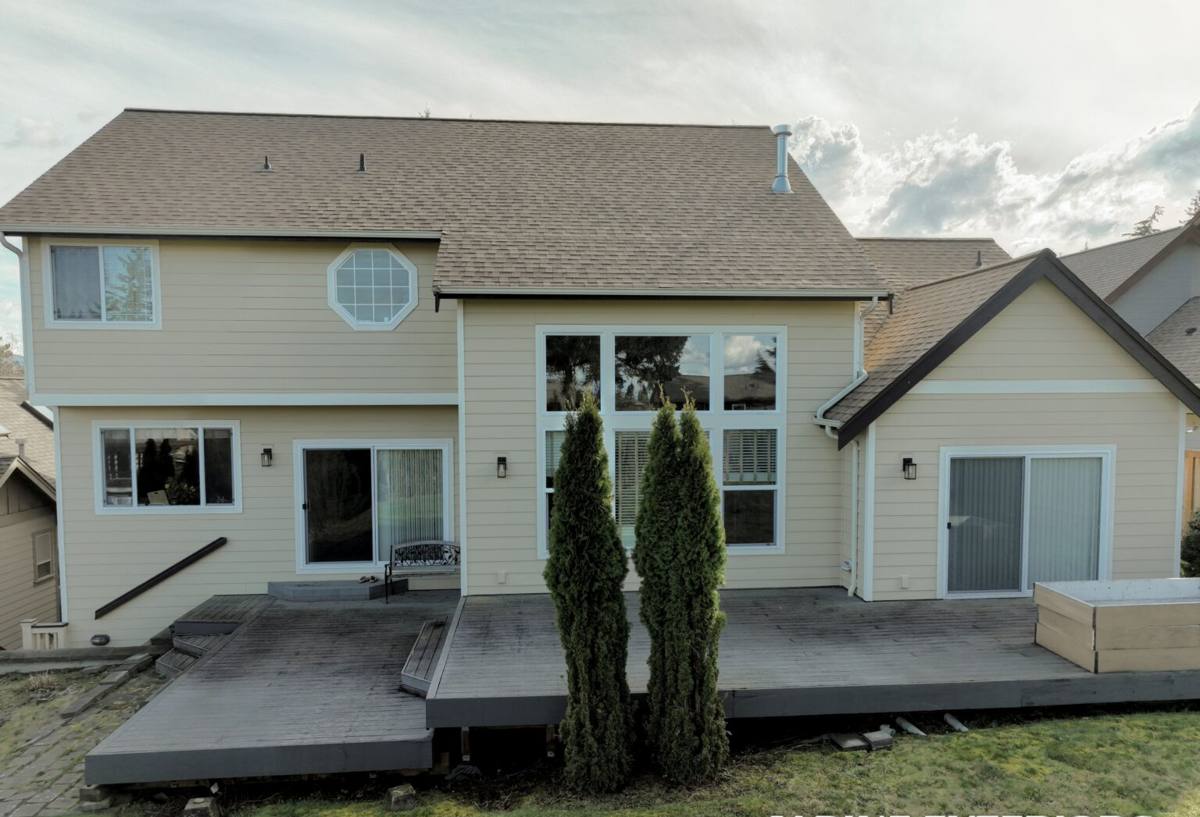
What Custer's Climate Does to an Under-Built Deck
Three things drive almost every deck failure or premature aging problem we see in this part of Whatcom County:
- Salt air corrosion: proximity to the water accelerates rust on any fastener, bracket, or hinge that isn't rated for exterior or coastal exposure — cheap galvanized screws can start bleeding within a season or two.
- Driving rain intrusion: wind-driven rain gets pushed sideways and up under ledger boards, stair stringers, and railing posts, finding any gap in flashing or caulking that a calmer climate would never expose.
- Extended moss and mildew season: shaded decks, decks tight to trees, and decks with poor board spacing stay damp long after a storm passes, giving moss and algae months to establish rather than days.
None of these are exotic problems. They're the reason deck-building standards exist. But they're also the details that get cut first when a crew is trying to hit a low bid, which is why we walk Custer homeowners through exactly what's included before work starts.
Choosing the Right Decking Material
There's no single "best" decking material — there's a best fit for the homeowner's budget, maintenance tolerance, and how exposed the deck will be to sun, rain, and salt air. Here's how the common options actually compare in this climate:
| Material | Upfront Cost | Maintenance | Moisture & Salt-Air Behavior |
|---|---|---|---|
| Pressure-treated fir/pine | Lowest | Needs sealing every 1-2 years | Can cup or check if end grain and fastener holes aren't sealed; budget-friendly workhorse |
| Western red cedar | Moderate | Periodic oiling/staining to hold color | Naturally rot- and insect-resistant; a strong regional choice given our climate, but still needs sealed end cuts |
| Composite decking | Higher | Occasional washing, no staining | Won't rot or splinter; some early-generation composites held moisture at the core, so board quality and proper gapping still matter |
| PVC decking | Highest | Wash only | Fully synthetic, very low moisture uptake; best long-term option for shaded, damp-prone areas |
For most Custer homes, we see cedar and mid-tier composite as the sweet spot — cedar for homeowners who like the look and don't mind periodic maintenance, composite for those who want to spend their weekends doing something other than restaining a deck. Pressure-treated framing underneath either surface material is standard practice regardless of what's on top.
A Note on Product Selection
We don't push a single brand or material on every job. Some composite lines have had well-documented moisture and fastener-compatibility issues over the years, and we've adjusted what we install and how we install it based on that track record — not because a product is "bad," but because our standard is to use materials and fastening methods with a solid history of performing in wet coastal climates. We'll walk you through the honest trade-offs for your specific deck rather than steering you toward whatever has the best margin.
Framing and Substructure — Where Decks Actually Fail
The decking surface is what homeowners see, but the framing underneath is what determines whether a deck lasts fifteen years or forty. In Custer's rain and humidity, we pay particular attention to:
Footings and Posts
Footings need to be sized and set to local frost and load requirements, not just eyeballed. Posts should sit on post bases that keep end grain off concrete and standing water — wood-to-concrete contact is one of the fastest ways to start rot at the base of a deck.
Ledger Attachment and Flashing
The ledger board — where the deck attaches to the house — is the single most common source of hidden water damage. It needs proper flashing that directs water away from the house band board, not just caulk, which fails over time. This is the detail most likely to get skipped on a rushed job, and it's the one that causes the most expensive repairs down the road.
Joist Protection
Joist tops and cut ends absorb water fastest. Capping joists with a protective flashing tape and sealing every cut end before the decking goes down adds a modest amount of labor and materially extends the life of the frame.
Fasteners and Hardware for Salt Air Exposure
Semiahmoo's coastal air is harder on metal than most inland Washington locations. On every deck we build, hardware selection isn't an afterthought:
- Structural connectors (joist hangers, post bases, hurricane ties) rated for exterior or coastal exposure, not standard interior-grade galvanized.
- Stainless steel or coated deck screws matched to the decking material's chemical treatment — mismatched metals accelerate corrosion in both directions.
- Bolted, through-connections at railing posts rather than surface-screwed brackets, since railing failure is a safety issue, not just a cosmetic one.
- Hidden fastener systems where the decking product supports them, which also reduces the number of exposed metal points that can rust and streak the boards.
Cutting corners on hardware is invisible on day one and obvious by year three, when rust streaks start bleeding down the face of the boards and connections start to loosen.
Managing Moss, Mildew, and Drainage Long-Term
You can't eliminate moss risk in Whatcom County — the climate is what it is — but you can design a deck to shed water and dry out fast instead of holding moisture:
- Correct board spacing so water drains through rather than pooling on the surface.
- Deck framing pitched slightly away from the house so runoff has somewhere to go.
- Avoiding solid skirting or under-deck enclosures that trap humid air against the framing, unless a proper ventilated under-deck drainage system is installed.
- Choosing decking colors and finishes that make early moss or mildew growth visible early, so it gets addressed with a simple wash rather than left to establish.
A deck built with these details in mind still needs an occasional wash-down, but it won't need aggressive pressure washing or chemical treatment every spring just to stay usable.
Our Deck Building Process
Every Custer deck project follows the same sequence, whether it's a full rebuild or new construction:
- On-site assessment of the site, sun/shade exposure, drainage slope, and existing structure (for rebuilds).
- Written estimate covering materials, framing spec, hardware grade, and a realistic timeline.
- Permit pull and inspection scheduling where required.
- Demolition of the old structure (if applicable) and footing/post work.
- Framing, ledger flashing, and joist protection.
- Decking installation with attention to board spacing and drainage.
- Railing, stairs, and any built-in features.
- Final walkthrough with the homeowner before we consider the job done.
We don't skip steps to hit a faster timeline, and we won't quote a price that only works if the crew cuts corners on flashing or hardware.
Permits and Local Code Considerations
Most new deck construction and many substantial rebuilds in Whatcom County require a building permit, particularly for decks above a certain height or attached to the home's structure. Requirements can vary depending on the deck's size, height off grade, and railing needs. We handle the permit process as part of the job rather than leaving homeowners to navigate it, and we build to the load and railing standards that inspection will actually check — height, guard spacing, and stair geometry in particular.
Why Hire a Crew That Already Works in Custer
A deck contractor who mainly works inland or in a drier climate can still build something that looks right, but "looks right" and "built for this weather" aren't the same thing. Crews who work Custer and the surrounding Semiahmoo area regularly already know which fastener grades hold up, which framing details matter most given the driving rain patterns here, and which materials are worth the added cost versus which ones are marketing. That experience shows up in the small decisions — flashing details, hardware selection, drainage slope — that a generic crew might not think to prioritize on a first job in the area.
If you're planning a new deck, replacing an aging one, or want an honest opinion on whether your current deck needs repair or replacement, we're happy to take a look. Reach out for a free, no-pressure estimate using the form below — we'll walk the site, talk through your options, and give you a straight answer.