 Semiahmoo Exterior
 Windows in Custer Take a Different Kind of Beating
Custer sits close enough to the water that salt-laden air is part of daily life, and far enough into Whatcom County's rural stretch that homes here often go years between a contractor actually looking closely at the windows. That combination is tough on a house. Salt air corrodes exposed hardware and accelerates the breakdown of caulking and sealants faster than it would further inland. Driving rain off the Strait pushes water sideways into any gap in flashing or trim, not just straight down like a lot of installers assume. And the long, damp moss season that blankets roofs and siding across this part of Washington keeps humidity sitting against exterior walls for months at a time, which is exactly the condition that lets rot get started around a poorly sealed window frame.
None of this means Custer homes need exotic solutions. It means the installation has to respect the climate instead of treating this like a dry-climate job with a different address. A window that's installed correctly for these conditions will outlast one that isn't by decades, even if the units themselves are identical.
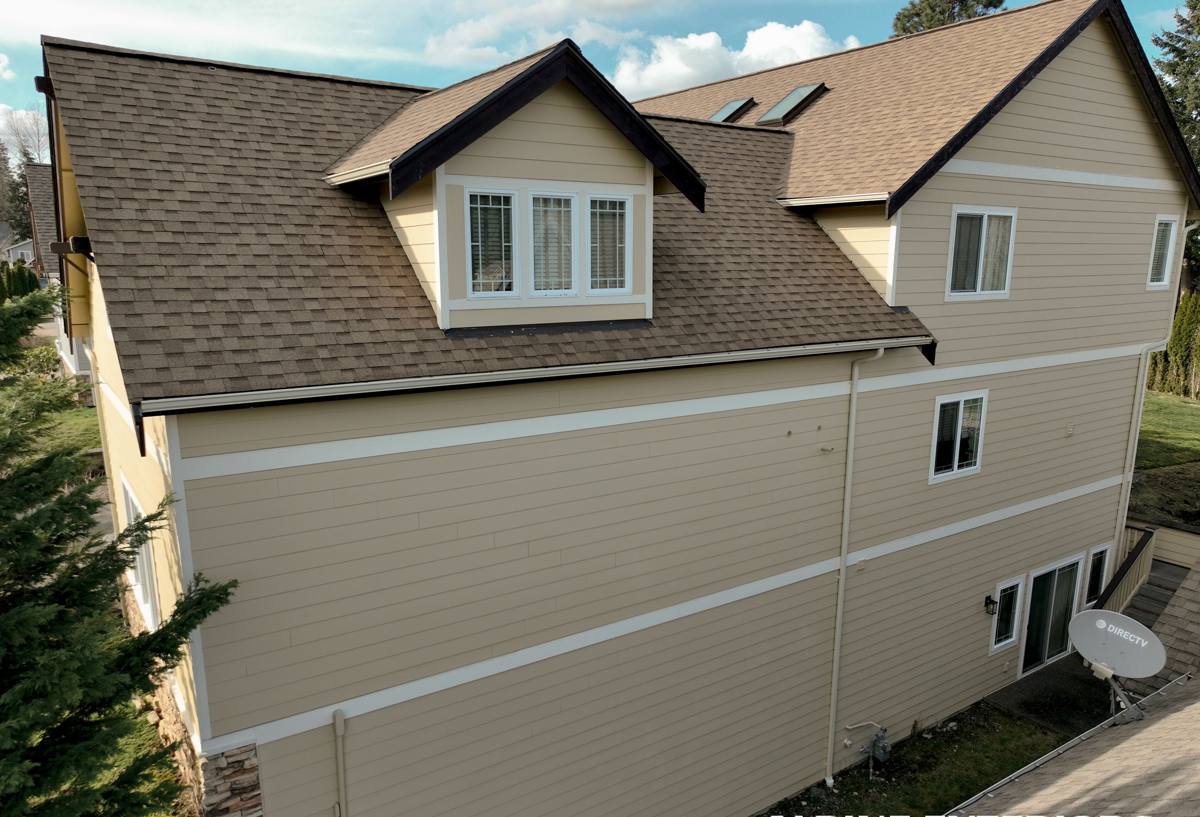
Signs a Custer Home Is Overdue for Window Work
Most window failures around here don't show up as a dramatic leak. They show up slowly, and homeowners often chalk them up to "old house" quirks instead of a fixable problem. Watch for:
- Visible fogging or moisture trapped between panes of a double-glazed unit — the seal has failed and it won't clear up on its own
- Soft or discolored wood trim, sill, or the wall surface directly below a window
- Persistent drafts even with the window latched, especially during wind off the water
- Paint that keeps bubbling or peeling around the frame no matter how often it's touched up
- Hardware that's stiff, corroded, or won't latch tight anymore
- A noticeable difference in the room's temperature near the window compared to the rest of the house
- Visible daylight or a gap you can feel around the frame from outside
Any one of these on its own might be minor. Two or three together usually means water has already found a way in, even if there's no obvious stain yet.
What a Correct Installation Actually Involves
Setting a new window into an opening is the easy part. The work that actually determines whether it lasts is everything around the window unit itself — and it's also the part that's easiest for a rushed crew to shortcut.
Sill Pan Flashing
Every window opening needs a sloped, waterproof pan at the sill so that any water that does get past the exterior cladding drains back outside instead of soaking into the framing. This is non-negotiable in a climate where driving rain is routine, and it's one of the most commonly skipped steps in budget installations.
Integration with the Drainage Plane
The window's flashing has to tie into the house's weather-resistive barrier in the correct shingled order — top flashing over the barrier, side flashing lapped correctly, and the sill flashing underneath. Get the order wrong and you've built a funnel instead of a barrier.
Air Sealing Without Trapping Moisture
The gap between the window frame and the rough opening needs to be sealed for air and insulated, but not packed solid with a material that holds moisture against the frame. Low-expansion foam or backer rod with sealant, applied correctly, handles both jobs without creating a hidden damp pocket.
Exterior Sealant and Trim Detail
The visible caulk line is the last line of defense, not the first. It matters, but a good sealant bead can't make up for missing flashing underneath it — and in salt air, sealants age faster, so the detailing behind them has to be solid on its own.
Full-Frame Replacement vs. Insert (Pocket) Replacement
One of the first decisions on any Custer window project is whether the job calls for a full-frame replacement or an insert replacement into the existing frame. Both are legitimate approaches — the right one depends on the condition of what's already there.
| Factor | Insert (Pocket) Replacement | Full-Frame Replacement |
|---|---|---|
| Existing frame condition | Requires a sound, dry, square frame | Appropriate for rotted, soft, or out-of-square frames |
| Access to flashing/sill pan | Limited — relies on the old frame's flashing | Full access to correct or install new flashing |
| Disruption to siding/trim | Minimal | Trim and sometimes siding are removed and reset |
| Best fit for this climate | Homes with recently verified, healthy framing | Older homes or any window showing water damage signs |
| Long-term risk if used incorrectly | Hides ongoing rot behind a new window | Low, since the opening is fully exposed and corrected |
We'll always check behind the trim before recommending one over the other. Given how much moisture cycles through this area during moss season, we lean toward full-frame replacement any time there's a question mark about the condition of the existing opening — an insert replacement over hidden rot just delays the problem.
Choosing Frame Materials for a Salt-Air, High-Rain Climate
There's no single "best" window material for every house, but some choices hold up better than others in Custer's specific conditions.
Vinyl is a solid, low-maintenance choice for most homes here — it doesn't corrode, handles moisture well, and performs reliably without ongoing upkeep, which matters in a climate where nobody wants to be re-caulking or repainting every couple of years.
Fiberglass costs more up front but resists expansion and contraction across our temperature swings better than vinyl, and it takes paint well if you want to match specific trim colors down the line.
Wood and wood-clad windows can look great and suit certain older or historic-style homes, but they carry the highest maintenance burden in this climate — exposed wood needs consistent upkeep to keep moss-season moisture from working into the finish, and we're upfront with clients about that trade-off rather than glossing over it.
Aluminum frames conduct cold and can be prone to condensation in our damp winters unless they're thermally broken, so we're selective about where we'll recommend them.
Hardware finish matters too — in salt air, cheaper hardware coatings corrode noticeably faster, so it's worth asking what finish is actually specified before signing off on a quote.
How We Handle a Custer Window Project
- On-site assessment — we check the condition of the existing frame, sill, and surrounding wall, not just the glass, before recommending insert or full-frame replacement
- Measurement and material selection — sized to the actual opening, with a frame material and glazing package matched to the room's exposure (a window facing prevailing wind and rain gets treated differently than a sheltered one)
- Removal — old unit and any compromised trim or sheathing come out, and we inspect the framing underneath before anything new goes in
- Flashing and sill pan installation — built and integrated correctly with the existing weather-resistive barrier, correcting any past mistakes we find
- Setting and shimming the window — leveled, plumb, and square, with proper fastening per the window manufacturer's instructions
- Insulation and air sealing — gap filled without trapping moisture against the frame
- Exterior sealing and trim — weatherproofed and finished to match the home
- Final walkthrough — operation, latching, and seal checked with you before we consider the job done
Energy Performance and Code Considerations
Washington's energy code sets minimum performance requirements for replacement windows, and homes in Whatcom County need to meet those standards just like anywhere else in the state. Beyond code minimums, a properly rated, well-sealed window makes a real difference here — not because of extreme heat like other parts of the country deal with, but because of how much of the year our homes are fighting damp cold and wind rather than dry air. If a bedroom window is being replaced, egress requirements (minimum opening size and sill height) apply and need to be checked against current code, especially in older homes where the original opening may not meet today's standard. We handle these code checks as a normal part of the process rather than something you have to track down yourself.
Why It Matters to Hire a Crew That Already Works in Custer
Window installation isn't a one-size-fits-all trade, and a crew that mostly works drier, inland climates can get away with shortcuts that simply don't hold up out here. Working regularly in Custer and the surrounding Semiahmoo area means we already know which details matter most in this specific environment — how aggressively salt air ages exterior hardware and sealants, how hard driving rain can push water sideways during a winter storm, and how long moss-season dampness sits against a house before it dries out. That local pattern recognition shows up in the small decisions on every job: which sealants and hardware finishes hold up, how conservative to be about flashing details, and when a insert replacement is genuinely fine versus when it's just papering over a bigger problem.
It also means we're not learning the local building department's expectations for the first time on your project, or guessing at how a particular exposure will behave over the next twenty years. We've made those judgment calls before, on homes facing the same wind and rain your house does.
Get a Straight Answer About Your Windows
If you're noticing drafts, fogged glass, or soft trim around your windows, it's worth getting an honest look before the damage spreads further into the wall. We offer free, no-pressure estimates for Custer homeowners — we'll tell you plainly whether you're looking at a simple insert replacement or something more involved, with no upsell and no guesswork. Use the form below to get started.