 Semiahmoo Exterior
 Roof Repair Built for Custer's Coastal Climate
Custer sits close enough to the water that homes here deal with a different set of roofing problems than you'd find further inland. Salt-laden air off the Strait of Georgia and Semiahmoo Bay works on metal fasteners and flashing year-round. Driving rain off winter storms finds every weak seam. And Whatcom County's long, wet moss season puts pressure on roofs for months at a stretch, not just a few weeks in spring. A roof repair here needs to account for all three, not just patch the one leak a homeowner happened to notice.
We work on roofs throughout the Semiahmoo area, and Custer's mix of older farmhouses, newer builds, and everything in between means we see a wide range of roofing conditions. What stays consistent is the climate stress. This page covers what that stress does to a roof, what an honest repair actually involves, and how our process works when you call us out to Custer.
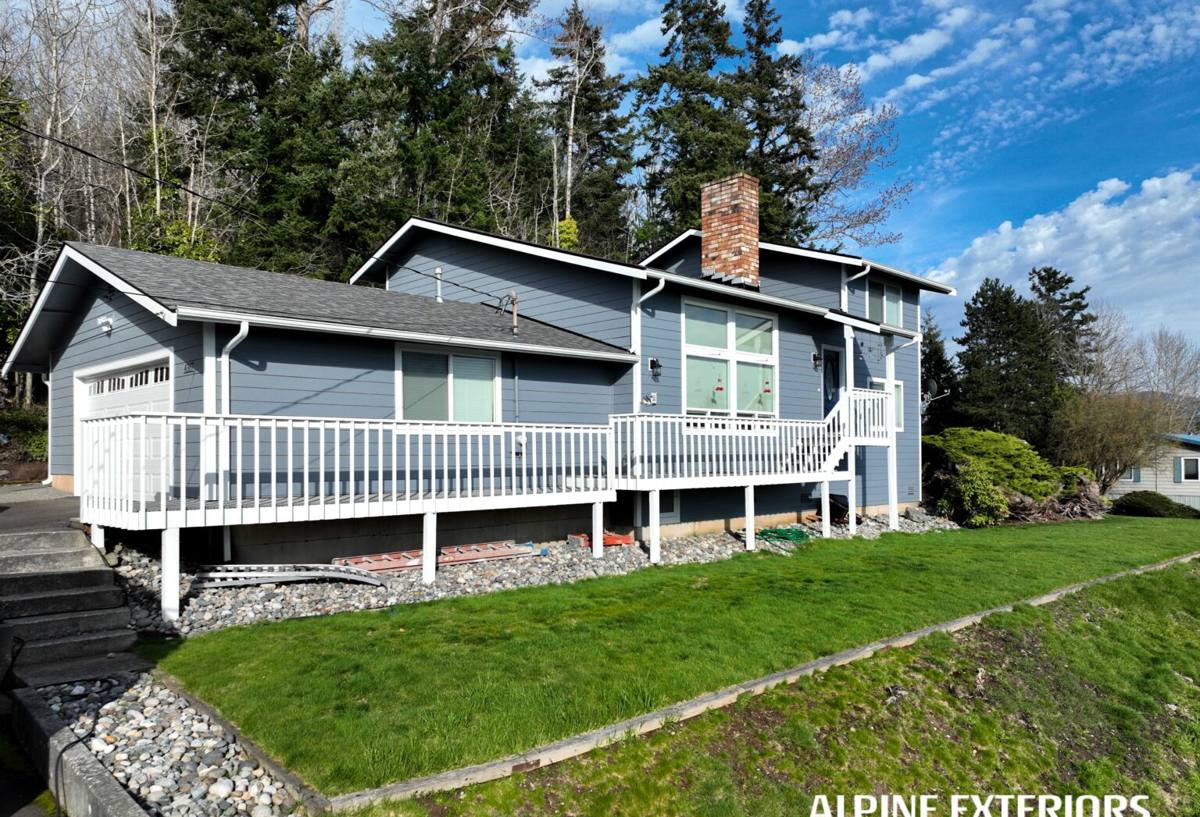
What Salt Air, Rain, and Moss Do to a Custer Roof
Salt Air and Metal Corrosion
Salt air accelerates corrosion on any exposed metal — flashing, fasteners, drip edge, and gutter hardware. Once corrosion starts on a fastener or flashing seam, it doesn't stay cosmetic. Corroded nails lose their grip on shingles, and pitted flashing stops shedding water the way it should. This is a slower process than a wind-torn shingle, which is exactly why it goes unnoticed until it's already caused a leak.
Wind-Driven Rain
Rain that comes in sideways off a storm doesn't behave like rain falling straight down. It gets pushed up under shingle tabs, into valleys, and around penetrations like vent boots and chimney flashing — all places a roof is designed to shed water downhill, not resist it being pushed uphill. A repair that only addresses the visible gap and ignores how wind-driven rain actually moves across a roof tends to fail again in the next storm.
Moss and Moisture Retention
Whatcom County's moss season runs long because the combination of shade, moisture, and mild temperatures rarely lets up. Moss holds water against the roofing surface far longer than the surface would otherwise stay wet, which softens shingles, lifts edges, and works its way under flashing over time. Moss growing in a roof valley is a particular problem — valleys carry more water than any other part of the roof, and moss slows that water down right where it needs to move fastest.
Common Roof Repair Needs We See in Custer
- Lifted or cracked shingles along ridge lines and exposed slopes, where wind load is highest
- Flashing failures around chimneys, skylights, and vent pipes — usually corrosion or a seal that's dried out
- Moss buildup in valleys and along the north-facing slope, holding moisture against the roofing material
- Gutter and downspout backups that push water back under the roof edge instead of away from the house
- Soft or discolored decking visible from the attic, usually a sign a leak has been active longer than the homeowner realized
- Fastener corrosion on older metal roofing or flashing, leading to loose panels or open seams
Most of these don't start as emergencies. They start small — a few lifted shingles, a little moss in a valley — and get worse through one more wet season if nobody's looking at them.
What a Correct Roof Repair Actually Involves
A repair that holds up in this climate is more than swapping out a damaged shingle. Here's what we check and do on a typical roof repair call:
- Inspect the full roof plane around the reported problem, not just the immediate spot — damage rarely stays isolated
- Check attic decking from underneath for soft spots, staining, or daylight where there shouldn't be any
- Pull and replace compromised flashing rather than caulking over it, since caulk is a temporary fix on a corroded or gapped seam
- Match replacement shingles or roofing material as closely as possible to what's already installed
- Clear moss and debris from valleys and re-check water flow before closing anything up
- Confirm fasteners are sound and re-nail or replace as needed rather than working around a weak fastener
- Walk the repair with the homeowner and explain what we found and what we did — no guessing at what happened after we leave
Our Process From Call to Completion
- Initial call or estimate request — you describe what you're seeing (a stain on the ceiling, missing shingles, a leak after a storm), and we schedule a time to look at it in person.
- On-site inspection — we get on the roof and in the attic where accessible, and look at the whole roof system, not just the reported spot.
- Honest assessment — we tell you what's actually wrong, what it will take to fix it, and whether it's a straightforward repair or something that points toward a bigger issue.
- Written estimate — a clear scope and price before any work starts, so there are no surprises partway through.
- Repair work — completed by a crew that shows up prepared, protects the property, and cleans up debris and old material when the job's done.
- Follow-up — if something isn't sitting right after the first hard rain, we want to hear about it.
Repair or Replace? Cost Factors to Weigh
Not every roof problem in Custer needs a full replacement, but some do. These are the factors that usually decide which side of that line a roof falls on:
| Factor | Points Toward Repair | Points Toward Replacement |
|---|---|---|
| Age of roofing material | Under roughly two-thirds of expected lifespan | Near or past expected lifespan |
| Extent of damage | Localized — one slope, one flashing point, one valley | Spread across multiple slopes or repeated leak spots |
| Decking condition | Solid, dry decking under the damaged area | Soft, stained, or rotted decking found on inspection |
| Moss and moisture history | First occurrence, caught early | Long-term moss growth with granule loss or curling shingles |
| Flashing and fastener condition | Isolated corrosion, easily replaced | Widespread corrosion across multiple penetrations |
A repair estimate should tell you honestly which category your roof falls into. We'd rather do a smaller, correct repair than talk a homeowner into a replacement they don't need yet — and we'll also tell you plainly when a repair is just delaying a replacement you should start budgeting for.
Materials and Flashing Choices We Use
For repair work, matching the existing roofing material is usually the right call — mixing materials or profiles on one roof plane creates its own water-management problems down the line. For flashing, we favor corrosion-resistant metals and proper step-and-counter flashing details at walls and chimneys over sealant-heavy shortcuts. Sealant has its place, but on a roof exposed to salt air and constant moisture, a sealant-only fix has a shorter service life than a properly formed and fastened flashing detail. We'll explain the trade-offs for your specific situation rather than defaulting to whatever's fastest.
Why a Local Crew That Already Works Custer Matters
A roofing crew that regularly works this stretch of Whatcom County has already seen how the local climate plays out on real roofs — which slopes hold moss longest, which flashing details tend to fail first in salt air, and how quickly a small leak can turn into decking damage during a wet winter. That familiarity means less guesswork on your roof and a repair scoped to what actually happens here, not a generic checklist.
It also means we're not far away if something needs a second look. A roof repair should hold up through the next storm season, and being local to the Semiahmoo area means we can respond quickly if it doesn't — and follow up in person if you have questions after the work is done.
Scheduling Around Whatcom County Weather
Roof repairs go faster and hold up better when they're done during a dry weather window, which in this part of Washington means paying attention to the forecast rather than just the calendar. We schedule repair work with that in mind, and for urgent leaks we'll prioritize getting a roof temporarily protected even if the full repair has to wait a day or two for a dry stretch. Waiting until the rainy season is in full swing to address a known problem almost always costs more than catching it early.
If you're seeing signs of roof trouble in Custer — a stain on the ceiling, missing shingles after a windstorm, or moss that's gotten out of hand — we're happy to take a look and give you a straight answer. Request a free, no-pressure estimate using the form below and we'll schedule a time to get on your roof.