 Semiahmoo Exterior
 Cherry Point's Roofs Work Harder Than Most
A roof in Cherry Point earns its keep. Sitting out near the Strait of Georgia in Whatcom County, homes here take on a mix that most inland roofs never see: salt-laden air off the water, wind-driven rain that gets pushed sideways into laps and flashings, and long stretches of damp, low-sun winter that make moss and algae a near-permanent tenant on north-facing slopes. None of that is exotic — it's just the normal cost of living this close to Puget Sound's northern edge. But it means a roof built to a generic spec will show its age faster here than the same roof would forty miles inland.
A correct new roof installation for this area isn't about upgrading to something exotic. It's about getting the fundamentals — fasteners, flashing, underlayment, ventilation — right for salt exposure and constant moisture, instead of building to the minimum a code inspector will pass.
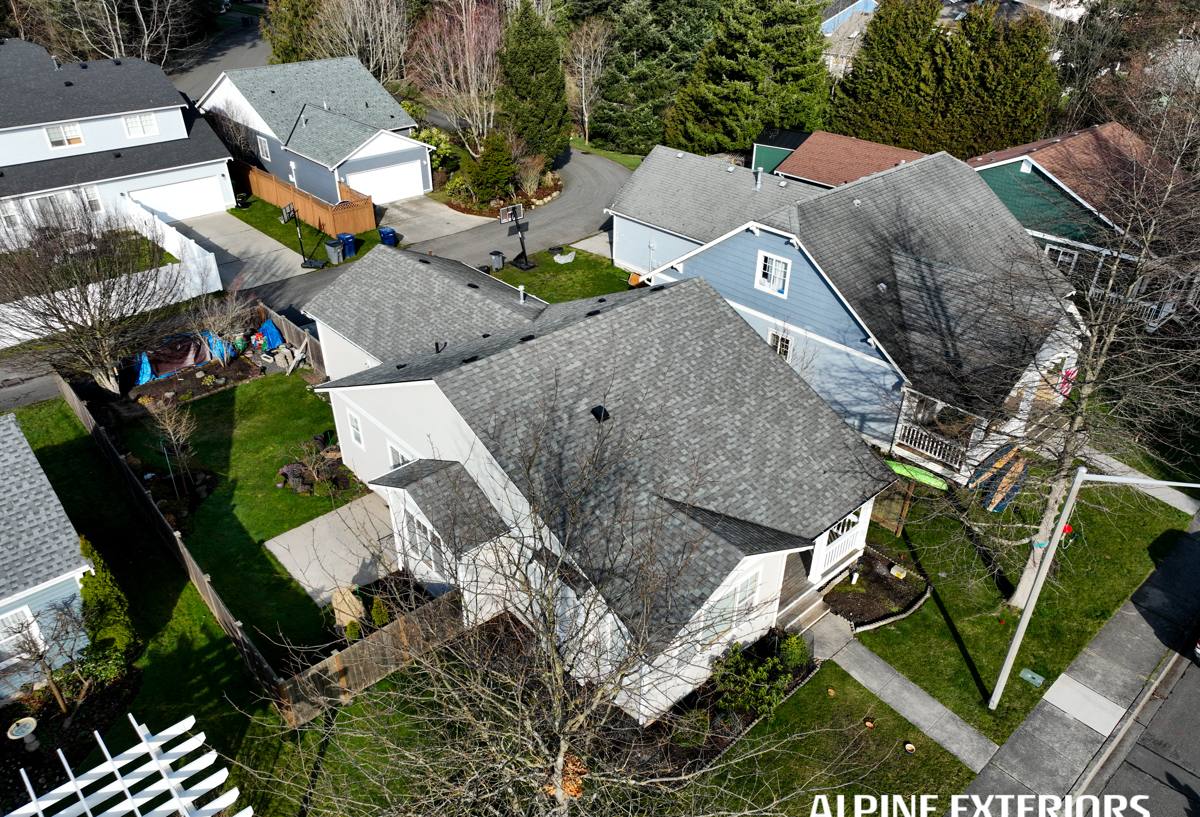
What Salt Air and Driving Rain Actually Do to a Roof
It helps to understand the failure modes before talking about the fix.
Salt Air
Airborne salt accelerates corrosion on anything metal — nail heads, flashing, valley metal, roof vents, and fastener shanks. On a standard roof, exposed or under-spec fasteners can start rusting years before the shingles themselves are due for replacement. Once a fastener corrodes and loses its grip, you get lifted shingle tabs, which is exactly where wind-driven rain finds its way in.
Driving Rain
Rain that falls straight down is easy for any roof to shed. Rain that's being pushed sideways by wind off the water behaves differently — it can work backward under shingle laps, around vent boots, and along step flashing at wall intersections. A roof that's only "watertight" under calm conditions isn't enough here; the underlayment and flashing details have to assume wind-driven moisture as the normal case, not the exception.
Moss and Algae
Shaded, north-facing, and low-slope sections stay damp for days after a storm, especially under the tree cover common in this part of Whatcom County. That moisture is exactly what moss needs to root in shingle mat. Once moss gets a foothold, it lifts shingle edges as it grows, holds water against the roof deck, and shortens the life of the material underneath it — regardless of how good the shingle itself is.
What a Correct Installation Involves Here
The visible shingle or metal panel is only part of the job. What's underneath it is what determines whether the roof actually performs in this climate for its full expected life.
- Full tear-off to the deck — so we can inspect and repair any soft or water-damaged sheathing before it's covered up, not papered over.
- Corrosion-resistant fasteners and flashing — matched to salt exposure rather than a generic inland spec.
- Ice-and-water shield at vulnerable zones — eaves, valleys, and any low-slope transitions, as a second line of defense behind the primary underlayment.
- Synthetic underlayment across the full deck — for consistent water resistance under wind-driven rain, not just felt paper that can wick moisture over time.
- Properly lapped step and counter-flashing at every wall, chimney, and skylight intersection — the single most common source of leaks on an otherwise sound roof.
- Balanced intake and exhaust ventilation — so the attic and roof deck can actually dry out between rain events instead of staying damp, which both fights moss and protects the sheathing from the inside.
Material Options for Cherry Point Homes
There's no single "correct" material — the right choice depends on roof pitch, budget, and how much shade the roof sits under. Here's how the common options actually compare for this specific climate.
| Material | Salt Air Performance | Moss Resistance | Typical Lifespan |
|---|---|---|---|
| Architectural asphalt shingle | Good, with corrosion-resistant fasteners and flashing | Moderate — benefits from algae-resistant granules and good ventilation | 25–30 years |
| Standing seam metal | Very good with coated, marine-rated fasteners and panels | Excellent — smooth surface sheds moss and debris | 40–50+ years |
| Synthetic composite (shake/slate look) | Good, consistent material with no natural decay | Good — doesn't feed moss the way wood does | 30–50 years |
| Cedar shake | Requires diligent maintenance in salt air | Poor without frequent treatment — wood is what moss prefers to grow on | 20–30 years with upkeep |
For most Cherry Point homes we're recommending architectural asphalt with a full corrosion-resistant fastener and flashing package, or standing seam metal where the homeowner wants the longest possible service life and lowest ongoing maintenance. We steer people away from cedar shake in this specific microclimate — not because it's a bad product everywhere, but because the maintenance burden to keep it moss-free this close to the water is more than most homeowners want to sign up for.
Our Installation Process
- On-site inspection and estimate — we walk the roof, check the attic for existing moisture or ventilation problems, and give you a written scope and price. No pressure, no same-day-signature tactics.
- Material selection — we go over the options above against your budget and how much shade your roof gets, since that drives how much moss pressure you'll deal with long-term.
- Tear-off and deck inspection — old roofing comes off down to the sheathing, and any soft or water-stained decking gets flagged and replaced before anything new goes down.
- Underlayment and flashing — ice-and-water shield at vulnerable zones, synthetic underlayment across the field, new step and counter-flashing at every wall and penetration.
- Installation — shingles, panels, or composite installed to manufacturer spec, with corrosion-resistant fasteners throughout.
- Ventilation check — intake and exhaust confirmed balanced so the new roof can actually dry out between storms.
- Cleanup and final walkthrough — magnetic sweep for stray nails, debris hauled off, and a walkthrough so you know exactly what was done.
Why a Crew That Already Works Cherry Point Matters
Roofing crews that mostly work drier, inland parts of Whatcom County will build a technically sound roof — but "technically sound" and "sound for this specific spot" aren't always the same thing. A crew that regularly works Semiahmoo-area homes knows which fastener and flashing upgrades are worth paying for here, which slopes on a given house are going to fight moss regardless of material, and how much of a roof's underlayment and ventilation package should be treated as non-negotiable rather than optional add-ons.
That local pattern recognition is the difference between a roof that looks right on installation day and one that's still performing the way it should in year fifteen, after a decade and a half of salt air and winter storms.
Signs Your Cherry Point Home May Need a New Roof
Repairs make sense for isolated problems. A full replacement makes sense once the roof is failing broadly rather than in one spot. Signs worth a professional look:
- Shingle granules collecting in gutters or at downspouts
- Curling, cupping, or cracked shingles across multiple slopes, not just one area
- Moss established across a significant portion of the roof, not just a thin edge line
- Visible daylight or water staining in the attic, especially near valleys or wall intersections
- Flashing that's visibly rusted, lifted, or separated from the roof plane
- Roof is at or past the manufacturer's expected service life for its material
- Rising number of small leaks or repairs in recent years
What Affects the Cost
| Factor | Why It Matters |
|---|---|
| Roof size and number of slopes | More material, more labor, more flashing detail work |
| Deck condition | Rotted or soft sheathing found at tear-off adds material and labor to replace |
| Material choice | Asphalt, metal, and composite carry different material and installation costs |
| Roof complexity | Valleys, dormers, chimneys, and skylights each add flashing work |
| Ventilation upgrades | Adding or correcting intake/exhaust venting where the existing system is inadequate |
| Access and slope | Steep or hard-to-access roofs take longer and require more safety setup |
Because deck condition and roof complexity vary so much house to house, we don't quote a firm number without seeing the roof in person. What we can tell you honestly, up front, is which of these factors are likely to apply to your home based on its age and layout.
Living With Your New Roof
A correctly installed roof still benefits from basic upkeep in this climate. Keep gutters and downspouts clear so water isn't backing up under the eaves. Have a professional check the roof after major windstorms, since driving rain events are when marginal flashing details tend to show themselves. And don't let moss build back up for years at a time — early, light treatment is far cheaper and gentler on the roofing material than letting it establish and then having it scraped off.
If you're weighing a new roof for a Cherry Point home, we're glad to come take a look and walk you through what we're seeing — no pressure, no hard sell. Use the form below to request a free estimate.