 Semiahmoo Exterior
 Roofs in Cherry Point Take a Different Kind of Beating
Cherry Point sits out on open, exposed ground along the Whatcom County coastline, and that location shapes everything about how a roof ages here. Wind comes off the water with nothing to slow it down. Rain doesn't just fall straight — it drives sideways during winter storms and finds every gap a roof has to offer. And because this stretch of the county rarely gets a hard, dry stretch of weather, moss and algae get a long head start every single year. A roof that would hold up fine in a drier, more sheltered part of the state can show real wear here after just a few seasons.
Storm damage repair in this kind of environment isn't just about patching whatever blew loose in the last windstorm. It's about understanding why that spot failed in the first place — usually wind uplift at an edge, a flashing detail that was never quite sealed right, or years of trapped moisture under moss that finally worked its way through. We work storm damage calls in Cherry Point and the surrounding Semiahmoo-area coastline regularly, and the pattern repeats often enough that we can usually tell you what we're going to find before we're even on the ladder.
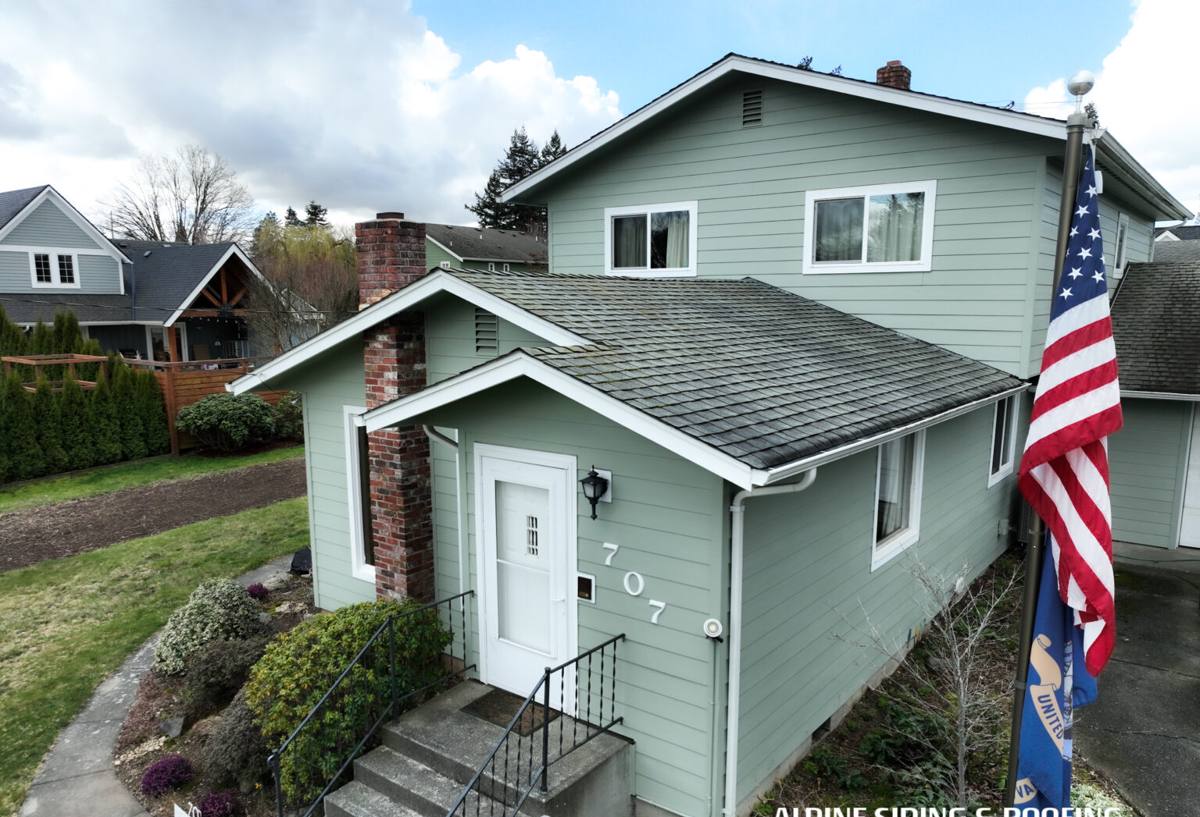
What Storm Damage Actually Looks Like Out Here
Wind Damage
Open exposure means sustained wind loads that most roofing materials weren't tested against in a lab setting near the coast. The most common failure point is the perimeter — ridge caps, rake edges, and the first few courses near a gable end. Once wind gets a finger under one shingle or shake, it peels the next one, and the next. A homeowner often sees this as "a few shingles missing" when the real story is a section of underlayment now exposed to weather it was never meant to face alone.
Salt Air and Corrosion
Coastal salt air is hard on anything metal. Exposed fasteners, flashing seams, and gutter hardware corrode faster here than they would even ten or fifteen miles inland. Corrosion doesn't announce itself — it just slowly opens up tiny gaps at fastener heads and seam laps until a storm pushes enough water through to notice indoors. Part of a proper storm repair in this area is checking every piece of exposed metal, not just the section that visibly failed.
Moss, Algae, and the Long Wet Season
Because Cherry Point rarely dries out for long, moss and algae get months of uninterrupted growing time most years. Moss holds moisture against the roofing surface, which accelerates granule loss on asphalt shingles and can rot the wood underneath cedar shakes. A storm often finishes off a spot that moss had already been quietly weakening for a year or two — which is why a repair that only addresses the storm damage and ignores the moss underneath it tends to fail again quickly.
Signs Your Cherry Point Roof Needs a Storm Damage Inspection
- Shingles, tabs, or ridge caps missing or visibly lifted after a windstorm
- Granules collecting in gutters or at downspout outlets
- New or spreading water stains on interior ceilings, especially near exterior walls
- Daylight visible through the attic decking or roof sheathing
- Flashing around chimneys, vents, or skylights that looks bent, lifted, or separated
- Thick moss growth, especially where it bridges shingle tabs or sits along a ridge
- Soft or spongy spots when walking the roof (a sign of decking rot, not something to ignore)
What a Correct Storm Damage Repair Actually Involves
A quick patch job is tempting after a storm, and sometimes a small, targeted repair really is the right call. But a repair done right always starts with an honest inspection, not just a fix at the spot you can see from the ground.
1. Full Roof Inspection, Not Just the Obvious Spot
We look at the whole roof plane, not just where the damage is visible, because wind and water damage often extends past what's obvious from the driveway. This includes checking the decking underneath for soft spots, since a roofing material can be replaced but rotten sheathing has to come out.
2. Matching Materials Correctly
Mismatched shingle color or profile on a repair sticks out and can also create a weak seam where old and new material meet. We match existing materials as closely as possible, and when an exact match isn't available anymore, we'll tell you that honestly rather than pretending it's a perfect blend.
3. Flashing and Underlayment First
Most roof leaks trace back to flashing or underlayment failure, not the shingles themselves. A repair that replaces surface material but skips a compromised flashing detail or torn underlayment will leak again — often in the next storm.
4. Ventilation and Moisture Check
Given how long the wet season runs here, we check attic ventilation as part of storm repairs when access allows. Poor ventilation traps moisture, which accelerates the same moss and rot problems that made the storm damage worse in the first place.
Repair vs. Replacement — How We Help You Decide
Not every storm-damaged roof needs full replacement, and not every roof can be safely patched. The honest answer depends on the roof's age, the extent of the damage, and what we find once we're actually up there.
| Factor | Leans Toward Repair | Leans Toward Replacement |
|---|---|---|
| Roof age | Under 10-12 years, otherwise healthy | Nearing or past expected material lifespan |
| Extent of damage | Localized — one section, one storm event | Spread across multiple planes or recurring leak spots |
| Decking condition | Solid, no soft spots found | Rot or delamination found under damaged area |
| Moss/algae history | Minor, recently cleaned | Long-term buildup with granule loss underneath |
| Material availability | Close match available for the existing roof | Discontinued material, mismatch would be obvious |
We'll walk you through where your roof falls on this list and give you a straight recommendation — not the most expensive option by default.
Our Process for Storm Damage Calls in Cherry Point
Step 1: Prompt Inspection
After a storm, timing matters. We aim to get out and assess exposed decking or underlayment quickly, since every additional rain event on an open roof makes the damage worse.
Step 2: Documentation
We photograph and document the damage clearly, which makes the insurance claim process smoother if you're filing one. Clear documentation from the start avoids disputes over what was storm-caused versus pre-existing wear later on.
Step 3: Temporary Protection When Needed
If a section is actively exposed to weather, we can install temporary protection to stop water intrusion while the full repair is scoped and materials are sourced.
Step 4: Scoped Repair or Replacement
Once we know what's actually going on — surface damage only, or decking and underlayment involved too — we give you a clear, written scope before any work starts. No guessing at the invoice stage.
Step 5: Cleanup and Final Check
We clear debris, old material, and dislodged granules from gutters and grounds, then do a final walk of the repair with you.
Why It Matters That We Already Work This Area
A roofing crew that mostly works inland neighborhoods doesn't see coastal wind and salt exposure often enough to know what it does to a roof over time. Working Cherry Point and the broader Semiahmoo coastline regularly means we're not guessing at how open exposure affects flashing life, fastener corrosion, or how aggressively moss takes hold here compared to a more sheltered lot a few miles inland. That local pattern recognition is part of what makes a repair estimate accurate the first time instead of turning into a longer list once we're actually on the roof.
It also means we understand what's realistic for scheduling around Whatcom County's storm season, which typically runs heaviest from late fall through winter — the same window when roofs are most likely to need this kind of repair and when contractor schedules fill up fastest.
Insurance and Storm Damage Repairs
Many storm damage repairs are covered under homeowners insurance, though coverage details vary by policy and by the specific cause of loss. We're glad to provide the documentation and written scope your adjuster will want to see, and we'll give you our honest read on what looks storm-related versus what looks like pre-existing wear — because insurers will ask that question, and it's better to have a straight answer up front than a dispute later.
Get a Straight Answer on Your Cherry Point Roof
If your roof took damage in a recent storm, or you're just not sure whether that missing shingle or that spreading ceiling stain is something urgent, we're happy to come take a look. We'll give you a free, no-pressure estimate and an honest assessment of what's actually going on — whether that's a small repair, a larger scope, or just something to keep an eye on. Use the form below to get started.