 Semiahmoo Exterior
 Roofing on Cherry Point Isn't the Same Job as Roofing Inland
Cherry Point sits close enough to the water that the air itself is different — salty, damp, and almost never fully dry for long stretches of the year. Add in driving rain that comes sideways off Semiahmoo during winter storms, and a moss season that can run from fall through spring, and you've got a roofing environment that's genuinely harder on materials than what a roof fifteen miles inland in Whatcom County has to deal with. A roof replacement here needs to account for all three of those stressors from the first shingle to the last flashing detail, not just meet a generic code minimum.
This page is about one job, done right, in one place: full roof replacement for homes in and around Cherry Point. Not a repair patch, not a general overview of roofing services — the specific work of tearing off a worn-out roof and putting on a system built to hold up against this exact stretch of coastline.
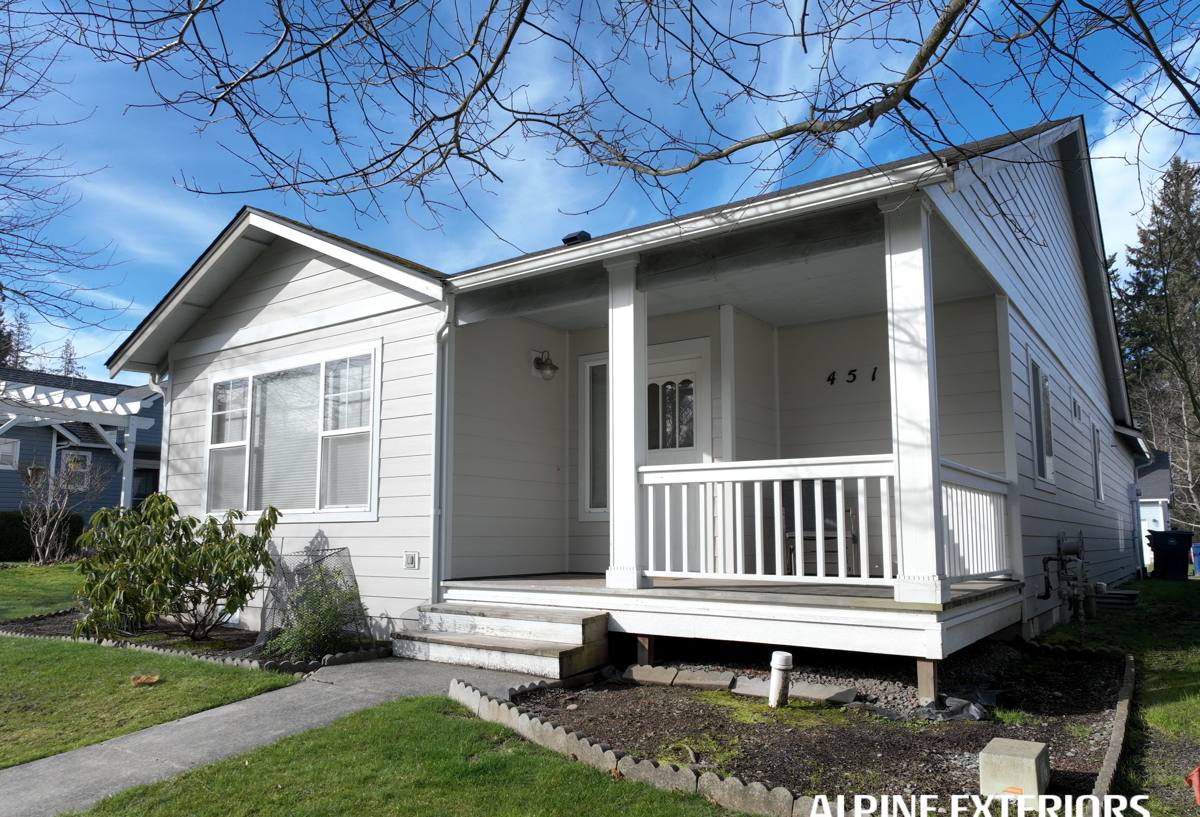
What Salt Air, Rain, and Moss Actually Do to a Roof Here
Salt Air and Metal Fatigue
Airborne salt is corrosive to exposed metal. Nails, fasteners, flashing, vent stacks, and gutter hardware near the shoreline corrode faster than the same materials would inland. When a roof was built or last replaced with standard-grade fasteners and thin flashing, the metal components often fail well before the shingles or panels themselves wear out. That's a common reason a Cherry Point roof develops leaks around flashing points even when the field of the roof still looks fine from the ground.
Driving Rain and Wind-Driven Water
Rain that falls straight down is easy for any roof to shed. Rain that's being pushed sideways by wind off the water is a different problem — it can work its way up under shingle tabs, around poorly lapped underlayment, and into any gap in flashing that would never leak in calmer conditions. This is why underlayment choice and lap direction matter more here than they would in a sheltered inland lot.
Moss, Algae, and Trapped Moisture
A long moss season means roof surfaces stay damp longer between dry spells, and moss and algae get a real foothold, especially on north-facing slopes and anywhere shade keeps a section of roof from drying out. Moss isn't just cosmetic — as it grows it lifts shingle edges, holds water against the roof deck, and accelerates granule loss on asphalt shingles. A roof replacement is the right time to correct the conditions that let moss take hold in the first place, not just replace the surface it was growing on.
Signs a Cherry Point Roof Needs Replacement, Not Another Patch
Coastal homes often get patched over and over because a leak seems small. The trouble is that by the time water is visibly getting in, the underlayment and decking underneath have usually been wet for a while. Here's what tells us a roof has moved past the point where repair is the honest recommendation:
- Granule loss heavy enough that you can see bare or shiny patches on asphalt shingles, especially on rain-facing slopes
- Shingles that are cupping, curling, or cracking, particularly where moss or algae has been sitting
- Rusted, pitted, or failing metal flashing around chimneys, vents, and roof-to-wall transitions
- Soft or spongy spots when walking the roof, which usually means the decking underneath has taken on moisture
- Recurring leaks in the same general area even after repairs
- Daylight visible through the roof deck from the attic, or damp insulation and staining on rafters
- A roof that's simply reaching the end of its material's expected service life, especially if it was never upgraded for coastal exposure
If a roof is showing two or more of these, repair usually just buys a season or two before the same failure points reopen. That's worth knowing before spending money on a patch that won't hold.
Roofing Materials That Actually Hold Up This Close to the Water
Material choice matters more on Cherry Point than it does in a lot of Whatcom County. Some products that perform fine inland show their weaknesses fast in salt air and constant damp. Here's how the common options compare for this specific setting:
| Material | Salt Air Performance | Moss Resistance | Trade-Offs |
|---|---|---|---|
| Architectural asphalt shingle | Good with corrosion-resistant fasteners and flashing | Moderate; benefits from zinc/copper strips | Best value; needs correct install detailing to earn its full lifespan here |
| Standing seam metal | Excellent when properly coated and fastened | High resistance, sheds moisture fast | Higher upfront cost; fastener and coating quality matters a lot near saltwater |
| Synthetic/composite shingle | Good; won't absorb moisture like organic materials | Good, doesn't feed moss growth | Mid-to-upper cost; product quality varies by manufacturer |
| Cedar shake | Poor to fair without diligent upkeep | Low; shake is a natural moss and algae host in damp climates | Attractive but a high-maintenance choice for this specific exposure; we're upfront about that trade-off rather than steering every client toward it |
We're not against any of these products outright — every one of them has a place. But we'll tell you plainly if a material you're considering is going to fight the local climate instead of working with it, and what that means for maintenance down the road.
What a Correct Roof Replacement Involves Here
A roof replacement done right for a Cherry Point home isn't just stripping old shingles and laying new ones. The parts that don't show are what determine whether the roof lasts fifteen years or thirty-five in this environment.
Full Tear-Off and Deck Inspection
We remove the existing roofing down to the deck so we can actually see what's underneath — soft or delaminated plywood, rusted nails, or old moisture damage that a roof-over would just seal in. Any compromised decking gets replaced before anything new goes down.
Upgraded Underlayment and Ice-and-Water Protection
Given how much wind-driven rain this area sees, we don't treat underlayment as an afterthought. Self-adhering ice-and-water membrane goes at eaves, valleys, and around every penetration — the spots wind-driven rain is most likely to find a way in.
Corrosion-Resistant Flashing and Fasteners
Chimney flashing, step flashing, vent boots, and fasteners are specified for coastal exposure, not just whatever's standard inland. This is one of the most overlooked details in roofing near saltwater, and it's usually where the first leaks show up when it's skipped.
Ventilation That Actually Dries the Attic Out
Balanced intake and exhaust ventilation keeps the attic from staying damp between rain events, which matters directly for moss prevention and for the life of the decking itself. A roof can be installed perfectly and still underperform if the attic underneath it can't breathe.
Moss-Resistant Details Where They Make Sense
On shaded or north-facing slopes, we'll talk through zinc or copper strips and other moss-deterrent details that reduce how often the roof needs cleaning, rather than leaving that as a surprise maintenance chore after the fact.
Our Process, Start to Finish
- On-site inspection. We walk the roof and attic, check decking condition, flashing, ventilation, and note anything specific to your home's exposure to wind and moisture.
- Written estimate. A clear breakdown of material options, scope of work, and pricing — no vague allowances or surprise add-ons later.
- Scheduling around the weather. Roof replacement needs a dry window to do right. We plan around Whatcom County's rain patterns rather than rushing a job into a storm.
- Tear-off and deck repair. Old roofing comes off, decking gets inspected and repaired as needed, and the site is protected throughout.
- Installation. Underlayment, flashing, ventilation, and the finish roofing material go in to spec, with attention to every detail covered above.
- Final walkthrough and cleanup. We review the finished roof with you, answer questions, and make sure the property is left clean — magnetic sweep for nails included.
Why a Crew That Already Works Cherry Point Matters
Roofing crews that mostly work inland don't always think about corrosion-resistant fasteners, moss-prone slopes, or wind-driven rain as default considerations — because they don't have to, most of the time. A crew that regularly works Semiahmoo and the surrounding Whatcom County coastline treats those details as standard practice, not an upsell. That local familiarity also means we're realistic about scheduling around this area's weather windows and know what a roof in this specific setting tends to need five and ten years down the line, not just on install day.
It also means straightforward answers. If a product or detail isn't a good fit for a home this close to the water, we'll say so and explain why — whether that's a maintenance burden, a moisture concern, or simply a better option for the money.
Protecting Your Investment After Replacement
A new roof still needs some upkeep in this climate, especially through moss season. A few habits go a long way:
- Have gutters and downspouts cleared before the fall rains start, so water isn't backing up under the roof edge
- Keep overhanging branches trimmed back to cut down on shade and debris that feed moss growth
- Do a visual check after major windstorms for lifted shingles or displaced flashing
- Address any small leak or staining promptly rather than waiting — coastal moisture problems compound quickly
- Schedule a periodic roof check-up, particularly if the roof includes moss-prone north-facing slopes
If you're weighing a repair against a full replacement, or just want an honest read on where your roof stands, we're happy to take a look. Reach out for a free, no-pressure estimate using the form below — we'll give you a straight answer about what your Cherry Point home actually needs.