 Semiahmoo Exterior
 Building a Deck That Actually Holds Up in Cherry Point
Cherry Point sits close enough to the water that every deck built here is fighting a low-grade battle against salt-laden air, wind-driven rain, and a moss season that can stretch from October well into spring. A deck design that works fine inland — standard fasteners, a basic wood species, minimal drainage detailing — often shows problems within a few years out here: corroded hardware, soft spots where water pools, and green film creeping across boards that never fully dry out between storms.
None of that means a deck in Cherry Point has to be high-maintenance or short-lived. It means the build has to account for the actual conditions from the first footing to the last board, not just meet a generic spec sheet. That's the difference between a deck that needs real repair work in year five and one that's still solid and safe well past year fifteen.
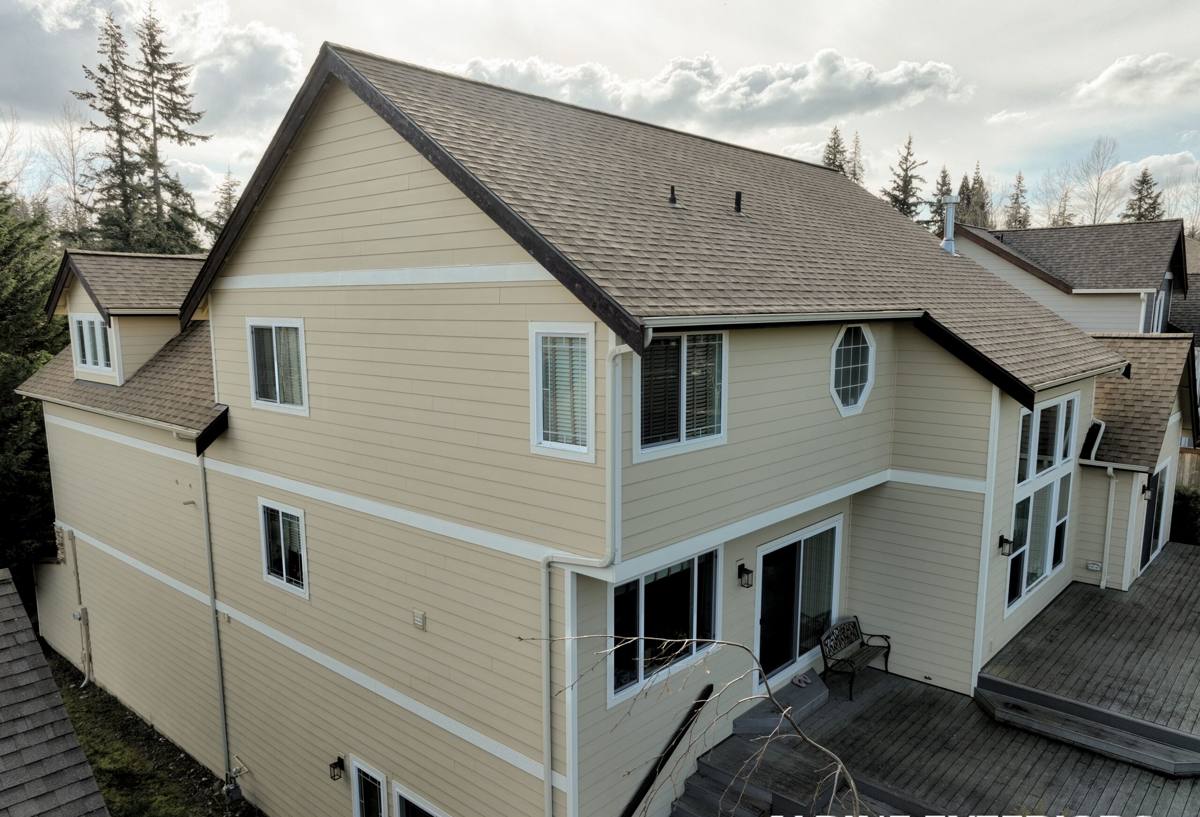
What Salt Air, Rain, and Moss Actually Do to a Deck
It helps to understand the specific failure modes we're designing around, rather than treating "coastal climate" as a vague concern.
Salt Air and Corrosion
Airborne salt accelerates corrosion on any exposed metal — screws, joist hangers, bolts, post bases. Standard hot-dip galvanized hardware can start rusting at the surface within a couple of years this close to Semiahmoo Bay. Once a fastener corrodes, it loses holding strength long before it looks obviously bad, which is why a lot of coastal deck failures come as a surprise.
Driving Rain and Moisture Intrusion
Whatcom County storms often come in sideways, which pushes water into joints, ledger connections, and end grain that a straight-down rain would never reach. Any gap in flashing or a poorly sealed ledger board becomes a slow, hidden leak path into the house rim joist — one of the most expensive repairs a deck problem can cause.
Moss, Algae, and Prolonged Dampness
With a moss season that runs a large part of the year here, any deck surface that stays damp and shaded — under trees, on the north side of a house, in low-airflow corners — will grow moss and algae faster than homeowners expect. Beyond looking bad, moss holds moisture against the wood surface, which speeds up rot and makes boards dangerously slick.
Decking Material: What Actually Makes Sense Here
There's no single "best" decking material — there's a best fit for how a homeowner uses the deck, their maintenance appetite, and their budget. In a Cherry Point environment, we weigh moisture behavior and fastener corrosion resistance more heavily than we would in a drier inland location.
| Material | How It Handles This Climate | Maintenance Reality |
|---|---|---|
| Pressure-treated wood | Affordable, but end grain and fastener holes need real attention to resist the constant damp/dry cycling | Annual cleaning and periodic sealing to keep moss and graying in check |
| Cedar | Naturally rot-resistant and handles moisture well, but softer surface can hold moss if not kept clean and ventilated underneath | Periodic oiling or staining; cleaning to prevent moss buildup |
| Composite decking | Doesn't absorb water the way wood does, so it resists rot and holds up well to driving rain | Still needs regular cleaning — composite can grow surface algae/moss if left damp and shaded |
| PVC/capped composite | Best moisture resistance of the common options; performs well right along the water | Lowest maintenance burden, but higher upfront cost |
We'll walk through the honest trade-offs for your specific site — sun exposure, tree cover, how much time you want to spend maintaining it — rather than steering everyone toward the same product.
Framing and Fasteners: Where Coastal Decks Actually Fail
The visible decking gets all the attention, but the structure underneath is what determines whether a deck is safe and long-lasting. In a salt-air environment, this is where corners cut early cause problems years later.
- Stainless steel or heavy-duty coated fasteners at every connection exposed to weather, not just the standard galvanized spec
- Proper ledger flashing where the deck ties into the house, so driving rain can't work its way behind the board and into the rim joist
- Joist tape or a moisture barrier on top of framing members to stop water from sitting in fastener holes
- Post bases and hardware rated for ground contact and moisture exposure, set to keep wood posts off standing water
- Adequate airflow underneath the deck so damp ground conditions don't keep the framing perpetually wet
None of this is exotic — it's standard best practice that simply matters more here than it would forty miles inland. Skipping it doesn't show up as a problem on day one. It shows up as soft framing, rust streaks, or a failed ledger connection several years down the road.
Drainage and Layout Decisions That Prevent Moss
Since moss needs sustained dampness and low light to take hold, a lot of moss prevention actually happens in the design phase, before a single board is installed.
Sun and Airflow Planning
Where the site allows it, we plan gaps between boards, railing spacing, and skirting to keep air moving underneath and around the deck. A deck that dries out quickly after a storm simply won't grow moss the way a shaded, still-air deck will.
Grading and Drainage Around the Structure
Standing water at the base of posts or footings is a moss and rot accelerant. Correct grading and drainage away from the structure keeps the ground underneath from staying saturated through Whatcom County's wetter months.
Surface Texture Choices
Some decking profiles and finishes shed water and resist algae growth better than others. We'll flag which options make sense if your deck sits in a shadier or tree-covered spot versus full sun.
Our Process for a Cherry Point Deck Build
- On-site assessment — we look at sun exposure, tree cover, drainage patterns, and how the deck ties into the house before recommending a design or material.
- Design and material selection — honest conversation about wood versus composite versus PVC based on your budget, maintenance preference, and the site's exposure.
- Permitting — Whatcom County and local jurisdiction permitting handled as part of the job, not left for the homeowner to sort out.
- Structural build — footings, framing, flashing, and fastener choices specified for coastal conditions, not a generic inland spec.
- Decking and railing installation — with attention to gaps, drainage, and airflow that reduce future moss and moisture problems.
- Final walkthrough — we go over basic maintenance specific to your material choice so you know what to expect season to season.
Realistic Maintenance for This Climate
Every deck needs some maintenance — the goal is matching the routine to the material and being upfront about it before you buy.
- Rinse or sweep debris off the surface regularly, especially under trees where organic buildup feeds moss
- Clean with an appropriate deck cleaner once or twice a year to stay ahead of algae and moss rather than scrubbing established growth
- Check fastener heads and hardware periodically for early rust, especially on older or budget hardware
- Reseal or restain wood decking on the schedule appropriate to the product — skipping this is the single biggest cause of premature wood decking failure here
- Keep gutters and downspouts near the deck clear so runoff isn't dumping extra water onto or under the structure
Why Local Build Experience in Cherry Point Matters
A deck builder who mainly works inland jobs isn't necessarily going to over-spec fasteners, add ledger flashing details, or plan for moss-prone shade pockets unless they've seen those problems show up in this specific environment. Working regularly in and around Semiahmoo and the rest of Whatcom County's coastal areas means we've already seen how salt air, driving rain, and long moss seasons age a deck — and we build to head that off from the start rather than treating it as an afterthought.
Questions Worth Asking Any Deck Contractor
- What fastener and hardware grade are you specifying, and is it rated for coastal/salt-air exposure?
- How is the ledger board flashed and sealed where it meets the house?
- What drainage or grading work happens under and around the deck?
- Are you licensed and insured, and can you provide proof of both?
- What does routine maintenance look like for the specific material we choose, in this specific climate?
- Is the permitting for this jurisdiction included, or is that on the homeowner?
If a contractor can't answer these plainly, that's worth noting before you sign anything.
If you're planning a new deck or replacing one that hasn't held up to Cherry Point's weather, we're happy to walk the site with you and talk through honest options — no pressure, no upsell script. Fill out the form below for a free estimate.