 Semiahmoo Exterior
 Why Cherry Point Homes Wear Out Siding Faster
Cherry Point sits close enough to the water that salt-laden air is a daily fact of life, not an occasional weather event. Combine that with Whatcom County's long, wet winters and the shade cover common on many lots here, and you get a specific set of stresses on exterior walls: constant low-grade salt exposure, driving rain that gets pushed sideways by wind off the Strait, and a moss and algae season that can run eight or nine months out of the year. Siding that isn't built for this combination fails in predictable ways — swelling at seams, paint that chalks and peels early, and moisture finding its way behind the cladding long before a homeowner sees an obvious problem on the surface.
Replacing siding out here isn't just a cosmetic decision. It's an opportunity to correct whatever let moisture and salt get a foothold in the first place, and to install a system that's actually engineered for this kind of exposure rather than one that merely tolerates it.
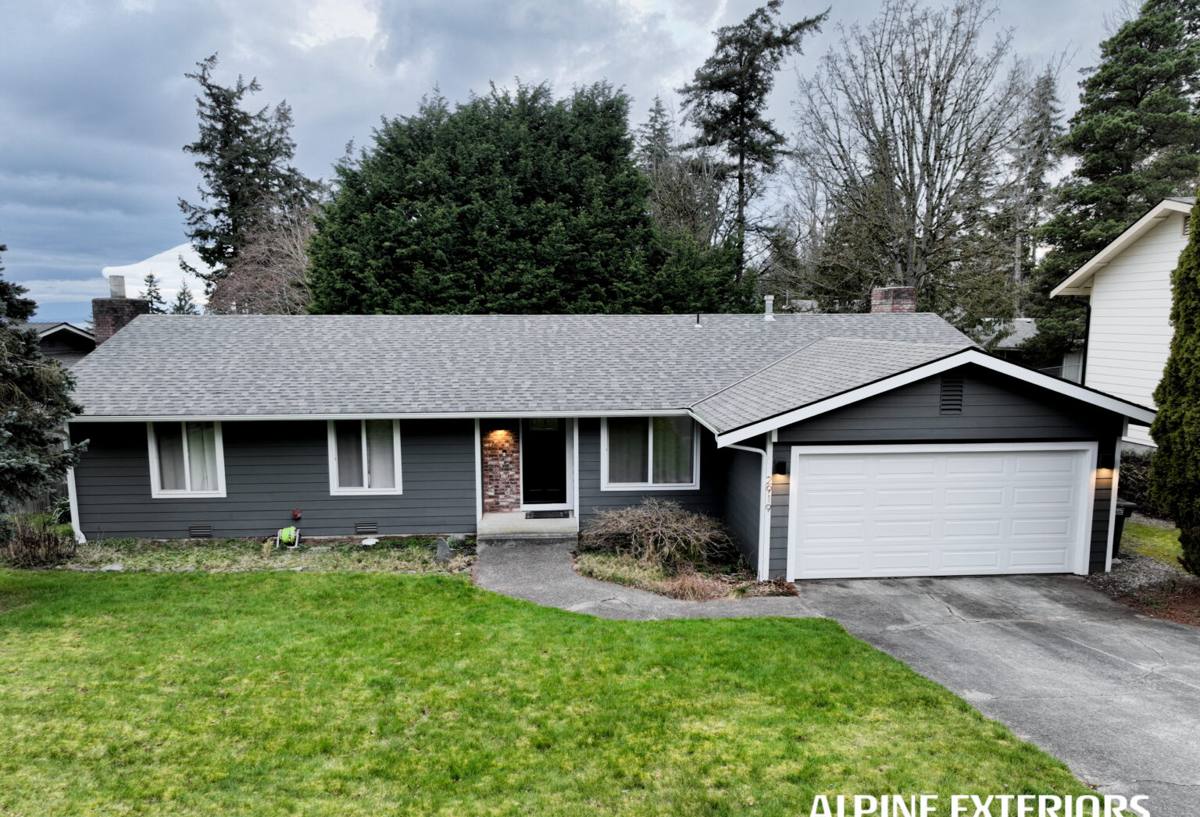
Signs Cherry Point Siding Needs Replacing, Not Patching
Not every issue means a full tear-off. But in a salt-air, high-moisture environment, some signs point to problems that a patch or repaint won't solve:
- Soft or spongy spots when you press on the siding, especially near the bottom courses and around window trim
- Paint or finish failure that keeps coming back within a year or two of repainting, even on the shaded or north-facing walls
- Persistent moss or algae staining that returns within weeks of cleaning
- Visible gaps, warping, or cupping at panel seams and butt joints
- A musty smell in interior rooms along exterior walls, which often means moisture has already reached the sheathing
- Corrosion streaking near fasteners or trim, a common symptom of salt air working on lower-grade materials over time
If you're seeing two or more of these at once, that's usually a sign the siding system itself — not just the paint job — has reached the end of its useful life.
Why Salt Air Speeds Up Failure
Airborne salt is corrosive and hygroscopic — it pulls moisture out of the air and holds it against whatever surface it lands on. On siding, that means finishes degrade faster, fasteners are more prone to corrosion, and any material with a wood component is under near-constant low-level moisture pressure. It's a slow process, which is exactly why it often goes unnoticed until the damage is well established.
What Correct Siding Replacement Involves Here
A proper replacement in a coastal, moss-prone area like Cherry Point is as much about what's behind the siding as the siding itself. Skipping any of these steps is how homeowners end up repeating the same failure in ten years instead of solving it.
1. Full Removal and Inspection
Old siding comes off completely so the sheathing and framing underneath can be inspected. This is where hidden rot, mold, or insect damage gets found and addressed — problems that are invisible from the outside but that new siding installed directly over them will only trap.
2. Weather-Resistive Barrier and Flashing
A correctly installed water-resistive barrier, with properly lapped and sealed flashing at every window, door, and penetration, is what actually keeps driving rain out. In an area that gets wind-pushed rain off the water, flashing details at horizontal trim and butt joints matter more than they would in a drier, more sheltered location.
3. Rainscreen or Proper Ventilation Gap
Where conditions call for it, a ventilated gap between the barrier and the new siding lets any moisture that does get through dry out instead of sitting against the wall assembly — important in a climate where things simply don't dry quickly for much of the year.
4. Fastening and Finish Selection
Corrosion-resistant fasteners and a factory finish built to hold color and integrity in salt air and constant damp are non-negotiable in this location. This is a big part of why we install only James Hardie fiber cement with its factory ColorPlus finish — it's engineered for exactly this kind of exposure, rather than relying on a field-applied paint job to hold up on its own.
Why We Install Only James Hardie Fiber Cement
We don't install vinyl, LP SmartSide, primed spruce, cedar, or other fiber cement brands. That's a deliberate standard, not a limitation of what we're capable of installing. In an environment like Cherry Point's — salt air, sustained moisture, heavy moss growth — the material differences show up faster than they would somewhere drier and more sheltered.
| Factor | James Hardie Fiber Cement | Common Alternatives |
|---|---|---|
| Moisture behavior | Non-combustible fiber cement core, engineered to resist moisture-driven swelling | Wood-based products can absorb moisture and swell at edges/seams over time |
| Finish durability in salt air | Factory-applied ColorPlus finish backed by its own warranty | Field-applied paint typically needs more frequent recoating in coastal exposure |
| Moss/algae resistance | Dense, stable surface holds up to regular cleaning without degrading | Some materials soften or roughen with repeated cleaning, accelerating wear |
| Fire classification | Non-combustible material | Varies; some alternatives are combustible |
| Long-term warranty | Strong transferable manufacturer warranty on both substrate and finish | Warranty terms and coverage vary widely by product and manufacturer |
This isn't a claim that other products can't be installed correctly — it's that we've standardized on the one system whose engineering and warranty structure line up with what a house near the water actually needs, and we'd rather do one product exceptionally well than several products adequately.
Hardie's HZ Product Lines
James Hardie makes climate-specific "HZ" formulations designed for different moisture and freeze conditions across the country. For the Pacific Northwest's wet, temperate exposure, that means a formulation engineered around sustained moisture rather than freeze-thaw cycling — which is a better match for what Whatcom County and the Semiahmoo area actually deal with year-round.
Our Process for a Cherry Point Siding Replacement
- On-site assessment — we walk the exterior, check for moisture intrusion at trim, corners, and penetrations, and look at how the home is oriented relative to prevailing wind and rain
- Written scope and estimate — what's being removed, what the wall assembly will include, product and color selection, and a clear cost breakdown
- Tear-off and sheathing inspection — old material removed, substrate checked and repaired as needed before anything new goes up
- Barrier, flashing, and ventilation detailing — the unglamorous part that determines whether the job lasts
- Hardie installation to manufacturer spec — correct fastener placement, joint treatment, and clearances, which directly affects whether the warranty is honored later
- Final walkthrough — we go over the finished work with the homeowner before calling the job complete
Why Local Experience in This Area Matters
A crew that regularly works Cherry Point and the broader Semiahmoo area already understands how far the salt exposure extends inland on a given lot, which sides of a house take the worst of the moss growth, and how local wind patterns push rain into trim and seams. That's the kind of judgment that comes from repeated exposure to this specific stretch of Whatcom County coastline — not something you get from a general install checklist. It shows up in small decisions: where to add extra flashing attention, which details need tightening up versus which are fine as designed, and how aggressively to plan for ventilation given a lot's tree cover and sun exposure.
What to Expect Cost-Wise
Siding replacement costs vary with the size of the home, the condition of the sheathing once it's exposed, trim and detail complexity, and how much repair work is needed before new siding goes up. Rather than quote a number that doesn't reflect your actual house, we provide a written estimate after seeing the property — factoring in tear-off, any substrate repair, materials, and installation labor. What we can say honestly: cutting corners on the barrier and flashing work to save money up front is the single most common reason siding jobs fail early in this climate, and it's not a place we're willing to shortcut.
Ready for a Straightforward Look at Your Siding?
If your Cherry Point home is showing early signs of wear — paint that won't hold, persistent moss staining, or soft spots near the base of the walls — it's worth getting an honest, no-pressure assessment before the damage goes further. Fill out the form below and we'll set up a time to take a look and walk you through what we find, with a clear estimate and no obligation.