 Semiahmoo Exterior
 Building Decks for Cherry Point's Coastal Conditions
Cherry Point sits close enough to the water in northern Whatcom County that salt spray, wind-driven rain, and a long damp season are just part of owning property here. A deck built without that in mind shows it fast — swollen seams on cheap boards, rusted-out fasteners, slick moss patches by December. Composite decking, installed the right way for this specific environment, holds up to that pressure far better than untreated or even pressure-treated wood. But "composite" isn't one product, and "installed correctly" isn't automatic. This page covers what a composite deck actually needs to hold up and look decent year after year near Semiahmoo, and how we approach that work as a crew that's out in this area regularly, not just passing through.
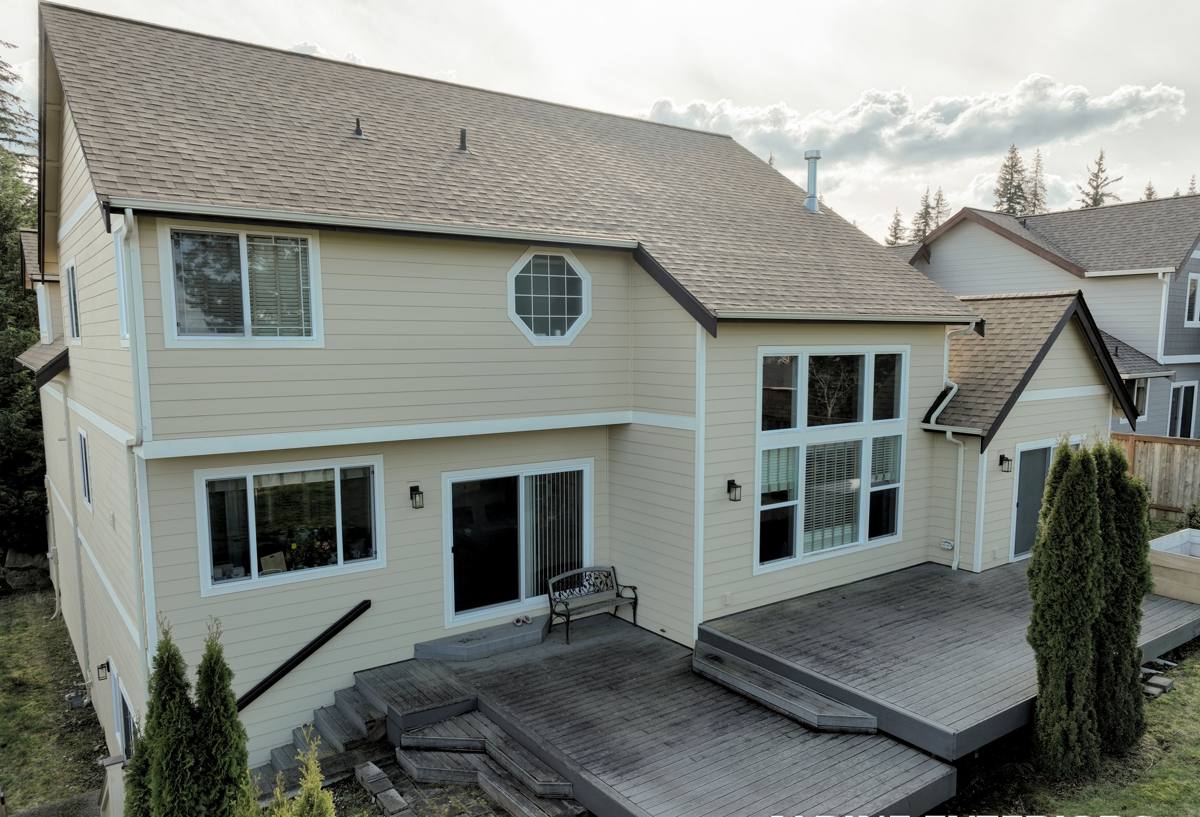
What Salt Air, Rain, and Moss Actually Do to a Deck
Three things wear down decks in this part of Whatcom County faster than they would forty miles inland, and each one attacks a different part of the structure.
Salt Air and Metal Hardware
Airborne salt near the shoreline speeds up corrosion on anything metal — screws, joist hangers, post bases, railing brackets. Standard zinc-coated fasteners that would last for years in a drier, inland yard can start rusting and bleeding orange stains into the deck surface within a couple of seasons out here. Once hardware starts corroding, it's not just cosmetic — it loses holding strength.
Driving Rain and Wind-Pushed Water
Wind coming off the water pushes rain sideways more often than it falls straight down, which drives moisture into places a calmer climate wouldn't reach: under rail caps, into fastener heads, along cut board ends, and behind ledger boards where a deck ties into the house. Any gap in flashing or any exposed end cut becomes a spot for water to sit and work its way into whatever's underneath.
Moss and Algae Growth
Whatcom County's wet season runs long, and shaded or north-facing decks in Cherry Point can stay damp enough, for long enough, that moss and algae take hold on the surface. That's not just an appearance issue — moss on stair treads and low spots is a genuine slip hazard, and it holds moisture against the board surface longer than the surrounding area.
Why Composite Decking Makes Sense for This Climate
Composite boards — a blend of wood fiber and plastic, most with a protective cap layer — don't absorb water the way solid wood does. They don't swell, cup, or splinter from the constant wetting and drying cycle that's normal here. That matters more in a spot like Cherry Point than in a drier climate, because decks along this stretch of coast rarely get a long stretch of dry weather to fully dry out between rain systems.
Capped composite also resists the surface staining and mildew growth that wood picks up when it sits damp for weeks at a stretch, and it doesn't need the periodic sanding, staining, or sealing that keeps a wood deck's moisture barrier intact. That said, composite is low-maintenance, not no-maintenance — we'll get into what upkeep still looks like below.
Composite vs. the Alternatives: An Honest Comparison
There's no single "best" decking material for every situation — each option trades off differently on cost, upkeep, and how it handles a marine climate. Here's how the common choices compare for a Cherry Point property:
| Material | Salt Air / Moisture Resistance | Ongoing Maintenance | Typical Lifespan |
|---|---|---|---|
| Pressure-Treated Wood | Fair — treatment resists rot but doesn't stop swelling or fastener corrosion | Regular sealing/staining, especially exposed to wind-driven rain | Shorter, depends heavily on upkeep |
| Cedar | Naturally rot-resistant but still absorbs moisture and moves seasonally | Oiling or staining to hold color and resist graying/checking | Moderate, weather-dependent |
| Capped Composite | Strong — cap layer resists moisture absorption and salt staining | Periodic cleaning; no sealing or staining required | Long, backed by manufacturer warranty |
| PVC Decking | Very strong — fully synthetic, effectively immune to moisture absorption | Lowest — surface cleaning only | Long, typically the longest manufacturer warranty terms |
PVC costs more up front and some homeowners find the look less like natural wood than capped composite. Cedar and pressure-treated wood cost less initially but ask for more of your time and money over the life of the deck, especially in a climate that doesn't give wood much chance to dry out. We'll walk through which fits your project and budget rather than push one option by default.
What a Correct Composite Deck Build Involves
The Substructure Comes First
The boards on top only perform as well as what's underneath them. Composite manufacturers generally call for tighter joist spacing than a standard wood deck, and diagonal or picture-frame board patterns often need it tighter still. Skipping that spec is one of the most common shortcuts we see on decks built by crews not used to working with composite — the boards look fine at first but start to flex, bounce, or gap prematurely.
Ledger flashing where a deck attaches to the house deserves particular attention here — it's the single most common point of hidden water damage on any deck in a wind-driven-rain climate, composite or not. Joist tape over exposed framing lumber is cheap insurance against trapped moisture that a composite deck board itself will never show on the surface until the substructure underneath is already compromised.
Fasteners and Hardware Suited to Salt Exposure
Given how fast standard hardware corrodes this close to the water, we spec stainless steel or coated fasteners rated for coastal exposure, along with hidden fastener clip systems compatible with the board profile being installed. Cheaper hardware might save a little on the front end, but replacing rusted screws or repairing a bracket failure later costs far more than doing it right the first time.
Ventilation and Drainage Underneath
Low decks need airflow underneath so framing can dry out between rain events instead of staying perpetually damp. That means adequate skirting gaps, correct grading away from the foundation, and end-gapping on boards so water has somewhere to go instead of pooling against a house wall or post base.
Board Profile and Drainage Detailing
Grooved-edge composite boards paired with hidden fastener clips leave the surface free of exposed screw heads, which helps in two ways here: fewer metal points exposed to salt air, and a cleaner path for water to run off instead of pooling around fastener heads. Solid-edge boards are typically used for picture-frame borders and stair nosing, where a color-matched, finished edge matters more than the drainage benefit of a grooved profile. Getting this mix right — grooved in the field, solid where it's exposed or trimmed — is part of a correctly detailed composite deck, not just a style choice.
Keeping a Composite Deck Looking Good Near Semiahmoo
Composite decking cuts down on maintenance, but a few habits go a long way toward keeping a deck looking and performing well through repeated marine winters:
- Rinse salt film off the surface periodically, especially after storms with strong onshore wind
- Sweep debris out of board gaps so water and organic matter don't sit and feed moss growth
- Keep gutters and downspouts clear so roof runoff isn't dumping onto or beside the deck
- Treat moss and algae early with a cleaner made for composite surfaces — avoid pressure washing at close range, which can damage the cap layer
- Trim back overhanging vegetation to let more sun and airflow reach shaded sections
- Do a yearly walk-under inspection of framing, flashing, and fastener condition, not just the visible deck surface
Our Process for a Cherry Point Composite Deck Project
- On-site assessment of the deck's exposure — wind direction, sun/shade pattern, proximity to salt spray, and drainage around the site
- Structural evaluation of the existing deck and ledger connection if this is a replacement, not new construction
- Framing repair or upgrade to meet composite spacing requirements and current code, with flashing and joist tape addressed before any boards go down
- Hardware selection matched to the site's exposure level rather than a one-size-fits-all fastener choice
- Board installation following manufacturer spacing and fastening specs, including proper gapping for drainage and seasonal movement
- Railing, stair, and trim work finished to match, followed by a walk-through so you know what maintenance, if any, is left on your end
Why a Local Semiahmoo Crew Matters for This Kind of Work
A deck built to a generic spec sheet doesn't necessarily hold up on a shoreline-exposed lot in Cherry Point the way it would somewhere more sheltered. Working this area regularly means knowing which hardware actually performs long-term against salt air rather than just what's rated well on paper, which lots see the worst wind-driven rain, and where moss and drainage problems tend to show up first on a deck. It also means we're still local when it's time for a warranty question or a five-year check-in — not a crew that built your deck and moved on to the next county.
Timing matters too. We generally plan Cherry Point installs around the drier stretches of the year where possible, since framing work goes faster and more reliably when the substructure isn't fighting standing water or saturated ground, even though composite boards themselves can be installed in wet weather if needed.
What Affects the Cost of a Composite Deck Project
Every project is different, so instead of a flat price, it helps to know what actually moves the number:
- Size and shape — square footage, plus how many angles, stairs, or level changes are involved
- Framing condition — whether the existing substructure can be reused or needs partial or full replacement
- Board tier — capped composite versus PVC, and the manufacturer line within each
- Railing and finish detail — cable rail, glass panels, picture-framing, lighting, and similar upgrades add labor and material
- Site access — how easily materials and equipment can reach the build location
- Permitting — required for most new decks and many replacements in Whatcom County, and factored into project timing
We'll go through these factors with you on-site and give you real numbers for your specific project rather than a generic estimate that doesn't hold up once work starts.
If you're weighing a new composite deck or a replacement for an aging one near Cherry Point or Semiahmoo, we're glad to come take a look, walk the site with you, and put together a straightforward, no-pressure estimate — just fill out the form below to get started.