 Semiahmoo Exterior
 Why Cherry Point Homes Wear Out Windows Faster
Cherry Point sits right on the Whatcom County shoreline near Semiahmoo, and that location cuts both ways. The water views are part of why people live here, but the same exposure that makes the setting desirable also makes it hard on a house. Salt-laden air drifts in off the water and settles on everything, including window frames, hardware, and glazing seals. Add driving rain that comes in sideways during winter storms, plus a moss season that stretches for months in our wet, shaded microclimates, and windows here simply age faster than the same product would fifty miles inland.
None of this means Cherry Point homes need exotic solutions. It means the ordinary rules of window replacement — correct materials, correct flashing, correct sealing — matter more here and get punished faster when skipped. A window installed with a shortcut in a dry inland town might last a decade before the problem shows. On a Cherry Point property facing the water, the same shortcut can show up in leaks, fogged glass, or a swollen sash within two or three winters.
What Salt Air Actually Does to a Window
Salt in the air isn't just a coastal cliché — it's a corrosive agent. It settles into hardware, hinges, and metal fasteners, and over time it accelerates rust and pitting on anything that isn't rated for marine or near-marine exposure. It also degrades certain finishes and coatings faster than a manufacturer's standard warranty testing assumes, because most window warranties are written around general climate exposure, not salt-air corrosion specifically. That's a detail worth reading closely before you buy.
What Driving Rain and Moss Add to the Problem
Whatcom County's wet season isn't just steady rain — wind-driven rain hits window edges and trim at an angle, which is exactly the condition that exposes a weak seal or poor flashing job. Meanwhile, the same damp, shaded conditions that make our region green also grow moss and algae on north-facing trim, sills, and anything with standing moisture. Moss holds water against wood and caulking far longer than open air would, which quietly shortens the life of the seal around a window even if the glass unit itself is fine.
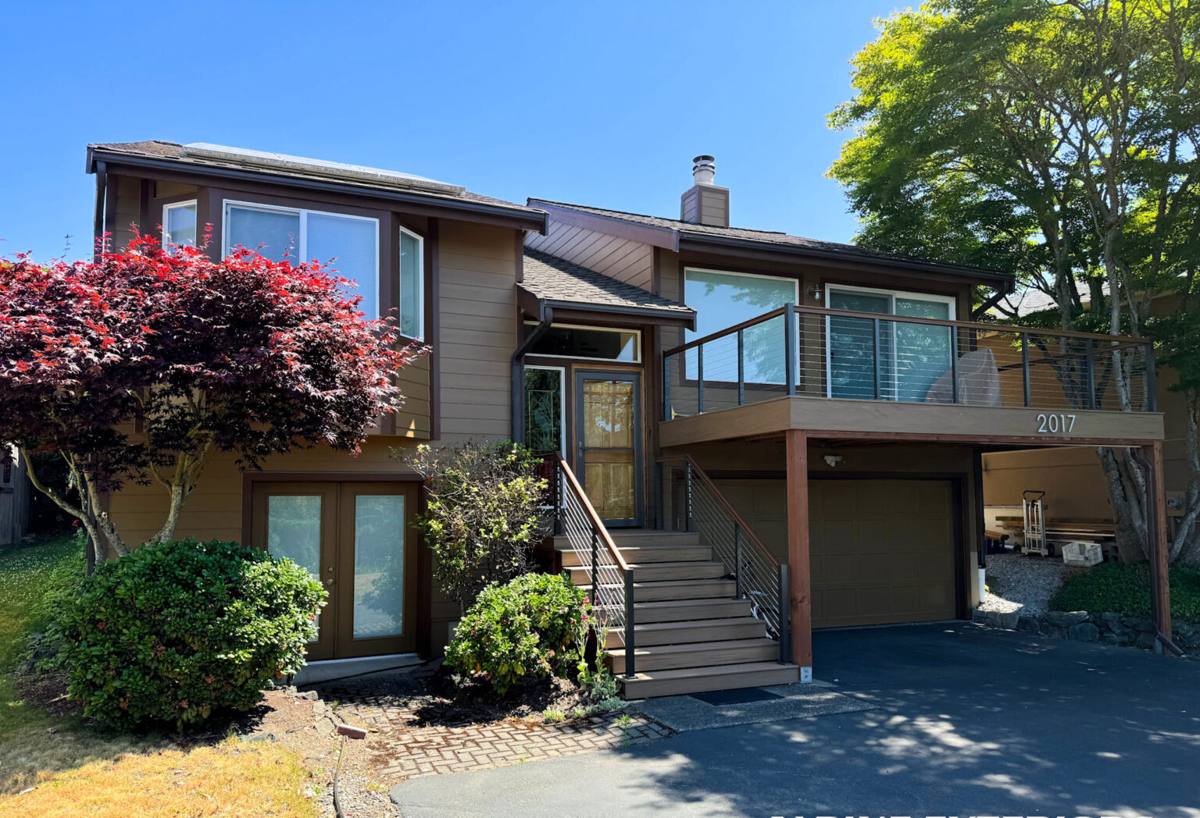
Signs a Cherry Point Home Needs Window Replacement
Windows rarely fail all at once. They give warning signs first, and in a salt-air, high-rain environment those signs tend to show up earlier than a homeowner expects.
- Fogging or a permanent haze between panes — the seal on the insulated glass unit has failed and moisture is trapped inside
- Visible rust or pitting on hinges, cranks, or locking hardware
- Soft or spongy wood at the sill or lower frame corners, a sign of long-term moisture intrusion
- Drafts you can feel with a hand near the frame on a windy day
- Difficulty opening, closing, or locking a window that used to operate smoothly
- Moss or dark staining building up on the sill or lower trim that keeps returning after cleaning
- Noticeably higher heating bills in winter with no other explanation
- Condensation forming on the inside of the glass regularly, even when the window is undamaged
Any one of these on its own might just need a repair or a re-caulk. Several at once, especially on a wall that takes direct weather off the water, usually means the windows have reached the point where replacement is the more honest answer than another round of patching.
What a Correct Window Replacement Actually Involves
Swapping in a new window sounds simple, and the window unit itself is often the easy part. What determines whether the job holds up through a Whatcom County winter is everything around the window — the parts a homeowner doesn't see once the trim goes back on.
Removal Without Hidden Damage
The old window and its surrounding trim have to come out carefully enough to expose the framing underneath without tearing the weather-resistant barrier more than necessary. This is also the point where hidden rot or water damage from years of moisture intrusion gets found — and it needs to be dealt with before anything new goes in, not covered over.
Flashing and Water Management
Flashing is the layer that directs water away from the window opening and down the wall instead of into it. In a home that takes direct wind-driven rain off the water, flashing done correctly — properly lapped, sealed at the corners, integrated with the house wrap — is the single biggest factor in whether that window stays dry for the next twenty years. This step gets skipped or rushed more than any other part of a window job, and it's the one that costs the most to fix later once it's hidden behind trim and siding.
Sealing and Insulation
The gap between the new window frame and the rough opening needs to be sealed and insulated correctly — not overpacked with expanding foam, which can bow a frame, and not left loose, which leaves a draft and a moisture path. Exterior caulking needs to be a product rated for the temperature swings and UV exposure our climate delivers, not just whatever tube is on hand.
Hardware and Frame Material Suited to Salt Exposure
For a property with real salt-air exposure, hardware and fasteners should be selected with that in mind — corrosion-resistant options exist and cost only a little more up front, but they matter far more here than they would on an inland job.
Choosing the Right Window for Cherry Point's Climate
There's no single "best" window material for every home — it depends on budget, how exposed the wall is, and how much upkeep you want to take on. Here's how the common options actually compare for a coastal Whatcom County property.
| Frame Material | Salt-Air Performance | Maintenance | Typical Trade-Off |
|---|---|---|---|
| Vinyl | Good — won't rust or rot | Low; occasional cleaning | Fewer color options; frame can flex on very large sizes |
| Fiberglass | Very good — stable and corrosion-resistant | Low | Higher upfront cost than vinyl |
| Aluminum | Fair — needs a marine-grade finish near the water | Moderate; watch for pitting over time | Thinner sightlines but conducts more cold |
| Wood (clad or unclad) | Weakest without cladding — vulnerable to moisture and moss | High; regular finish upkeep | Classic look but most exposure risk on this coastline |
| Wood-clad (vinyl or aluminum exterior) | Good on the exposed side; wood interior still needs normal care | Moderate | Best of both if budget allows |
For most Cherry Point homes taking direct exposure off the water, vinyl or fiberglass frames hold up with the least maintenance headache. Unclad wood isn't off the table, especially on more sheltered elevations, but it comes with a real ongoing maintenance commitment in a climate that grows moss on anything that stays damp.
Glass Matters as Much as Frame
Double-pane, low-E glass is the standard baseline for this region and handles our temperature swings and rain load well. Triple-pane adds insulation value and some sound dampening, which can be worth it on a wall facing prevailing wind and weather, but it's a real cost jump that isn't necessary on every elevation of every house.
Our Window Replacement Process
- On-site assessment — we look at each window individually, since sun, wind, and moisture exposure often varies a lot from one side of a Cherry Point home to another
- Honest recommendation — which windows genuinely need replacement now, which can wait, and which just need repair or resealing
- Material and glass selection based on your budget and each wall's actual exposure, not a one-size-fits-all package
- Careful removal, checking framing for hidden rot or moisture damage before anything new goes in
- Correct flashing and sealing, built for wind-driven rain, not just a dry-day install
- Final fit, operation check, and a walkthrough so you know how to maintain the new windows in this climate
What Window Replacement Costs to Expect
Pricing depends heavily on window size, count, frame material, glass package, and how much of the surrounding trim or siding needs to be opened up to do the job right. As a rough guide:
| Factor | Effect on Cost |
|---|---|
| Frame material (vinyl vs. fiberglass vs. clad wood) | Vinyl is typically the most budget-friendly; fiberglass and clad wood cost more upfront but often less to maintain |
| Glass package (double vs. triple pane) | Triple-pane adds meaningful cost per window; usually worth it only on the most exposed walls |
| Number of windows replaced at once | Doing multiple windows in one project usually lowers the per-window cost versus one at a time |
| Hidden repair needs | Rot or water damage found during removal adds cost, but skipping the repair costs far more later |
| Access and window size | Second-story, oversized, or hard-to-reach windows take more labor |
We'll always give you a real number for your specific home rather than a generic price range that doesn't account for your exposure, window sizes, or existing condition.
Why Hiring a Crew That Already Works Cherry Point Matters
Window replacement isn't a job where general experience automatically translates to local results. A crew that mostly works drier, more sheltered parts of Whatcom County can still do a technically fine install and have it underperform on a Cherry Point property, simply because they weren't planning for the wind-driven rain and salt exposure this particular coastline delivers. Crews who already work this area know to flash more conservatively on water-facing walls, know which hardware finishes actually hold up here, and recognize moss-driven moisture damage on sight instead of mistaking it for something else.
That local pattern recognition is the difference between a window that's still tight in ten years and one that needs attention again in three.
Keeping New Windows Performing in This Climate
A correctly installed window still benefits from a little seasonal attention in a coastal environment. A short annual routine goes a long way:
- Rinse salt residue off frames and glass a few times a year, especially after storms
- Clear moss and debris from sills and tracks before it holds moisture against the frame
- Check exterior caulking each fall for cracking or gaps before winter rain arrives
- Test that weep holes (the small drainage openings at the base of the frame) aren't blocked
- Operate locks and cranks periodically so hardware doesn't seize from disuse
If you're weighing whether your Cherry Point home's windows need replacing or just some attention, we're happy to take a look and give you a straight answer — no pressure, no upsell. Use the form below to request a free estimate.