 Semiahmoo Exterior
 Cherry Point Sits Right Where Salt Air Meets Heavy Rain
Cherry Point is a different kind of exposure than most siding is designed for. The stretch of coastline near Semiahmoo, along the Strait of Georgia in Whatcom County, combines three things that are hard on exterior building materials at the same time: salt-laden marine air, wind-driven rain coming straight off the water, and long stretches of gray, low-drying weather that let moss and algae get a foothold and stay there. Any one of those on its own is manageable. Together, over years, they expose the weak points in siding that was never built for this kind of climate.
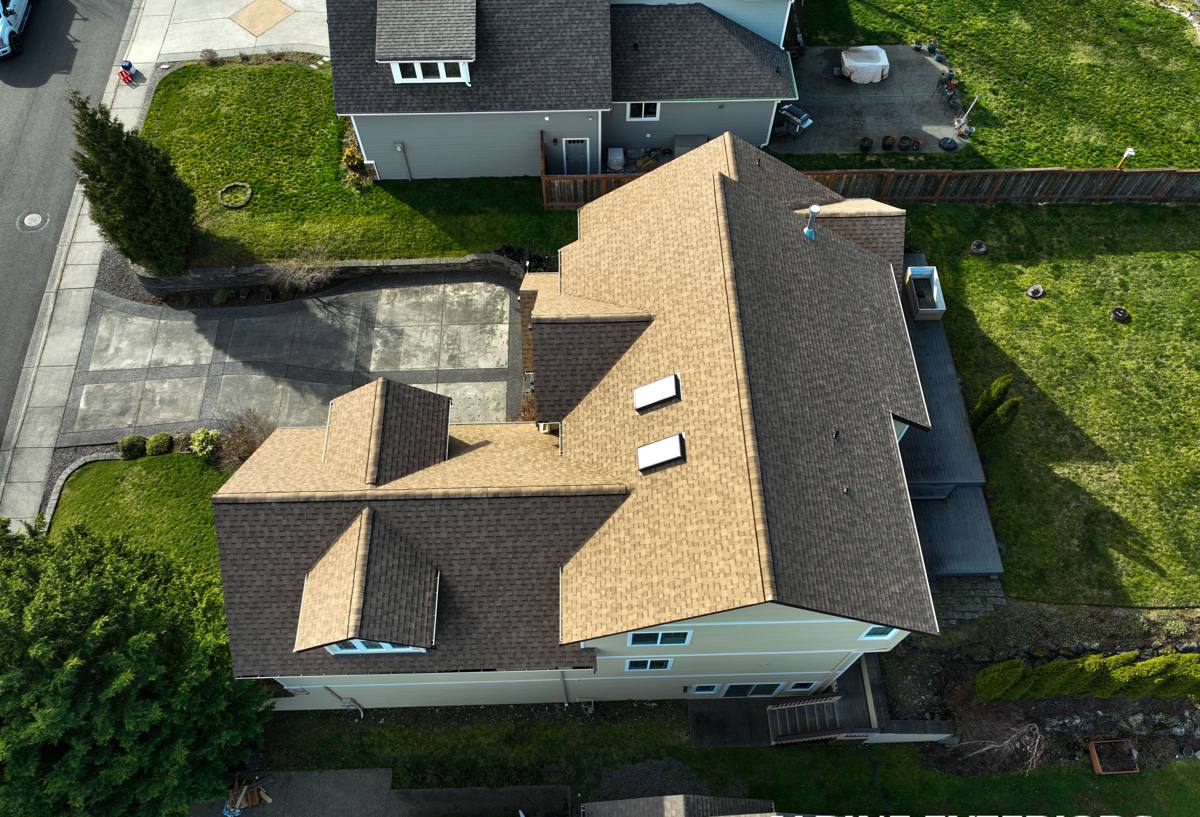
Homes here tend to sit on open bluffs facing the water, in wooded lots set back among fir and cedar, or somewhere in between. Both situations create their own siding problems — open exposure means direct salt spray and wind pressure, while shaded, tree-lined lots mean slower drying and more moss. A correct siding job for a Cherry Point home has to account for whichever situation it's actually in, not a generic Pacific Northwest average.
What the Marine Climate Actually Does to Siding
Salt Air and Metal Fasteners
Airborne salt is corrosive to unprotected metal. Over time it attacks exposed nail heads, poor-quality flashing, and cheap trim fasteners, leaving rust streaks and, eventually, failure points where water can get behind the cladding. This is one of the most overlooked issues on coastal Whatcom County homes — the siding panel itself can look fine while the fasteners and flashing holding it in place are quietly corroding underneath.
Driving Rain and Moisture Intrusion
Rain that falls straight down is far less damaging than rain that gets pushed sideways into a wall by wind. Cherry Point gets both, and the sideways kind is what actually causes rot, sheathing damage, and mold behind siding. It's not the siding material alone that stops this — it's the drainage system built behind it. Siding installed flat against the sheathing with no way for incidental moisture to drain and dry is a slow-motion problem in this climate, regardless of what material is on the outside.
Shade, Moss, and Slow-Drying Walls
Wooded and low-lying lots around Cherry Point don't get much direct sun on north- and west-facing walls for long stretches of the year. Combined with regular rain, that means those walls can stay damp for days at a time. Moss and green algae thrive in exactly that condition, and once established on porous or textured siding, they hold moisture against the surface even longer — a cycle that accelerates decay on materials that aren't built to shed it.
Why We Install Only James Hardie in This Area
We standardized on James Hardie fiber cement siding and don't install vinyl, LP SmartSide, cedar, primed spruce, or other fiber cement brands. That's not a marketing position — it's a decision based on what actually holds up to salt air, driving rain, and years of moss pressure without turning into a maintenance burden for the homeowner.
Fiber cement is dimensionally stable and doesn't expand, contract, warp, or rot the way wood-based products can when they take on repeated moisture cycling. James Hardie's HZ product lines are engineered specifically for different climate zones, and the HZ5 formulation used in the Pacific Northwest is built around resistance to moisture and the freeze-thaw and wet-dry cycling that's common here. It's also non-combustible, which matters on properties near dry brush or wooded lots during summer fire-danger stretches.
The factory-applied ColorPlus finish is the other half of the equation. It's baked on under controlled conditions rather than field-painted, so the color and the moisture-resistant coating are more consistent and better bonded than a job-site paint job can achieve — which matters when the finish is fighting salt spray and UV for years without a repaint. James Hardie backs it with a strong transferable warranty, but only when the product is installed to their specification, which is where a lot of siding jobs quietly fall short.
What a Correct Cherry Point Installation Involves
Drainage Plane and Rainscreen Gap
In a climate that pushes rain sideways into walls, the drainage plane behind the siding matters as much as the siding itself. A correct install includes a weather-resistant barrier and, on most Cherry Point homes, a rainscreen gap that lets any moisture that gets behind the panels drain and air-dry instead of sitting against the sheathing. Skipping this step is one of the most common ways otherwise-good siding jobs fail early in marine climates.
Flashing and Sealant Details
Every window, door, and penetration is a place water can get in if it's flashed wrong. We use corrosion-resistant flashing and follow James Hardie's specific sealant and joint-treatment guidance rather than generic caulk-everything shortcuts, since the wrong sealant in the wrong place can trap moisture instead of shedding it.
Fastening for Wind Off the Water
Open, waterfront-adjacent lots around Cherry Point see stronger sustained wind than sheltered inland areas. Fastener type, spacing, and placement all affect how well siding holds up under wind load, and we follow James Hardie's fastening schedule for the specific product line and exposure rather than a one-size-fits-all approach.
How Siding Materials Compare Under Cherry Point Conditions
| Material | Salt Air Resistance | Moss/Moisture Handling | Typical Maintenance |
|---|---|---|---|
| James Hardie fiber cement | Strong — non-combustible, stable, factory finish resists corrosion staining | Handles wet-dry cycling well when properly drained; doesn't rot | Occasional wash; repaint not required for years with ColorPlus |
| Vinyl siding | Can become brittle and discolor faster under salt/UV exposure | Won't rot, but seams and gaps behind panels can trap moisture | Low, but panels crack or warp and are hard to color-match when replaced |
| Cedar/wood siding | Attractive but vulnerable to salt-accelerated weathering | Prone to moss growth and rot in shaded, damp conditions without diligent upkeep | Regular refinishing, sealing, and moss treatment |
| LP SmartSide (engineered wood) | Wood-based core is moisture-sensitive if edges/seams aren't perfectly sealed | Edge swelling is a known risk in sustained wet climates | Requires careful caulk/paint maintenance to prevent moisture entry |
This isn't a claim that other products are unusable everywhere — it's why, specifically for a climate like Cherry Point's, we've chosen to put our name behind one system rather than install several and hope each one gets maintained perfectly.
Our Process, Start to Finish
Assessment and Prep
We start with a walk-around of the home, checking existing siding, flashing, and any signs of past moisture intrusion — since siding replacement is also the best opportunity to catch and fix hidden sheathing or framing issues before they're covered back up. Tear-off is done carefully to avoid damaging window and door surrounds that will be reused.
Installation
We install the weather-resistant barrier and rainscreen system, then the James Hardie panels or lap siding, following the manufacturer's fastening and clearance specifications for this climate zone — including proper ground clearance and gaps at trim, which matter for keeping moisture from wicking up from grade.
Final Walkthrough
Once the job is complete we walk the property with the homeowner, review the work, and go over what maintenance (if any) is expected going forward, along with warranty documentation.
Keeping Cherry Point Siding Healthy Between Visits
James Hardie siding is low-maintenance, but "low" isn't "none," especially in a moss-prone marine climate. A few habits go a long way:
- Rinse siding annually, especially on shaded, north-facing walls where moss and algae take hold first
- Trim back tree branches and shrubs that keep walls in constant shade and slow drying time
- Check caulking around windows, doors, and trim every year or two for cracking or gaps
- Keep gutters clear so overflow isn't running down the siding face during heavy rain
- Watch for rust staining near fasteners or trim, which can signal a flashing or fastener issue worth catching early
- Avoid pressure-washing directly into seams or under panels, which can force water where it doesn't belong
Why a Crew That Already Works Cherry Point Matters
Coastal Whatcom County properties don't all behave the same way. A wooded, shaded lot needs different drainage and moss-prevention attention than an open, wind-exposed bluff lot a half mile away, and a crew that only occasionally works this stretch of coast is more likely to default to generic, inland installation habits. Working this area regularly means we're used to accounting for salt exposure on fasteners and trim, sizing rainscreen and flashing details for driving rain rather than light inland showers, and recognizing which lots are going to need extra attention to shaded, slow-drying walls before moss becomes a recurring problem instead of a one-time cleaning.
It also means fewer surprises during the project itself — permitting expectations, typical site access on rural and wooded Whatcom County lots, and seasonal weather windows for a clean install are all things that come from doing this work here repeatedly, not from a one-off job.
If you're weighing siding options for a Cherry Point property or dealing with early signs of moss, staining, or moisture damage on existing siding, we're glad to take a look. Reach out for a free, no-pressure estimate — the form below gets you directly to our local crew.