 Semiahmoo Exterior
 Roof Repair on Cherry Point: Getting the Fix Right the First Time
Cherry Point sits along the Strait of Georgia shoreline in Whatcom County, not far from Blaine and Semiahmoo, and homes out here take on a version of coastal weather that's harder on a roof than what most inland properties in the county ever see. Open water exposure means salt-laden air, wind that carries rain sideways instead of straight down, and a mild, damp climate that keeps moss and moisture active on a roof surface for most of the year. A roof repair done without accounting for that combination tends to fail again within a season or two — the leak comes back, or a new one shows up a few feet away.
We do roof repair work specifically for homes in this stretch of the county, and we treat every repair call the same way: find the actual source of the problem before touching anything, then fix it in a way that holds up to the conditions this property actually deals with. That sounds obvious, but it's the step that gets skipped most often, and it's usually why a "repaired" roof leaks again.
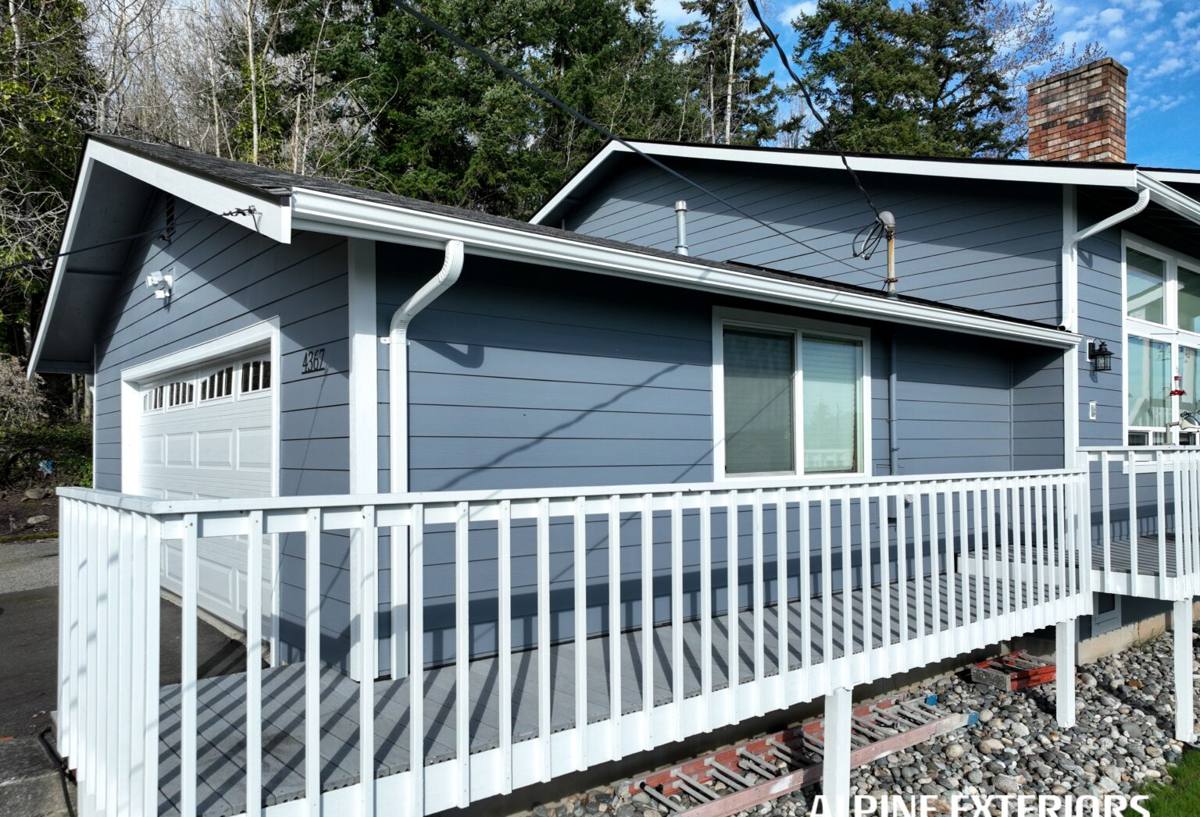
What Cherry Point's Climate Does to a Roof
Salt Air and Corrosion
Waterfront and near-waterfront properties along this part of the Whatcom County coastline get salt-laden air moving across the roof continuously, not just during storms. Salt accelerates corrosion in exposed fasteners, flashing metal, and any hardware that isn't rated for that kind of exposure. A nail or flashing piece that would last decades a few miles inland can start rusting and failing years sooner out here, and a rusted fastener or a corroded flashing seam is one of the most common quiet causes of a roof leak that seems to come from nowhere.
Wind-Driven Rain Off the Strait
With open water and little windbreak, rain along the Cherry Point shoreline often doesn't fall straight down — it gets pushed sideways and even upward under shingle edges, at ridge caps, and into any gap in flashing that a calmer inland roof would never be tested against. That's a heavier moisture load on joints, laps, and transitions than the region's overall rainfall numbers suggest. A repair that looks watertight on a dry, calm day can still leak under a wind-driven storm if the lap and flashing work weren't done with that specific stress in mind.
A Long Moss and Mildew Season
Mild temperatures and near-constant humidity give moss and mildew most of the year to establish themselves on a Whatcom County roof, and shaded, north-facing slopes are usually the first place it shows up. Moss isn't just cosmetic — as it grows, it holds moisture against the roof surface and works its way under shingle edges, which lifts them and creates an entry point for water. A roof repair on a mossy slope that doesn't address the moss itself is treating the symptom, not the cause.
Repair or Replace? An Honest Read Before Any Work Starts
Not every roof problem needs a full replacement, and not every leak can be permanently solved with a patch. The honest answer depends on the roof's age, how much of the roofing material is still sound, and whether the damage is isolated or spread across multiple areas.
When a Repair Is the Right Call
- The roofing material is generally in good condition and the roof still has meaningful years of life left
- The problem is isolated to one area — a section of flashing, a run of shingles, a single penetration
- The underlying deck and structure show no signs of rot or long-term water damage
- The homeowner plans to stay in the home and wants to extend the roof's useful life rather than replace it early
When Replacement Makes More Sense
If a roof is near the end of its expected lifespan, if leaks are showing up in multiple unrelated areas, or if a repair would involve tearing into a large enough section that the cost approaches what a full replacement would cost, we'll say so directly. We'd rather tell a homeowner that a repair is a short-term patch on a roof that needs replacing soon than sell a repair we know won't hold.
What a Correct Roof Repair Actually Involves
Diagnosing the Real Source of a Leak
Water that shows up on a ceiling or in an attic rarely originates directly above the stain — it often travels along rafters, sheathing, or underlayment before dripping down somewhere else entirely. A correct repair starts with tracing the water back to where it's actually entering the roof system, which usually means a physical inspection of the roof surface, the flashing, and often the attic side of the deck, not just a look from the ground or a photo.
Matching Materials and Technique
A repair should use materials that match the existing roof in type, weight, and profile wherever possible, and should be fastened and lapped using the same standards a full install would follow. A patch that uses the wrong fastener spacing, the wrong underlayment, or shingles that don't properly integrate with the surrounding material can create a new leak point even while it appears to fix the original one.
Flashing: Where Most Repairs Actually Happen
In our experience, the majority of roof leaks on homes in this area trace back to flashing — around chimneys, vents, skylights, valleys, and roof-to-wall transitions — rather than the shingles or roofing material itself. A proper flashing repair means removing and reinstalling the flashing correctly, with the right laps and sealant, not just running a bead of caulk over the visible gap. Caulk-only fixes are common shortcuts and they rarely last more than a season or two in this climate.
Common Roof Repair Issues We See on Cherry Point Homes
| Issue | Likely Cause | Typical Repair Approach | Urgency |
|---|---|---|---|
| Recurring leak near a chimney or vent | Failed or corroded flashing, degraded sealant | Remove and reinstall flashing with proper laps | Moderate to high — worsens with each storm |
| Lifted or missing shingles on a shaded slope | Moss growth working under shingle edges | Moss removal, treatment, and shingle replacement in the affected section | Moderate — grows over time if untreated |
| Ceiling stain with no obvious roof damage visible | Water traveling along the deck from a distant entry point | Attic-side tracing to locate and repair the actual entry point | High — often indicates ongoing hidden moisture |
| Rusted or failing fasteners and flashing metal | Salt air corrosion over time | Replace with corrosion-resistant hardware rated for coastal exposure | Moderate — accelerates once corrosion starts |
| Granule loss and thinning shingles | Age and prolonged UV and moisture exposure | Section replacement, or a signal to plan for full replacement | Low to moderate — depends on remaining roof age |
Repair costs on a roof like this generally run from a few hundred dollars for a contained flashing or spot-shingle fix, up to a few thousand for a larger section that involves deck repair or extensive flashing work. The honest range depends entirely on what's actually found once the roof is opened up — which is exactly why we inspect before quoting rather than pricing off a description over the phone.
Our Roof Repair Process
We start with an on-site inspection of the roof and, when the leak's source isn't obvious from the surface, the attic side of the deck as well. From there we give a clear explanation of what we found, what's causing the problem, and what it will take to fix it — including whether repair or replacement is the more sensible option for that specific roof. We put the scope of work and price in writing before starting anything. On the repair itself, we match materials to the existing roof, use fasteners and flashing metal rated for salt air exposure, and detail every lap and seam with wind-driven rain in mind, not just calm-weather water shedding.
Why a Crew That Already Works Cherry Point Matters
A roofer who regularly works this stretch of the Whatcom County coastline already knows which flashing details tend to fail first out here, how far moss typically spreads on a shaded slope in a normal wet season, and which fastener grades actually hold up against salt air rather than looking fine for a year before rusting. That familiarity shows up in the repair itself — the right materials get used the first time, and the fix is built for the conditions this specific property deals with instead of a generic roof repair approach that happens to work fine somewhere drier and calmer.
A Checklist Before Hiring for Roof Repair on Cherry Point
- Ask them to physically inspect the roof, and the attic if needed, before giving a firm price
- Confirm they'll explain whether a repair or a replacement is the more sensible call, not just quote whatever you asked for
- Ask what fastener and flashing materials they use, and whether those are rated for salt air exposure
- Get the scope of work and price in writing before anything is repaired
- Confirm current Washington contractor licensing and active liability insurance
- Ask what the repair warranty covers and for how long
If you've got a leak, a stain on the ceiling, or a roof section that's just not looking right, we're happy to come take an honest look and tell you straight what it needs. Reach out below for a free, no-pressure estimate.