 Semiahmoo Exterior
 Cherry Point Decks Take a Different Kind of Beating
If you own a home near Cherry Point, you already know your deck doesn't age the way a deck fifty miles inland does. This stretch of Whatcom County sits close enough to the water that salt-laden air is a constant, low-grade attacker on every exposed surface. Add in the driving rain that comes sideways off the Strait during fall and winter storms, and a moss season that can run from October well into spring, and you have a deck environment that punishes shortcuts. Fasteners corrode faster. Wood grain opens up and holds moisture longer. Moss and algae take hold on any surface that stays shaded and damp, and once established, they hold water against the decking like a wet sponge.
None of this means a deck near Semiahmoo can't last for decades. It means the repair work has to account for what's actually happening to the material, not just patch what's visible on the surface. A loose board is rarely just a loose board out here — it's usually a symptom of a fastener that's corroded, a joist that's held moisture too long, or a flashing detail that was never right to begin with.
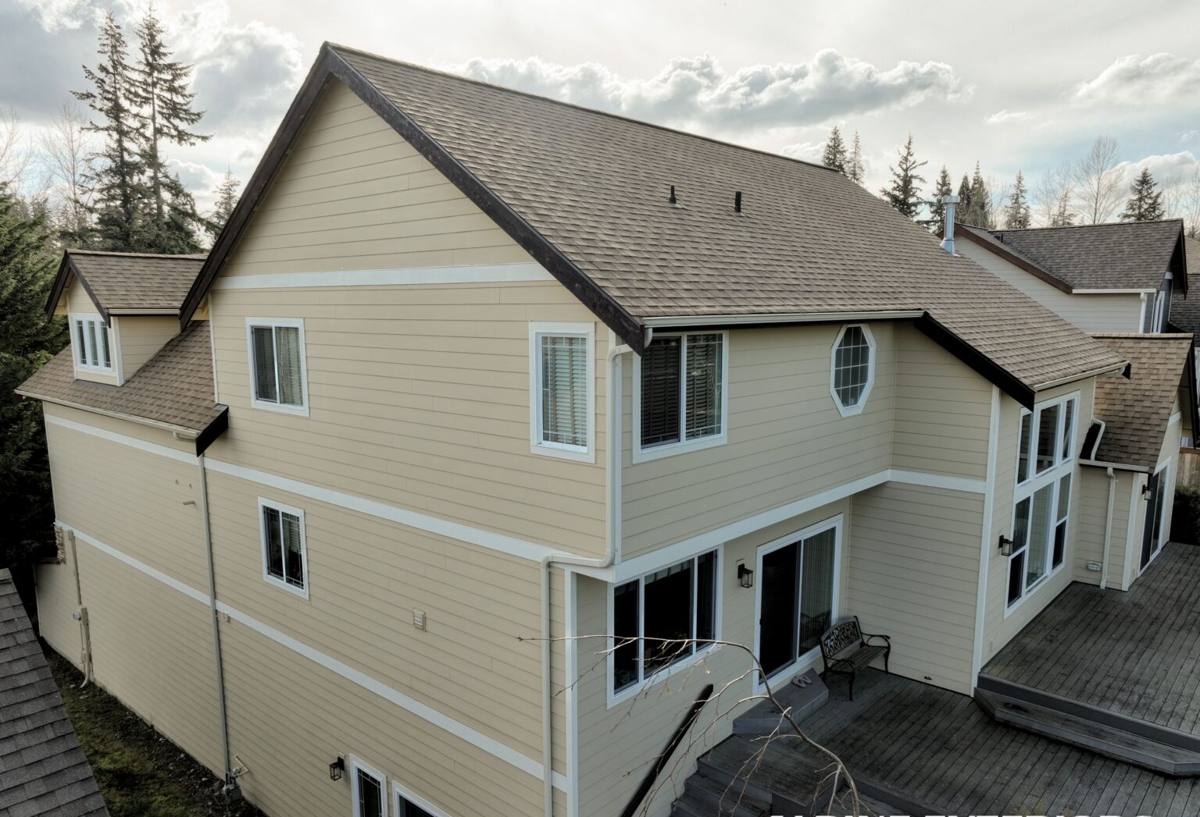
Signs Your Deck Needs Attention Before It Needs Replacement
Most deck problems in this area start small and stay hidden underneath the decking boards, where nobody looks until something gives. Catching issues early is what keeps a repair a repair instead of a full rebuild.
- Boards that feel spongy, springy, or noticeably softer underfoot than the boards around them
- Green or black staining that keeps coming back within weeks of cleaning, especially on the north or shaded side
- Rust streaks running down from screw heads or nail heads
- Gaps opening up between boards that weren't there a year or two ago
- A railing or post that has any wobble at all when you push on it
- Visible daylight or water staining where the deck ledger meets the house
- Stair stringers that feel different underfoot than they used to — a slight give or flex
- Standing water that takes more than an hour or two to drain after rain stops
Any one of these on its own might be minor. Two or three together, especially combined with the age of the deck, usually means it's time for a proper look underneath, not just a surface fix.
What a Correct Deck Repair Actually Involves
A repair that's done right starts underneath the deck, not on top of it. Anyone can replace a bad board from above in twenty minutes. Fixing it correctly means understanding why that board failed and whether the same thing is happening to its neighbors.
The Structure First
Joists, beams, posts, and the ledger board attachment to the house carry the actual load. In a marine-influenced climate like this one, these are the components most likely to be quietly failing while the surface still looks fine. We check for soft spots, check that joist hangers are still doing their job and haven't corroded through, and confirm the ledger connection is properly flashed — a poorly flashed ledger is one of the most common hidden failure points on older decks in coastal Whatcom County.
Fasteners and Hardware
Salt air accelerates corrosion on fasteners that weren't rated for exterior, coastal-adjacent use. Part of a correct repair is replacing corroded screws, nails, and structural hardware with fasteners and connectors rated for the exposure — not just matching what was there before if what was there before was already failing.
Decking and Railings
Whether your decking is wood or composite, repair work should match the board profile and fastening pattern of the existing deck so the finished product doesn't look like a patchwork. Railings get the same structural scrutiny as the deck itself — a railing that looks fine but has soft posts or corroded anchor bolts is a safety issue, not just a cosmetic one.
Drainage and Airflow
A huge amount of long-term deck damage in this region comes down to water that doesn't drain and air that doesn't move. Correcting grade, adding gapping where boards have swelled tight, and clearing debris from under low-clearance decks all matter as much as the visible repair itself.
Repair or Replace? How We Make That Call
Not every damaged deck needs to come down. The decision usually comes down to how much of the structure — versus just the surface — has been compromised.
| Factor | Usually Repairable | Usually Needs Replacement |
|---|---|---|
| Framing condition | Joists and beams are sound, isolated soft spots only | Widespread soft or rotted framing |
| Ledger connection | Solid attachment, flashing needs updating | Ledger itself is compromised or improperly attached |
| Decking surface | Scattered bad boards among otherwise sound decking | Most boards show similar age-related deterioration |
| Fasteners/hardware | Isolated corrosion, connectors still structurally sound | Hardware failing throughout, hangers pulling loose |
| Age of the deck | Under 15-20 years with reasonable past maintenance | Original construction with no upgrades in 20+ years |
| Code compliance | Meets current railing and guard requirements | Railing height, spacing, or footing don't meet code |
We'll always tell you honestly which side of that line your deck falls on. Sometimes a deck that looks rough from a distance is actually a good repair candidate once we get underneath it. Other times a deck that looks fine on top is close to the end of its structural life, and we'd rather tell you that upfront than sell you a repair that won't hold.
Our Deck Repair Process
- Full underneath inspection. We get under the deck, check every joist, post, footing, and the ledger connection before we talk about the visible boards.
- Honest scope and options. You get a clear picture of what's actually wrong, what a repair covers, and what it doesn't — no upsell pressure, no vague scope.
- Structural repairs first. Any compromised framing, hardware, or ledger issues get corrected before anything cosmetic is touched.
- Decking and railing work. Matched boards and hardware go in, fastened with corrosion-resistant connectors appropriate for this climate.
- Drainage and airflow check. We confirm water sheds properly and address any conditions that contributed to the original damage.
- Final walkthrough. We show you what was done and what to watch for going forward, including realistic maintenance expectations for this area.
Materials We Use and Why
Wood and composite decking each hold up differently against salt air, moisture, and moss, and the right choice depends on your existing deck, your budget, and how much upkeep you want to do.
For wood repairs, we use lumber rated for exterior structural use and treat cut ends properly — an untreated cut end is an open door for moisture no matter how good the rest of the board is. For composite repairs, matching the existing board profile matters more than it seems, since composite lines vary in board thickness and groove spacing, and a mismatched replacement board stands out immediately.
On fasteners and structural hardware, our standard is corrosion-resistant connectors rated for coastal exposure. It costs a little more than standard hardware, but in a location like Cherry Point, standard hardware is often the actual root cause of the repair call in the first place. We'd rather build in the right hardware once than have you calling about the same rust stains again in two years.
Moss, Mildew, and Salt: What Happens After the Repair
A repaired deck in this climate still needs a maintenance rhythm that decks further inland don't. Moss season here effectively runs most of the wet part of the year, and left unchecked, moss holds moisture directly against the deck surface and accelerates exactly the kind of damage that led to the repair.
A realistic maintenance routine includes clearing debris and moss buildup from between boards a few times a year, keeping nearby vegetation trimmed back so air can move under and around the deck, and rinsing salt residue off the surface periodically, especially after storms with onshore wind. None of this is complicated, but it's the difference between a repair that lasts fifteen years and one that needs revisiting in three.
Why Hiring a Crew That Already Works Cherry Point Matters
Deck repair isn't the same job in every part of Whatcom County. A contractor who mostly works drier, inland properties may not think twice about hardware grade, flashing detail, or moss-related drainage — because their typical job site doesn't demand it. Out here near Semiahmoo, those details aren't optional extras; they're the difference between a repair that holds and one that's back on your to-do list next winter.
Working this area regularly also means knowing what tends to fail first on decks built to older standards, what the local weather actually does to different repair approaches over a few seasons, and how to set expectations honestly instead of guessing. That familiarity shows up in the quality of the inspection as much as the quality of the finished work.
Get a Straight Answer About Your Deck
If your deck near Cherry Point has soft spots, corroding hardware, persistent moss staining, or just doesn't feel as solid as it used to, it's worth getting an honest look underneath before deciding on repair versus replacement. We'll walk the deck with you, explain exactly what we find, and give you a clear picture of your options — no pressure, no guesswork. Use the form below to request a free estimate.