 Semiahmoo Exterior
 Decking in California Creek Has to Deal With Weather Most Products Aren't Built For
If you live in the California Creek area of Semiahmoo, you already know your deck takes more abuse than a deck fifty miles inland. The combination of salt-laden air off the water, long stretches of driving rain, and a moss season that can run from fall through spring wears down decking materials in ways that don't show up in a manufacturer's brochure. We've replaced enough failed wood decks in this part of Whatcom County to know that the standard advice — "just seal it every year" — doesn't hold up here the way it might somewhere drier.
This page is about one thing: composite decking, done right, for homes in California Creek specifically. Not a generic rundown of decking materials, but what actually matters when your deck sits within reach of salt spray and sits wet for days at a time.
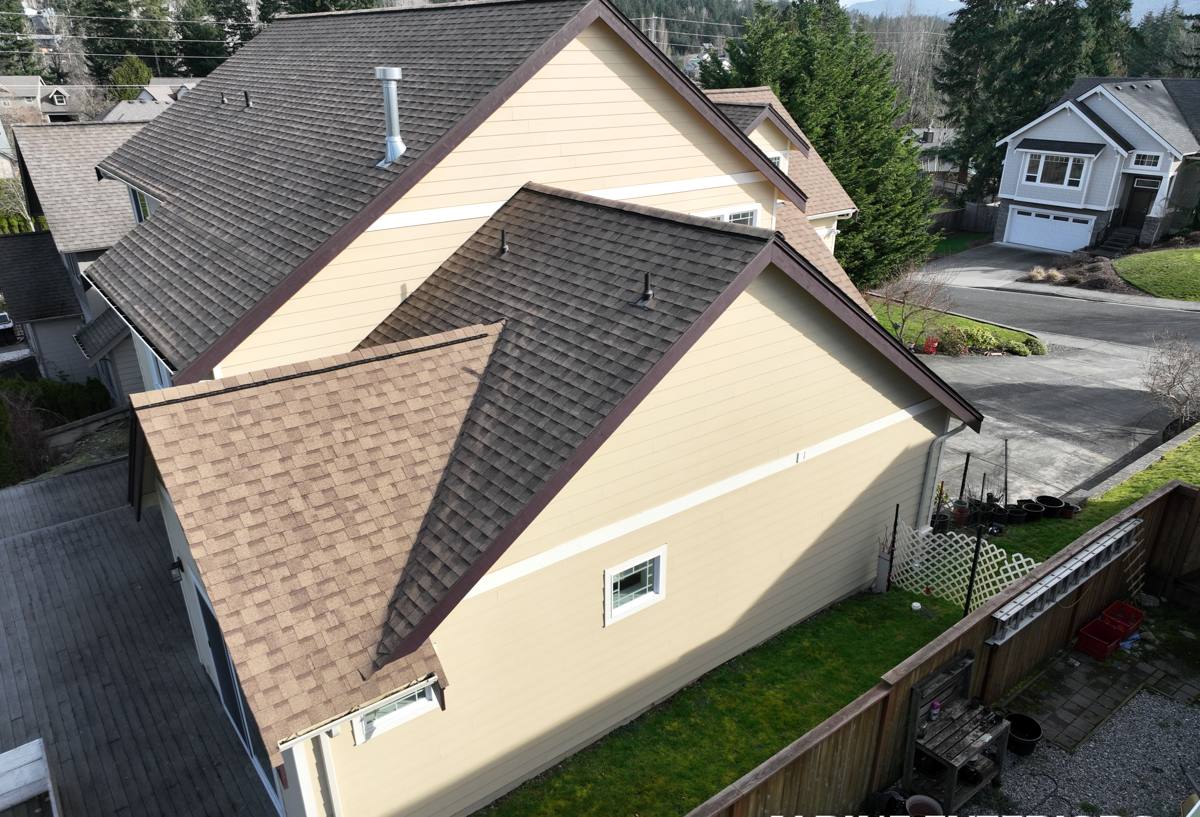
What Salt Air, Rain, and Moss Actually Do to a Deck
Salt Air and Marine Exposure
Salt in the air doesn't just affect boats and metal railings — it accelerates the breakdown of wood fibers, pulls moisture into end grain faster, and speeds up corrosion on any exposed fasteners, brackets, or hardware. On a wood deck, this shows up as premature graying, splitting, and loosened boards well before the wood has reached the end of its useful life. On a deck built with the wrong hardware, it shows up as rust streaks and weakened connections you can't always see from the top.
Driving Rain and Standing Moisture
Semiahmoo gets its share of wind-driven rain, and a deck oriented toward open water or a clearing can take rain at an angle that gets under railings, into fastener holes, and between boards that aren't spaced correctly. Water that doesn't drain and dry quickly is the single biggest driver of rot, mold, and structural failure in any deck material that isn't fully moisture-resistant.
Moss and Algae Season
Shaded, damp decking surfaces in this part of Whatcom County can grow moss and algae for a good chunk of the year. Beyond looking bad, a mossy surface holds moisture against the board and becomes slick and genuinely dangerous underfoot — especially on stairs. Some materials resist this better than others, and surface texture matters as much as the material itself.
Why Composite Decking Fits This Environment
Composite decking — boards made from a blend of wood fiber and plastic, most of them capped with a protective outer layer — was developed largely to solve the problems wood has in exactly this kind of climate. It doesn't mean composite is maintenance-free, and it doesn't mean every composite product performs the same. But the core material properties line up well with what California Creek homes deal with:
- Capped composite boards don't absorb water the way wood does, which limits the swelling, cupping, and splitting that comes from repeated wet-dry cycles
- The surface doesn't need to be sealed, stained, or refinished on a yearly schedule
- Most capped products resist mold and algae growth better than bare wood, though they still need to be cleaned
- Color and surface texture are baked into the board, so salt exposure doesn't fade or strip a finish the way it can with stained wood
None of that means composite is immune to this climate — poor installation, the wrong fasteners, or blocked drainage will cause problems in composite decking just as it does in wood. The material gives you a better starting point; the installation is what determines whether that advantage actually holds up.
Composite vs. Other Common Decking Materials
| Material | Moisture Behavior | Ongoing Maintenance | Typical Lifespan Here |
|---|---|---|---|
| Pressure-treated wood | Absorbs water; prone to cupping, splitting, checking | Annual cleaning, periodic staining/sealing | Shorter, with visible wear by mid-life |
| Cedar or other natural wood | Absorbs water; grays and softens with UV and moisture | Regular sealing to slow rot and grain raising | Moderate, heavily dependent on upkeep |
| Capped composite | Resists absorption; minimal swelling/cupping | Periodic washing; no staining or sealing | Longer, more consistent performance |
| Uncapped composite (older-style) | Some moisture uptake at the surface over time | More cleaning than capped product; can mold if neglected | Shorter than capped composite |
We install capped composite products almost exclusively for this reason — the extra layer of protection is what actually earns the low-maintenance reputation composite decking is known for. An uncapped board asked to perform in salt air and standing moisture just doesn't hold up as well over time.
What a Correctly Installed Composite Deck Involves
The board itself is only part of the equation. Most composite deck failures we get called out to inspect trace back to installation shortcuts, not the material. A deck built for this climate needs attention in a few specific places.
Substructure and Drainage
The framing underneath a composite deck should be pressure-treated or otherwise moisture-resistant, with joist tape or a similar barrier protecting the tops of joists from the water that will inevitably get through board gaps. Proper slope away from the house and clear drainage paths underneath the deck matter more here than in a drier climate, because standing water under the deck has more days per year to do damage.
Fasteners and Hardware
Given the salt exposure common around Semiahmoo, we use stainless steel or coated fasteners and hardware rated for coastal or marine environments — not the standard galvanized hardware that's fine further inland. This is one of the most common corners cut in decking work, and it's also one of the hardest for a homeowner to inspect after the fact.
Board Spacing and Ventilation
Composite boards need consistent gapping for drainage and for the material's natural expansion and contraction with temperature. Too tight, and water sits on the surface and between boards, which is exactly the environment moss and algae need. Too loose, and the deck feels sloppy underfoot and debris collects in the gaps. Airflow underneath the deck also matters — a low, boxed-in deck with no ventilation traps moisture against the framing regardless of what's on top of it.
Our Process for California Creek Decking Projects
- On-site assessment — we look at sun and wind exposure, proximity to open water or salt spray, drainage, and the condition of any existing structure before recommending anything
- Framing and structural check — existing substructures are inspected for rot, corrosion, or undersized framing before new decking goes down
- Material selection — we walk through composite board options, color and texture choices, and railing systems suited to a coastal Whatcom County property
- Installation — proper joist protection, coastal-rated fasteners, correct spacing, and attention to drainage and ventilation throughout
- Final walkthrough — we go over basic care and what to expect from the material through its first moss season
Product Considerations Worth Understanding
Not all composite decking is built the same, and it's worth knowing a few things before you choose a product.
Capped vs. Uncapped Boards
Capped composite has a hard outer shell wrapped around the wood-plastic core, which is what gives it stain resistance, color retention, and better moisture performance. Uncapped composite is generally less expensive but more exposed to staining, moisture uptake, and mold growth at the surface — a real drawback in a climate with this much rain and shade.
Hidden Fastener Systems
Most quality composite decking today is designed to be installed with hidden fastener clips rather than face-screwed, leaving a cleaner surface with no exposed screw heads to corrode or trap moisture. This also reduces the number of penetration points where water can work into the board.
Color and Heat
Darker composite boards absorb more heat and, in some cases, show fading over the years faster than lighter tones. In a marine climate with more overcast days than sun, heat buildup is less of a concern here than it would be further inland — but color retention under salt exposure is still worth discussing when you're picking a board.
What Affects the Cost of a Composite Deck Here
| Factor | Why It Matters Locally |
|---|---|
| Deck size and shape | More linear footage of board edges and framing to protect against moisture |
| Height and substructure condition | Elevated decks and older framing may need additional structural work before decking goes on |
| Board and railing selection | Capped composite and coastal-rated railing hardware cost more than base-grade materials but hold up longer here |
| Site exposure | Decks with direct salt air or wind exposure may need upgraded fasteners and flashing details |
| Drainage and ventilation work | Additional grading, joist protection, or under-deck airflow solutions add cost but prevent moisture problems |
We're not going to put a number on this page — every property is different, and the honest range depends on the specifics above. What we can tell you is that the cheapest install almost never accounts for salt exposure, drainage, or coastal-rated hardware, and that's usually where problems start two or three years down the road.
Keeping a Composite Deck in Good Shape Through Moss Season
- Sweep debris and standing organic matter off the deck regularly, especially in shaded areas
- Wash the surface a couple of times a year with a soft-bristle brush and mild soap, more often if moss or algae builds up in shaded corners
- Check that drainage gaps between boards stay clear of dirt and leaf debris
- Rinse salt residue off the surface periodically if the deck sits close to open water
- Keep an eye on railing posts and fastener points for any early signs of corrosion
- Confirm underdeck ventilation isn't blocked by stored items, plants, or added skirting
Why It Matters to Hire a Crew That Already Works in California Creek
Decking installation isn't uniform across Washington. A crew that mostly builds decks in a dry inland climate isn't thinking about coastal-rated fasteners, joist protection against near-constant moisture, or drainage details sized for the amount of rain this part of Whatcom County gets. We work on homes throughout the Semiahmoo area regularly enough to know which details actually matter here versus which ones are just upsells — and we build every composite deck with the salt air, rain, and moss season in mind from the framing up, not as an afterthought.
If you're planning a new deck or replacing one that's showing its age, we're happy to come take a look and talk through what your property specifically needs. Fill out the form below for a free, no-pressure estimate.