 Semiahmoo Exterior
 Building New in California Creek: What the Site Actually Demands
California Creek sits close enough to the water that salt air, wind-driven rain, and shade-grown moss are simply part of building here. When you're framing a new home or a major addition in this part of Semiahmoo, the windows you choose and how they're installed matter more than they would twenty miles inland. A window package that performs fine in a dry, sheltered lot can fail early here if it wasn't specified and flashed for this exact microclimate.
New construction is also the one point in a home's life where getting windows right is genuinely easier than it will ever be again. The wall assembly is open, the flashing planes are accessible, and there's no old caulk, no failed sealant, and no interior finish work to protect. Once siding, trim, and drywall go up, correcting a window mistake means tearing into finished work. New construction is the cheap moment to do it right.
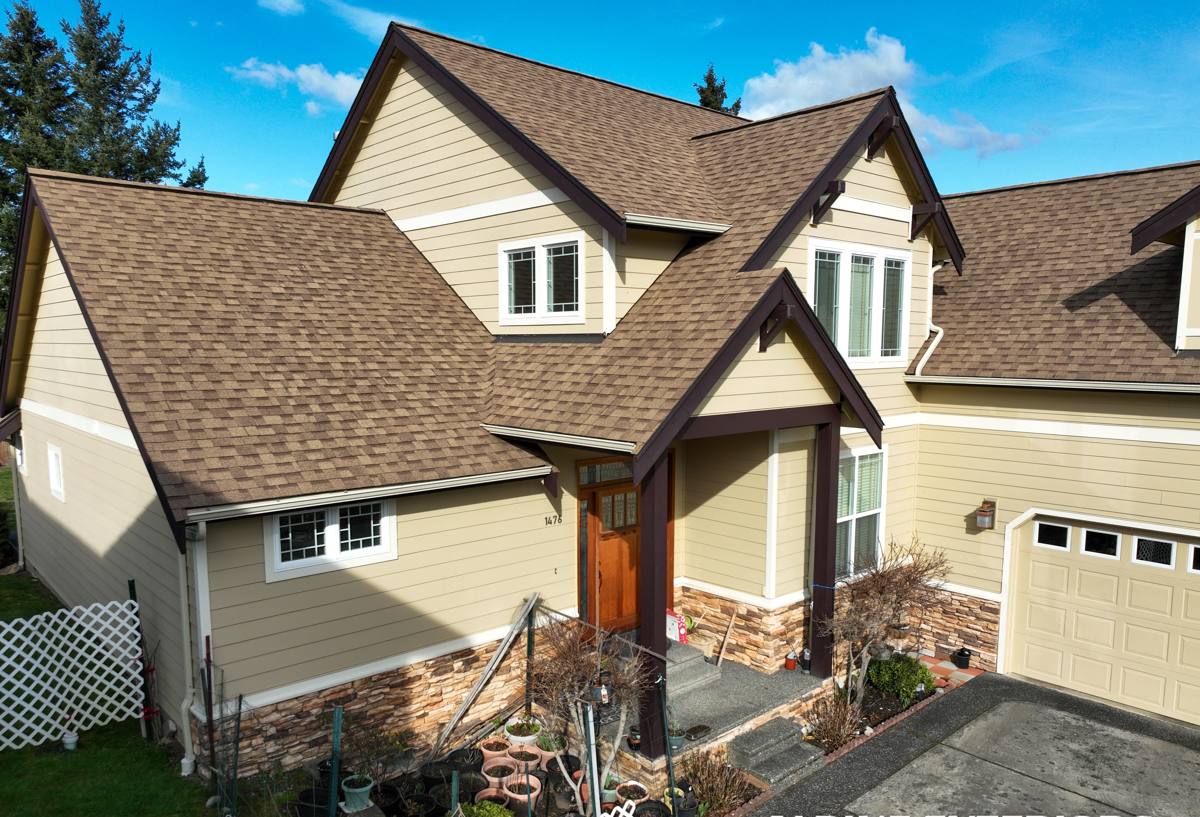
Why New-Construction Windows Are a Different Job Than Replacement
People sometimes assume a new-construction window and a replacement window are the same product installed two different ways. They're not quite the same conversation. New-construction units have a nailing flange designed to integrate with the home's water-resistive barrier and flashing system before siding goes on. That flange is either your best friend or your biggest liability, depending on whether it's flashed correctly.
Because the rough openings aren't finished yet, we're not working around existing trim or matching an old opening size. That's an advantage — it means the window, the flashing, and the wall assembly can be sequenced in the right order instead of retrofitted around each other. But it also means there's no room for shortcuts. Every opening gets the same attention, because there's no "close enough" when the siding hasn't gone on yet to hide a gap.
What Salt Air, Driving Rain, and Moss Season Ask of a Window System
Salt Air and Hardware Corrosion
Airborne salt from the water accelerates corrosion on cheap fasteners, hinges, and cranks well before the glass or frame shows any wear. On a new build, this is a spec decision, not a repair decision — we push toward corrosion-resistant hardware and fastener packages up front, because swapping out pitted hinges on a five-year-old window is a service call, not a warranty fix.
Driving Rain and Wind-Loading
Semiahmoo gets weather that comes in sideways, not just straight down. That changes how a window has to shed water — sill pans, proper flashing laps, and a drainage path behind the cladding aren't optional details, they're the difference between a dry wall cavity and slow, invisible rot. Wind-driven rain will find any shortcut in the flashing sequence, and it will find it during the first real storm, not years later.
Moss and Shaded, Damp Sites
Many California Creek lots have mature tree cover or sit close to the creek corridor, which means shade, dampness, and a long moss season that keeps surfaces wet longer than they'd stay wet on an open, sunny lot. Moss and algae growth on sills, trim, and frame exteriors is mostly cosmetic, but it signals moisture sitting where it shouldn't. Frame materials and finishes that resist staining and that we can flash with a clean, positive slope away from the glass make a real difference over the life of the window.
Choosing Frame Materials and Glass for This Site
There's no single "best" window material — the right call depends on budget, the home's design, and how exposed the specific elevation is to weather. Here's how the common options stack up for a coastal Whatcom County build:
| Frame Material | Coastal Durability | Maintenance | Typical Fit |
|---|---|---|---|
| Vinyl | Good — won't rust or corrode; UV-stable finishes hold up well | Low — occasional wash-down | Value-focused builds, most window count |
| Fiberglass | Very good — dimensionally stable, resists moisture-driven warping | Low | Larger openings, higher-exposure elevations |
| Aluminum-clad wood | Good exterior durability if the cladding and flashing are done right; interior wood needs protection from condensation | Moderate | Design-driven builds wanting a wood interior look |
| Solid wood (uncladded) | Weakest in this climate without disciplined maintenance | High | Only where owner commits to regular refinishing |
On glass, we default to a Low-E, argon-filled dual-pane package as the baseline for this area — it manages heat loss through our long wet winters without adding cost that doesn't pay back. Triple-pane is worth discussing for north-facing or particularly exposed rooms, but it's a budget and performance conversation specific to the elevation, not a blanket upgrade every window needs.
Flashing and Water Management: The Part No One Sees Later
Almost every window failure we get called about in coastal Whatcom County homes traces back to flashing, not the window unit itself. On new construction, the sequence has to happen in the right order every time:
- Sill pan flashing installed and sloped to drain water outward, not into the wall cavity
- Window set into the pan with the nailing flange properly fastened per manufacturer spec
- Jamb and head flashing lapped correctly — water always sheds over the layer below it, never under
- Weather-resistive barrier integrated with the flashing, not just taped over the top
- A drainage plane behind the siding so any water that gets past the cladding has somewhere to go
- Sealant used at the right joints only — sealing the wrong seam can trap water instead of keeping it out
This sequence is the same reason we take flashing details seriously on every job in this area — it's the single biggest predictor of whether a window is still performing well in fifteen years or starting to show rot at the sill in five.
Our New-Construction Window Process
1. Plan Review and Window Schedule
We review the architectural plans or work directly with your builder to confirm sizes, egress requirements, and performance ratings for each opening before ordering anything.
2. Material and Glass Selection
We walk through frame material, glass package, and hardware options against your budget and each elevation's actual exposure — a shaded, creek-side wall and a south-facing wall don't always need the same spec.
3. Rough Opening and Flashing
Openings are checked for square and correct dimension, sill pans installed, and flashing sequenced before the window ever goes in.
4. Window Installation
Units are set, shimmed level and plumb, fastened per manufacturer specification, and insulated around the frame without over-packing, which can bow the frame and affect operation.
5. Exterior Integration
Flashing is tied into the weather-resistive barrier and drainage plane so the window is fully integrated with the wall assembly before siding closes it in.
6. Final Check and Walkthrough
Every window is operated, checked for square operation and a tight seal, and reviewed with you or your builder before we sign off.
What Affects the Cost of a New-Construction Window Package
| Factor | Why It Moves the Price |
|---|---|
| Frame material | Vinyl is the entry point; fiberglass and clad-wood cost more but bring different durability and maintenance profiles |
| Window count and size | More openings and larger units mean more material, more labor, more flashing to detail |
| Glass package | Dual-pane Low-E is standard; triple-pane or specialty coatings add cost for specific exposures |
| Elevation exposure | Walls facing prevailing wind and rain may warrant a higher-spec install even if the rest of the home doesn't |
| Site access and staging | Wooded or tight California Creek lots can affect delivery and staging logistics |
Checklist Before You Sign Off on a Window Package
- Are performance ratings (U-factor, air infiltration) specified for this climate zone, not just a generic default?
- Does the sill pan and flashing plan appear in writing, not just verbally?
- Is hardware rated for coastal/salt-air exposure, or is it a standard inland package?
- Does every elevation get the same install quality, or only the "visible" ones?
- Is there a clear manufacturer warranty and a clear installer workmanship warranty, and do you know which covers what?
Why a Crew That Already Works California Creek Matters
A window installed correctly on paper can still underperform if the crew doesn't understand how water actually moves on a specific site. Knowing that a lot sits low and shaded near the creek, or that a particular elevation takes the brunt of storms coming off the water, changes small decisions — where extra flashing attention goes, which openings get upgraded hardware, how aggressively we detail the sill. That's the kind of judgment that comes from building in Semiahmoo and Whatcom County repeatedly, not from a generic install checklist.
We'd rather walk your site, look at the plans, and give you a straight answer about what your specific California Creek lot needs than sell you a one-size package. If you're framing new or planning an addition, we're happy to provide a free, no-pressure estimate — no obligation, just a clear look at what the job actually involves.