 Semiahmoo Exterior
 Windows Built for the California Creek Microclimate
California Creek sits close enough to Semiahmoo Bay that the same weather pattern shapes every house in the area: salt-laden air coming off the water, long stretches of driving rain in the fall and winter, and a moss season that seems to start earlier and last longer every year. None of that is unique to one street or one lot — it's the baseline condition for the whole area, and it's a different set of stresses than what you'd design for fifteen miles inland. Windows here don't fail because they're old. They fail because they were never really matched to this environment in the first place.
When we talk about "custom windows" for a California Creek home, we don't mean upgraded trim or a fancier grille pattern. We mean sizing, frame material, glazing, and flashing detail chosen specifically because this property sits in a salt-air, high-moisture corridor of Whatcom County. That's a different set of decisions than a stock big-box window run, and it shows up in how the window performs ten and twenty years down the road, not just on install day.
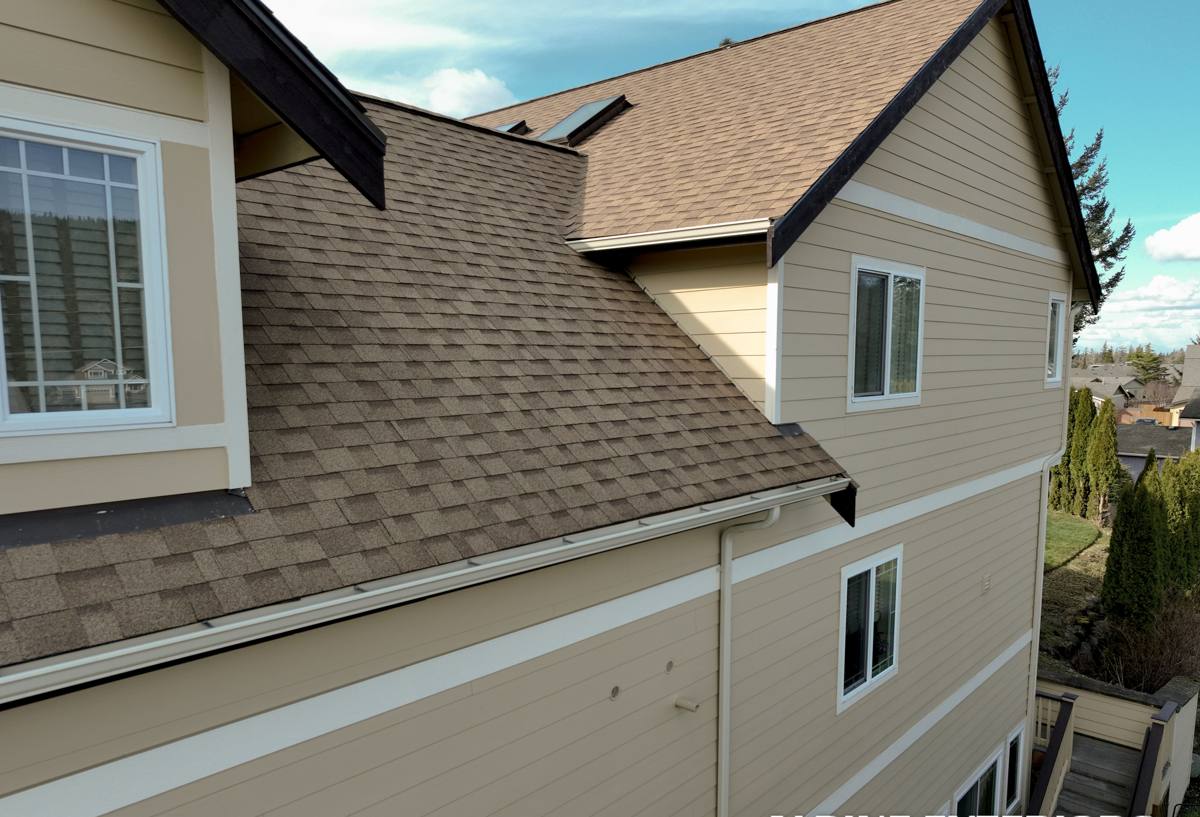
What "Custom" Actually Means on a Job Like This
A lot of homeowners hear "custom window" and assume it just means expensive. In practice, custom means the window is built to the actual opening and the actual exposure, instead of the opening being reworked to fit a stock size. That matters more here than it would in a drier, calmer climate for a few reasons:
- Older California Creek homes often have openings that were framed before modern window sizing standards existed, so stock replacement windows frequently mean shimming, filler strips, or resizing the rough opening — every one of which is a potential water entry point.
- Custom sizing lets us keep the original opening intact and properly flashed, rather than cutting into siding or sheathing that's already weathered.
- Glazing packages can be specified for this exposure — higher-performance low-E coatings and gas fills that resist condensation during the wet months, not just a generic "energy efficient" label.
- Frame and cladding materials can be matched to how much direct salt spray and wind-driven rain a given elevation actually takes, since the ocean-facing side of a house and the sheltered side often need different answers.
What Salt Air, Driving Rain, and Moss Actually Do to a Window
Salt air
Airborne salt is corrosive to unprotected metal hardware — hinges, cranks, locks, and screws — and it accelerates the breakdown of certain finishes and sealants over time. It also tends to settle into any gap or seam, which is why hardware on windows near the water often seizes up or corrodes years before it would inland, even on units that otherwise still look fine from the curb.
Driving rain
Wind-driven rain doesn't just fall — it gets pushed sideways and upward into gaps that a straight-down rain would never reach. That means flashing details and sill pans that would be adequate in a calmer climate can still let water in here, especially around the bottom corners of a window and anywhere a nail fin or flange wasn't properly lapped with the water-resistive barrier.
Moss and sustained moisture
A long moss season isn't just a roof and gutter problem. Moss and algae hold moisture against exterior surfaces, including window trim and sills, for much longer than the rain event itself. Wood trim and sills that stay damp for extended periods are where rot gets started, often well before it's visible from inside the house.
Frame Material: What Actually Holds Up Near the Water
There's no single "best" window frame material for every house — it depends on exposure, budget, and how the house is built. Here's how the common options actually compare for a salt-air, high-rainfall setting like California Creek:
| Material | Salt air resistance | Moisture behavior | Maintenance | Typical cost position |
|---|---|---|---|---|
| Vinyl | Good — won't corrode or rot | Handles moisture well; seams are the weak point | Low | Lower |
| Fiberglass | Very good — stable, low expansion/contraction | Excellent, holds paint and finish well | Low to moderate | Mid to higher |
| Wood-clad (exterior clad, wood interior) | Depends heavily on cladding quality and install detail | Interior wood needs protection from any leaks | Moderate | Higher |
| Aluminum | Poor to fair unless marine-grade and well-finished | Prone to condensation without a thermal break | Moderate to high | Varies |
Our default recommendation for direct-exposure elevations near the water is vinyl or fiberglass, because both shrug off salt corrosion without ongoing upkeep. Wood-clad windows can still be the right call on a house where the look matters and the budget supports proper maintenance, but we're honest with clients that any wood-interior window near the water is a longer-term commitment to upkeep, not a set-it-and-forget-it product.
Signs Your Current Windows Are Losing the Battle
Because water intrusion and hardware failure happen gradually, most homeowners don't notice until there's visible damage. A few things worth checking before that point:
- Cranks, locks, or hinges that feel gritty, stiff, or corroded compared to how they operated a year or two ago
- Soft or discolored trim, sill, or drywall directly below or beside a window
- Condensation forming between the panes (a sign the seal has failed on a double- or triple-pane unit)
- Visible daylight or a noticeable draft around the frame when it's windy
- Paint or finish that's bubbling, peeling, or chalking faster on window trim than on the rest of the siding
- A musty smell near a window that wasn't there before, which often points to moisture trapped in the wall cavity
Any one of these on its own isn't necessarily an emergency, but a few of them together usually means it's time for a real look, not just caulk and paint.
How the Job Actually Works, Start to Finish
- Walkthrough and exposure assessment. We look at each elevation separately — a wall facing the water and prevailing wind needs different detailing than a sheltered wall, even on the same house.
- Measurement and product selection. Openings are measured precisely so windows are built to fit, not force-fit. We talk through frame material, glazing package, and hardware finish based on that wall's actual exposure.
- Removal, without guesswork. When we pull the old window, we check the rough opening and surrounding sheathing for hidden moisture damage before anything new goes in. Damaged material gets addressed then, not covered up.
- Flashing and water management. This is the step that determines whether the window still performs in ten years. Sill pans, flashing tape, and proper lapping with the house wrap are done in the correct sequence so water is always directed out, never trapped behind the window.
- Installation and air-sealing. The window is set plumb, level, and square, shimmed correctly, and sealed with the right materials at the interior and exterior — not just a bead of caulk around the outside.
- Trim, finish, and final check. Interior and exterior trim is completed, hardware is tested, and we walk the job with the homeowner before calling it done.
Flashing Detail: Where Most Window Failures Actually Start
It's worth spending a separate section on this, because it's the part of the job nobody sees once the trim goes back on — and it's also where most window failures actually originate. A window can be an excellent, well-built unit and still leak within a few years if the flashing sequence around it was done wrong. In a driving-rain climate, water gets pushed into places gravity alone would never take it, so the sill pan and flashing tape have to be layered correctly with the house's water-resistive barrier: everything above laps over everything below, with no reverse laps and no gaps at the corners. This is also where a rushed installer cuts corners, because it's invisible once the window is trimmed out. We treat this step as the actual core of the job, not a formality before the visible finish work.
Why a Crew That Already Works California Creek Makes a Real Difference
A contractor who works across Whatcom County generally, but doesn't spend regular time in the tighter salt-air corridor around Semiahmoo and California Creek, is more likely to default to standard details that work fine most places but leave gaps here. A crew that already works this specific area has usually already seen which flashing shortcuts fail early near the water, which hardware finishes actually hold up to salt exposure over years rather than months, and how differently the ocean-facing side of a house ages compared to the sheltered side. That's not a marketing point — it's the practical difference between a window that's still tight in fifteen years and one that needs attention in five.
Keeping Your New Windows Ahead of Salt and Moss
A properly installed custom window still benefits from basic upkeep in this climate. A few habits go a long way:
- Rinse salt residue off frames and hardware periodically, especially on elevations facing the water
- Keep gutters and downspouts clear so roof runoff isn't sheeting down past window heads
- Trim back vegetation that shades window trim and keeps it damp longer than it needs to be
- Operate hardware a few times through the off-season so cranks and locks don't seize from disuse
- Have caulking and exterior sealant checked every couple of years rather than waiting for a visible gap
None of this is complicated, but it's the difference between a window system that lasts and one that starts fighting you after the first few wet winters.
Get a Straight Answer for Your Home
Every California Creek property carries this climate a little differently depending on elevation, exposure, and how the original windows were installed. If you're dealing with drafts, stuck hardware, foggy glass, or you're just planning ahead before the next wet season, we're glad to take a look and give you an honest read on what your windows actually need. Use the form below to request a free, no-pressure estimate.