 Semiahmoo Exterior
 Siding Installation for the California Creek Area
The California Creek area sits back a bit from the open shoreline of the Semiahmoo spit itself, but it isn't sheltered the way an inland lot would be. Homes here sit along or near the creek corridor, in a mix of wooded and open properties, still close enough to Semiahmoo Bay to catch salt-laden air on a regular basis, and shaded in places by mature trees that a spit-front property wouldn't have. That combination — coastal exposure plus a shaded, slower-drying creek corridor — creates its own set of demands on a siding installation, different from a wide-open waterfront lot and different from a dry, inland Whatcom County property.
This page is specifically about siding installation for homes in and around California Creek — full new siding, whether on new construction or a complete re-side of an existing home, not spot repair. We install James Hardie fiber cement exclusively, and everything below assumes that system, since it's the only one we install to spec on homes in this area.
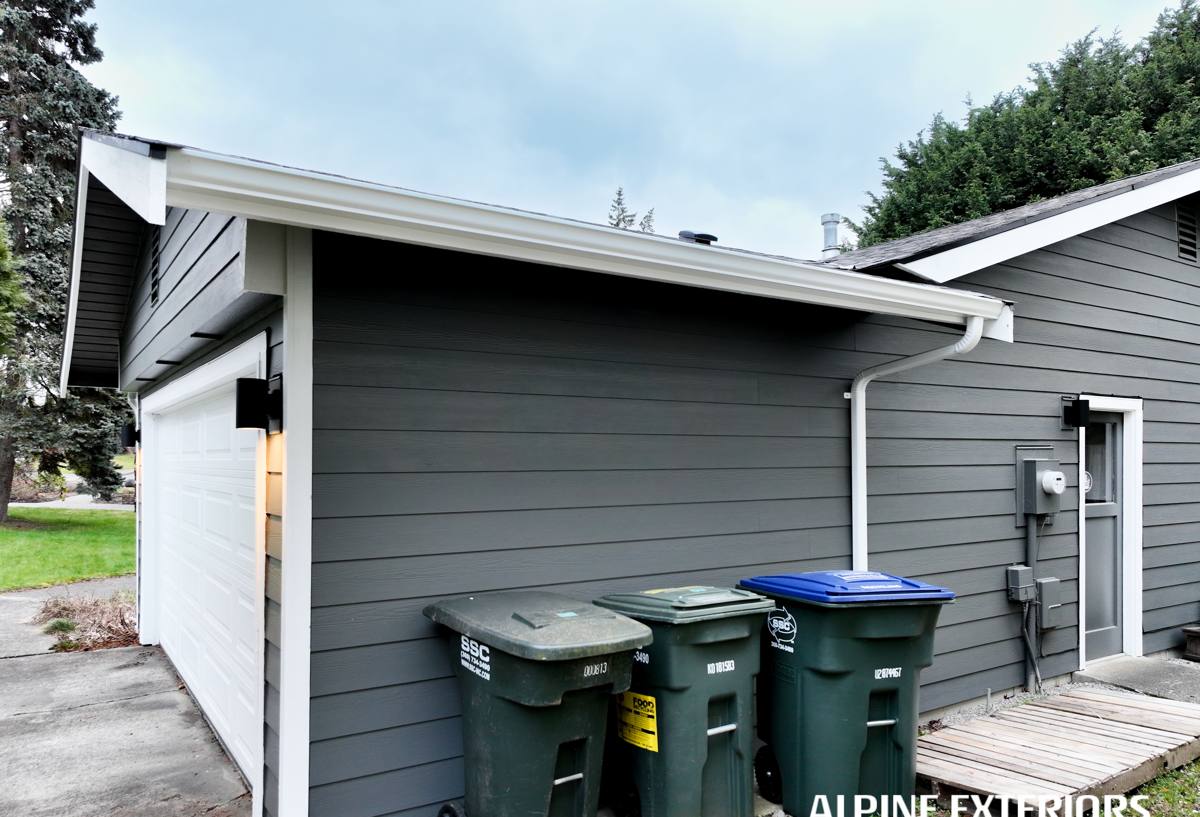
What Sets This Corner of Semiahmoo Apart
Salt Air, Just Filtered a Little
Properties tucked back near California Creek aren't hit with the same direct, unbroken salt spray a spit-front home takes on, but the air moving inland off Semiahmoo Bay still carries salt with it, and it still accelerates corrosion on fasteners, flashing, and trim hardware over time. Trees and terrain can knock down some of the wind, but they don't filter out the salt itself. An installation crew that assumes "set back from the water" means "not a coastal install" is making a mistake that shows up as rust streaking and premature hardware failure a few years down the road.
Driving Rain That Lingers Instead of Draining Fast
Wind-driven rain off the bay still reaches this area, and low-lying ground near a creek corridor often drains slower than an open, elevated lot. That means water has more opportunity to sit against a foundation, a low wall section, or the bottom courses of siding before it moves on. Installation details that manage that — proper clearance at grade, correct slope and drainage detailing — matter more here than on a property where water simply runs off and away.
Tree Cover and a Long, Uneven Moss Season
Mature trees along the creek corridor are one of the nicer things about this part of Semiahmoo, but they also mean more shade, more leaf and needle debris in gutters and against lower siding courses, and slower drying after every wet spell. Whatcom County's marine climate already supports a moss and mildew season that runs most of the year; a shaded, tree-lined lot near California Creek tends to see it start earlier in the fall and hang on longer into spring than a property with more open sun exposure. It's usually the north-facing and tree-shaded walls that show it first.
Why We Only Install James Hardie Siding Here
We install one siding system, on every home we work on in this area: James Hardie fiber cement. We don't install LP SmartSide, vinyl siding, Cemplank, Allura, primed spruce, or cedar. That's not a brand preference — it's a standard built around what actually holds up on a property that deals with coastal salt exposure, slow-draining ground, and a shaded, moss-prone microclimate all at once.
- Non-combustible core: Fiber cement doesn't feed a fire the way wood-based siding products can, which matters for safety and often for insurance underwriting.
- Factory-applied ColorPlus finish: The color is cured under controlled factory conditions rather than brushed on site, and it resists fading, chalking, and moisture intrusion far longer than field-applied paint — a real advantage on shaded walls that stay damp longer between dry spells.
- Climate-engineered HZ product lines: Hardie's HZ5 formulation is built for regions with heavy moisture exposure and freeze-thaw cycling, which describes this part of Whatcom County well.
- Dimensional stability: Fiber cement doesn't swell, cup, or warp the way engineered wood products can after repeated wetting, which matters on walls that don't dry out quickly under tree cover.
- A strong, transferable warranty when installation follows Hardie's published specification.
What Correct Installation Demands From the Material
Fiber cement only performs the way it's engineered to when the installation matches the manufacturer's spec. On a lot with slower drainage and more shade, that margin for error is thinner than on an open, sun-exposed property — a wall that already takes longer to dry between wet spells has less tolerance for a fastening or flashing shortcut that lets moisture in.
What a Correct Installation Actually Involves
Fastening and Spacing
James Hardie publishes exact fastener type, spacing, and placement requirements, and they vary by product line and exposure category. Following that spec is what keeps panels secured through coastal wind loads and keeps the manufacturer's warranty valid if a problem ever comes up.
Clearances at Grade, Roofline, and Decks
Hardie specifies minimum clearance between siding and grade, roofing, decks, and other horizontal surfaces. On a California Creek property where ground can hold moisture longer, that clearance is one of the most important details in the whole job — it's what keeps the bottom edge of the siding out of standing water or splash-back instead of sitting in it.
Flashing and Sealant at Every Penetration
Windows, doors, hose bibs, vents, and light fixtures all interrupt the siding plane, and each one is a place water can get behind the cladding if it's flashed or sealed incorrectly. This is the slowest, least visible part of an installation, and on a shaded wall that stays damp longer, a flashing mistake has more time to do damage before anyone notices it.
Field-Cut Edges and Drainage Behind the Panel
Every field-cut edge — around a window, at a corner, at the end of a run — needs to be sealed or primed to Hardie's specification before it goes up. Behind the panel, proper drainage-plane detailing gives any moisture that does get in a path to escape rather than sit against the sheathing, which matters most on the walls that get the least sun.
Installation Shortcuts That Fail Fastest Near California Creek
| Shortcut | What it looks like on install day | How it shows up later |
|---|---|---|
| Standard fasteners instead of corrosion-resistant hardware | No visible difference | Rust streaking and loosened panels within a few years, even set back from open water |
| Skipped clearance at grade near low or slow-draining ground | Siding looks flush and tidy | Wicking, softness, and paint failure at the bottom courses |
| Rushed flashing at windows on shaded walls | Looks sealed from outside | Hidden moisture intrusion that takes longer to dry, often not visible until interior staining shows up |
| Unsealed field-cut edges | Cuts look clean and painted | Localized swelling or delamination at the cut |
| Panels installed tight against trim with no drainage gap | Appears well-fitted | Trapped moisture and persistent moss on shaded, tree-covered walls |
Our Installation Process, Step by Step
Site and Exposure Walkthrough
Before anything is priced, we walk the property and look at how each wall is actually exposed — which faces catch wind and salt air off the bay, which sit under tree cover or close to the creek corridor, and where existing moss, staining, or soft siding suggests a chronic moisture problem rather than a one-time issue.
Tear-Off and Sheathing Check
Old siding comes off and the sheathing underneath gets inspected before any new material goes up. On a shaded, slower-drying property, sheathing damage is more common than homeowners expect; we'd rather find and address it at this stage than bury it under new siding.
Weather Barrier and Flashing First
The water-resistive barrier goes on with proper overlap and taped seams at every seam and penetration, and flashing goes in at every window, door, and horizontal transition before siding covers any of it. This hidden layer does most of the real work of keeping wind-driven rain and trapped moisture out of the wall assembly.
Siding to Manufacturer Spec
Panels go up following Hardie's fastening, spacing, and clearance requirements as the baseline, not as an upgrade. Field cuts are sealed as they're made.
Final Walkthrough
We walk the completed job with the homeowner, confirm the work matches what was estimated, and go over what basic maintenance looks like for a property with this much shade and creek-corridor moisture — things like gutter clearing and keeping vegetation trimmed back from the lower siding courses.
New Siding vs. Re-Siding an Existing California Creek Home
Installing siding on new construction and re-siding an existing California Creek home share the same core standards but start from different points. New construction means building onto fresh sheathing and a new water-resistive barrier, with no unknowns underneath. Re-siding an older home means tear-off first, an honest look at what the original construction left behind, and often correcting older detailing — inadequate clearances, missing flashing, or a barrier that was never properly installed — before new siding goes up. On a property that's been shaded and slow-drying for years, that discovery phase during tear-off tends to matter more than it would on a drier, sun-exposed lot.
Cost and Timeline Factors for a California Creek Installation
| Factor | Why it matters here |
|---|---|
| Square footage and number of stories | More area and height mean more labor and, on taller walls, more staging and access equipment |
| Trim and detail complexity | More windows, dormers, and roofline transitions mean more flashing and cutting work |
| Sheathing condition underneath old siding | Rot or water damage found during tear-off adds repair scope before new siding can go up |
| Tree cover and lot drainage | Shaded, slower-draining lots often warrant extra attention to clearance and drainage detailing |
| Ground disturbance near the creek corridor | Some California Creek properties fall within Whatcom County critical-area or stream-buffer rules; worth flagging early if grading or excavation is part of the project |
| Product line and finish selection | James Hardie offers multiple panel styles, textures, and ColorPlus finishes at different price points |
Weather and access matter for scheduling in this area, too — tree-covered lots can stay wet or slick longer after a storm than an open property a mile away, so we build some flexibility into timelines rather than promising a fixed date a wet week is likely to break.
Why a Crew That Already Works California Creek Matters
Installation quality on paper and installation quality in practice aren't always the same thing, and the gap shows up fastest on a property with this specific combination of coastal exposure and creek-corridor shade. A crew that regularly works this stretch near Semiahmoo already knows where extra drainage detail earns its keep, which fastener spec holds up on a wall that gets salt air but never much direct sun, and where a slow-draining yard changes how clearance at grade should be handled. That judgment comes from doing this work repeatedly in this specific setting, not from applying a generic coastal checklist and hoping it fits.
A Checklist Before Hiring for Siding Installation Here
- Ask what siding material they install and why, and whether they stand behind it with a written warranty
- Confirm current Washington contractor licensing and active liability insurance
- Ask how they handle clearance and drainage detailing on shaded, slower-draining lots
- Ask about fastener and hardware corrosion resistance, even for a property set back from open water
- Ask whether any part of the project involves ground disturbance near the creek corridor, and whether that triggers county critical-area review
- Get a clear, written scope of work before any contract is signed
If you're planning new siding for a home near California Creek, or want a straightforward second opinion on an existing installation, we're glad to come take a look and talk through what your property actually needs. Reach out using the form below for a free, no-pressure estimate.