 Semiahmoo Exterior
 What Salt Air, Rain, and Moss Do to Roofs Near California Creek
Homes around California Creek sit close enough to Semiahmoo Bay and Drayton Harbor that salt-laden air is part of daily life, not an occasional coastal event. That air moves inland on the wind and settles on every exposed roof surface, where it slowly works on exposed fasteners, metal flashing, and any cut edge of shingle or panel that isn't sealed. It's a slow process, which is exactly why it gets missed until a leak shows up.
Layer on the region's rainfall pattern — long stretches of steady, driving rain rather than short heavy downpours — and you get roofs that stay wet for days at a time instead of drying out between storms. Add the tree cover common in this part of Whatcom County, and you get a long moss season that runs from fall through spring, sometimes longer in shaded, north-facing sections of a roof. None of these factors alone destroys a roof quickly. Together, over years, they're the main reason roof repair calls in this pocket of Semiahmoo tend to involve moisture intrusion and material breakdown rather than storm damage.
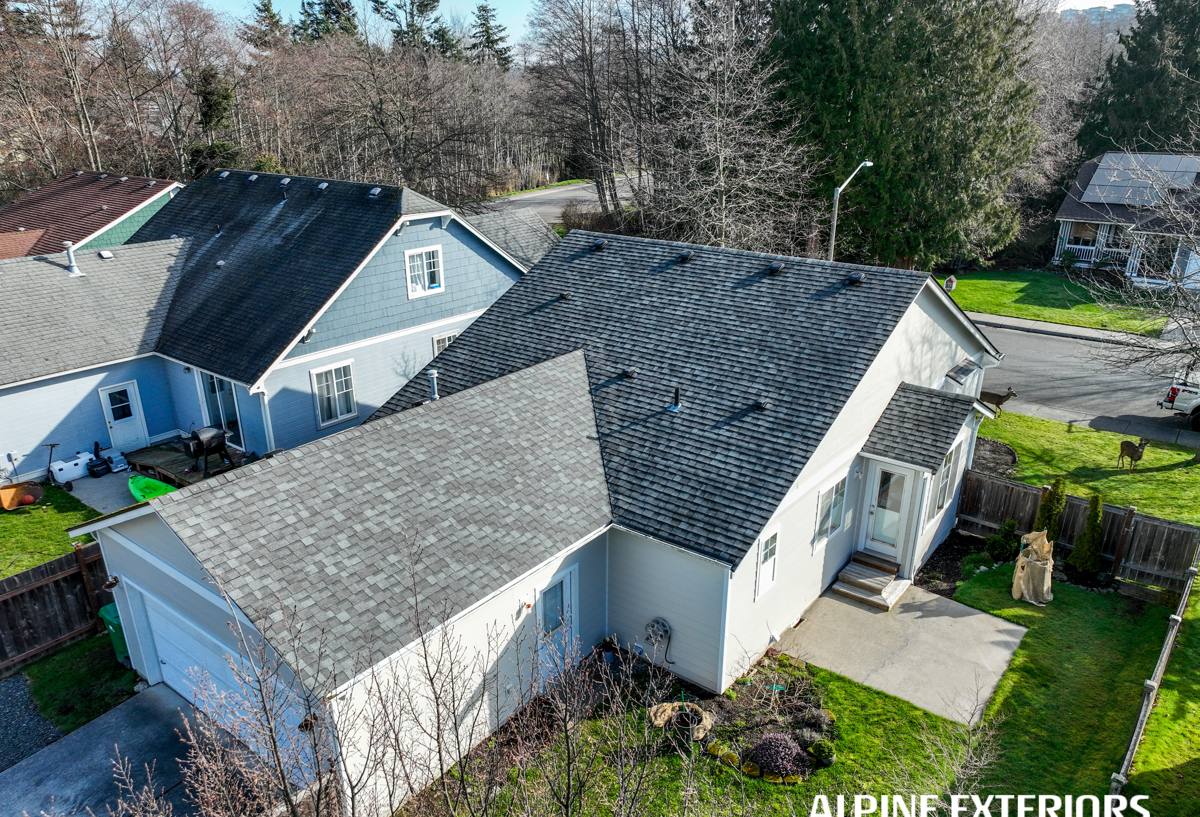
Signs a California Creek Roof Needs Repair, Not Replacement
Most roofs don't fail all at once — they fail in one section while the rest of the roof still has useful life left. Catching that early is what keeps a job a repair instead of a full tear-off.
Inside the House
Ceiling stains that appear or darken after a stretch of rain, musty smells in an upstairs closet or attic, and daylight visible through the roof deck from inside the attic are all signs worth acting on quickly. In a climate this wet, a small leak left alone for a season can mean replacing insulation and drywall in addition to the roof itself.
From the Ground and on the Roof
From the ground, look for streaking, dark patches, or thick moss growth concentrated in shaded valleys and along the north side of the roof. Curling, cracked, or missing shingles, flashing that's pulled away from a chimney or wall, and granules collecting in gutters are all signals that a section of roof is nearing the end of its service life even if the rest looks fine.
What a Correct Roof Repair Actually Involves
A repair done right addresses the cause of the failure, not just the visible symptom. In this climate, that almost always comes back to water management at the details — not the open field of the roof.
Flashing, Valleys, and Penetrations
Most leaks near California Creek trace back to flashing: around chimneys, skylights, vent pipes, and where a roof meets a wall or dormer. Salt air accelerates corrosion at fastener heads and metal seams, and once a flashing joint opens even slightly, driving rain will find it. A correct repair replaces or re-seals the flashing itself, not just the shingles around it, and checks that valleys are clear and properly lapped so water sheds instead of pooling.
Moss, Debris, and Growth Removal
Moss doesn't just sit on top of shingles — its root structure lifts shingle edges and holds moisture against the roofing material underneath. A proper repair includes careful moss and debris removal using methods that don't strip granules or damage the shingle surface, followed by a look at what's causing the moss to concentrate there in the first place, whether that's shade, poor airflow, or a low spot holding water.
Underlayment and Decking Checks
Once the surface layer is pulled back at the repair area, we check the underlayment and roof decking underneath. If moisture has been getting through for a while, the plywood decking can be soft or delaminated, and underlayment can be brittle or torn. Patching over compromised decking is a common shortcut that leads to a repeat call within a year or two — it gets replaced, not covered.
Roofing Materials Common in the Area — Repair Considerations
The right repair approach depends heavily on what's already on the roof. Here's how the common materials in this area typically hold up and what that means for a repair.
| Material | How It Behaves in This Climate | Repair Considerations |
|---|---|---|
| Asphalt composition shingle | Most common material; granule loss and edge curling accelerate with sustained moisture and moss | Individual shingles can often be replaced if the field is otherwise sound; matching older shingle color and profile can be limited by product availability |
| Cedar shake or shingle | Attractive but requires consistent airflow underneath; moss and moisture retention are the primary long-term concerns | Repairs need shakes split and matched to existing exposure and thickness; we're upfront that ongoing maintenance is heavier than other materials, which is a maintenance trade-off worth weighing, not a defect |
| Metal roofing (standing seam or panel) | Sheds water and moss well but fastener and seam integrity matter more near salt air | Repairs focus on sealant renewal, fastener replacement, and seam inspection rather than panel replacement in most cases |
Our Roof Repair Process
We keep the process straightforward because homeowners dealing with an active leak don't need extra steps between them and a dry roof.
- Inspection. We walk the roof and attic where accessible, looking for the actual source of the problem, not just the spot where water is showing up inside.
- Diagnosis and documentation. We identify what's failing — flashing, shingles, underlayment, decking — and document the extent of it before recommending a scope of work.
- Written estimate. You get a clear breakdown of what needs to be done and why, with options where they genuinely exist.
- Repair work. We complete the agreed scope, including any decking or underlayment replacement uncovered once the area is opened up.
- Cleanup and walkthrough. Job site is cleared of debris and fasteners, and we walk you through what was done before we consider the job complete.
What Affects the Cost of a Roof Repair
Roof repair pricing varies enough from job to job that flat numbers aren't honest to quote without seeing the roof, but the same handful of factors drive most of the difference.
| Factor | Why It Matters |
|---|---|
| Extent of hidden damage | Decking or underlayment that's been wet for a while often needs replacement once the roof surface is opened up, which changes scope |
| Roof pitch and access | Steeper roofs and limited access around trees or tight lots take longer and require more safety setup |
| Material match | Matching older or discontinued shingle colors and profiles can add time and limit sourcing options |
| Number and complexity of penetrations | Chimneys, skylights, and multiple vent pipes each add flashing work beyond a simple shingle swap |
| Moss and growth severity | Heavy, established moss takes more time to remove properly without damaging the roofing surface underneath |
Why Hiring a Crew That Already Works California Creek Matters
A roof repair crew that regularly works this specific stretch near Semiahmoo already knows what a roof in this microclimate is up against — the combination of coastal moisture, tree-shaded moss zones, and salt exposure that doesn't show up the same way ten miles inland. That familiarity shows up in small but important ways: knowing which flashing details tend to fail first in homes built during certain eras common to the area, recognizing moss patterns that point to a ventilation issue rather than just a cosmetic one, and understanding how Whatcom County's permitting requirements apply to repair versus replacement scopes.
It also means a faster, more accurate estimate. A crew unfamiliar with coastal Whatcom County conditions may underestimate how much moisture has traveled under shingles that look fine from the ground, or miss that a metal roof's fastener corrosion is further along than the surface suggests. Local experience isn't a marketing line here — it's the difference between a repair that holds and one that gets revisited next rainy season.
A Homeowner's Checklist Before You Hire a Roof Repair Contractor
- Ask for proof of current licensing and insurance, and confirm it covers work in Washington State
- Get the scope of work in writing, including what happens if hidden decking or underlayment damage is found
- Ask how moss and debris will be removed — methods that protect granules and shingle surfaces versus ones that strip them
- Confirm whether the estimate includes flashing and penetration repair or just shingle replacement
- Ask about warranty terms on both materials and labor, and get them in writing
- Check that the contractor can explain why a repair is sufficient versus recommending a full replacement — the answer should be specific to your roof, not a default upsell
Keeping Your Roof Healthy Between Repairs
A repair extends a roof's life, but a few habits stretch that further in a climate that never really lets a roof dry out for long. Keep gutters and downspouts clear so water isn't backing up under the roof edge, especially during the long moss season when debris accumulates faster. Trim back tree limbs that shade sections of the roof and keep them damp longer than the rest. Have the roof looked at after any significant windstorm, since driving rain can find even small gaps that opened up in a storm before they turn into an interior leak. And keep an eye on moss regrowth — a section that was cleared once can come back within a year or two if conditions haven't changed.
If you're noticing signs of a leak, heavy moss, or aging flashing on a home near California Creek, we're happy to take a look and give you a straight answer about what it needs. Reach out for a free, no-pressure estimate using the form below.