 Semiahmoo Exterior
 Siding Repair Along California Creek: A Different Kind of Exposure
Homes near California Creek sit in a stretch of Whatcom County where two things overlap: coastal weather rolling in off Semiahmoo Bay and Drayton Harbor, and the shaded, moisture-holding microclimate of a creek corridor. That combination is harder on exterior siding than either factor alone. Salt-laden air corrodes fasteners and trim faster than inland air does. Driving rain off the water finds every gap, seam, and nail hole. And the tree cover and dampness that come with living near a creek extend moss and algae season well beyond what a typical Whatcom County home deals with. Siding repair out here isn't a generic fix-it job — it's a task that has to account for all three at once.
We work on homes in this area regularly, which means we're not guessing at how California Creek weather behaves. We know which siding failures show up first in this pocket of Semiahmoo, and we know how to repair them so the fix actually holds through the next wet season instead of failing again in a year or two.
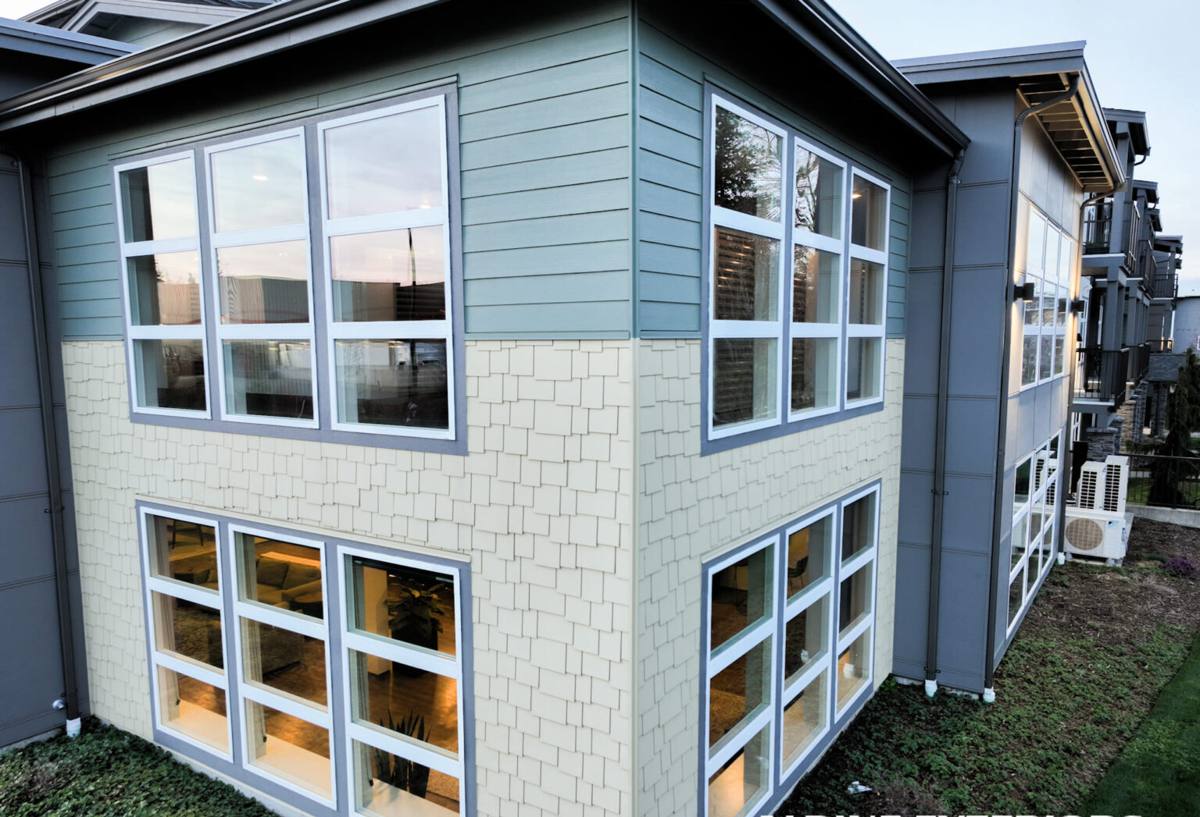
How Salt Air, Driving Rain, and Moss Season Actually Damage Siding
Salt Air
Even homes set back from the water pick up salt aerosol carried on coastal wind. Over time it accelerates corrosion in exposed fasteners, flashing, and any metal trim components. Corroded fasteners lose their grip, which lets siding panels shift, gap, or work loose — and a loose panel is an open door for water.
Driving Rain
Storms coming off the Strait of Georgia and Semiahmoo Bay don't just fall straight down — wind pushes rain sideways into siding laps, butt joints, and anywhere caulking has started to fail. Once water gets behind a panel, it doesn't dry out quickly in this climate. It sits against the wall sheathing, and that's where rot starts.
Moss and Algae Season
The shade and moisture typical of a creek-side lot keep siding surfaces damp longer after every rain. That extended dampness is exactly what moss and algae need to establish. Left alone, moss holds water against the siding surface and works into seams and lap edges, which accelerates the exact moisture problems described above.
Signs Your Siding Needs Repair, Not Just a Cleaning
Some siding issues near California Creek look cosmetic but point to something underneath that needs attention. Others are early enough that a straightforward repair — not a full re-side — solves the problem. Knowing the difference is where an honest inspection matters.
- Panels that look slightly bowed, warped, or separated at the seams
- Soft or spongy spots when you press on the siding near the bottom courses or around windows
- Persistent moss or dark staining that comes back quickly after cleaning
- Visible rust streaking from fasteners or trim
- Cracked or missing caulk at joints, corners, and window/door trim
- Paint that's peeling, bubbling, or flaking in patches rather than evenly across the wall
- Gaps where siding has pulled away from the wall or from adjacent panels
Any one of these on its own might be a small fix. Several together, especially clustered on one elevation, usually means water has been getting behind the siding for a while and the repair needs to address the cause, not just the symptom.
Repair vs. Replacement: How We Actually Decide
Not every damaged section means a full re-side, and not every homeowner needs to hear "replace it all" from a contractor who'd rather sell the bigger job. We look at scope, cause, and what's underneath before recommending either path.
| Factor | Points Toward Repair | Points Toward Replacement |
|---|---|---|
| Extent of damage | Isolated to one or two elevations or a small area | Spread across most of the home |
| Underlying sheathing/framing | Sound, no rot found on inspection | Soft, rotted, or water-damaged framing discovered |
| Siding material | Still structurally serviceable, matchable finish | Failing material (e.g., old primed wood or degraded composite) with poor long-term prognosis |
| Age of existing siding | Newer install, isolated failure point | Original siding nearing or past expected service life |
| Root cause | Fixable detail — bad caulking, a loose panel, damaged trim | Systemic issue — poor original flashing, chronic moisture intrusion |
We'll tell you plainly which category your home falls into. If a repair is the honest answer, that's what we'll recommend and price — we're not trying to upsell a job your siding doesn't need.
What a Correct Siding Repair Actually Involves
A repair that's done right goes beyond swapping a damaged panel for a new one. The steps that get skipped by a rushed job are usually the ones that determine whether the repair lasts.
1. Find the Real Cause First
Before anything gets removed, we identify why that section failed. Replacing a rotted panel without fixing the flashing or caulking detail that let water in just buys you a few more years before the same spot fails again.
2. Remove Damaged Material and Check What's Underneath
Once panels come off, we inspect the house wrap, flashing, and sheathing behind them. If moisture has reached the sheathing, that gets addressed before any new siding goes back on — covering damaged sheathing with new siding just hides a problem that keeps getting worse.
3. Correct the Water Management Details
This is the step that separates a lasting repair from a temporary patch: proper flashing at joints and penetrations, correct lap orientation so water sheds down and out, and the right gap and caulking approach at trim and window returns.
4. Match the New Section to the Existing Siding
For fiber cement repairs, we work to match profile, reveal, and finish as closely as possible so the repaired section blends into the wall rather than standing out as an obvious patch.
5. Final Weatherproofing and Cleanup
Fastener heads, seams, and trim returns get sealed correctly, and any moss or algae residue on adjacent siding gets addressed so the repaired area isn't sitting next to a surface that's already breaking down.
Our Process for California Creek Homes
We keep the process straightforward because homeowners deserve to know what's happening to their house and why.
- Inspection. We look at the damaged area and the surrounding siding, and we check for signs of moisture behind the wall, not just on the surface.
- Honest assessment. We tell you whether this is a repair, a larger repair, or something that's crossed the line into replacement territory — and why.
- Clear scope and pricing. You know what's being done before work starts, not after.
- The repair itself. Damaged material out, cause corrected, water management details fixed, new fiber cement material in and finished to match.
- Walkthrough. We show you what was found and what was done, including anything underneath that needed attention.
Why We Repair with James Hardie Fiber Cement — Not Vinyl, LP, or Cedar
When a repair involves replacing panels or splicing in new material, the product matters as much as the workmanship. We install James Hardie fiber cement exclusively, and that standard applies to repairs as much as full installs.
Vinyl siding can work loose or distort with temperature swings and doesn't hold up structurally the way fiber cement does when a section needs to be repaired and blended into an existing wall. LP SmartSide and similar engineered wood products are wood-based, which means they carry more inherent risk from the exact conditions California Creek homes deal with: sustained moisture and shaded, slow-drying surfaces. Primed spruce and cedar require more diligent, ongoing maintenance to keep ahead of moisture and rot in a climate that doesn't give siding much of a chance to fully dry out between rain events.
James Hardie fiber cement is non-combustible, dimensionally stable, and its ColorPlus factory finish is engineered to resist the fading and moisture-related breakdown that shorten the life of paint on wood-based products. Its HZ5 product line is specifically engineered for cold, wet, freeze-thaw climates — the kind Whatcom County sees regularly. For a home near California Creek, that durability isn't a luxury feature. It's what keeps a repair from becoming a recurring expense.
What to Ask Before Hiring a Siding Repair Crew
Not every contractor who says "we do siding repair" actually diagnoses the cause before patching the symptom. A few questions up front save you from paying for the same repair twice.
- Will you check for moisture or rot behind the damaged panels before repairing, or just replace what's visible?
- What's your plan for matching the repaired section to the rest of my siding?
- Do you carry manufacturer certification or documented experience with fiber cement specifically?
- What warranty applies to the repair work itself, separate from any material warranty?
- Have you worked on homes in this area before, and do you understand the moisture and moss patterns local to it?
- Will I get a written scope before work starts, not just a verbal estimate?
Why Hiring a Crew That Already Works California Creek Matters
A repair crew that hasn't worked this specific stretch of Semiahmoo coastline is starting from zero — they have to learn on your house which details fail first in this climate. A crew that already works California Creek has seen the pattern: which elevations take the worst driving rain, where moss establishes fastest under the tree cover near the creek, and which original installation shortcuts tend to surface as problems five or ten years later in homes exactly like this one.
That local pattern recognition changes how a repair gets diagnosed. It's the difference between patching what's visible and correcting what's actually going to fail next. For a home in a climate this demanding, that difference is what determines whether a repair lasts five years or fifteen.
If you're seeing signs of siding trouble on a California Creek-area home — or you just want a straight answer on whether it's a repair or something bigger — we're happy to take a look. Reach out for a free, no-pressure estimate using the form below.