 Semiahmoo Exterior
 California Creek's Siding Problem Isn't the Same as an Inland Home's
Homes in and around California Creek sit close enough to the water that they take a different kind of weather than houses a few miles inland in Whatcom County. Salt-laden air moves off Semiahmoo Bay and the Strait of Georgia and settles on exterior walls year-round. Add driving, wind-pushed rain that hits siding at an angle instead of falling straight down, and a moss season that can stretch from late fall through spring, and you've got three separate stresses working on the same wall at the same time. Most siding products were never engineered with all three in mind at once.
The practical effect is that siding here ages differently than the manufacturer's glossy brochure suggests. Fasteners corrode faster. Caulk joints that would last a decade elsewhere fail in half that time. And north- and west-facing walls — the ones that stay shaded and damp longest — grow moss and algae that hold moisture against the surface long after a storm has passed. A siding replacement done for California Creek needs to account for all of that, not just match what's already on the wall.
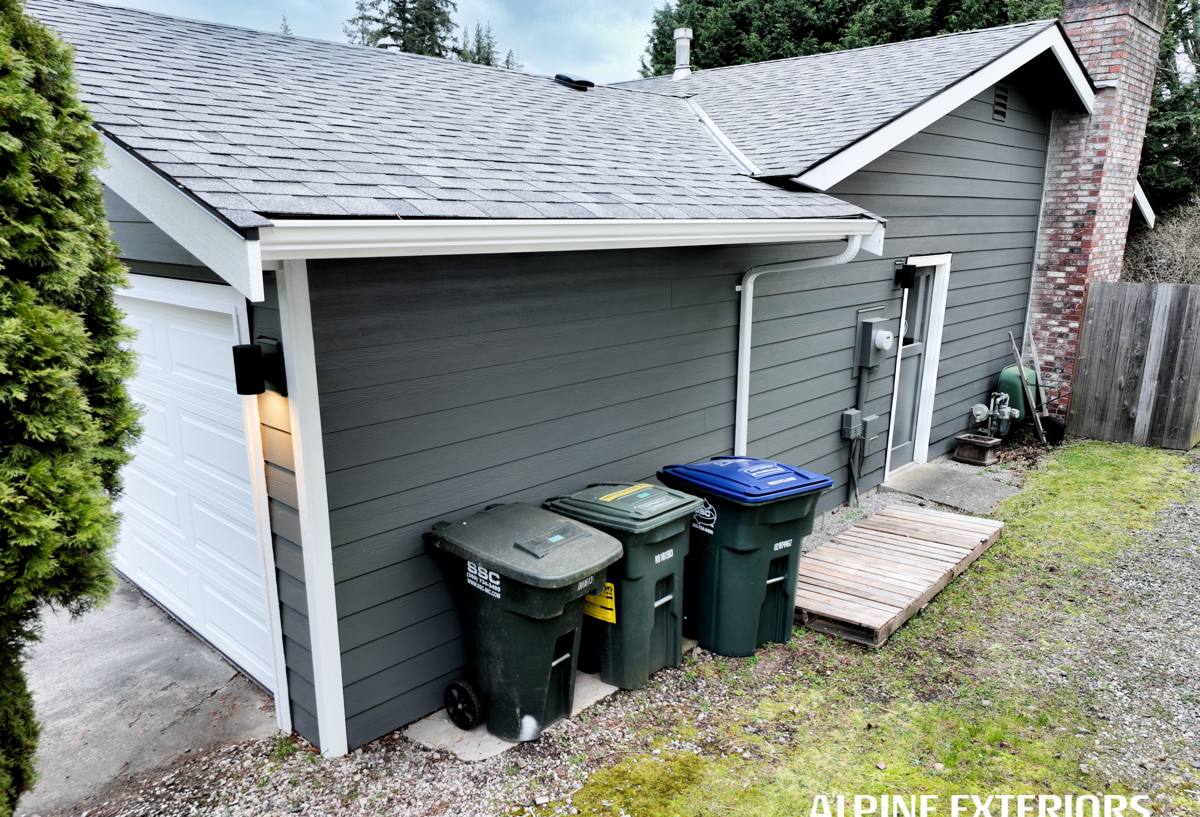
What Actually Fails First on These Homes
When we tear old siding off a California Creek house, the failure pattern is usually consistent. It's worth knowing what to look for, because these are the areas that decide whether a repair will actually hold or whether full replacement is the honest answer.
Moisture-Driven Failures
Butt joints and field seams are almost always the first place water gets in. Once caulk shrinks or cracks — which happens faster under constant salt-air exposure — wind-driven rain pushes moisture behind the panel instead of running off it. On wood-based products like hardboard or untreated wood siding, that moisture leads to swelling, delamination, and soft spots. On any siding, it eventually reaches the sheathing and framing behind it.
Moss, Algae, and Trapped Moisture
Shaded walls near tree lines or on the north side of a home hold moisture longer, and moss takes hold in the texture of painted wood, hardboard, and some composite products. Moss isn't just cosmetic — it keeps the wall damp for days after rain has stopped, which accelerates rot and paint failure underneath it.
Corrosion and Finish Breakdown
Salt air corrodes exposed fasteners faster than it would inland, which shows up as rust streaks bleeding down the face of the siding. Paint and factory finishes also chalk and fade faster under the combination of UV, salt, and constant moisture cycling.
What a Correct Siding Replacement Actually Involves
Replacing siding on a home exposed to this kind of weather is not a cosmetic swap — it's an opportunity to fix the water management system behind the wall, which is usually where the real problem lives.
Tear-Off and Sheathing Inspection
Full removal of the old siding lets us actually see the sheathing, framing, and any existing water-resistive barrier. This is the step that gets skipped by anyone doing a quick recover job, and it's the step that matters most near the water — rot at the bottom courses, around window and door openings, and at any old flashing is common and needs to be repaired before anything new goes back on.
Water-Resistive Barrier and Flashing
A correctly installed weather-resistive barrier, properly lapped and taped, combined with correct flashing at every window, door, and penetration, is what actually keeps driving rain out. Siding itself sheds most water, but it is not the sole waterproofing layer — the barrier and flashing behind it are what stop the wind-driven rain that gets past the cladding.
Fastening and Clearances
Fastener type, spacing, and depth all affect long-term performance, especially in a salt-air environment where corrosion-resistant fasteners matter more than they would inland. Proper clearance from grade, decks, and roof lines also keeps splash-back and standing moisture away from the bottom of the wall, which is consistently where we find the worst damage on older homes.
Signs It's Time to Replace, Not Patch
Not every siding problem calls for full replacement — but on homes in this area, patching often just delays the inevitable once these signs show up:
- Soft or spongy spots when you press on the siding, especially near the bottom courses or below windows
- Persistent moss or algae growth that returns within a season of cleaning
- Paint that's peeling or bubbling rather than just fading
- Visible gaps or cracked caulk at butt joints and corners
- Rust streaking below nail heads or fasteners
- Warping, buckling, or panels that no longer sit flat against the wall
- Interior signs like musty smells, staining, or soft drywall near exterior walls
Why We Only Install James Hardie Fiber Cement
We install exclusively James Hardie fiber cement siding, and in a climate like this one, that's a deliberate standard rather than a brand preference. Fiber cement is non-combustible, doesn't swell or delaminate the way wood-based products can when repeatedly wetted, and Hardie's ColorPlus factory finish is baked on under controlled conditions rather than field-applied — which matters when you're fighting UV, salt, and moisture all at once. Hardie also engineers its HZ5 product line specifically for regions with weather like the Pacific Northwest's, meaning the product's moisture and freeze-thaw performance is built around the conditions California Creek homes actually face, not a national average.
We don't install vinyl, LP SmartSide, Cemplank, Allura, or primed wood siding, and we're upfront about why: each of those products has real trade-offs in maintenance burden, moisture behavior, or long-term finish durability that we've seen play out on homes in this exact environment. Hardie isn't maintenance-free, but its failure points are better understood, its warranty is stronger, and it holds up to salt air and sustained damp better than the alternatives we've moved away from.
How Different Siding Materials Hold Up Near the Water
| Material | Moisture Behavior | Moss/Algae Resistance | Salt Air Durability | Maintenance |
|---|---|---|---|---|
| Vinyl | Sheds water but joints and J-channels trap moisture; can warp in heat | Moderate — smooth surface but grows algae in shaded areas | Can become brittle over time | Low, but limited repair options once damaged |
| Wood / LP SmartSide | Absorbs moisture at cut edges and joints; prone to swelling | Low — textured surface holds moisture and moss | Finish degrades faster under salt exposure | High — regular painting and caulk maintenance |
| James Hardie Fiber Cement | Dimensionally stable; doesn't swell or delaminate | Good — factory finish resists moss and mildew growth | Engineered HZ5 line built for wet coastal climates | Low — occasional wash, no repainting cycle needed |
Our Siding Replacement Process
- On-site assessment of existing siding, trim, and any visible moisture damage
- Full tear-off of old siding and inspection of sheathing and framing underneath
- Repair or replacement of any damaged sheathing, framing, or old flashing found during tear-off
- Installation of a correctly lapped water-resistive barrier and new flashing at every opening
- Installation of James Hardie fiber cement panels, plank, or shingle siding to manufacturer fastening specifications
- Trim, corner, and joint detailing finished to shed water rather than trap it
- Final walkthrough covering care, expected finish life, and what to watch for going forward
What Drives the Cost of a Siding Replacement Here
Every home is different, but the same handful of factors move the price up or down on most California Creek projects.
| Factor | Why It Matters |
|---|---|
| Square footage and home shape | More wall area, dormers, and cut-ins mean more material and labor |
| Sheathing and framing condition | Rot found during tear-off adds repair scope before new siding can go on |
| Existing siding type | Some materials come off cleaner and faster than others |
| Trim and detail level | Corner boards, window trim, and accent details add labor time |
| Access and site conditions | Slopes, tight lot lines, or limited staging area affect scaffolding and logistics |
| Siding profile chosen | Lap, shingle, and panel Hardie products carry different material and install costs |
We don't post fixed pricing because the sheathing condition alone can shift a project significantly once tear-off starts — but we'll always walk you through exactly what we find and what it changes before moving forward.
Why Hiring a Crew That Already Works in California Creek Matters
Siding installation isn't the same job in every part of Whatcom County. A crew that mostly works drier, inland neighborhoods can install a technically correct wall and still miss the details that matter specifically near the water — extra attention to flashing at exposed elevations, fastener choices that account for salt air, and timing tear-off around the wettest stretches of the moss season so open walls aren't sitting exposed longer than they need to be.
Working this area regularly also means we're familiar with how wind and rain actually move across these lots, which walls take the worst of it, and where moisture problems tend to originate on homes of a similar age and construction. That local pattern recognition is the difference between a replacement that looks right on day one and one that's still performing correctly ten years in.
If your siding is showing any of the signs above, or you're just trying to plan ahead before the next wet season, we're happy to take a look. The estimate is free, there's no pressure, and you'll walk away knowing exactly what your home actually needs — just fill out the form below to get started.