 Semiahmoo Exterior
 Why California Creek Homes Need a Different Approach to Windows
California Creek sits close enough to the water that homes here take a different kind of weathering than houses even a few miles inland. Salt-laden air moves through the area regularly, wind-driven rain hits window assemblies at angles that flat installation methods were never designed for, and the long, damp stretch of the year that Whatcom County calls "moss season" keeps siding, trim, and window perimeters wet far longer than manufacturers assume in their standard specs. A window that performs fine in a dry inland climate can fail here in half the time if it wasn't chosen and installed with these conditions in mind.
Energy efficiency in this setting isn't just about a lower heating bill, though that matters too. It's about picking glass, frame, and hardware that resist corrosion and moisture intrusion while still holding a tight thermal seal through wet winters and cool, damp summers. Get that combination wrong and you end up with fogged glass, swollen sashes, or drafts within a few years — regardless of what the energy label said on install day.
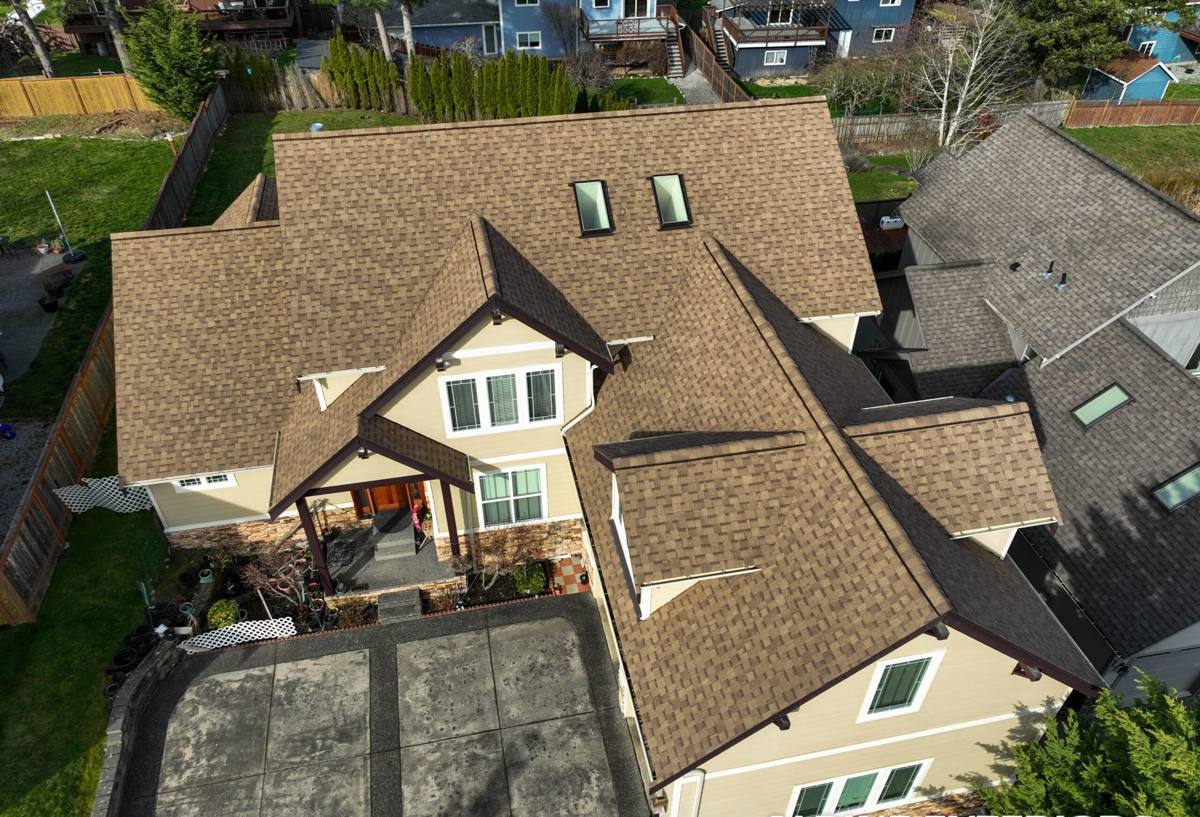
What Salt Air, Rain, and Moss Actually Do to Windows
Salt Air and Metal Components
Salt in the air accelerates corrosion on anything metal — hinges, balance systems, screen frames, and lower-grade cladding. Over time this shows up as stiff or sticking hardware, pitting on aluminum components, and hardware that seizes long before the glass itself has any problem. Windows near the water need corrosion-resistant hardware and cladding rated for coastal exposure, not the standard-grade parts that are fine 20 miles inland.
Driving Rain and Water Intrusion
Wind off the water doesn't just drop rain straight down — it drives it sideways into wall assemblies and window perimeters. A window that's watertight in a still-air test can still leak under real driving-rain conditions if the flashing details around it weren't built for that load. Most window failures we see in this kind of climate aren't glass failures at all; they're water finding a way behind the frame through a gap in the flashing or a bead of sealant that was never really doing the job.
Moss and Trapped Moisture
Moss doesn't attack the window itself, but it holds moisture against trim, sills, and siding for extended periods, which keeps wood components wet and encourages rot right at the point where the window meets the wall. Once moisture gets into that transition zone, it's a slow, hidden problem — often not visible until interior sill damage or paint failure gives it away.
What "Energy-Efficient" Really Means in This Climate
Energy-efficient windows are usually sold on U-factor and Solar Heat Gain Coefficient (SHGC) numbers, and those numbers matter. But in a marine climate like this one, the frame material and the seal quality matter just as much as the glass package, because a great insulated glass unit installed in a frame that warps, corrodes, or lets water behind it will lose its performance fast.
Glass Package
For this area, we generally recommend dual-pane windows with a low-E coating and an argon or krypton gas fill as the baseline — this keeps U-factors low enough for genuine winter comfort without the added cost of triple-pane, which is rarely necessary in our milder coastal temperature swings. Where a home faces more direct wind or west-facing exposure, upgrading the glass spacer to a warm-edge (non-metal) design helps resist the condensation and seal fatigue that constant humidity can accelerate.
Frame Material
Frame choice is where climate-specific judgment matters most. Vinyl performs well and resists corrosion but can flex more in the largest openings. Fiberglass holds its shape better under temperature swings and takes coastal exposure well, at a higher cost. Wood-clad units look great but need consistent maintenance in a moss-prone, high-moisture area — we're upfront that they're a bigger long-term commitment here, not a knock on the product itself, just an honest read on what this climate asks of it.
| Frame Material | Coastal/Moisture Performance | Maintenance Needs | Typical Fit |
|---|---|---|---|
| Vinyl | Good; won't corrode or rot | Low | Most homes, best value |
| Fiberglass | Very good; stable in temperature/humidity swings | Low | Larger openings, higher-exposure sides |
| Aluminum | Fair; prone to corrosion near salt air unless well-clad | Moderate | Limited use, mainly commercial/specialty |
| Wood-clad | Fair; exterior clad protects wood but perimeter still needs attention | High | Homes prioritizing a specific interior look |
What a Correct Installation Involves
The window itself is maybe half the job. In a climate that drives rain sideways and keeps trim damp for weeks at a time, the installation details around the window are what actually determine whether it stays watertight and efficient for the long haul.
- Removing old flashing and sealant fully rather than sealing over it
- Installing a proper sill pan to direct any water that does get past the exterior back outside instead of into the wall
- Using flashing tape and house wrap integration that shed water in the correct shingle-lap order
- Shimming and leveling the unit so the sash operates correctly and the seal isn't stressed unevenly
- Insulating the gap between frame and rough opening — not overfilling with expanding foam, which can bow the frame
- Sealing the interior air barrier separately from the exterior water barrier, so the two systems work independently
- Checking operation and seal integrity before calling the job finished
Skip any of these steps and you can still end up with water intrusion or drafts even with a top-tier window, because the failure point moved from the glass to the installation.
Our Process for California Creek Homes
We start with a walk-through of the specific windows in question — noting sun and wind exposure on each side of the house, current condition of trim and sills, and any signs of past water intrusion. That assessment drives the product recommendation; we're not selling the same package to every wall of the house regardless of exposure.
From there we go over frame material, glass package, and realistic cost ranges before any work starts, so there are no surprises. Installation follows the flashing and sealing sequence above on every unit, not just the ones facing the weather. Once installed, we walk the homeowner through operation and what to watch for over the first season, since a new window settling into a marine climate can show minor adjustment needs that are normal and quick to fix if caught early.
Why Local Experience Matters Here
A crew that mostly works drier, inland jobs can still install a technically correct window — but the judgment calls around flashing detail, sealant selection, and frame material for a specific exposure come from having done this work repeatedly in Whatcom County's coastal conditions. Knowing how long moss season really runs, how far driving rain travels into a wall assembly on an exposed elevation, and which hardware actually holds up to salt air over years rather than months isn't something you get from a spec sheet. It comes from seeing what fails here and building around it.
Signs Your Current Windows Are Already Struggling
- Fogging or moisture between the panes (a failed seal on the insulated glass unit)
- Sashes that stick, drag, or won't latch cleanly
- Visible gaps, cracked sealant, or soft trim around the frame
- Noticeable drafts or cold spots near the window on windy days
- Paint failure or discoloration concentrated right at the sill or frame edge
Any of these can show up well before a window is old enough to have "worn out" on a normal timeline — coastal exposure just shortens the clock.
Cost Factors to Understand Before You Budget
| Factor | Why It Moves the Price |
|---|---|
| Frame material | Vinyl is typically the most affordable; fiberglass and wood-clad cost more upfront |
| Glass package | Upgraded low-E coatings and gas fills add cost but improve comfort and efficiency |
| Exposure side | Wind- and rain-exposed elevations may need upgraded flashing detail or hardware |
| Existing damage | Rot or water damage found during removal adds repair scope before the new window goes in |
| Number and size of openings | Larger or custom-sized units cost more than standard sizes |
We give a written, itemized estimate before work begins so homeowners can see exactly what's driving the number, rather than a single lump figure.
Maintenance in a Moss-Prone Climate
Even a correctly installed, high-quality window benefits from basic upkeep in this environment. Keeping moss and debris cleared from adjacent trim and sills, rinsing accumulated salt residue off glass and hardware periodically, and checking sealant lines once a year for cracking go a long way toward getting the full service life out of the investment. None of this is heavy maintenance — it's a few minutes a season — but skipping it entirely is how avoidable moisture problems get started.
If you're weighing whether it's time to replace windows on a California Creek home, we're happy to take a look and give you a straightforward, no-pressure assessment of what your specific home actually needs. Use the form below to request a free estimate.