 Semiahmoo Exterior
 Roofing California Creek Homes for the Coastline They Actually Sit On
California Creek sits close enough to the water and the tree line that its roofs live a harder life than roofs twenty miles inland. Salt-laden air off the Strait and Drayton Harbor area, wind-driven rain that comes in sideways more often than straight down, and a long stretch of the year when moisture and shade combine to grow moss — all of it lands on the same asphalt shingles that a big-box installer might treat like any other job. They're not the same job. A roof here needs the right underlayment, the right ventilation, and installation details that account for wind and standing moisture, not just a shingle nailed to code minimums.
This page covers what that looks like specifically for asphalt shingle roofing in California Creek: what the climate actually does to a roof, what a correctly built system includes, how we handle the work from first look to final inspection, and why it matters to hire a crew that already knows this stretch of Whatcom County rather than one learning it on your roof.
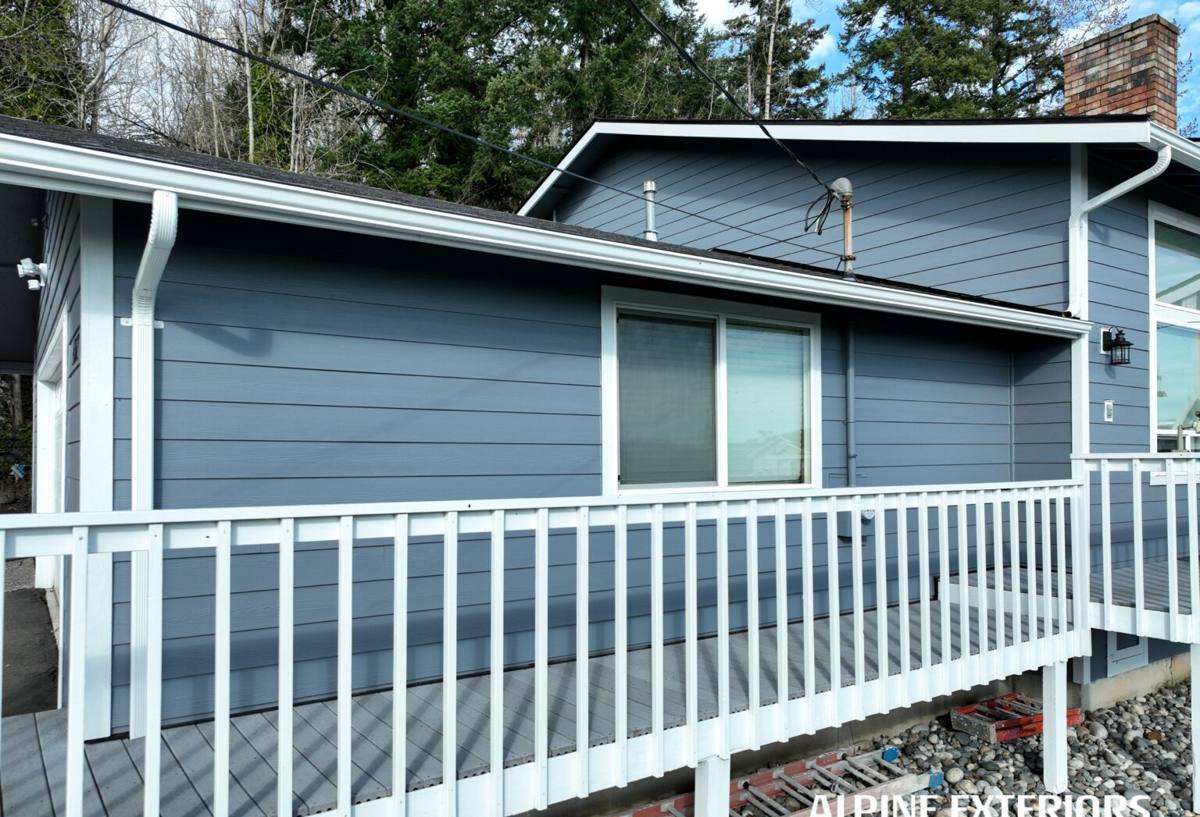
What Salt Air, Driving Rain, and Moss Actually Do to a Shingle Roof
Salt Air and Metal Fatigue
Salt-bearing air corrodes exposed metal faster than a drier inland climate would — roofing nails, flashing, vent caps, and gutter hardware all age quicker near the water. Once a nail head or flashing seam starts to corrode, it stops sealing the way it did on day one, and that's how small leaks start years before a homeowner notices a stain on the ceiling.
Wind-Driven Rain
Rain that comes in at an angle, rather than falling straight down, finds every gap a standard install leaves behind — under shingle tabs, around vent boots, along step flashing at walls and chimneys. A roof built for calm-weather rain can perform fine for years and then fail during the one storm that pushes water sideways under the shingle course.
Moss and Trapped Moisture
Shade from surrounding trees plus a long damp season gives moss the two things it needs: moisture and time. Moss doesn't just sit on top of shingles looking bad — it holds water against the shingle surface, lifts tabs as it grows, and works its way toward the nail line. Left alone through a few wet seasons, moss shortens the life of an otherwise sound roof by years.
What a Correctly Built Asphalt Shingle Roof Includes Here
"Correct" isn't a marketing word — it's a specific list of details that either get done right or don't. For California Creek, that list includes:
- Ice-and-water shield at eaves, valleys, and around every penetration — not just at the code-minimum locations, but anywhere wind-driven rain is likely to push water uphill under a shingle.
- Synthetic underlayment across the full deck, which holds up to moisture exposure far better than old-style felt if a shingle is ever compromised before the roof is finished or during a future repair.
- Balanced ventilation — intake at the eaves and exhaust at the ridge, sized to the actual attic, so moisture from inside the house doesn't condense against the underside of the deck and feed rot or mold.
- Corrosion-resistant fasteners and flashing suited to a marine-influenced climate, not generic mill-finish hardware that starts rusting within a couple of seasons.
- Proper step and counter-flashing at every wall, chimney, and dormer intersection — the single most common source of "mystery leaks" on otherwise good roofs.
- Correct nailing pattern and shingle exposure, installed to the manufacturer's high-wind specification rather than a generic pattern, since wind loading here is a real factor.
Choosing the Right Shingle for This Climate
Not every asphalt shingle is built the same way, and the difference matters more here than in a drier, shadier climate. The table below compares the common options we install and how each holds up against salt air, rain, and moss.
| Shingle Type | Typical Lifespan | Algae/Moss Resistance | Best Fit |
|---|---|---|---|
| Standard 3-tab | 15-20 years | Low unless treated | Budget-conscious re-roofs on sunnier, more exposed lots |
| Architectural (dimensional) | 25-30 years | Moderate; better with algae-resistant granules | Most California Creek homes — better wind rating and thicker profile |
| Algae-resistant (copper/zinc granules) | 25-30 years | High | Shaded lots or homes with heavy tree cover and a history of moss |
| Impact-resistant / high-wind rated | 30+ years | Moderate to high, depending on line | Exposed, wind-facing sites near open water |
For most California Creek properties, we lean toward a dimensional shingle with algae-resistant granules — it's a modest upgrade in material cost that pays for itself by keeping moss from taking hold in the first place, rather than paying to have it treated or removed later.
How Our Roofing Process Works
- On-site inspection. We walk the roof and attic, check for existing moss, soft decking, ventilation problems, and flashing condition before quoting anything.
- Honest scope. We tell you plainly whether you need a full replacement, a partial re-roof, or repairs — and why. If a repair is genuinely the right call, that's what we recommend.
- Tear-off and deck check. Old material comes off down to the deck, and we inspect the sheathing for rot or soft spots before anything new goes down — moisture damage under old shingles is common on shaded, damp lots.
- Underlayment and flashing. Ice-and-water shield, synthetic underlayment, and new flashing go in at every vulnerable point, sized for this climate rather than a generic minimum.
- Shingle installation. Installed to manufacturer spec for nailing pattern and exposure, with attention to hip, ridge, and valley detail.
- Ventilation check. We confirm intake and exhaust are balanced for the attic's actual size, adding or correcting vents where needed.
- Final walk-through. We review the finished roof with you, including care and moss-prevention notes specific to your lot's sun and shade exposure.
Repair, Partial Re-Roof, or Full Replacement?
Not every roof in California Creek needs full replacement, and we won't tell you it does when it doesn't. The right call usually comes down to a few honest factors:
| Factor | Points Toward Repair | Points Toward Replacement |
|---|---|---|
| Age of roof | Under 12-15 years | Approaching or past shingle's rated lifespan |
| Moss/algae extent | Isolated patches, shingles intact underneath | Widespread moss lifting shingles across multiple slopes |
| Deck condition | Solid, dry sheathing | Soft spots or rot found during inspection |
| Leak history | One-time or localized flashing issue | Recurring leaks in different spots each season |
| Ventilation | Adequate, no attic moisture signs | Undersized or blocked, causing ongoing moisture problems |
Living With Moss and Moisture Between Roofing Jobs
A well-built roof still needs some attention in a climate like this. A short seasonal checklist keeps small issues from becoming roof-age-shortening ones:
- Clear overhanging branches back from the roofline so shingles get more light and dry out faster after rain.
- Have gutters cleaned at least twice a year — clogged gutters back water up under the eave edge, exactly where wind-driven rain already puts the most pressure.
- Watch for dark streaking or green-black patches on north-facing or shaded slopes; that's early moss and algae, best addressed before it lifts shingle tabs.
- Check attic ventilation isn't blocked by insulation or storage — restricted airflow is one of the most common causes of premature shingle failure we see.
- Have flashing around chimneys, vents, and skylights inspected every few years, since these are the first places corrosion and wind-driven rain find a way in.
Why It Matters to Hire a Crew That Already Works California Creek
A roofing crew that mostly works drier, more inland areas can still put on a shingle roof that looks fine — for a while. What they're less likely to get right the first time are the details that only matter in a coastal, tree-shaded, high-moisture environment: where ice-and-water shield actually needs to go given local wind direction, how much ventilation an attic here really needs, and which shingle lines hold up against years of moss pressure instead of just the first one or two. We work on homes throughout the Semiahmoo and Whatcom County area regularly, which means we're not guessing at what this climate does to a roof — we're already accounting for it in every estimate and every install.
If you're dealing with moss buildup, a roof that's getting up in years, or you just want an honest opinion on what your California Creek home actually needs, we're glad to take a look. Request a free, no-pressure estimate using the form below and we'll walk the roof with you and tell you straight what we find.