 Semiahmoo Exterior
 Why California Creek's Climate Is Hard on Siding
California Creek sits close enough to the water that homes here deal with a combination most inland Whatcom County properties don't: salt-laden air, wind-driven rain that hits siding sideways instead of straight down, and a moss and algae season that can stretch for most of the year in shaded, north-facing spots. Any one of these on its own is manageable. Together, they're what actually wears siding out early.
Salt air is corrosive to fasteners and trim metal, and it accelerates the breakdown of coatings that aren't formulated to handle it. Driving rain finds every gap in flashing, every under-caulked seam, and every spot where siding was nailed too tight to the sheathing. And moss doesn't just look bad — it holds moisture against the wall assembly long after a storm has passed, which is exactly the condition that rots wood-based siding and delaminates weaker composite products from the inside out.
None of this means siding is doomed here. It means the material and the installation both have to be chosen with this specific exposure in mind, not a generic "coastal Washington" assumption. A product and crew that perform fine in a dry inland subdivision can fail years early a few miles from the water.
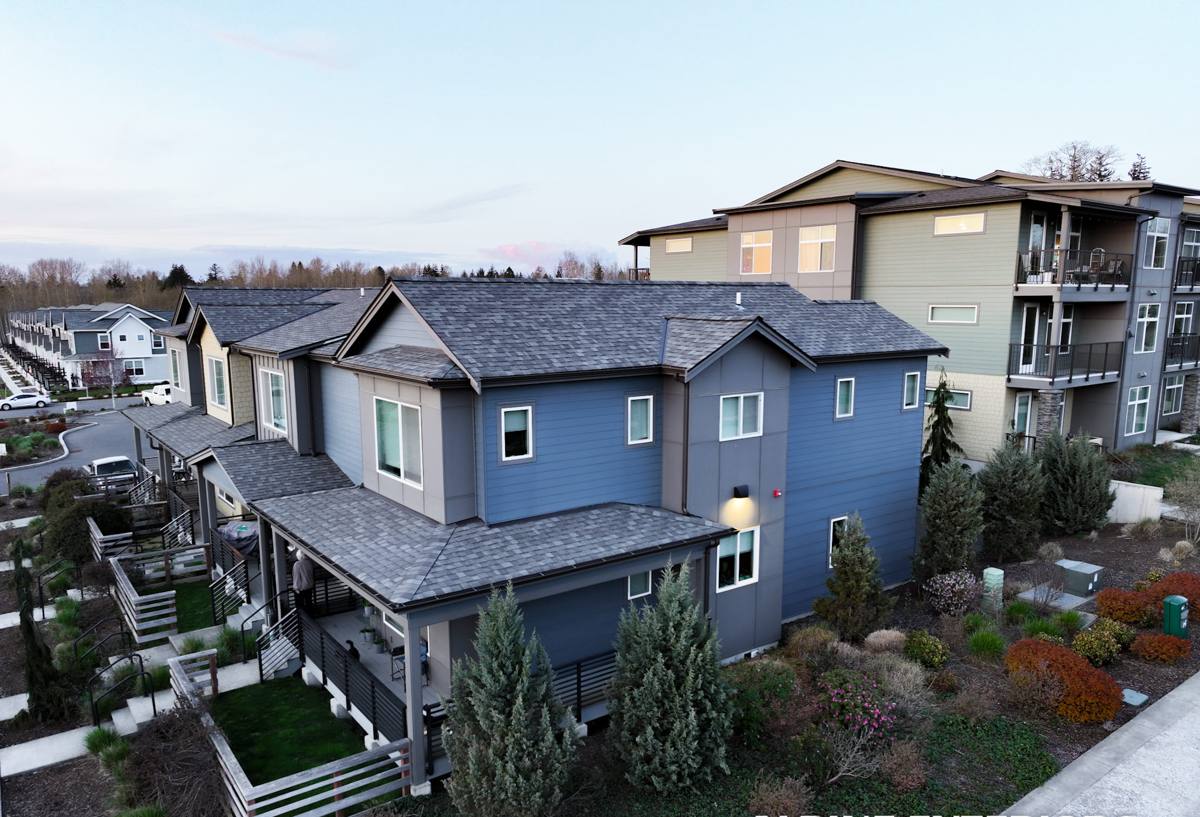
What a Correct Fiber Cement Job Requires in This Environment
Fiber cement is not a material you can install "close enough" and expect it to perform. In a salt-air, high-rain environment like California Creek, a handful of details separate a job that lasts decades from one that causes problems in five to seven years.
- Proper clearance and flashing at every horizontal surface — window heads, deck ledgers, roof-to-wall transitions — so wind-driven rain has a way out instead of a way in.
- Correct fastener spacing and nail set depth, since over-driven nails crack the board's edge and create a moisture entry point that shows up as staining or swelling later.
- Stainless or hot-dip galvanized fasteners and trim hardware rated for coastal exposure, not standard interior-grade fasteners that corrode and streak the siding.
- A drainage plane (weather-resistant barrier plus furring or a rainscreen gap) behind the siding so any moisture that does get past the cladding can drain and dry instead of sitting against the sheathing.
- Factory-finished panels installed to the manufacturer's exposure and caulking specification, rather than field-painted boards that lose their finish integrity years sooner.
Skip any one of these and the siding itself can be excellent material and still underperform. This is why we treat installation method as seriously as product selection.
Why We Only Install James Hardie
We install James Hardie fiber cement exclusively — not vinyl, not LP SmartSide, not Cemplank or Allura fiber cement, not primed spruce or cedar. That's a deliberate standard, not a brand preference we picked at random.
Vinyl siding is affordable and low-maintenance, but it's a plastic product: it can warp or deform in direct heat, it flexes and rattles in sustained wind, and its color is baked all the way through so fading is uniform but permanent — there's no refinishing it back to new. In a wind-exposed spot like California Creek, that flexing matters over time.
Engineered wood siding (LP SmartSide and similar products) performs well in many climates, but it's wood-based at its core, which means its long-term durability depends heavily on keeping moisture off the cut edges and out of any breach in the coating. In a zone with this much driving rain and a long damp moss season, that's a maintenance burden we're not comfortable putting on a homeowner's shoulders.
Other fiber cement brands make a legitimate product, but James Hardie backs its siding with a strong transferable limited warranty, offers climate-engineered HZ product lines built specifically for wetter regions, and applies its ColorPlus factory finish with a baked-on process that holds up better and longer than field-applied paint. For a coastal Whatcom County property, that combination is what we're willing to put our name behind.
How James Hardie Performs Against the Alternatives Here
| Factor | James Hardie Fiber Cement | Vinyl | Engineered Wood (LP SmartSide) |
|---|---|---|---|
| Non-combustible | Yes | No | No |
| Moisture/rot resistance | High — cement-based, not wood | Not moisture-sensitive, but seams/flex are a concern | Depends on coating integrity at cut edges |
| Salt-air performance | Strong with correct fasteners/trim | Fair — can chalk and become brittle | Fair — coating wear accelerates near salt spray |
| Finish longevity | Factory ColorPlus, long fade resistance | Color molded through, fades uniformly | Field or factory paint, repaint cycle needed |
| Wind/impact resistance | Rigid, low flex | Can flex, crack in cold, rattle in wind | Good, but edge damage exposes substrate |
| Warranty structure | Strong transferable limited warranty | Varies by manufacturer | Varies, often shorter on finish |
Our Process for California Creek Homes
Assessment and Exposure Mapping
We start by walking the exterior and noting which walls take the worst of the weather — typically the sides facing open water or prevailing wind — versus shaded, north-facing walls where moss and algae build up fastest. That exposure map drives decisions on flashing detail, HZ product selection, and where extra attention to drainage is worth it.
Tear-Off and Substrate Check
We remove the old siding down to the sheathing and check for hidden rot, soft spots, or prior water intrusion around windows and penetrations. This is often where older siding jobs reveal the corners that were cut — missing flashing, no drainage gap, or fasteners driven straight through into studs without proper sealing.
Weather Barrier and Drainage
We install a code-compliant weather-resistant barrier and, where the wall assembly calls for it, a rainscreen or furring gap so water that gets behind the cladding can drain and the wall can dry rather than trap moisture — the detail that matters most given how long California Creek's moss season runs.
Installation to Spec
Hardie panels and trim go up following manufacturer fastening and clearance specifications, with corrosion-resistant fasteners and properly sealed joints. We don't deviate from spec to save time, because the deviations are exactly what shows up as problems in year three or four.
Final Detailing and Walkthrough
Caulking, trim, and touch-up happen last, followed by a walkthrough so you understand what was done and what, if anything, needs periodic attention going forward.
Living With Fiber Cement in a Salt-Air, Moss-Prone Area
One advantage of fiber cement over wood-based alternatives is how little upkeep it actually needs when installed correctly. It won't rot, it doesn't attract insects, and the factory finish holds its color far longer than field-applied paint. That said, "low-maintenance" isn't "no-maintenance" in this environment.
- Rinse siding periodically to clear salt residue and organic buildup, especially on walls that stay shaded and damp.
- Keep gutters clear so overflow doesn't run down the face of the siding and feed moss growth at trim lines.
- Trim back vegetation and tree cover that keeps a wall shaded and damp longer than the rest of the house.
- Inspect caulking at trim and penetrations every year or two — caulk is the one component that wears out before the siding does.
Signs Your Current Siding May Already Be Failing
- Persistent staining or dark streaking below nail heads or trim joints
- Soft or spongy spots when pressed, especially near the bottom courses
- Visible gaps, warping, or buckling panels
- Paint that's peeling or bubbling rather than just fading
- Moss or algae that returns within weeks of cleaning
- Rising interior heating costs with no other explanation
What Affects the Cost of a Fiber Cement Project Here
| Cost Factor | Why It Matters in This Area |
|---|---|
| Extent of substrate repair | Wind-driven rain and moss-related moisture often mean hidden sheathing damage isn't known until tear-off |
| Number of wall penetrations and trim details | Windows, decks, and roof-to-wall transitions each need individual flashing attention |
| Product line selected | Hardie's HZ5 line and specific plank profiles vary in price versus standard options |
| Drainage plane addition | Adding a rainscreen gap on a re-side adds labor but pays off in a climate this wet |
| House height and access | Multi-story or steep-lot homes near the water often need more staging and time |
We don't quote a project until we've actually looked at the walls — broad ranges without an on-site look aren't useful to you or accurate for us.
Why Hiring a Crew That Already Works California Creek Matters
A siding crew that mostly works dry, inland jobs will still get the panels up straight. What they're less likely to get right on the first pass is the flashing detail at a deck ledger facing the water, the fastener spec for a salt-exposed wall, or the judgment call on where a rainscreen gap actually earns its cost versus where it doesn't. Those calls come from having done this specific kind of job, in this specific kind of weather, more than once.
We work throughout Semiahmoo and the surrounding Whatcom County coastline, which means we're not guessing at how a wall in California Creek behaves — we've already seen how the salt air, the rain angle, and the moss season interact with siding here, and we install accordingly.
Get a Straight Answer About Your Home
If your siding is showing its age, or you're planning ahead before it becomes an emergency, we're happy to take a look and give you a straightforward assessment — no pressure, no inflated urgency. Request a free estimate below and we'll walk the exterior with you and talk through what your home actually needs.