 Semiahmoo Exterior
 California Creek's Weather Is Hard on Roofs — Here's Why
Homes near California Creek sit close enough to Semiahmoo Bay that salt-laden air is part of daily life, not an occasional event. That air moves inland on the wind and settles onto every exposed surface, including your roof. Combine that with Whatcom County's long, wet winters and the moss season that seems to stretch from October well into spring, and you've got a roofing environment that punishes shortcuts. A roof built for a drier inland climate simply doesn't hold up the same way out here.
Driving rain is the other piece of it. Storms off the water don't always come straight down — wind-driven rain gets pushed sideways under shingle edges, into exposed nail heads, and along any flashing detail that wasn't sealed correctly the first time. On a lot of older roofs in this area, the failures we find aren't from bad materials. They're from installation details that were fine for a calmer climate but were never built for wind-driven coastal rain and near-constant dampness.
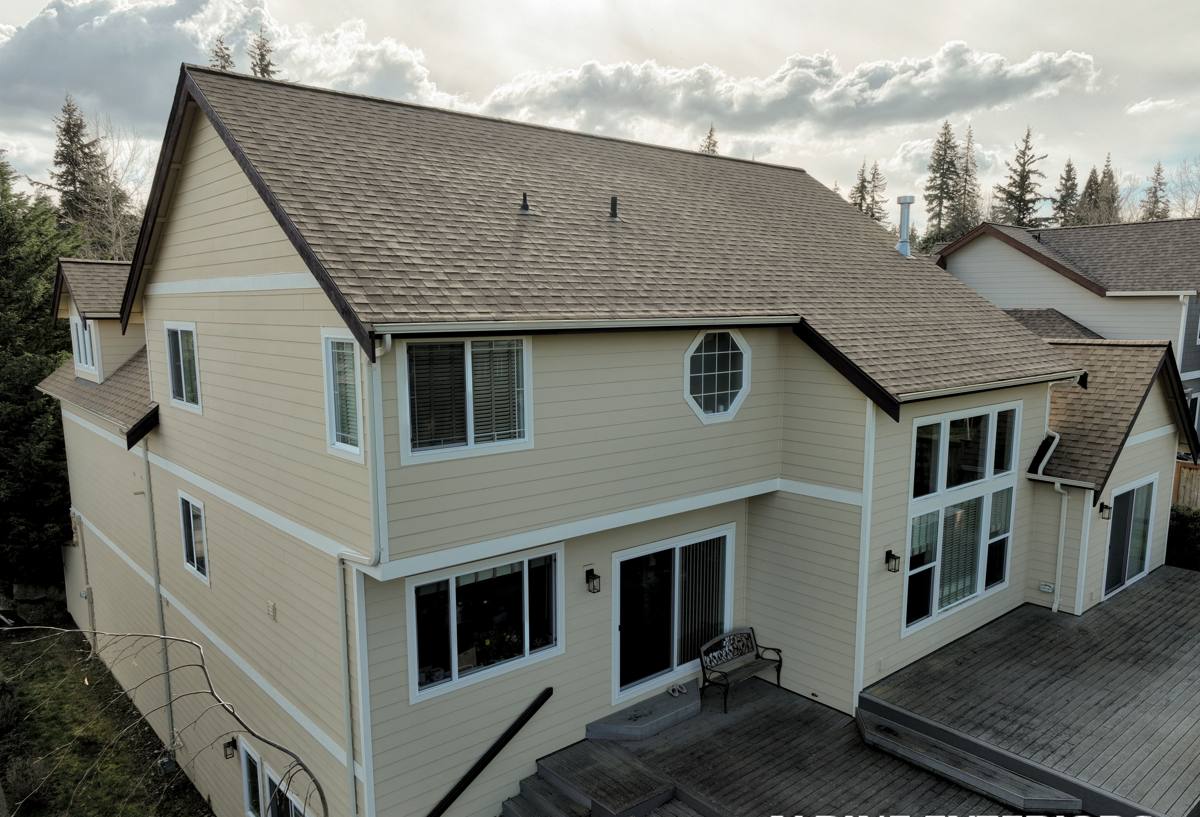
Signs a California Creek Home Needs a New Roof, Not Another Repair
Repairs make sense when a roof has isolated damage and is still within its useful life. Full replacement makes sense when the roofing system itself — not just one spot — is breaking down. Because of the moss and moisture load in this area, that breakdown often shows up earlier than the shingle's rated lifespan would suggest.
- Granules collecting in gutters or at downspout outlets, especially after a hard rain
- Moss or algae streaking that comes back within a season or two of being cleaned off
- Shingles that look cupped, curled at the edges, or brittle when walked on
- Soft spots in the roof deck, or sagging visible from the ground
- Daylight or water staining in the attic around vents, chimneys, or valleys
- A roof that's 18–25+ years old and has never had underlayment or flashing replaced
- Rising energy bills paired with poor attic ventilation or insulation
If you're seeing two or more of these, it's worth having someone look at the whole system rather than patching the same trouble spot again next winter.
What a Correct Roof Installation Actually Involves
A roof is a system, not a single product. The shingles or metal panels get the attention, but most of the roof's actual performance — how well it sheds wind-driven rain, how long it resists moss, whether it leaks in year three or year twenty — comes down to what's underneath and around them.
The Roof Deck
Before anything new goes on, the deck gets inspected for soft spots, delamination, and rot, particularly around valleys and eaves where water has had the most opportunity to sit. Any compromised sheathing gets replaced. Installing new roofing over a bad deck is one of the most common shortcuts we see, and it's the fastest way to guarantee a callback.
Underlayment
In a climate with this much sustained moisture, we lean toward synthetic or self-adhered underlayment over old-style felt, especially at eaves and valleys where wind-driven rain concentrates. This is the roof's last line of defense if wind ever lifts a shingle edge — which it will, eventually, somewhere on every roof's life.
Flashing
Flashing around chimneys, skylights, sidewalls, and roof-to-wall transitions is where most leaks actually start — not in the open field of shingles. Correct flashing is step-flashed, counter-flashed where needed, and sealed with materials rated for long-term UV and moisture exposure, not just caulked and left.
Ventilation
A roof needs balanced intake and exhaust airflow to keep the attic dry and temperature-regulated. Get this wrong and you trap moisture under the deck, which accelerates rot from the inside — invisible from the ground and often invisible from the attic floor until it's advanced.
How Our Roof Installation Process Works
1. Inspection and Estimate
We start on the roof, not just with a drive-by look. That means checking the deck condition where accessible, current flashing details, ventilation setup, and any moss or moisture patterns specific to your property's sun exposure and tree cover. You get a written estimate that spells out material, scope, and what we found — not a vague number.
2. Tear-Off and Deck Prep
Old roofing comes off down to the deck so we can actually see what we're building on. Damaged sheathing is replaced before anything new goes down. We don't install new roofing over old layers — it hides problems and voids most manufacturer warranties anyway.
3. Underlayment, Flashing, and Ice/Water Protection
This is the stage that determines how the roof performs in year five and year fifteen, not just on the day it's installed. Eaves, valleys, and penetrations get extra protection given how much sustained rain this area sees.
4. Installation
Material goes on to manufacturer specification — correct nailing pattern, correct exposure, correct fastening for local wind exposure near the water. This isn't the place to save ten minutes per square.
5. Cleanup and Final Walkthrough
Magnetic sweep for nails, full site cleanup, and a walkthrough where we show you what was done and answer questions before we consider the job finished.
Material Choices We Recommend for This Climate
There's no single "best" roofing material for every home — it depends on your roof's pitch, your budget, how long you plan to stay in the home, and how much upkeep you want to take on. Here's how the common options stack up for a coastal Whatcom County property.
| Material | Moss/Algae Resistance | Maintenance | Typical Lifespan |
|---|---|---|---|
| Standard asphalt composition shingle | Moderate — benefits from algae-resistant granules | Periodic cleaning recommended | 20–25 years |
| Architectural (laminate) shingle | Good with algae-resistant option | Low to moderate | 25–30 years |
| Metal roofing (standing seam) | Excellent — sheds moss and debris well | Low | 40–60 years |
| Cedar shake | Poor without diligent upkeep | High — regular treatment needed | 20–30 years with upkeep |
| Synthetic composite shingle | Good | Low | 30–50 years |
We don't push cedar shake for most homes out here, and it's not because the material can't look good — it's because a coastal, moss-heavy environment demands a level of ongoing treatment and cleaning that most homeowners underestimate before they commit. If you want that look, we'll talk through what the upkeep actually requires so you're deciding with real information, not just a photo.
Salt Air and Metal: What Actually Matters
Homeowners near the water sometimes worry that salt air rules out metal roofing. In practice, it depends on the coating and fastener system, not the metal itself. Aluminum and properly coated steel panels handle coastal exposure well; the failure points are usually uncoated or poorly matched fasteners that corrode faster than the panel around them. When we install metal in this area, fastener compatibility and coating spec are part of the conversation, not an afterthought.
Ventilation and Moisture: The Part You Don't See
A new roof can look perfect and still fail early if the attic underneath isn't breathing correctly. Balanced ventilation — enough intake at the eaves and enough exhaust at the ridge — keeps moisture from condensing under the deck during our wetter months. We check existing ventilation as part of every estimate and will tell you plainly if your current setup is undersized, even if it means the job includes more than just the roofing material itself.
Warranty Coverage: Manufacturer vs. Workmanship
A new roof typically comes with two separate warranties, and homeowners often assume they're the same thing. The manufacturer's warranty covers defects in the shingles or panels themselves. The workmanship warranty — which we provide — covers installation errors, which is where most early roof failures actually originate. Ask any contractor bidding your job which workmanship warranty they offer and what voids it; installing over an old roof or skipping proper ventilation are common ways manufacturer coverage gets reduced or voided, regardless of who did the labor.
Permits, Timeline, and What Affects Cost
Most full roof replacements in this area are permitted through the applicable local building department, and we handle that process as part of the job. Timeline for a typical single-family home runs a few days to just over a week depending on size, pitch, and weather windows — and out here, we plan around rain more than most inland crews have to.
Cost depends on several factors more than any single number can capture upfront, which is why we walk every roof before quoting:
- Roof size and number of facets, valleys, and penetrations
- Pitch and accessibility — steep or multi-story roofs take more time and safety setup
- Extent of deck repair needed once old roofing is removed
- Material selected, from standard shingle to metal or synthetic
- Condition of existing ventilation and whether it needs upgrading
- Any additional work like skylight replacement or chimney flashing rebuilds
Why Hiring a Crew That Already Works California Creek Matters
A roof installed by a crew unfamiliar with this specific stretch of coastline is still a roof — but it's often missing the small decisions that come from having seen how this exact climate treats a roof over time. That includes which underlayment upgrades are worth it at the eaves, how much overhang protection makes sense given the wind direction off the bay, and where moss tends to establish first based on tree cover and roof orientation common to this neighborhood.
We also know the practical side: which local suppliers stock the materials that hold up here, what the permitting process looks like for this jurisdiction, and how to schedule around the rain patterns that define a Whatcom County winter. None of that shows up in a generic estimate, but it shows up in how the roof performs five and ten years down the road.
Get a Straightforward Estimate
If your roof is showing its age, or you just want a second opinion before committing to a repair versus a full replacement, we're glad to take a look. The estimate is free, there's no pressure, and you'll get a clear explanation of what we find and what your real options are — use the form below to get started.