 Semiahmoo Exterior
 Siding Installation in Blaine Isn't a Generic Job
Blaine sits right where the Salish Sea meets Whatcom County's marine weather patterns, and that combination is hard on exterior building materials in ways that inland siding jobs never have to account for. A siding installation done to "standard" spec somewhere in the Cascade foothills or the Puget Sound interior can fall short here, because Blaine homes deal with a tighter combination of salt-laden air, wind-driven rain off the water, and long stretches of damp, shaded moisture that keeps siding wet for days at a time. Installing siding correctly in this area means understanding that climate before the first piece of material ever goes on the wall.
This page focuses specifically on siding installation for homes in and around Blaine and the broader Semiahmoo area — what the local conditions demand, what a properly executed job actually involves, and why the installation itself matters as much as the material choice.
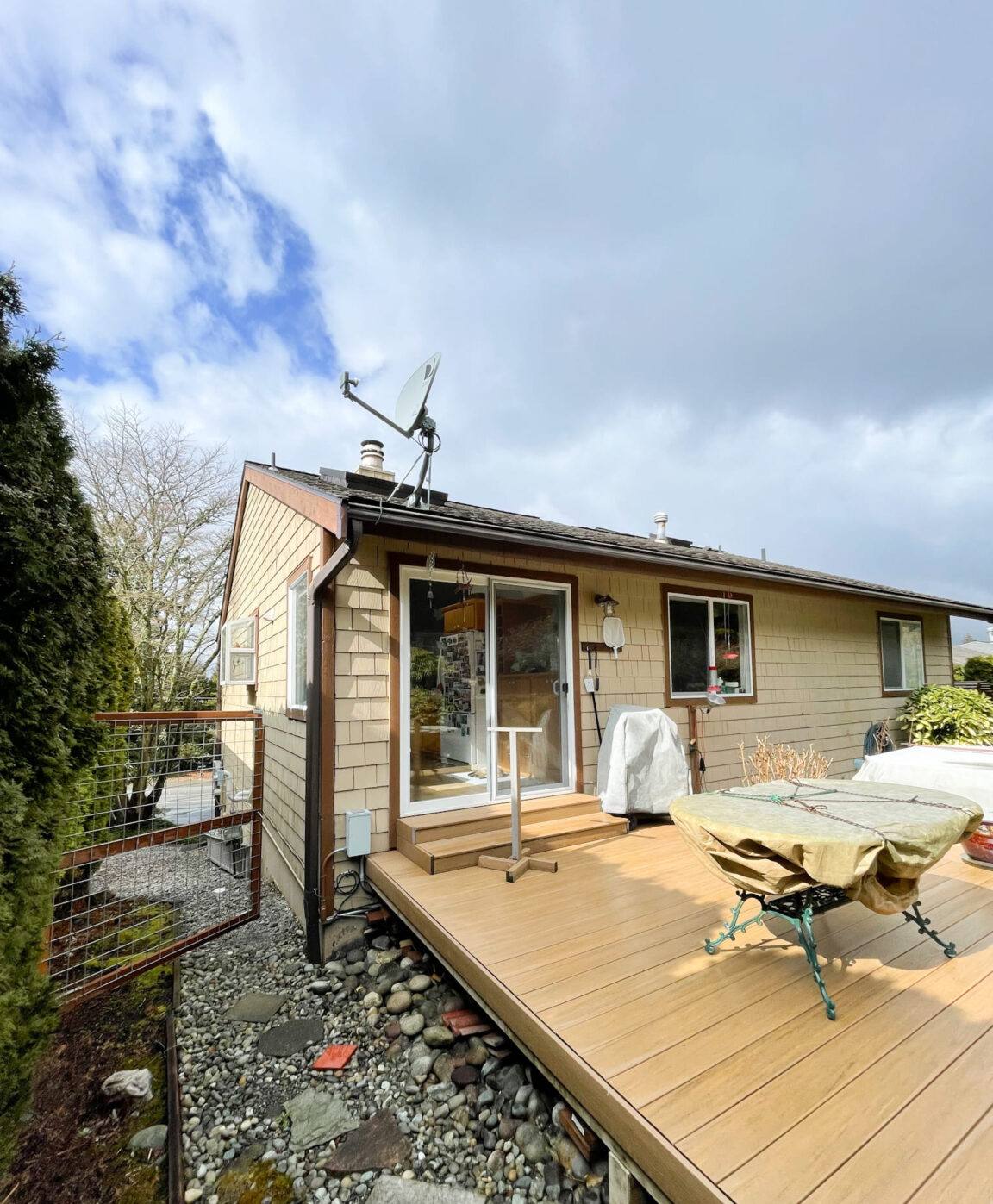
What Blaine's Marine Climate Does to Siding Over Time
Salt Air and Corrosion
Proximity to Semiahmoo Bay and the Strait of Georgia means airborne salt is a constant, low-grade presence on exterior surfaces. Salt exposure accelerates corrosion of fasteners, trim hardware, and any metal flashing components that aren't rated for coastal use. It also breaks down lower-grade paint and coatings faster than they'd wear inland, which is why the finish system on your siding matters just as much as the siding material underneath it.
Driving Rain
Storms coming off the water often bring rain sideways, not straight down. That changes how water behaves against a wall — it gets pushed up under laps, into seams, and around trim edges that would stay dry in a calmer rain pattern. A siding system that isn't installed with the right overlaps, gaps, and drainage path behind it will eventually let that wind-driven moisture find its way to the sheathing.
A Long Moss and Mildew Season
Whatcom County's damp, mild winters and shaded, tree-lined lots around Blaine create ideal conditions for moss, algae, and mildew growth on north-facing and shaded siding runs. Siding that stays wet longer because of poor drainage, tight landscaping, or inadequate ventilation behind the cladding will show green and black staining well before a comparable wall in a drier microclimate.
Signs Your Blaine Home's Siding Needs Attention
Homeowners in this area often notice one or two of the following before deciding to look into replacement. None of these are emergencies on their own, but together they usually point to a siding system that's no longer doing its job.
- Persistent moss, algae, or dark staining on shaded or north-facing walls that comes back shortly after cleaning
- Soft spots, bubbling, or visible warping, especially near ground level or below windows
- Paint that's peeling, chalking, or fading unevenly across different wall exposures
- Visible gaps at seams, corners, or trim where caulking has failed or shrunk
- Rust streaking from fasteners or metal flashing components
- A musty smell or visible moisture staining on interior walls that share an exterior wall
- Siding that flexes or feels spongy when pressed near the bottom edge
If more than one of these shows up in the same area of the house, there's a good chance moisture has already gotten past the siding surface, not just stained it.
What a Correct Siding Installation Actually Involves
The material you choose only performs as well as the installation behind it. In a climate like Blaine's, the details that get skipped on a rushed job are exactly the details that cause problems within a few wet seasons.
Sheathing and Moisture Barrier
Before any siding goes up, the wall needs a continuous, properly lapped weather-resistive barrier. In a driving-rain environment, every lap has to shed water downward and outward, not just be "close enough." Any penetrations — outlets, hose bibs, light fixtures — need to be flashed and sealed individually rather than caulked over as an afterthought.
Drainage Plane
A ventilated gap behind the siding lets bulk water that does get past the cladding drain out and lets the wall assembly dry rather than trap moisture against the sheathing. This is one of the most commonly skipped steps on lower-bid jobs, and it's one of the most important ones for a home exposed to prolonged damp conditions like Blaine sees for much of the year.
Flashing at Every Transition
Windows, doors, roof-to-wall intersections, and deck ledgers are where the vast majority of siding-related water intrusion actually starts. Correct flashing at each of these transitions — installed in the right order, lapped correctly — matters more to long-term performance than almost any other part of the job.
Fastening and Fit
Fiber cement siding has manufacturer-specified fastener types, spacing, and clearances for a reason: get them wrong and you introduce cracking, buckling, or premature fastener corrosion, especially with salt air in the mix. Gaps at butt joints and corners need to be sized to allow for material movement without leaving an open path for wind-driven rain.
Finish and Caulking
The final caulking and touch-up work is what keeps water out of seams over time. In a coastal climate, using the right sealant — one rated for the movement and moisture exposure the wall will actually see — is not optional.
Why We Install James Hardie Fiber Cement — and Nothing Else
We made a deliberate decision to install James Hardie fiber cement siding exclusively, rather than offering vinyl, LP SmartSide, or other fiber cement alternatives alongside it. That's not a marketing position — it's a reflection of what holds up under repeated salt exposure, driving rain, and a long wet season without turning into a maintenance burden for the homeowner.
Fiber cement is non-combustible and dimensionally stable in ways that wood-based and vinyl products aren't, which matters when a wall is going to spend months at a time damp or humid. James Hardie's ColorPlus finish is factory-applied and baked on under controlled conditions, which gives it better long-term color retention and adhesion than field-applied paint — a real advantage in an area where UV exposure is moderate but moisture exposure is high. Hardie also engineers regional HZ product lines specifically for climate zones like ours, and backs the material with a strong transferable warranty when it's installed to their specification.
None of that replaces correct installation. But it means we're not spending our labor putting a product on a Blaine home that we already know will need more maintenance, or perform less predictably, than what we'd choose for our own house.
Our Installation Process
- On-site assessment. We look at wall exposure, existing moisture damage, trim condition, and any problem areas specific to your home's orientation relative to wind and rain.
- Tear-off and inspection. Old siding comes off and the sheathing underneath gets inspected for rot or damage before anything new goes up — problems found here get addressed, not covered.
- Weather barrier and drainage plane installation. This is where the long-term performance of the wall actually gets decided, and we don't shortcut it.
- Flashing at every window, door, and roof transition. Done in the correct sequence so water is always directed outward and down.
- James Hardie siding installation to manufacturer fastening and clearance specifications.
- Trim, caulking, and final detailing using sealants suited to coastal moisture and movement.
- Final walkthrough so you understand what was done and what the warranty covers.
What Affects the Cost of a Siding Installation in Blaine
| Factor | Why It Matters Locally |
|---|---|
| Home size and wall complexity | More corners, transitions, and dormers mean more flashing detail work, which is where quality is won or lost in this climate |
| Existing sheathing condition | Coastal moisture exposure sometimes means hidden rot that needs repair before new siding goes on |
| Siding profile and trim style | Lap width, trim detail, and accessory boards affect both material cost and labor time |
| Access and site conditions | Tree cover, tight lots, and shaded elevations common around Blaine can add setup and drying-time considerations |
| Removal and disposal of old siding | Varies by what's currently on the house and how it needs to be handled |
Every home is different, and the only way to get an accurate number is to have someone look at the actual walls, trim, and access conditions on your property.
Why It Matters to Hire a Crew That Already Works in Blaine
A crew that installs siding across a range of climates might do fine work, but a crew that regularly works Semiahmoo, Blaine, and the surrounding Whatcom County coastline already knows which walls in this area take the worst of the wind-driven rain, where moss tends to establish first, and how to sequence a job around the wetter stretches of the year so materials aren't compromised before they're even sealed up. That local pattern recognition is difficult to substitute with a generic installation checklist, no matter how thorough it is on paper.
It also means faster, more informed answers when something about your specific property — orientation, tree cover, proximity to the water — changes how the job should be approached.
Ready to Talk About Your Blaine Home's Siding
If your siding is showing moss, staining, gaps, or soft spots, or you're simply planning ahead for a home in a climate that doesn't forgive shortcuts, we're happy to take a look and give you an honest read on what your walls actually need. Reach out for a free, no-pressure estimate using the form below — there's no obligation, just a straight assessment of your home's siding.