 Semiahmoo Exterior
 Composite Decking Built for Blaine's Coastline, Not a Catalog Photo
Blaine sits right on the water — Semiahmoo Bay and Drayton Harbor are close enough that salt-laden air reaches homes well back from the shoreline. Add Whatcom County's long, wet fall-through-spring stretch and a moss season that can run half the year in shaded yards, and you've got conditions that are hard on any outdoor structure. Composite decking is a good match for this climate when it's installed correctly, but "composite" is not one product — the material, the fasteners, and the framing underneath it all matter more here than they would in a dry inland climate.
This page covers what we look at specifically for composite deck projects in Blaine: what the local weather actually does to a deck over time, what a correct build looks like from the ground up, and what our process involves when we take on a project in this area.
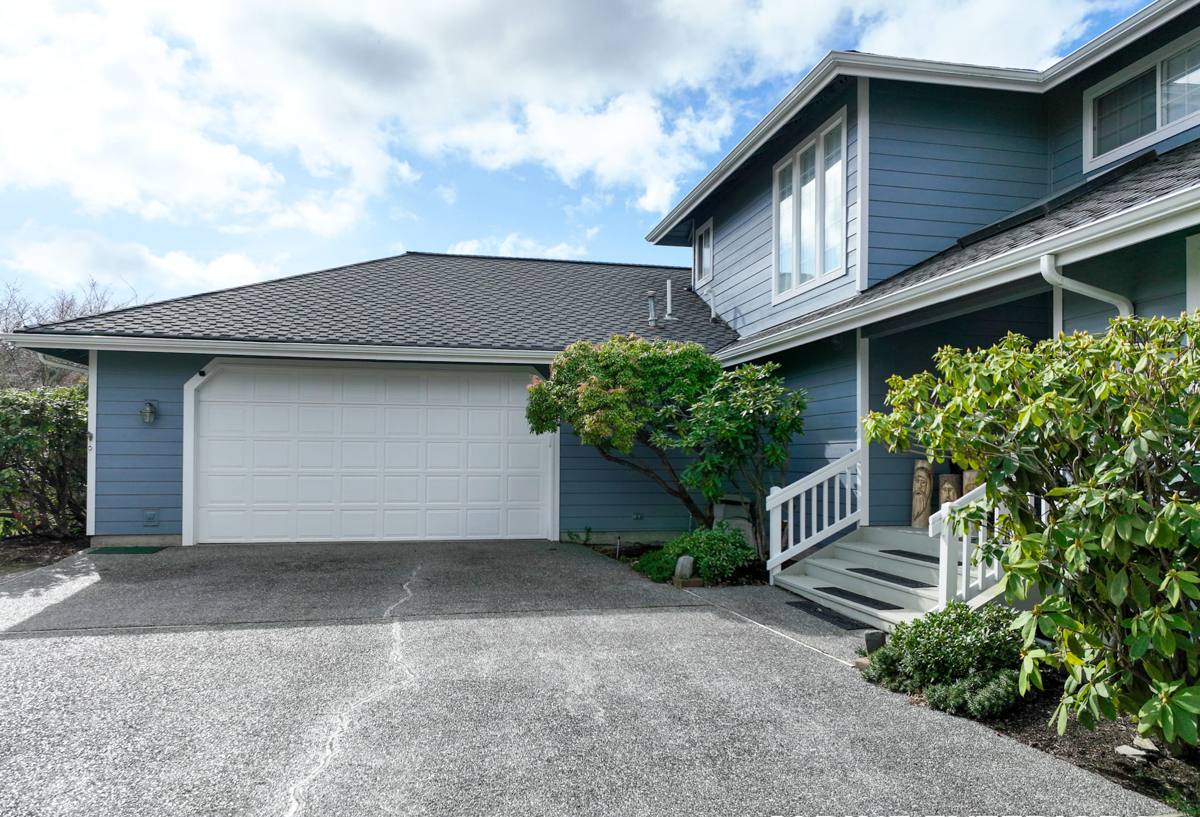
What Blaine's Climate Actually Does to a Deck
Salt Air and Metal Fasteners
Homes closer to the water deal with airborne salt that settles on every exposed surface, including deck hardware. Standard zinc-coated fasteners and brackets can start corroding faster near the coast than they would even a few miles inland. This doesn't show up as a problem in year one — it shows up as rust streaks and loosening connections a few seasons in, usually right when a homeowner assumed a "low-maintenance" deck meant "no maintenance."
Driving Rain and Water Management
Rain here doesn't just fall straight down — wind off the bay drives it sideways into ledger boards, railing posts, and any gap where water can find its way behind a board or into a joist. The volume of rain over a Whatcom County winter also means any deck without real drainage planning will hold water somewhere, and standing water is what eventually causes rot in the structure underneath, even if the decking surface itself is composite and doesn't rot.
Moss and Algae in Shaded Areas
Composite boards don't feed mold and rot the way untreated wood does, but they aren't immune to surface growth. Shaded decks, north-facing decks, and anywhere airflow is blocked underneath will still grow moss, algae, and mildew film on the surface during our wet months. That's a cleaning issue rather than a structural one, but it's worth knowing before you pick a board color and finish, since darker, textured boards hide this better than light, smooth ones.
Composite Decking Materials: What We Install and Why
Not all composite decking behaves the same way in a coastal, high-moisture climate. We install fully capped composite boards as our standard for Blaine projects — a wood-plastic core wrapped in a polymer shell — because the cap is what keeps moisture, salt, and organic material from working into the board itself over time. Uncapped composite, which was common in older product lines, doesn't have that shell and is more prone to surface fading, staining, and moisture absorption at cut edges.
| Decking Type | Moisture Resistance | Mold/Algae in Shade | Maintenance | Typical Lifespan Here |
|---|---|---|---|---|
| Untreated or pressure-treated wood | Absorbs water, prone to rot without upkeep | High risk without regular treatment | Annual sealing/staining | 10–15 years |
| Uncapped composite | Moderate — absorbs some moisture at edges | Moderate, worse at cut ends | Periodic cleaning | 15–20 years |
| Fully capped composite | High — sealed shell resists moisture intrusion | Lower, especially with textured caps | Occasional washing | 25+ years |
| PVC (all-plastic) | Highest — no wood content | Low | Occasional washing | 25+ years |
PVC decking is fully synthetic and performs well in wet climates too, but it has a different feel and cost profile than capped composite. We'll walk through both options honestly during an estimate rather than pushing whichever happens to be on the truck.
What a Correct Composite Deck Build Involves
The decking surface gets all the attention, but most of the failures we get called out to inspect on other companies' work trace back to what's underneath it, not the boards themselves. A correct build for this climate includes:
- Ledger board flashing and a proper waterproof membrane where the deck attaches to the house, so water can't track back into the band joist or wall framing
- Joist tape over every joist top before boards go down, protecting the wood substructure from the moisture that inevitably gets past the decking surface over time
- Coated or stainless fasteners and structural connectors rated for coastal exposure, not generic zinc hardware
- Footings set to the frost and load depth required for the site, not just deep enough to look sturdy
- Proper board spacing for drainage and expansion, since composite boards move with temperature more than people expect
- Ground clearance and airflow underneath the deck to keep the substructure drying out between rain events
Skip any one of these and the composite boards on top can look perfect for years while the frame underneath is quietly failing — which is a much more expensive repair than replacing decking alone.
Drainage and Airflow: The Part Nobody Sees
Given how much rain this area gets, we treat under-deck drainage as part of the job, not an upgrade. That means grading or a drainage system under low, ground-level decks so water has somewhere to go instead of pooling against footings, and enough clearance under elevated decks for air to actually move. On shaded lots — which is a lot of Blaine's tree-covered residential streets — we'll also talk through board orientation and gap width, since tighter, poorly ventilated gaps are exactly where moss and mildew take hold first.
Quick Signs an Existing Deck Has a Moisture Problem
- Soft or spongy spots when you walk across boards near the house
- Rust staining around fastener heads or brackets
- Persistent green or black growth in the same spots every year despite cleaning
- Gaps or movement at the ledger board connection to the house
- Standing water anywhere on or under the deck 24+ hours after rain stops
If you're seeing any of these on a current deck, it's worth having it looked at before deciding whether to repair, resurface, or fully rebuild.
Railings, Stairs, and Code Requirements
Any deck we build in Blaine or elsewhere in Whatcom County needs to meet current building code for guard height, baluster spacing, and stair rise/run, and most projects above a certain height or size require a permit through the local building department. We handle the permit process as part of the job rather than leaving it to the homeowner to figure out, and we won't cut corners on railing spacing or footing depth to save time — those are the details inspectors check and the details that matter most for safety.
Our Process for a Blaine Composite Deck Project
- On-site assessment — we look at the existing deck or bare site, note drainage, sun exposure, and how close the property is to the water, since that affects hardware and material recommendations
- Material and layout discussion — capped composite vs. PVC, board color and pattern, railing style, and any structural repairs the existing framing needs
- Permit handling — we pull the necessary permits and schedule inspections so the project stays compliant from footings to final walkthrough
- Demo and framing — old decking removed, framing inspected and repaired or rebuilt, ledger flashing and joist tape installed before any composite goes down
- Composite installation — boards, fasteners, and railings installed to manufacturer spec, with attention to gapping and drainage
- Final walkthrough — we cover basic cleaning and care so the deck actually holds up through the wet season ahead
Cost Factors for a Composite Deck in Blaine
Every deck is priced around the specifics of the site, but the same handful of factors drive most of the variation we see on Blaine projects:
| Factor | Why It Affects Cost |
|---|---|
| Deck size and shape | More square footage and complex angles increase material and labor |
| Framing condition | Existing rot or undersized joists means rebuilding the substructure, not just the surface |
| Height and footing depth | Elevated decks need engineered footings and additional support structure |
| Railing style | Composite or metal railing systems cost more than basic wood but resist coastal weather better |
| Stairs | Each stair run adds framing, code compliance work, and material |
| Site access | Tight lots or waterfront access constraints can add labor time |
We give a firm, itemized number after the on-site assessment — not a phone estimate — because the framing condition alone can change the scope significantly.
Why a Crew That Already Works in Blaine Makes a Difference
A contractor who mostly builds decks inland doesn't always think about coastal fastener corrosion or plan drainage for the volume of rain a bay-adjacent lot actually gets. Working in this area regularly means we've already seen how a given ledger flashing detail, footing depth, or hardware choice holds up through a Whatcom County winter — not just how it looks on install day. That local track record is what tells us where it's worth spending a little more upfront versus where a standard approach is genuinely fine.
If you're weighing a new composite deck or wondering whether an existing one needs repair versus replacement, we're happy to take a look and give you a straight answer. Reach out below for a free, no-pressure estimate.