 Semiahmoo Exterior
 Building Decks for Blaine's Coastal Conditions
Blaine sits right where Semiahmoo Bay, Drayton Harbor, and the open water of the Salish Sea meet dry land, which means homes here take on a different kind of weather than decks built ten miles inland. Salt-laden air off the water accelerates corrosion on fasteners and hardware, driving rain off Georgia Strait pushes moisture into every seam and joint, and Whatcom County's long, mild, wet season keeps wood surfaces damp for weeks at a stretch. A deck built to a generic spec sheet will show its age fast out here. A deck built for this specific stretch of coastline holds up.
This page covers deck building specifically for Blaine and the surrounding Semiahmoo-area properties — what the local climate demands, what a correctly built deck actually involves, and how we approach the work as a crew that's already familiar with these conditions.
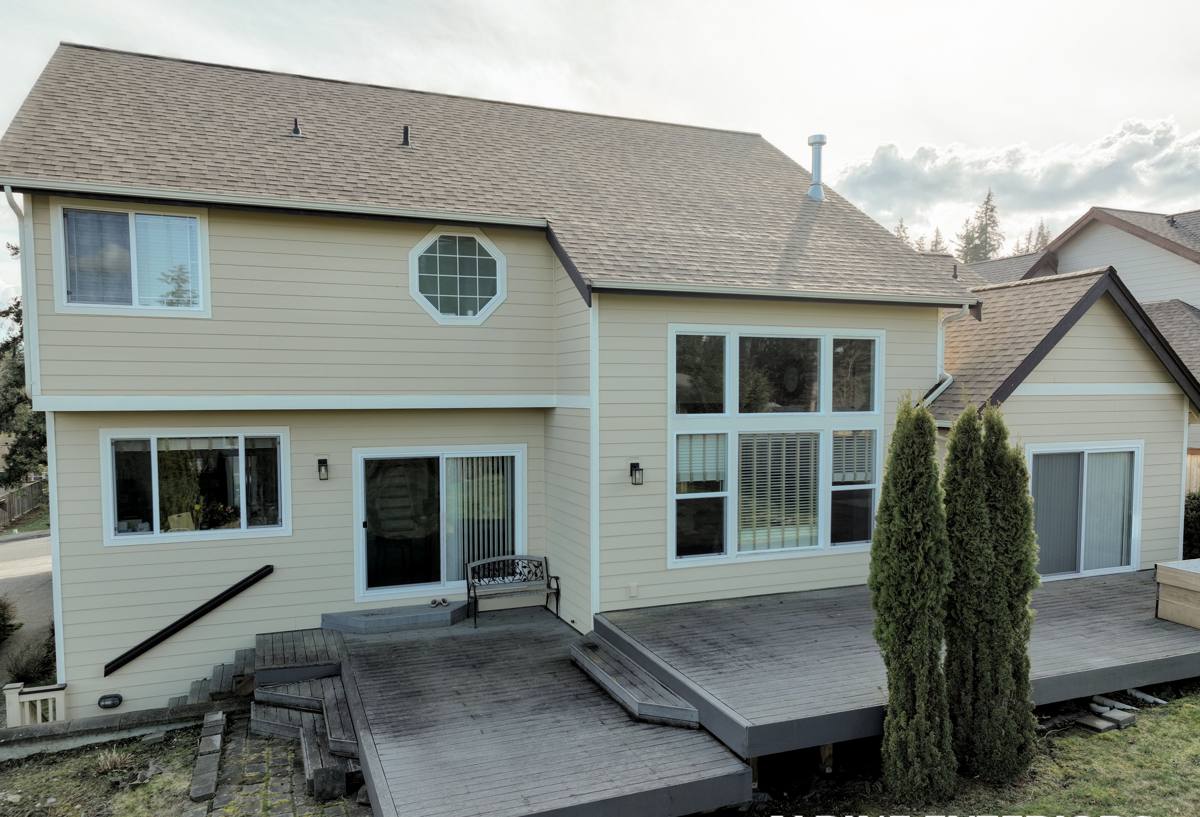
What the Blaine Climate Does to a Deck
Salt Air and Metal Fatigue
Proximity to Semiahmoo Bay and Drayton Harbor means airborne salt is a real factor on hardware, fasteners, and any exposed metal connectors. Standard electro-galvanized screws and brackets can start showing rust streaks and pitting well before their inland equivalents would. It's not a dramatic failure — it's a slow one, and it usually shows up as staining on the decking before anyone notices the fastener underneath has weakened.
Driving Rain and Wind-Driven Moisture
Blaine gets weather that comes in sideways off the water more often than it falls straight down. That matters for a deck because driving rain finds its way under railings, into ledger board connections, and behind any trim that isn't properly flashed. A deck that would stay dry in a calm, straight-down rain in a sheltered inland yard can take on real moisture exposure here.
Moss, Algae, and a Long Wet Season
Whatcom County's wet season runs long, and shaded or north-facing decks can stay damp for extended stretches between dry spells. That's ideal territory for moss and algae growth on decking surfaces, which isn't just cosmetic — it makes boards slick and dangerous underfoot, and it holds moisture against the wood or composite surface longer than it would otherwise sit there.
Choosing the Right Deck Material for This Area
There's no single "correct" decking material for every Blaine property — it depends on budget, how much upkeep you want to do, and how exposed the deck is to sun, wind, and salt spray. Here's how the common options actually compare for this climate:
| Material | How It Handles Salt Air & Moisture | Maintenance | Typical Lifespan Here |
|---|---|---|---|
| Pressure-treated fir/hem-fir | Good rot resistance if sealed regularly; fasteners need to be corrosion-rated | Annual cleaning and re-sealing recommended | 15–20 years with upkeep |
| Cedar | Naturally rot- and insect-resistant, but softer and more prone to surface weathering in wind-driven rain | Periodic cleaning, staining or sealing to hold color and grain | 15–20 years with upkeep |
| Composite decking | Doesn't absorb moisture the way wood does, resists rot, but surface can still grow algae/moss film without cleaning | Low — occasional washing, no staining or sealing | 25–30+ years, varies by product warranty |
| Tropical hardwoods (e.g., ipe-type species) | Very dense, naturally weather- and rot-resistant | Occasional oiling if you want to preserve original color; low if you let it silver naturally | 25+ years |
Whatever surface material you choose, the substructure underneath — joists, beams, posts, and hardware — matters just as much for a coastal property, and it's where a lot of corner-cutting happens that homeowners never see until something fails.
What a Correctly Built Deck Looks Like Here
Footings and Foundation
Footings need to sit below the local frost line and bear on solid, undisturbed soil — not fill dirt or organic material that will settle over time. On sloped or waterfront-adjacent lots around Blaine, drainage around footings deserves extra attention so standing water isn't sitting against concrete or posts through the wet months.
Ledger Board Attachment and Flashing
The ledger board — where the deck attaches to the house — is the single most common source of deck failures nationally, and it's a bigger risk here because of how much water this area's storms drive against exterior walls. Proper flashing (metal flashing over housewrap, with the deck ledger properly sealed and lagged into framing, not just siding) is non-negotiable. This is the detail that separates a deck that lasts decades from one that rots from the house outward.
Fasteners and Hardware
Given the salt air, we treat corrosion-resistant hardware as the standard, not an upgrade — stainless steel or heavy hot-dip galvanized fasteners and structural connectors rated for coastal exposure. It costs a bit more up front and saves you from hidden hardware failure a decade down the road.
Joist Spacing and Decking Fastening
Joist spacing needs to match the decking material's span rating — composite products in particular often require tighter joist spacing than standard lumber to avoid flexing or warping. Hidden fastener systems look cleaner and reduce the face-screw penetrations where water can enter the board, which matters more in a climate that stays damp as long as this one does.
Railings and Guards
Railing posts need solid blocking and through-bolted connections, not just toe-screwed into rim joists. Given the wind this area sees off the water, a railing system needs to be built to handle lateral load, not just look sturdy.
Our Deck Building Process
- On-site assessment — we look at sun exposure, wind exposure, drainage, and how close the property sits to salt water influence, since all of that shapes material and hardware recommendations.
- Design and material selection — sized and laid out for how you'll actually use the space, with an honest conversation about material trade-offs for your specific site conditions and budget.
- Permitting — most decks of meaningful size or height require a permit through the local building department; we handle that process rather than leaving it on the homeowner.
- Footings and framing — built to code minimums or better, with corrosion-rated hardware throughout.
- Ledger flashing and waterproofing — done properly at the house connection point, since this is where failures start.
- Decking, railing, and finish work — installed to the manufacturer's fastening spec, not shortcuts.
- Final walkthrough — we go over care and maintenance specific to the material you chose before we consider the job done.
What Deck Ownership Looks Like in Blaine
Every deck material needs some upkeep in this climate — the difference is how much and how often. Here's a practical seasonal checklist that applies to most Blaine-area decks regardless of material:
- Sweep debris and standing organic matter off the surface regularly through fall, when leaves and needles trap moisture against boards
- Clean moss and algae film off the surface before it builds up — a stiff brush and a deck-safe cleaner is usually enough if you stay ahead of it
- Check railing connections and fastener heads once a year for corrosion, looseness, or staining that suggests hardware wear
- Reseal or restain wood decking on the manufacturer or product's recommended cycle — don't wait until it's visibly gray and dry
- Keep gutters and downspouts near the deck clear so roof runoff isn't dumping extra water onto or under the structure
- Confirm drainage under and around the deck isn't pooling water against posts or footings after heavy rain
- Inspect ledger board flashing area for any signs of water staining on the siding above or below the connection
Cost Factors for a Blaine Deck Project
Every deck is different, but the same handful of factors drive most of the price variation we see on projects in this area:
| Factor | Why It Matters |
|---|---|
| Size and footprint | Square footage is the baseline driver of material and labor cost |
| Height off grade | Taller decks need more substantial footings, posts, and often permit review for guard rail requirements |
| Material tier | Pressure-treated, cedar, composite, and hardwood options span a wide cost range |
| Site access and slope | Waterfront-adjacent or sloped lots can add site prep and foundation work |
| Hardware spec | Coastal-rated stainless or heavy-galvanized hardware costs more than standard fasteners but is worth it here |
| Railing and stair complexity | Multiple stair runs, custom railing, or built-in features add labor time |
| Demo and disposal | Replacing an existing failed deck adds teardown and haul-away costs |
We give a firm, itemized quote before any work starts so you know exactly what you're paying for and why — no vague allowances that turn into surprises mid-project.
Why a Local Semiahmoo-Area Crew Matters
A deck built by a crew that doesn't normally work this close to the water tends to default to generic specs — standard fasteners, standard flashing details, whatever's easiest to source. A crew that already works Blaine and the Semiahmoo area regularly knows to spec corrosion-resistant hardware from the start, knows how the local building department handles deck permitting, and has already seen how driving rain and moss season treat different materials on real properties nearby. That familiarity shows up years later as a deck that's still solid, not one that needs early repairs because it was built to a spec sheet written for a drier, calmer climate.
If you're planning a new deck or replacing one that's showing its age, we're happy to take a look and walk you through your options honestly — no pressure, no upsell. Request a free estimate using the form below and we'll get back to you to talk through what your property actually needs.