 Semiahmoo Exterior
 Why Blaine Homes Need a Different Approach to Siding
Blaine sits close enough to the water that salt air is a daily fact of life, not an occasional nuisance. Add Whatcom County's driving winter rain and a moss season that can stretch from October through April, and you have a climate that is genuinely hard on exterior cladding. Wood-based siding products absorb moisture, swell, and give moss and algae a organic surface to grip. Vinyl can hold up on paper but tends to fade, warp, or crack under repeated wet-dry-freeze cycles near the water. This is the environment we designed our process around, and it's a big part of why we install James Hardie fiber cement exclusively rather than offering a menu of cheaper alternatives.
A siding job in Blaine isn't just about the product on the wall. It's about how that product is fastened, flashed, and finished so that the salt-laden moisture in the air and the near-constant rain don't find a way behind it. Get that wrong, and even a premium material fails early. Get it right, and a Blaine home can go decades without a repaint or a rot repair.
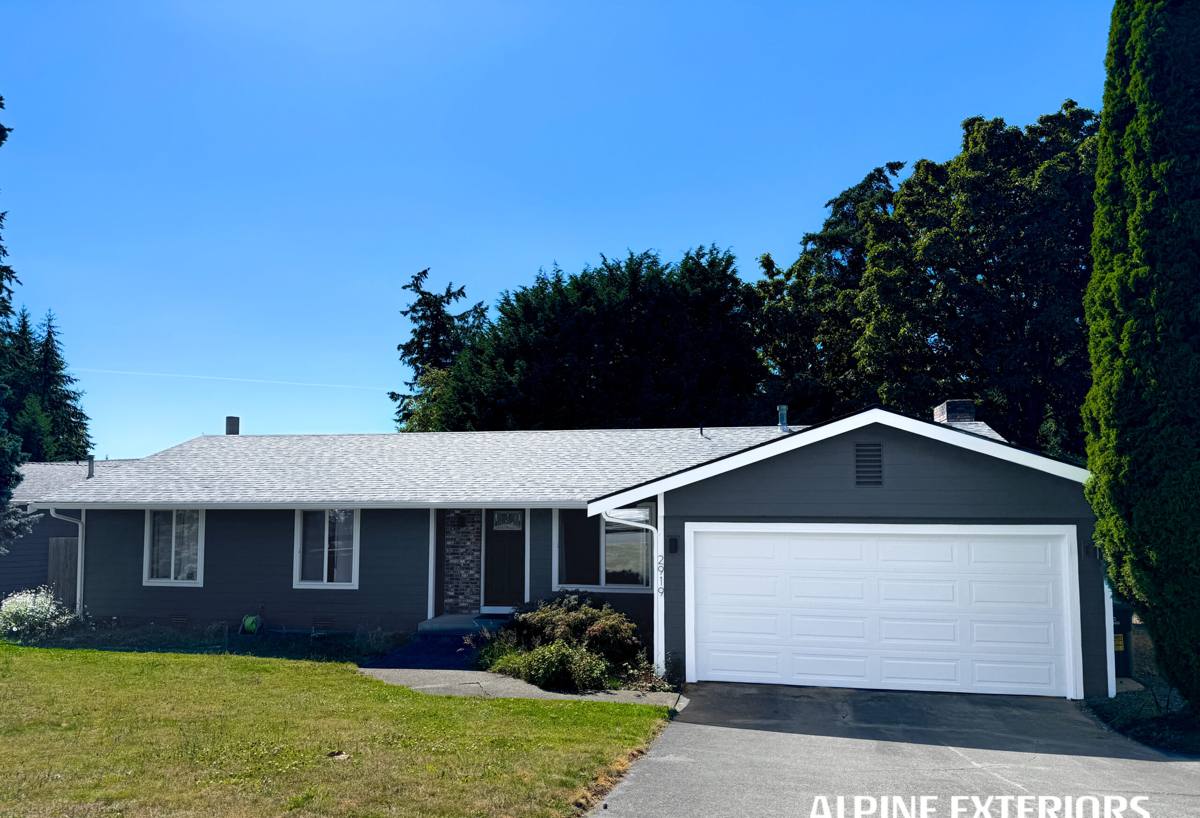
What Salt Air and Moss Season Actually Do to a House
Salt Air
Airborne salt is corrosive to metal and accelerates the breakdown of many paint and coating systems. On a house near Semiahmoo, that means fasteners, flashing, and trim need to be rated for a marine-influenced environment, not generic interior-grade hardware. It also means the finish on your siding needs to resist chalking and fading faster than it would fifty miles inland.
Driving Rain
Wind-driven rain off the water doesn't just hit a wall — it gets pushed sideways into laps, seams, and penetrations. Any gap in the water-resistive barrier or any lap that isn't properly overlapped becomes an entry point. Over a few wet seasons, water that gets behind the siding and can't drain or dry out will rot sheathing and framing long before the siding itself shows a problem.
Moss and Algae
Whatcom County's shaded, damp winters are ideal for moss and algae growth, especially on north-facing walls and anywhere siding stays wet for long stretches. Porous or wood-based products give these organisms something to root into. A dense, factory-finished fiber cement surface gives them far less to hold onto, which cuts down on the scrubbing and pressure-washing homeowners otherwise have to do every year.
Why We Standardized on James Hardie for This Climate
James Hardie fiber cement is engineered specifically for regional moisture and temperature profiles through its HZ5 product line, built for the kind of wet, moderate-freeze climate we have here. It's non-combustible, dimensionally stable in wet-dry cycles, and finished at the factory with ColorPlus Technology — a baked-on finish that resists fading and chipping far better than field-applied paint. That factory finish matters more in a salt-air environment, where site-applied coatings tend to break down faster.
We don't install LP SmartSide, vinyl, Cemplank, Allura, primed spruce, or cedar. Each of those has legitimate uses somewhere, but for a Blaine exterior exposed to salt air and a long wet season, we've found the long-term maintenance burden and moisture risk outweigh the upfront savings. Hardie's combination of factory finish, moisture resistance, and a strong transferable warranty is what we're willing to put our name behind.
What a Correct James Hardie Install Involves
The siding itself is only part of the job. A correct install in this climate depends on everything underneath and around it.
Water-Resistive Barrier and Flashing
Every wall gets a continuous water-resistive barrier, properly lapped shingle-style so water sheds downward and outward. Window and door openings get flashed with a sequence that directs any incidental moisture back out of the wall assembly rather than trapping it behind the siding.
Fastening
Fasteners are corrosion-resistant, sized and spaced to Hardie's published specifications, and driven flush — not overdriven, which cracks the board's edge and creates a moisture entry point. In a salt-air zone, fastener quality is not a place to cut corners.
Clearances and Gaps
Hardie specifies minimum clearances from grade, roof lines, decks, and other siding terminations so water has somewhere to go and the bottom edge of the siding never sits in standing moisture. Butt joints get properly sealed or flashed, and expansion gaps are left where the manufacturer calls for them.
Caulking and Sealant
Sealant is used at penetrations and transitions, not as a substitute for correct flashing. Over-reliance on caulk is one of the most common shortcuts we see on older installs, and it's one of the first things to fail once salt air and UV exposure get to it.
Our Process for a Blaine Siding Project
- On-site inspection of the existing wall assembly, siding condition, and any moisture or rot already present
- Written scope covering product line, color, trim details, and any sheathing or framing repair needed before new siding goes on
- Removal of old siding and inspection of the water-resistive barrier and sheathing underneath
- Repair of any rot or damage found, since covering it up only hides the problem
- Installation of a continuous, correctly lapped water-resistive barrier and flashing at every penetration
- Installation of James Hardie panels or planks to manufacturer fastening and clearance specifications
- Trim, caulking, and final detail work
- Walkthrough with the homeowner before we consider the job finished
Choosing the Right Hardie Product Line and Finish for This Area
James Hardie offers several plank profiles and panel styles, and the right choice depends on your home's existing look, HOA or neighborhood expectations, and how much trim detail you want. For a Blaine home, we generally steer toward the HZ5 climate-engineered formulation given the wet, moderate-freeze conditions here, paired with a ColorPlus factory finish in a color that holds up well against salt-air fading.
| Consideration | Why It Matters in Blaine |
|---|---|
| HZ5 formulation | Engineered for wet, moderate-freeze climates like Whatcom County |
| ColorPlus factory finish | Resists fading and chalking better than field-painted finishes in salt air |
| Lap siding vs. panel siding | Lap sheds driving rain well; panels suit modern styles but need careful joint detailing |
| Trim and fascia matching | Consistent moisture performance across the whole exterior, not just the field siding |
| Color selection | Darker colors show chalking and fade differently than lighter tones near the water |
What to Check Before Hiring Anyone for This Job
Fiber cement is forgiving of a lot of things, but not of a bad install. Because so much of the performance is hidden behind the siding once it's up, it's worth vetting a contractor carefully before they start.
- Ask whether they're a certified or experienced James Hardie installer, not just someone who has "worked with it before"
- Ask what water-resistive barrier and flashing details they use, and have them explain their approach in plain language
- Ask how they handle fastener spacing and whether they follow Hardie's published fastening schedule
- Ask what happens if they find rot or damage once old siding comes off
- Get a written scope that specifies product line, finish, and trim details, not just a total price
- Ask about warranty coverage — both the manufacturer's product warranty and the contractor's workmanship warranty
Maintenance Once It's Installed
One of the practical benefits of fiber cement in a climate like this is how little upkeep it needs compared to wood or vinyl. It won't rot, and the factory finish means you're not repainting every few years. That said, a few basics still apply near the water:
- Rinse off accumulated salt residue periodically, especially on sides facing prevailing wind off the water
- Keep gutters clear so water isn't running down the face of the siding
- Trim back vegetation that keeps a wall shaded and damp, since that's where moss gets a foothold first
- Have caulking at trim and penetrations checked every few years and refreshed if it's cracking or pulling away
Cost Factors Homeowners Should Understand
Every home is different, and a fair estimate depends on square footage, current siding condition, trim complexity, and how much sheathing or framing repair is needed once old material comes off. In general terms, cost is driven by the amount of surface area, the product line and profile chosen, the complexity of the home's shape and trim, and whatever repair work is uncovered during removal. We'd rather give you a real number after a site visit than a rough figure that doesn't hold up once the old siding comes off and we see what's actually underneath.
Ready to Talk About Your Home
If your Blaine home's siding is showing moss buildup, chalking paint, soft spots, or just looks tired from years of salt air and rain, we're glad to take a look. We'll give you an honest read on what's actually going on with your walls and what a correct James Hardie install would involve — no pressure, no upsell to a product we don't stand behind. Reach out for a free estimate using the form below.