 Semiahmoo Exterior
 Why Blaine Windows Wear Out Faster Than You'd Expect
Blaine sits close enough to the water that homes here take a different kind of beating than houses twenty miles inland. Salt-laden air corrodes metal hardware, weep systems, and low-quality fasteners years before they'd fail in a drier climate. Add Whatcom County's driving rain — the kind that comes in sideways off the Strait during winter storms — and you've got wind-driven water finding every weak seam in a window's flashing and sealant. Then there's moss season, which in this part of Washington isn't really a season at all; it's most of the year. Moss and algae hold moisture against wood trim, sills, and cladding, which accelerates rot in exactly the spots homeowners don't check until there's already a soft spot under the paint.
None of this means Blaine homes need exotic window technology. It means the basics — frame material, flashing detail, glazing seal, and installation sequence — have to be done right the first time, because this climate finds every shortcut.
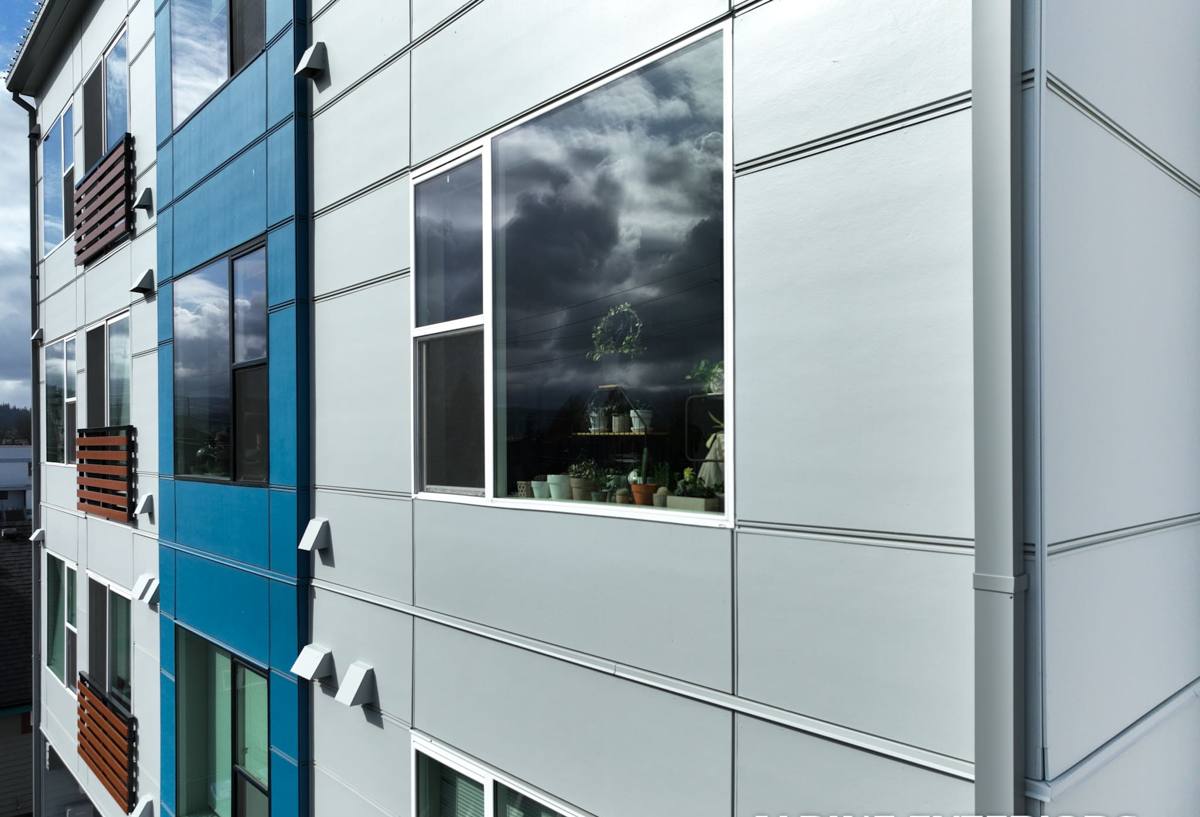
What "Custom" Actually Means for a Blaine Home
Custom windows aren't a luxury upgrade — for most houses in this area, they're simply the correct answer. Blaine has a real mix of older coastal cottages, mid-century ranches, and newer builds, and very few of them have perfectly standard rough openings anymore. Decades of settling, prior remodels, or original construction that predates today's window sizing standards mean off-the-shelf units often don't fit without shimming, extra trim, or foam-filled gaps that become long-term leak points.
A custom window is built to the exact opening you have. That matters here specifically because:
- Tighter, purpose-built fit means fewer gaps for wind-driven rain to exploit around the frame.
- Older homes near the water often have openings that are slightly out of square — custom units account for that instead of forcing a standard size to work.
- Matching sightlines and trim profiles preserves the character of older Blaine homes instead of leaving mismatched replacement windows that stand out.
- Coastal-grade hardware and glazing packages can be specified up front rather than added as an afterthought.
Frame Materials: What Holds Up Near Semiahmoo
Frame material is the single biggest factor in how a window performs over ten or twenty years of salt air and rain exposure. There's no single "best" material for every home — it depends on budget, the home's style, and how exposed the elevation is to prevailing weather.
| Material | Salt Air / Moisture Behavior | Maintenance | Typical Fit |
|---|---|---|---|
| Vinyl | Won't corrode or rot; performs well in coastal conditions | Low — occasional cleaning | Most homes, budget-conscious replacements |
| Fiberglass | Excellent — dimensionally stable, resists warping from moisture cycling | Low | Higher-exposure elevations, long-term ownership |
| Wood-clad | Good if cladding and flashing details are correct; exposed wood joints are a risk near salt air | Higher — finish and seams need periodic attention | Homes prioritizing interior wood look and historic character |
| Aluminum | Poor without marine-grade coatings — prone to pitting and corrosion in salt air over time | Higher near the coast | Rarely our recommendation for this specific exposure |
We steer most Blaine clients toward vinyl or fiberglass for water-facing elevations, and reserve wood-clad options for interior-facing walls or homes where matching existing trim is the priority. This isn't a knock on any manufacturer's product — it's a judgment call based on what holds up to sustained salt exposure with the least amount of upkeep.
Glazing and Weatherstripping
Double-pane glass with a quality low-E coating covers most of what a typical Blaine home needs for both energy performance and condensation control. Triple-pane can make sense on north- or west-facing rooms that catch the worst of the winter wind, but it's not automatic — we'll tell you honestly if it's overkill for a given opening. Weatherstripping and compression seals matter just as much as the glass itself; a good pane in a poorly sealed sash still lets moist air infiltrate.
What a Correct Installation Actually Involves
Most window failures we see in this area aren't glass failures — they're installation failures. Water gets behind the frame because flashing was skipped, taped instead of properly lapped, or installed out of sequence. In a climate with this much driving rain, sequence matters as much as materials.
The Installation Checklist
- Remove old unit and inspect the rough opening for hidden rot or moisture damage before anything new goes in.
- Install or repair the sill pan so any water that gets past the window has somewhere to drain, not soak.
- Flash in the correct shingle-lap order — building paper or house wrap over the top flange, never under it.
- Set the window plumb, level, and square, shimming at load points, not just the corners.
- Seal with a compatible, flexible sealant rated for exterior exposure — not a generic caulk that'll crack in a season.
- Insulate the gap between frame and rough opening without overpacking, which can bow the frame.
- Finish exterior trim and touch-up flashing so water sheds away from the wall, not toward it.
- Test operation and seal integrity before calling the job done.
Skip any one of these steps and the window itself — no matter the brand — becomes the weak point in the wall. This is where hiring matters more than the product spec sheet.
Our Process for a Blaine Job
We keep the process straightforward because homeowners deserve to know what's happening at each stage:
- On-site assessment. We look at every opening individually — not just measure for size, but check for existing moisture damage, settling, and how exposed that elevation is to wind and rain.
- Honest recommendation. We'll tell you where vinyl is the smart, economical choice and where fiberglass earns its higher price tag, based on that specific wall's exposure — not a one-size-sales-pitch.
- Custom measurement and ordering. Every unit is built to the actual opening, accounting for any out-of-square conditions common in older Blaine homes.
- Installation with proper flashing sequence. Sill pans, house wrap integration, and sealant done in the right order — not shortcuts covered by trim.
- Walkthrough and cleanup. We test operation, check seals, and leave the site clean.
Signs Your Current Windows Are Already Losing the Battle
Homeowners near the water often live with early failure signs for years before addressing them, because the symptoms look minor at first.
- Condensation building up between panes — a sign the seal has failed and the insulating gas has escaped.
- Persistent drafts even with the window latched, usually a sign of failed weatherstripping or a warped frame.
- Soft or discolored trim around the frame, which often means moisture has been getting behind the casing.
- Hardware that's stiff, corroded, or won't latch fully — common on older aluminum or lower-grade hardware in salt air.
- Visible moss or dark staining collecting on the sill or lower frame, holding moisture against the material.
Catching these early usually means a straightforward window replacement. Waiting on them usually means dealing with wall rot as well, which is a bigger and more expensive project.
What Affects Cost
Every Blaine home is different, so we won't quote a number without seeing the openings, but these are the main factors that move the price up or down:
| Factor | Effect on Cost |
|---|---|
| Frame material (vinyl vs. fiberglass vs. wood-clad) | Fiberglass and wood-clad run higher than vinyl |
| Number and size of openings | Larger and more numerous openings scale cost accordingly |
| Condition of the rough opening | Hidden rot or repair needs add labor beyond the window itself |
| Glazing package (double vs. triple-pane) | Triple-pane adds cost, worth it mainly on high-exposure walls |
| Custom shapes or sizing | Non-standard openings cost more than stock sizes |
| Trim and finish work | Matching existing exterior trim profiles adds finish labor |
Why a Crew That Already Works Blaine Matters
Window installation isn't just about the product — it's about understanding how a specific home in a specific location behaves in weather. A crew that regularly works Semiahmoo and greater Whatcom County already knows which elevations catch the worst of the winter storms, how moss buildup tends to progress on local rooflines and sills, and what rough-opening surprises show up in homes of a certain age in this area. That familiarity shows up in fewer callbacks and fewer surprises mid-installation — not because of any special technique, but because we've already seen how this coastline treats a window over time.
It also matters for accountability. A local crew is easy to reach if a question comes up six months or six years after installation, and we stand behind our own flashing and sealant work — not just the manufacturer's glass warranty.
Maintaining Custom Windows in a Salt Air and Moss Environment
Even a correctly installed window benefits from basic upkeep in this climate. Rinse salt residue off exterior frames periodically, especially on water-facing sides of the house. Keep sills and tracks clear of moss and organic debris so water can drain instead of pooling. Check exterior caulking annually for cracking, since UV and moisture cycling break down sealants faster here than inland. None of this is heavy maintenance — it's the kind of five-minute check that adds years to a window's service life.
If you're dealing with drafty, foggy, or aging windows in Blaine, we're happy to take a look and give you a straight answer on what's actually needed — no pressure, no upsell. Fill out the form below for a free estimate.