 Semiahmoo Exterior
 Why Blaine Homes Wear Out Siding Faster Than You'd Expect
Blaine sits right on Semiahmoo Bay, and that waterfront location is a double-edged sword. The views are part of why people love living here, but the same marine exposure that makes the setting beautiful is steadily working against whatever is nailed to the outside of the house. Salt-laden air moves off the bay and settles on siding, trim, and fasteners day after day, and over years that low-grade exposure adds up. Add in Whatcom County's driving rain — storms that come in sideways off the water rather than straight down — and you have moisture finding its way into seams, laps, and end joints that were never designed to handle wind-driven wetting.
Then there's moss. Blaine's long, mild, wet stretch of fall through spring gives moss and algae months to establish themselves on north-facing walls, under eaves, and anywhere siding stays shaded and damp. Moss holds moisture against the surface far longer than open air would, which is exactly the condition that rots wood-based siding and degrades cheaper composite products from the back side, often before a homeowner sees any sign of trouble on the face of the board.
None of this means Blaine is a uniquely hostile place to own a home. It means siding here has to be chosen and installed with the bay, the rain, and the moss specifically in mind — not treated the same way you'd treat a house in a dry inland climate.
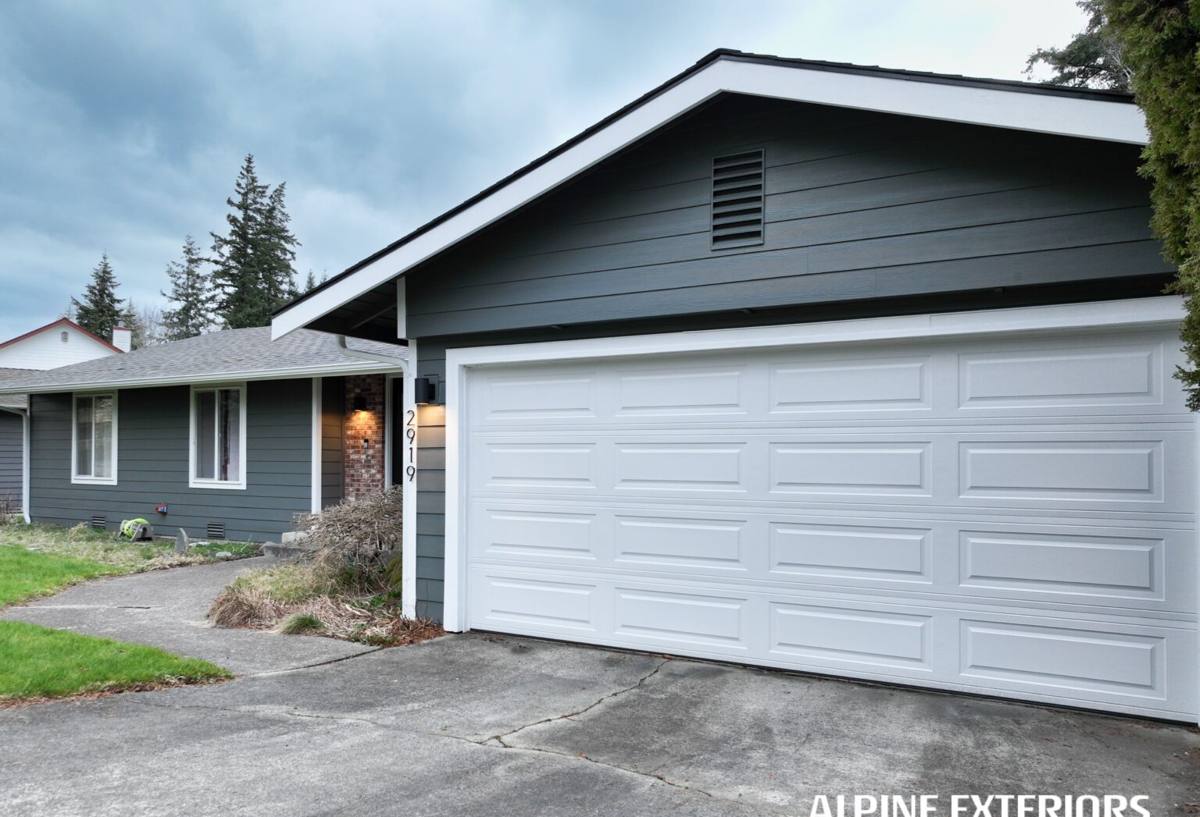
Signs a Blaine Home Needs Siding Replacement, Not Another Repair
We get called out to a lot of houses where the homeowner has already patched, caulked, or repainted a problem area more than once. Repair has its place, but there's a point where patching stops being cost-effective and starts being a way of delaying the real fix. Common signs we look for on Blaine homes include:
- Soft or spongy spots when you press on the siding, especially near the bottom courses and around window trim
- Persistent moss or dark staining that comes back within a season of cleaning
- Visible cupping, buckling, or gapping at the laps, particularly on the sides of the house that face the bay or catch prevailing wind
- Paint that won't hold — bubbling, peeling, or needing repainting far more often than it should
- A musty smell or visible staining on interior walls that share an exterior wall with problem siding
- Fasteners backing out or rust streaks running down from nail heads
Any one of these can sometimes be handled as a spot repair. Several of them together, especially on an older wood or composite install, usually means the underlying material and water-management layer are failing and a full replacement is the more honest recommendation.
What a Correct Siding Replacement Actually Involves
Siding replacement done right is mostly about what happens before the new siding ever goes up. The finish product gets the attention, but the layers underneath it are what actually keep water out of the wall assembly over the next 30-plus years.
Tear-off and inspection
We remove the old siding down to the sheathing and inspect for rot, soft spots, and damaged framing. In a marine climate like Blaine's, this step matters more than it does inland — hidden water damage behind failed siding is common, and it needs to be found and repaired before anything new goes on top of it.
Weather-resistive barrier and flashing
A new, correctly lapped weather-resistive barrier goes over the sheathing, with flashing integrated at every window, door, and penetration so water is directed out and down rather than trapped behind the cladding. This is the layer that actually stops wind-driven rain from reaching the framing, and it's also the layer that's easiest to shortcut if a crew is moving fast.
Rainscreen gap
For a bay-exposed climate like Blaine's, we build in a drainage gap behind the siding rather than fastening it flat against the barrier. That gap lets any moisture that does get past the outer layer drain and dry instead of sitting against the back of the siding — which is exactly the mechanism that causes premature rot and the delamination issues seen in lower-grade composite products.
Fastening and clearances
Correct nailing pattern, correct fastener type for a coastal environment, and proper clearance between the bottom of the siding and grade, roofing, and decks. Tight clearances trap moisture and are one of the most common causes of early rot we find when we tear off an older installation.
Why We Install Only James Hardie Fiber Cement
We don't install vinyl, LP SmartSide, primed wood, cedar, or other fiber cement brands, and that's a deliberate standard, not a lack of options. In a climate that combines salt air, driving rain, and a long moss season, the material matters as much as the workmanship.
Vinyl expands and contracts with temperature swings, can crack in cold snaps, and doesn't hold paint if a homeowner ever wants to change the color. Wood-based products, including engineered wood siding, rely on their outer coating staying intact to keep moisture out — any breach, and the wood substrate underneath is vulnerable to exactly the kind of prolonged dampness Blaine's moss season creates. Cedar is a genuinely attractive natural product, but it demands ongoing maintenance and refinishing to hold up against sustained coastal moisture, which is a real cost most homeowners underestimate when they choose it.
James Hardie fiber cement is non-combustible, doesn't support the kind of moisture-driven rot that wood products are vulnerable to, and holds its factory-applied ColorPlus finish for years without the repainting cycle vinyl and wood eventually require. Hardie's HZ5 product line is engineered specifically for cold, wet, and freeze-prone climates, which describes Whatcom County's weather well. It's a system we're comfortable standing behind on a bay-front home, and it's why we standardized on it rather than offering a menu of products with different long-term outcomes.
Our Process for a Blaine Siding Replacement
- On-site assessment — we walk the exterior, check for hidden moisture and rot, and evaluate sun and wind exposure on each side of the house.
- Written scope and estimate — a clear breakdown of tear-off, repair allowances if rot is found, materials, and the Hardie product line and profile recommended for the home.
- Tear-off and substrate repair — old siding removed, sheathing and framing repaired as needed before anything new is installed.
- Weather barrier, flashing, and rainscreen install — the water-management layers that do the real long-term work.
- Hardie siding installation — installed to manufacturer fastening specs and local clearance requirements.
- Final walkthrough — we review the completed work with the homeowner and cover basic care going forward.
Because we're based in Semiahmoo and already work regularly in Blaine, we're familiar with the exposure differences between a bay-front lot and a more sheltered one a few blocks inland, and with the county's permitting expectations for exterior work. That local knowledge shapes the product spec and installation details we recommend, not just the schedule.
What Siding Replacement Costs Depend On
Every home is different, but the same handful of factors drive most of the cost variation we see on Blaine projects.
| Factor | Why It Matters |
|---|---|
| House size and wall complexity | More corners, dormers, and trim details mean more cutting, fitting, and labor time |
| Condition of the substrate | Rot or water damage found during tear-off adds repair scope before new siding can go on |
| Siding profile and finish | Lap width, texture, and factory color options affect material cost |
| Accessibility | Waterfront lots, steep grades, or tight setbacks can affect staging and labor time |
| Trim and detail work | Window and door trim, corner boards, and fascia replacement add to scope |
We'd rather walk a home and give an honest number than throw out a broad range that doesn't reflect the actual project. The estimate we provide breaks out these factors so a homeowner can see exactly what's driving the cost.
Why a Crew That Already Works Blaine Is Worth Choosing
Siding installation is sensitive to detail, and a lot of the details that matter most are climate-specific. A crew that mainly works inland, drier regions may not instinctively build in the drainage gap, flashing overlap, and clearance margins that a bay-exposed Blaine home needs. A crew that works Semiahmoo and Blaine regularly has already seen where moisture problems tend to start on homes in this exact setting — which sides of a house take the worst of the driving rain, which details fail first under sustained salt exposure, and how aggressively moss establishes itself if drainage and airflow aren't accounted for.
That familiarity shows up in small decisions during the install — an extra flashing detail here, a slightly wider clearance there — that don't show up on a spec sheet but do show up in how the siding performs ten and twenty years down the road.
Caring for Your Siding After Replacement
New Hardie siding is low-maintenance compared to wood or vinyl, but "low-maintenance" isn't "no-maintenance," especially in Blaine's climate. A short annual routine keeps it performing the way it's designed to:
- Rinse siding once or twice a year to remove salt residue and organic buildup before it establishes as moss
- Keep gutters clear so overflow doesn't run down the face of the siding
- Trim back landscaping that shades siding and keeps it damp longer than necessary
- Check caulking at trim and penetrations annually and touch up as needed
- Watch for any staining or discoloration on north-facing walls, where moss takes hold first
If you're weighing a repair against a full replacement, or you're just not sure how much life is left in your current siding, we're glad to take a look and give you a straight answer. Reach out for a free, no-pressure estimate and we'll walk the property with you and explain exactly what we see.