 Semiahmoo Exterior
 Blaine Roofs Work Harder Than Most
A roof in Blaine doesn't get an easy life. Sitting this close to the water means salt-laden air moving across every shingle, fastener, and flashing detail almost year-round. Add Whatcom County's long, wet winters and the moss season that seems to start earlier and last longer every year, and you've got a roofing environment that punishes shortcuts. Asphalt shingle roofing can absolutely hold up here — but only when it's installed with this specific climate in mind, not treated the same as a roof going on a house in a dry inland county.
This page is about one job, done right, in one place: asphalt shingle roofing for homes in and around Blaine. Not a general overview of every roofing option we offer — just what actually matters for a shingle roof in this exact corner of Semiahmoo.
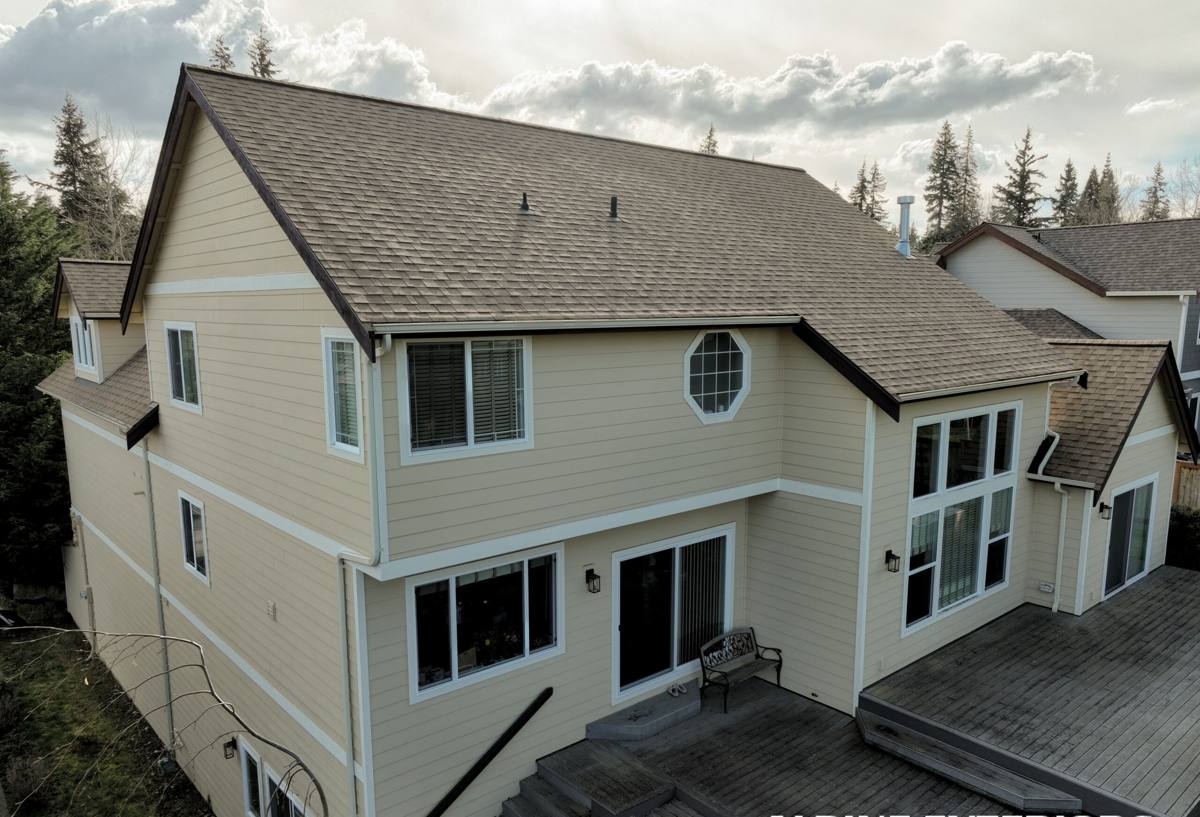
What Salt Air, Rain, and Moss Actually Do to a Shingle Roof
Salt Air
Airborne salt accelerates corrosion on anything metal — nails, flashing, drip edge, vent boots with metal collars. A roof that looks fine from the ground can have fasteners quietly losing their grip strength years before the shingles themselves show wear. This is why fastener and flashing material selection matters more here than it would twenty miles inland.
Driving Rain
Wind-driven rain off the water doesn't fall straight down — it gets pushed sideways, up under shingle tabs, and into any gap in flashing or underlayment. A roof detailed for calm, vertical rainfall will eventually leak here. Every transition point — valleys, chimneys, wall intersections, low-slope sections — needs to be built assuming the rain is coming in at an angle.
Moss and Algae
Shade, moisture, and mild temperatures are exactly what moss wants, and Blaine offers all three for a good chunk of the year. Moss doesn't just look bad — it holds moisture against the shingle surface, lifts tabs as it grows under the edges, and shortens the roof's usable life if it's left unmanaged.
What a Correctly Installed Asphalt Shingle Roof Includes Here
A roof that's going to last in this environment isn't just shingles nailed to a deck. The parts you don't see matter as much as the ones you do:
- Ice-and-water shield membrane at eaves, valleys, and around penetrations — not just felt paper, which won't stand up to wind-driven moisture the same way
- Corrosion-resistant fasteners and flashing, chosen for a marine-influenced air environment rather than standard-grade materials
- Balanced intake and exhaust attic ventilation, so moisture doesn't get trapped under the deck and rot it from beneath
- Properly lapped and step-flashed wall and chimney intersections, sealed against sideways-driven rain
- A shingle product rated for the wind exposure your specific roof plane sees, especially on gable ends and ridges facing open water
Skip any one of these and the roof may look fine at handoff, but the failure shows up two, five, or ten years later — usually as a leak that's hard to trace back to the actual cause.
Moss Prevention Built Into the Job, Not Bolted On Later
You can't stop moss spores from landing on a roof in this climate, but you can make the roof inhospitable to them. During installation, that means clean tab lines with no debris pockets, proper flashing at valleys so water doesn't pool and stay damp, and — where the roof design allows — zinc or copper strips near the ridge that release trace metal ions with every rain, which discourages moss growth on the shingle surface below.
None of that replaces regular maintenance. A shingle roof in Blaine benefits from a soft wash or gentle moss removal on a set schedule, done in a way that doesn't strip granules or void the shingle warranty. We'll walk you through what your specific roof needs based on its slope, shade exposure, and age — there's no single answer that fits every house.
Our Process for a Blaine Asphalt Shingle Roof
- Inspection and assessment — we look at the existing roof, the deck condition underneath, ventilation setup, and any trouble spots like valleys, chimneys, or low-slope transitions
- Honest scope and estimate — repair, partial replacement, or full tear-off, explained in plain terms with the reasoning behind the recommendation
- Tear-off and deck check — old material removed, deck inspected for soft spots or rot before anything new goes down
- Underlayment and flashing — ice-and-water membrane at vulnerable areas, new flashing where the old material is corroded or undersized
- Shingle installation — proper nailing pattern, correct exposure, and attention to wind-exposed roof planes
- Ventilation check — intake and exhaust confirmed balanced so the new roof isn't trapping moisture from day one
- Cleanup and walk-through — job site cleared, magnet-swept for stray nails, and a walk-through so you know what was done and what to watch for going forward
Repair, or Full Replacement?
Not every issue means a new roof. The table below covers the general factors that push a decision one way or the other — your actual roof may have a mix of these.
| Situation | Usually Points To |
|---|---|
| Isolated leak, roof under 10-15 years old, deck sound | Targeted repair |
| Granule loss concentrated in one area, rest of roof intact | Section repair or partial replacement |
| Widespread curling, cracking, or brittle shingles | Full replacement |
| Soft or spongy deck sections, signs of rot | Full replacement with deck repair |
| Roof near or past manufacturer's rated lifespan | Full replacement — repairs become a stopgap, not a fix |
| Heavy, longstanding moss with lifted tabs | Depends on extent — inspection needed to know if it's cosmetic or structural |
We'll tell you plainly which category your roof falls into. If a repair is the honest answer, that's what we'll recommend — a roof that doesn't need replacing yet shouldn't get sold as one.
Choosing a Shingle for This Climate
Asphalt shingles come in a range of grades, and the right choice for a Blaine roof isn't necessarily the cheapest or the most expensive — it's the one matched to your roof's exposure and your maintenance appetite.
| Factor | Standard 3-Tab | Architectural / Laminate |
|---|---|---|
| Wind resistance | Lower rating, more vulnerable on exposed planes | Higher rating, better suited to open, wind-exposed roofs |
| Algae resistance | Available on some lines | Widely available, often standard on mid-to-upper lines |
| Expected lifespan | Shorter end of the asphalt range | Longer end of the asphalt range |
| Upfront cost | Lower | Higher, but often lower cost-per-year over the roof's life |
For most homes near the water, we lean toward architectural shingles with algae-resistant granules simply because the added durability and moss resistance pay for themselves over time in this climate. That said, budget, roof pitch, and how long you plan to stay in the home are all legitimate factors — we'll go over the honest trade-offs for your specific situation rather than pushing one option.
Why It Matters That Your Crew Already Works Blaine
A crew that only occasionally works this stretch of Whatcom County has to relearn the local conditions on your roof. A crew that works Semiahmoo and the Blaine area regularly already knows which roof orientations catch the worst of the wind off the water, which neighborhoods tend to hold shade and grow moss faster, and what flashing and fastener choices actually hold up here instead of failing early. That familiarity shows up in fewer callbacks and a roof that's built for the conditions it's actually going to face, not a generic spec sheet.
It also means we're not far away if something needs a second look after the job is done — a real consideration when the next atmospheric river rolls in off the water.
Keeping a Blaine Shingle Roof Healthy Long-Term
A well-installed roof still needs basic upkeep to hit its full lifespan in this climate. A simple seasonal routine goes a long way:
- Clear debris from valleys and gutters before the fall rains ramp up
- Check for early moss growth on shaded slopes and address it before it spreads
- Look for lifted, cracked, or missing shingles after any high-wind event
- Confirm attic ventilation isn't blocked by insulation or debris
- Have flashing around chimneys, vents, and walls checked every few years, since these are the most common leak points
If you're not comfortable getting on the roof yourself — and given the moss and moisture here, most people aren't — a periodic professional check catches small issues while they're still cheap to fix.
Get a Straight Answer on Your Roof
If you're dealing with a leak, aging shingles, or just want an honest read on how much life is left in your current roof, we're glad to take a look. The estimate is free, there's no pressure attached to it, and you'll get a clear explanation of what your roof actually needs — use the form below to get started.