 Semiahmoo Exterior
 Why Blaine Decks Wear Out Faster Than the Instructions Say They Should
If you own a deck in Blaine or anywhere along the Semiahmoo waterfront, you already know it doesn't age like a deck in a dry inland town. The combination of salt-laden air off the bay, long stretches of driving rain, and a moss season that can run from fall through spring puts real, compounding stress on wood, fasteners, and finishes. None of these forces are dramatic on their own. It's the year-round exposure that adds up — moisture getting into joints that never fully dry out, metal fasteners corroding a little faster than the manufacturer's spec sheet assumes, and moss holding water against boards long after a storm has passed.
We repair decks across Whatcom County, and the pattern in Blaine is consistent: the failures we're called out for are almost never about bad carpentry. They're about materials and connections that weren't specified for a marine, high-rainfall climate in the first place, or repairs that patched the visible symptom without addressing the moisture path underneath it.
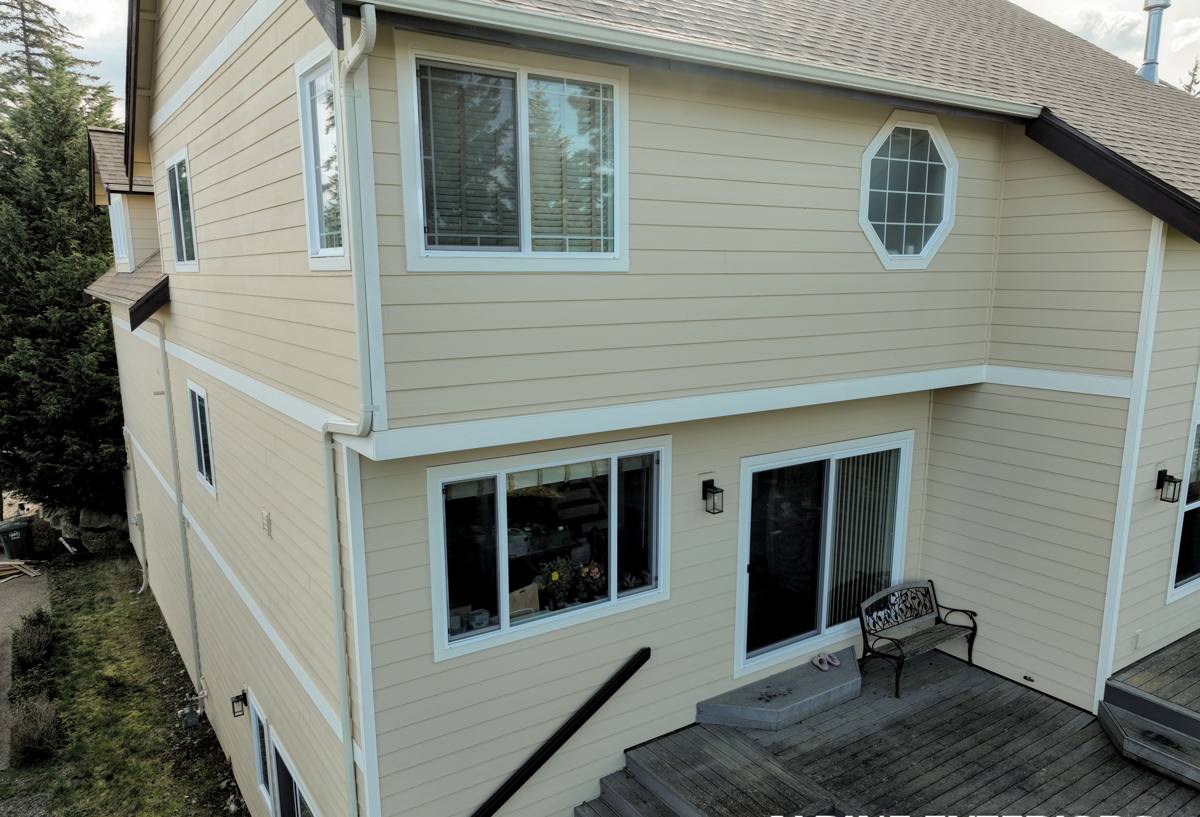
What This Climate Actually Does to a Deck
Salt Air
Airborne salt from the bay accelerates corrosion on anything metal — nails, screws, joist hangers, bolts, and railing hardware. Standard electro-galvanized fasteners that hold up fine 30 miles inland can start rusting within a few seasons this close to the water. Once a fastener corrodes, it loses holding strength long before the rust is visible from the surface, which is why boards can feel "loose" even though nothing looks obviously broken.
Driving Rain
Rain that comes in at an angle, which is common in this part of the county, gets pushed into places a straight-down rain never reaches — under railing base plates, behind ledger boards, into the end grain of stair stringers. End grain soaks up water far faster than the face of a board, so the cut ends of joists, rim boards, and decking are usually the first places we find rot.
Moss and Prolonged Dampness
Moss doesn't just look bad — it holds moisture against the wood surface for days after everything else has dried out, and it keeps boards several degrees cooler and damper than bare wood nearby. On flat or low-slope deck surfaces with poor drainage, moss buildup between boards is one of the most common reasons we see premature surface rot on otherwise sound framing.
Signs Your Deck Needs Repair — And Signs It's Past That
Most decks don't fail all at once. They give warnings first. Knowing the difference between a repair-stage issue and a replace-stage issue saves homeowners from either overpaying for a full rebuild they don't need, or under-fixing a structural problem that gets worse every winter.
- Boards that feel spongy or flex more than neighboring boards when you walk on them
- Visible gaps, cracking, or splintering concentrated near board ends
- Railings or posts that wiggle or feel less rigid than they used to
- Rust streaking below fastener heads or joist hangers
- A ledger board (where the deck attaches to the house) that looks discolored, swollen, or separated from the siding
- Persistent moss or algae in the same spots every year, even after cleaning
- Stairs that feel different underfoot from step to step
A few soft boards or a rusted hanger or two is almost always a repair. Widespread rot in the ledger, multiple failed joists, or a substructure that's been wet for years without anyone checking it is usually a sign the framing needs to be replaced, even if the surface decking looks salvageable.
What a Correct Deck Repair Actually Involves
A repair that only replaces what's visible from the top is a temporary fix. A repair done right starts underneath.
1. Find the Water Path, Not Just the Damage
Rot and fastener failure are symptoms. Before replacing anything, we trace where water is actually getting in — a gap in ledger flashing, a low spot holding standing water, a railing post base with no drainage — because replacing a board without fixing the water path just means the same repair again in a few years.
2. Inspect the Substructure
Joists, beams, posts, and the ledger connection carry the load. We check for soft spots with a probe, look at hanger and bolt condition, and confirm the ledger is properly flashed and fastened to the house framing — not just to the siding.
3. Match or Upgrade Fasteners for the Environment
In a salt-air location, we don't replace corroded fasteners with the same grade that failed. Stainless steel or heavy hot-dip galvanized hardware costs more up front but is the honest choice for anything this close to the bay — it's a maintenance and longevity trade-off worth making once rather than repeating every few years.
4. Address Drainage and Airflow
Standing water and trapped moisture are the root cause behind most of what we repair. That can mean adjusting board spacing, clearing blocked drainage gaps, or improving ventilation underneath a low-clearance deck so the substructure actually gets a chance to dry between rain events.
5. Finish and Seal Appropriately
Bare or under-finished wood in this climate weathers unevenly and holds moss more readily. Repaired sections get sealed or finished to match the rest of the deck so the repair blends in and performs the same as the surrounding material.
Repair vs. Replace: How We Help You Decide
| Factor | Leans Toward Repair | Leans Toward Replacement |
|---|---|---|
| Framing condition | Joists and ledger are sound, isolated soft spots | Rot in multiple structural members or the ledger connection |
| Age of deck | Under 15 years, built to a reasonable standard | Older than its material's typical service life, or unknown build history |
| Fastener condition | Localized corrosion, hardware still holding | Widespread rust, hangers pulling away from wood |
| Extent of decking damage | A handful of boards affected | Damage spread across most of the surface |
| Design issues | None — problem is wear, not layout | Poor drainage, no flashing, or undersized framing built into the original design |
Costs for deck repair vary widely depending on how much framing versus surface decking is involved, so we don't quote a number until we've actually looked underneath. What we can say honestly: a targeted repair addressing framing, fasteners, and drainage is almost always less expensive than a full rebuild, but only if the substructure is still fundamentally sound.
Our Process for a Blaine Deck Repair
- On-site assessment — We walk the whole deck, probe suspect boards, and check the substructure from below where access allows.
- Honest scope and estimate — You get a clear picture of what's failing, why, and what it will take to fix it correctly — no upselling to a full replacement if a repair will genuinely hold up.
- Repair work — Damaged boards, framing members, and hardware are replaced with materials suited to this climate, not just whatever matches on the shelf.
- Drainage and moisture check — We confirm water is shedding away from the structure, not pooling against it.
- Finish and walkthrough — Repaired areas are sealed or finished to match, and we walk the deck with you before calling it done.
Materials: What We Use and Why
For framing repairs, pressure-treated lumber rated for ground contact is the baseline in this climate, since deck substructures spend most of the year damp even when the top surface looks dry. For decking surfaces, we work with both quality wood species and composite boards, and we'll talk through the real trade-offs of each rather than pushing one option:
- Wood decking — Lower material cost, natural look, but requires regular cleaning and refinishing to resist moss and moisture in this climate.
- Composite decking — Higher upfront cost, resists moisture and moss buildup better, but still needs correct fastening, spacing, and substructure ventilation — composite doesn't forgive a poorly built frame underneath it.
- Fasteners and hardware — Stainless or heavy-duty hot-dip galvanized as the standard for anything within reach of salt air, not just at grade level.
We won't install a product or fastener grade we know is undersized for a Semiahmoo Bay location just because it's cheaper — that's a callback waiting to happen, and it's not the standard we hold our own repairs to.
A Homeowner's Maintenance Checklist Between Visits
A repaired deck still needs seasonal attention in this climate. This short list catches most problems while they're still cheap to fix:
- Sweep debris and standing leaves off the deck surface regularly through fall
- Clear moss and algae as soon as it appears rather than waiting for it to spread
- Check railing posts and stair stringers for movement once or twice a year
- Look for rust streaking near fastener heads and hangers where visible
- Confirm gaps between boards are clear so water can drain instead of pooling
- Re-seal or refinish wood decking on the schedule the finish manufacturer recommends — often shorter than inland recommendations given local rainfall
Why a Crew That Already Works Blaine Matters
Deck repair isn't the same job in every part of the county. A crew that mostly works drier, inland conditions can miss what's routine for us: which fastener grades actually hold up near the bay, which framing details fail first under driving rain, and where moss takes hold fastest on a given deck orientation. Working regularly in Blaine and the broader Semiahmoo area means we're not learning the local climate on your deck — we're applying what we've already seen hold up, and what hasn't, on homes exposed to the same salt air, rain, and moss season yours deals with.
If your deck has soft boards, loose railings, rust stains, or areas that never seem to dry out, we're happy to take a look and give you a straight answer about what it needs. Reach out for a free, no-pressure estimate using the form below.