 Semiahmoo Exterior
 When Blaine Storms Turn Into Roof Damage
Blaine sits right where Puget Sound weather meets the open water near the Canadian border, and that location means roofs here take a beating that inland Whatcom County homes simply don't see. Winter windstorms come off the Strait with real force, driving rain sideways under roof edges and lifting shingles that would stay put in a calmer climate. After a storm passes, most homeowners check for the obvious stuff — missing shingles, a dented gutter — and miss the damage that actually causes leaks: lifted flashing, driven-in fasteners, and underlayment that got wet before anyone noticed a problem.
This page is about one job done right: storm damage roof repair for homes in and around Blaine. Not a full re-roof pitch, not a generic list of roofing services — just what a correct repair looks like when the roof in question has been through a coastal storm and needs to be fixed properly, not patched.
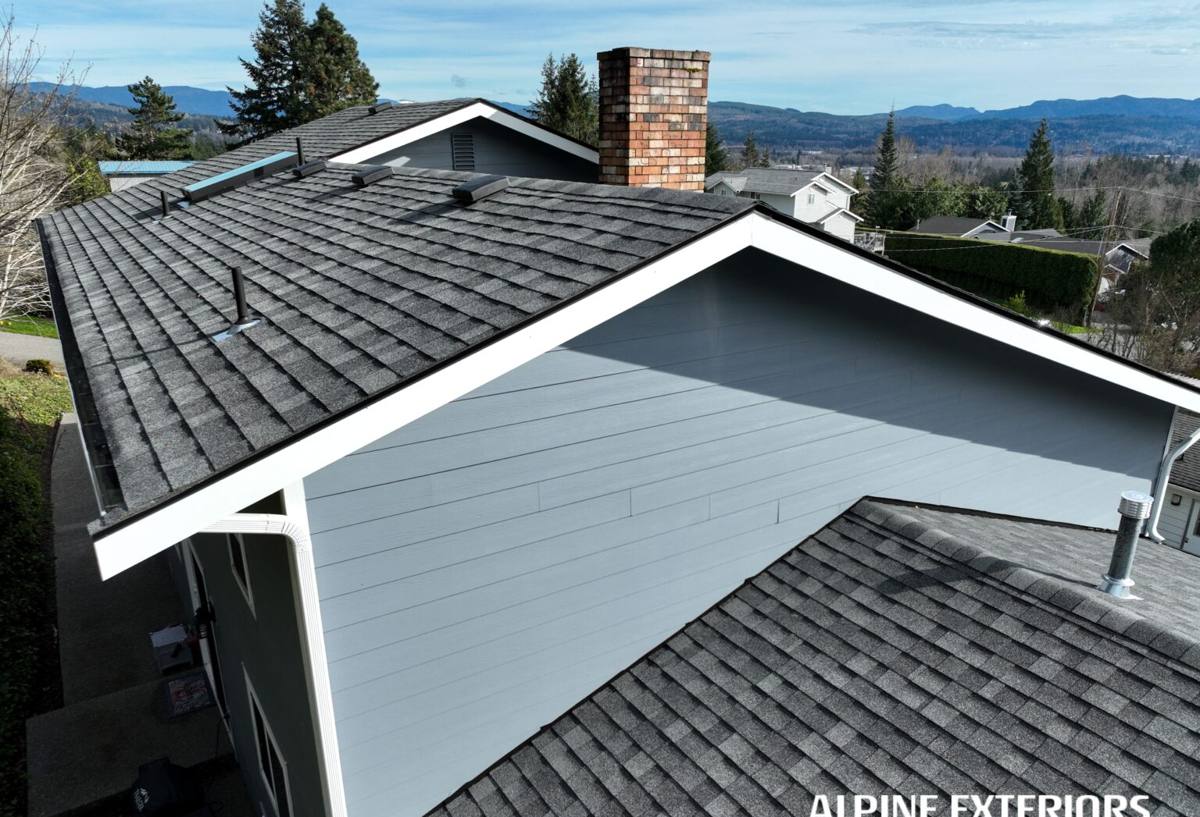
What Blaine's Coastal Climate Does to a Roof Over Time
Storm damage rarely happens to a roof in perfect condition. It happens to a roof that's already been softened up by years of salt air, rain, and moss. Understanding that baseline matters because it changes what "repair" actually needs to accomplish.
Salt Air and Corrosion
Homes close to the water deal with airborne salt that accelerates corrosion on exposed metal — flashing, fasteners, gutter hardware, and vent caps age faster here than they would ten or twenty miles inland. A storm that pulls at a flashing edge already weakened by corrosion will do more damage, faster, than the same wind hitting a healthy metal joint.
Driving Rain and Wind-Driven Water
Standard shingle installations are designed to shed water moving straight down. Wind-driven rain off the Strait doesn't move straight down — it comes in at an angle and gets pushed uphill under shingle edges, into vent flashing, and around chimney and skylight penetrations. Roofs here need attention to detail at every penetration and edge that a calmer inland climate could get away without.
Long Moss Season
Blaine's mild, wet stretch of the year runs long, which means moss and algae get more time to establish themselves on north-facing slopes and shaded areas. Moss holds moisture against the roofing material and works its way under shingle tabs, which weakens the seal well before a storm ever arrives. A roof with active moss growth is more vulnerable to wind and rain damage than a clean one, and it's common for us to find both problems on the same slope.
Signs Your Blaine Roof May Have Storm Damage
Some damage is obvious from the ground. Much of it isn't, which is why a proper inspection after any significant windstorm is worth doing even if nothing looks wrong from the driveway.
- Shingles that are cracked, curled, creased, or missing entirely, especially on the side of the roof that faced the wind
- Granules collecting in gutters or at downspout outlets — a sign of accelerated shingle wear
- Lifted or bent flashing around chimneys, skylights, vents, and roof-to-wall transitions
- Water stains on interior ceilings or upper-floor walls that appear after a storm
- Gutters pulled away from the fascia, sagging, or full of debris that's overflowing onto siding
- Visible daylight or gaps in the attic where flashing or sheathing has separated
- Moss or dark streaking that has expanded noticeably since the last time it was checked
- Soft or spongy spots when walking the roof, which can mean the decking underneath has taken on water
If you notice any of these after a storm, it's worth getting a look before the next round of weather makes a small problem worse.
What a Correct Storm Damage Repair Actually Involves
The difference between a repair that lasts and one that leaks again next winter usually comes down to what happens before and after the visible shingle work.
Inspection First, Not Assumptions
We start on the roof itself, not just from photos or a ladder at the eave. Storm damage often extends beyond what's visible from the ground — a single lifted shingle at the ridge can mean water has already tracked several feet down under the course below it. We also check the attic from the inside where access allows, since a stained rafter or wet insulation tells us more about how far water traveled than the exterior does.
Matching Materials, Not Just Patching
A repair that uses mismatched shingles or the wrong flashing profile might stop a leak temporarily, but it creates a weak point that fails again in the next storm. We match existing shingle type, color, and exposure as closely as the product line allows, and where an exact match isn't available, we place repairs where the difference will be least noticeable.
Flashing and Underlayment Come First
Shingles are the visible layer, but flashing and underlayment are what actually keep water out at vulnerable points — valleys, chimneys, skylights, and wall intersections. Replacing damaged shingles without addressing compromised flashing underneath is one of the most common shortcuts in storm repair, and it's exactly why some repairs leak again within a year. We replace or reseal flashing as part of the repair whenever it shows wear, corrosion, or storm displacement, not just when it's obviously torn.
Sheathing Checks Where Water Got Through
If water reached the roof decking, we check for soft spots, delamination, or rot before closing the repair back up. Covering damaged sheathing with new shingles just hides a structural problem that gets worse with every future storm.
Our Process, From Call to Completed Repair
- Initial call: You describe what you've noticed — a leak, missing shingles, storm damage you can see from the ground. We ask enough questions to understand urgency, especially if water is actively entering the home.
- On-site inspection: We walk the roof and check accessible attic space, documenting the extent of damage rather than just the point you noticed.
- Honest assessment: We tell you plainly whether this is a targeted repair, a larger section replacement, or something closer to a full re-roof — and why.
- Written estimate: You get a clear scope of work and price range before anything is scheduled, including whether insurance documentation may be useful.
- Repair work: Matching materials, correct flashing and underlayment work, and cleanup of debris and old materials from the property.
- Final check: We confirm the repair is watertight and walk you through what we found and fixed.
Repair vs. Replacement: How We Help You Decide
Not every storm-damaged roof needs a full replacement, and not every roof should be patched. The right call depends on the roof's age, how widespread the damage is, and what condition the rest of the roofing system is in.
| Factor | Repair Usually Makes Sense | Replacement Usually Makes Sense |
|---|---|---|
| Roof age | Under 10-15 years, or well-maintained | Nearing or past expected lifespan |
| Damage extent | Localized to one slope or section | Spread across multiple slopes |
| Moss/algae condition | Light, treatable growth | Widespread growth already degrading shingles |
| Decking condition | Solid, no soft spots found | Soft spots or rot present in multiple areas |
| Prior repair history | First significant repair needed | Roof has needed repeated patch repairs |
We'll walk you through where your roof falls on these points and give you a straightforward recommendation, not an upsell.
Working With Your Insurance After a Storm
Many storm damage repairs in Blaine are at least partially covered by homeowners insurance, particularly when wind or falling debris caused the damage. We can document what we find with clear notes and photos of the damage, which you can provide to your adjuster. We're not your insurance company and won't promise a coverage outcome, but a thorough, honest inspection report tends to make the claims process smoother than a vague description of "storm damage."
Why a Crew That Already Works Blaine Matters
A roofer who mainly works drier, inland areas can miss what matters most on a Blaine roof — the corrosion patterns from salt air, the specific spots where wind-driven rain from the Strait tends to find a way in, and how aggressively moss establishes itself here compared to elsewhere in Whatcom County. We work this area regularly, which means we're not guessing at how a Blaine roof behaves in weather — we've seen the same failure patterns repeat on similar homes and know what to check first.
It also means we can usually respond faster after a significant windstorm, when a lot of local roofs need attention at once and timing matters for preventing a small leak from becoming water damage inside the home.
After the Repair: Keeping Storm Damage From Coming Back
A correct repair addresses the immediate damage, but a few ongoing habits reduce the odds of repeat problems on a coastal roof:
- Clean gutters at least twice a year so storm rain has somewhere to go besides under the roof edge
- Have moss treated or removed before it spreads across a full slope, particularly on shaded north faces
- Check flashing and vent boots every year or two, since these fail well before shingles typically do
- Trim back overhanging branches that drop debris or hold moisture against the roof surface
- Get a post-storm inspection after any windstorm with sustained gusts, even if nothing looks wrong from the ground
If you've had storm damage to your Blaine roof, or you just want an honest look after the last windstorm came through, we're happy to come take a look. The estimate is free, there's no pressure attached to it, and you'll get a clear answer about what your roof actually needs — use the form below to get started.