 Semiahmoo Exterior
 Windows on the Blaine Waterfront Take a Different Kind of Beating
Blaine sits right where Whatcom County meets the water, and that location shapes everything about how windows perform here. Salt-laden air off the Strait of Georgia and Semiahmoo Bay works into aluminum hardware, vinyl glazing beads, and exposed fasteners in a way that inland Washington homes never have to deal with. Add driving rain that comes in sideways during winter storms, and a moss and algae season that can stretch eight or nine months out of the year, and you have a climate that finds every weak point in a window installation — usually within a few years, not a few decades.
This page is about one job, done right, in one area: window installation for homes in and around Blaine. Not a general overview of window options nationwide — the specific realities of installing windows on homes that sit close to salt water and get more wind-driven rain than almost anywhere else in the state.
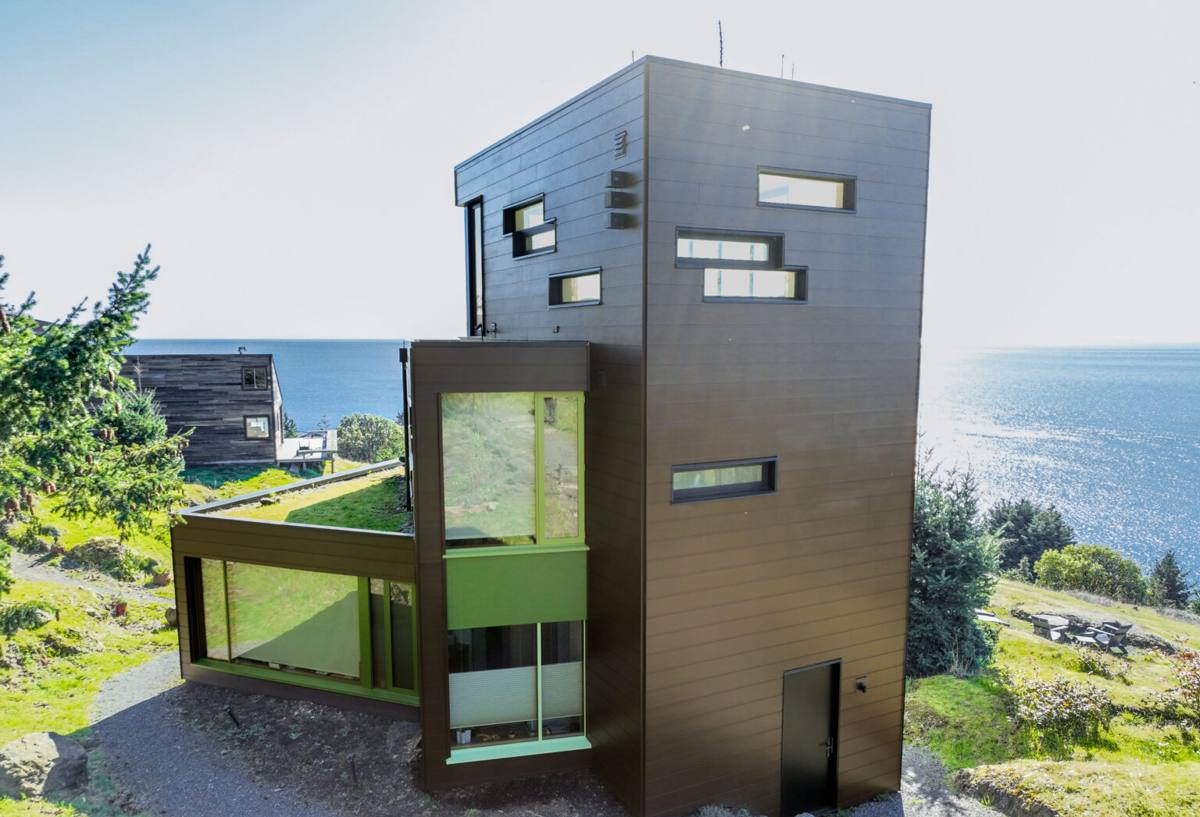
What Blaine's Climate Actually Does to a Window Installation
It helps to understand the failure points before talking about the fix. Three things drive almost every premature window problem we see on the coast:
Salt Air and Corrosion
Salt in the air settles on hardware, screws, and metal flashing. Left unaddressed, it accelerates corrosion on lower-grade fasteners and hinges, and it can degrade certain finishes faster than the manufacturer's warranty assumes. This is a material and hardware selection issue as much as an installation one.
Driving, Wind-Driven Rain
Standard rain falls straight down and sheds off a roof and siding system predictably. Wind-driven rain off the water pushes horizontally and even upward under eaves and around window edges, which means flashing details that would be adequate in a calmer inland setting can fail here. Water finds the path of least resistance, and a poorly lapped flashing or a bead of sealant used in place of proper flashing is exactly that path.
Moss, Algae, and Prolonged Moisture
Whatcom County's long wet season keeps wood trim, sills, and siding damp for extended stretches. Moss and algae growth around window perimeters holds moisture against the building longer than open air would, which is hard on any material that isn't detailed to shed water quickly and dry out between storms.
What a Correct Window Installation Involves
A window installation is not just setting a new unit into an old opening. On a Blaine home, the parts that matter most are usually invisible once the trim goes back on:
- Full removal of the old window and inspection of the rough opening for rot, soft framing, or prior water damage before anything new goes in
- Correct flashing sequence — sill pan flashing first, then side flashing, then head flashing, integrated with the home's existing water-resistive barrier so water is always directed outward and down, never trapped behind the new window
- Proper shimming and leveling so the window operates smoothly and doesn't rack, bind, or stress the seal over time
- Low-expansion foam and backer rod used correctly around the perimeter for insulation and air sealing, not as a substitute for flashing
- Exterior sealant appropriate for a marine climate, applied at the right joints — sealant is a secondary barrier, not the primary defense against water
- Interior and exterior trim reinstalled or replaced cleanly, with attention to paint or caulk lines that will be exposed to UV and salt air
Skip or rush any one of these steps and the window itself can be top quality and still fail early — usually as a slow leak that shows up as staining, soft drywall, or a musty smell months or years later, long after the crew that installed it is gone.
Signs a Blaine Home Needs Window Replacement
Homeowners in this area often notice a pattern before they can name the cause. Common signs it's time to look seriously at replacement:
- Visible condensation or fogging between panes, which means the seal on a double- or triple-pane unit has failed
- Drafts or noticeable temperature difference near the window even when it's fully closed and latched
- Wood sills or frames that feel soft, spongy, or show dark staining — a sign moisture has been getting in around the unit
- Windows that are hard to open, close, or lock, which often points to a frame that has warped or racked
- Visible corrosion on hardware, hinges, or fasteners
- Paint that keeps failing in the same spot on trim around a window, even after repainting
- Noticeably higher heating bills in winter with no other explanation
Our Process for Blaine Window Installation
We keep the process straightforward and give homeowners a clear picture of what's happening at each stage:
- On-site assessment. We look at the existing windows, the framing behind them, and any signs of past water intrusion before recommending anything.
- Honest scope and estimate. We tell you what's actually needed — sometimes that's a straightforward like-for-like replacement, sometimes it's a full-frame install because the old opening has hidden damage that needs to be addressed first.
- Material and hardware selection suited to a marine climate. We steer homeowners toward frame materials and fastener grades that hold up to salt air rather than the cheapest option that happens to fit the opening.
- Removal and opening inspection. Old windows come out, and we check the framing, sill, and sheathing before anything new goes in. Any rot or damage found gets addressed, not covered over.
- Flashing, installation, and sealing done in the sequence described above, built for wind-driven rain rather than a fair-weather installation standard.
- Trim, cleanup, and final check — every window is operated, checked for level and square, and inspected before we consider the job done.
Frame Materials: What Holds Up Near Semiahmoo Bay
There's no single "best" window material for every home — it depends on budget, the home's style, and how exposed a given wall is to weather. Here's how the common options actually perform in a salt-air, high-rain environment like Blaine's:
| Frame Material | Salt Air / Moisture Behavior | Maintenance | Notes for Blaine Homes |
|---|---|---|---|
| Vinyl | Good — won't corrode or rot; UV exposure over many years can affect color | Low | Solid value option; choose a quality line with reinforced corners and hardware rated for coastal use |
| Fiberglass | Very good — dimensionally stable, resists corrosion, holds paint well | Low to moderate | Strong fit for exposed, water-facing elevations; higher upfront cost |
| Wood (clad or unclad) | Sensitive — beautiful but needs consistent maintenance to keep moisture out | High | Best used where trim overhangs protect it, or with a durable exterior cladding on the wood |
| Aluminum | Prone to corrosion in salt air unless marine-grade and properly finished | Moderate | We're selective about where we use standard aluminum this close to the water |
We'll talk through these trade-offs honestly during the estimate rather than pushing one material for every situation. The right choice often varies window by window depending on which side of the house it's on and how exposed it is.
What Affects the Cost of a Window Installation
Every home is different, so we don't quote sight unseen — but these are the main factors that move the price up or down:
| Factor | Why It Matters |
|---|---|
| Number and size of windows | More glass and larger openings mean more material and labor |
| Full-frame vs. insert (pocket) replacement | Full-frame takes more labor but is often necessary when there's rot or the opening needs correcting |
| Frame material | Vinyl, fiberglass, and wood carry different material costs |
| Hidden rot or framing damage | Common on older coastal homes; adds repair time before the new window can go in |
| Trim and siding work around the opening | Matching existing trim profiles or siding takes additional time |
| Access and height | Second-story or hard-to-reach windows take longer and may need staging |
As a broad range, homeowners in this area typically see costs anywhere from around a thousand dollars per window on the low end for a straightforward insert replacement, up to several thousand per window for larger units, full-frame work, or hidden repairs. That range is wide on purpose — the only way to get an accurate number is an on-site look.
Why Hiring a Crew That Already Works Blaine and Semiahmoo Matters
Window installation isn't just about the window — it's about how that window integrates with a specific home's siding, trim, and moisture management system, in a specific climate. A crew that regularly works Blaine and the greater Semiahmoo area already understands which elevations take the worst of the wind-driven rain, why moss buildup around older wood trim is a recurring issue here, and why hardware and sealant choices that work fine in a drier inland climate don't always hold up this close to the water.
That local familiarity shows up in small decisions — how flashing is lapped on a bay-facing wall, which fastener grade goes into a window that will see salt spray, how much attention the sill detail gets on a home that catches wind off the water. Those decisions are the difference between a window installation that looks fine for a year and one that stays watertight for decades.
Keeping New Windows Performing Long-Term
A correct installation is the foundation, but a little upkeep goes a long way in this climate. A simple seasonal checklist:
- Rinse salt residue and grime off frames and glass a few times a year, especially on water-facing sides of the home
- Check exterior caulk lines annually for cracking or gaps and have them touched up before they become a leak path
- Clear moss or algae buildup from sills and surrounding trim before it holds moisture against the frame
- Operate each window (open, close, lock) a few times a year to catch hardware issues early
- Watch for condensation between panes, which signals a seal failure worth addressing before it worsens
If you're seeing drafts, fogged glass, soft trim, or windows that are getting harder to operate, or you're simply planning ahead for a home in Blaine or the wider Semiahmoo area, we're happy to take a look and give you a straightforward, no-pressure estimate — no invented urgency, just an honest read on what your windows actually need.