 Semiahmoo Exterior
 Blaine Harbor's Roofs Take a Different Kind of Beating
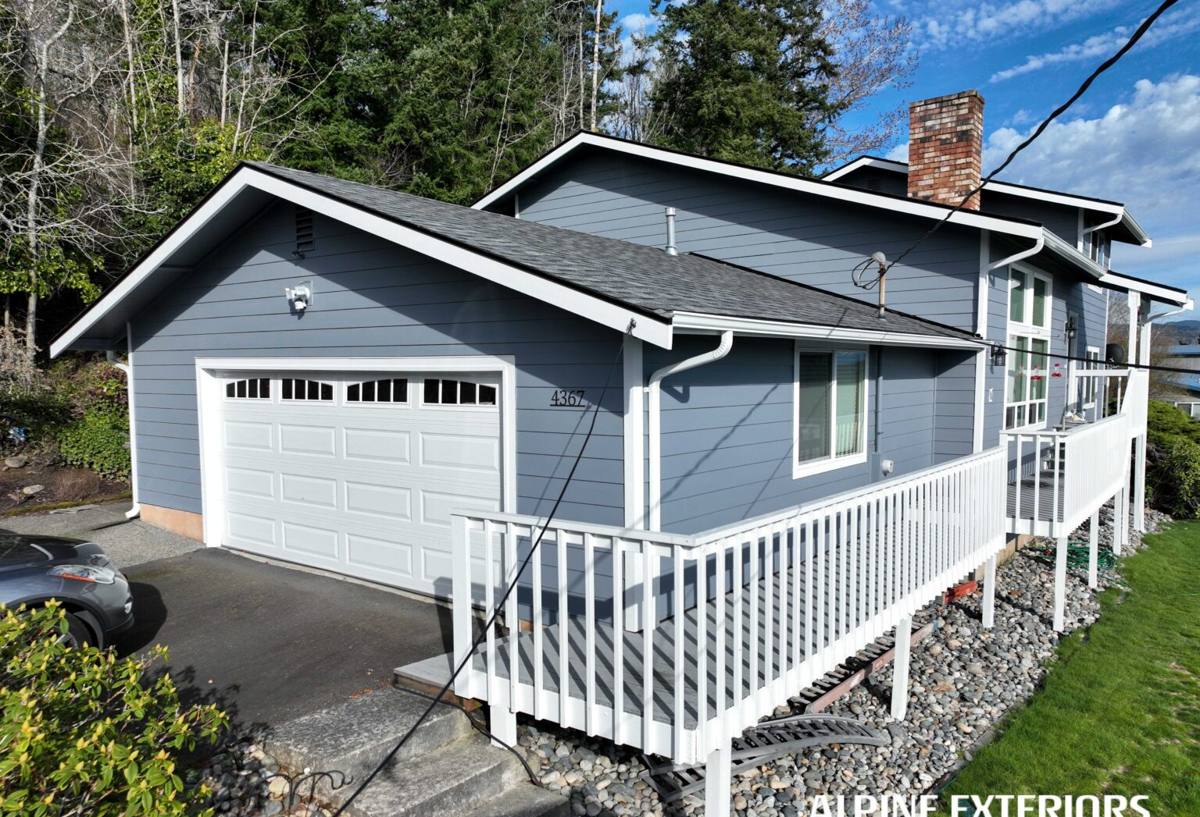
Houses along Blaine Harbor sit close enough to the water that the roof over your head is doing more work than a roof would in a drier, inland part of Whatcom County. Salt-laden air off Semiahmoo Bay accelerates corrosion on fasteners, flashing, and any exposed metal. Driving rain off the water finds its way into laps and seams that would stay dry on a calmer site. And the long, gray moss season here — often stretching from fall through spring — keeps shaded, north-facing roof planes damp for months at a time. None of this means a roof in Blaine Harbor needs to be exotic or over-built. It means the materials, fastening, and detail work have to be chosen and installed with this specific exposure in mind, not treated the same as a roof twenty miles inland.
This page is about one job in one place: replacing a roof on a home in Blaine Harbor. We'll walk through what wears out first here, what a correct replacement actually involves, the material trade-offs worth understanding, and why local experience on this stretch of coastline changes the outcome.
What Actually Wears Out First on a Harbor-Adjacent Roof
Fasteners and Flashing
Exposed metal is usually the first thing to show its age near saltwater. Nail heads, drip edge, step flashing, and pipe boots that would last decades further inland can start corroding or losing their seal noticeably sooner in a salt-air environment. Once flashing starts to fail — even in one small spot — water has a direct path into the roof deck.
Moss and Organic Growth
Whatcom County's wet, mild winters are ideal moss-growing conditions, and Blaine Harbor's marine layer and shade patterns from mature trees make it worse in spots. Moss holds moisture against the roofing material, works into shingle laps, and over time can lift edges and shorten the life of the roof underneath it. A roof that looks "mossy but fine" from the ground is often further along in decline than it appears.
Wind-Driven Rain
Storms coming off the water don't just fall straight down — they push rain sideways into vents, ridge caps, and anywhere a seam isn't fully sealed. A roofing system designed for a calmer inland site can be under-detailed for what this exposure actually demands.
Signs a Blaine Harbor Roof Is Ready for Replacement
Not every issue means a full tear-off. But a few signs together usually mean the roofing system itself — not just a patch — needs attention:
- Granule loss heavy enough that you're finding grit in gutters every season
- Shingles that are cupping, curling, or cracking, especially on south- and west-facing slopes
- Persistent moss or dark algae streaking that comes back within a season of cleaning
- Rusting or visibly deteriorated flashing around chimneys, vents, and valleys
- Soft spots, sagging, or staining on the roof deck visible from the attic
- A roof approaching or past the manufacturer's expected service life for its material and exposure
- Repeated leaks in different spots rather than one isolated failure point
If you're seeing two or more of these, it's worth having someone look at the whole system rather than chasing individual repairs.
What a Correct Replacement Actually Involves
Tear-Off and Deck Inspection
A full tear-off exposes the roof deck, which is the only way to know its real condition. In a marine environment, hidden moisture damage from slow leaks is common enough that we treat deck inspection as a required step, not an optional add-on. Soft, delaminated, or rotted sheathing gets replaced before anything new goes down — covering damaged decking with new roofing just hides a problem that will resurface.
Underlayment Suited to the Exposure
Underlayment is the roof's backup layer if wind-driven rain gets past the primary roofing material, and in a harbor-adjacent location that backup layer matters more than it would elsewhere. We use synthetic or self-adhering underlayment in valleys, eaves, and other vulnerable transitions, matched to the roofing product and the site's exposure.
Flashing and Detail Work
This is where most roof failures near saltwater actually start, so it's where the extra attention goes. New flashing at every penetration, valley, and wall transition, fastened with corrosion-resistant hardware suited to salt exposure, and sealed rather than just nailed down. Detail work like this doesn't show up in a curb-side photo, but it's the difference between a roof that holds up for its full expected life and one that starts leaking at the five- or six-year mark.
Ventilation
Proper intake and exhaust ventilation keeps the attic dry and temperature-balanced, which matters for moss resistance, ice-damming prevention in cold snaps, and simply making the new roofing material last as long as it's rated to. A roof replacement is the right time to correct ventilation that's been undersized or blocked for years.
Material Options for Blaine Harbor Homes
There's no single "correct" material for every home here — it depends on the home's style, budget, roof pitch, and how much maintenance you want to take on. The table below is a general starting point, not a quote.
| Material | How It Handles Salt Air & Moisture | Maintenance Expectation | Typical Service Life |
|---|---|---|---|
| Architectural asphalt composition shingle | Good, when installed with corrosion-resistant fasteners and proper flashing | Periodic moss treatment and gutter clearing | 25–35 years |
| Standing seam metal | Very good with marine-grade coatings; sheds moss and debris well due to slope and smooth surface | Low; occasional fastener and sealant checks | 40–60 years |
| Cedar shake | Traditional look but requires diligent moisture management in a wet, shaded climate | High; regular treatment and inspection | 20–30 years with upkeep |
| Synthetic/composite shingle | Good resistance to moisture and organic growth; consistent performance | Low to moderate | 30–50 years |
We're honest with clients about cedar in particular: it's a beautiful, traditional look, but it demands more upkeep in a shaded, wet, salt-air setting than most homeowners realize going in. If you want that look with less long-term maintenance, a synthetic shake product is worth discussing before committing either way.
Our Process, Start to Finish
- On-site inspection. We walk the roof and attic, note flashing condition, deck integrity where visible, and ventilation setup — not just a curb-side estimate.
- Written estimate with material options. You get a clear scope, product choices, and a straightforward number, not a vague range.
- Scheduling around the weather. Blaine's rain patterns mean we plan tear-off days carefully and protect the open deck if conditions shift mid-project.
- Tear-off and deck repair. Old roofing removed, deck inspected, any damaged sheathing replaced before moving forward.
- Underlayment, flashing, and roofing installation. Installed to manufacturer specification with fastening and sealing appropriate to salt-air exposure.
- Ventilation check and correction. Confirmed adequate or corrected as part of the job, not left as a future problem.
- Cleanup and final walk-through. Site cleared, magnetic sweep for stray fasteners, and a walk-through so you know exactly what was done.
Why Local Experience in Blaine Harbor Actually Matters
A roofing crew that has worked homes along this part of the Whatcom County coastline already knows which details matter most here: the fastener grades that hold up against salt air, the flashing patterns that stand up to wind-driven rain off the bay, and which roof orientations in this area tend to hold moss longest and need extra attention during installation. That's not something you can substitute with a generic playbook from a crew that mostly works inland subdivisions.
Local experience also means knowing the practical side — permitting expectations, typical weather windows for tear-off work in this area, and how to sequence a job so an open roof deck isn't sitting exposed when a storm rolls in off the water. None of that is guesswork when it's a routine part of how a crew already operates in Blaine Harbor.
After the Roof Goes On: Keeping It Performing
A correctly installed roof still benefits from basic upkeep, especially in this climate. A simple annual routine goes a long way:
- Clear gutters and downspouts before the fall rains start
- Have moss growth treated at the first sign of regrowth, rather than letting it establish
- Keep overhanging branches trimmed back to reduce shade and debris buildup
- Do a visual check of flashing and roof penetrations after major windstorms
- Confirm attic ventilation isn't blocked by insulation or debris
- Address any small leak signs immediately rather than waiting for the next dry season
Staying ahead of small issues is what lets a well-installed roof reach its full expected lifespan in a marine climate like this one.
Get a Straightforward Estimate
If your roof is showing wear, or you just want an honest read on where it stands, we're happy to take a look. The estimate is free, there's no pressure, and you'll get a clear explanation of what we see and what your real options are — use the form below to get started.