 Semiahmoo Exterior
 Roof Repair Built for Blaine Harbor's Weather, Not a Generic Fix
Blaine Harbor sits right where Semiahmoo Bay meets the open water, and that location shapes everything about how a roof ages here. Homes close to the harbor take on salt-laden air almost year-round, get hit with driving, wind-pushed rain off the water, and sit under a heavy tree canopy that keeps roofs damp and shaded for long stretches of the year. That combination — salt, wind-driven moisture, and a moss season that can run eight months or longer — wears roofing components down faster than a standard repair playbook accounts for. A roof repair done right in Blaine Harbor has to address the actual cause of the damage, not just patch the spot where water showed up inside the house.
We work on roofs throughout Whatcom County, but Blaine Harbor and the waterfront-adjacent streets around it get their own approach. Fasteners, flashing metals, and sealant choices that hold up fine a few miles inland can fail early this close to the water. Getting that right the first time is the difference between a repair that lasts and one you're calling us back for in two winters.
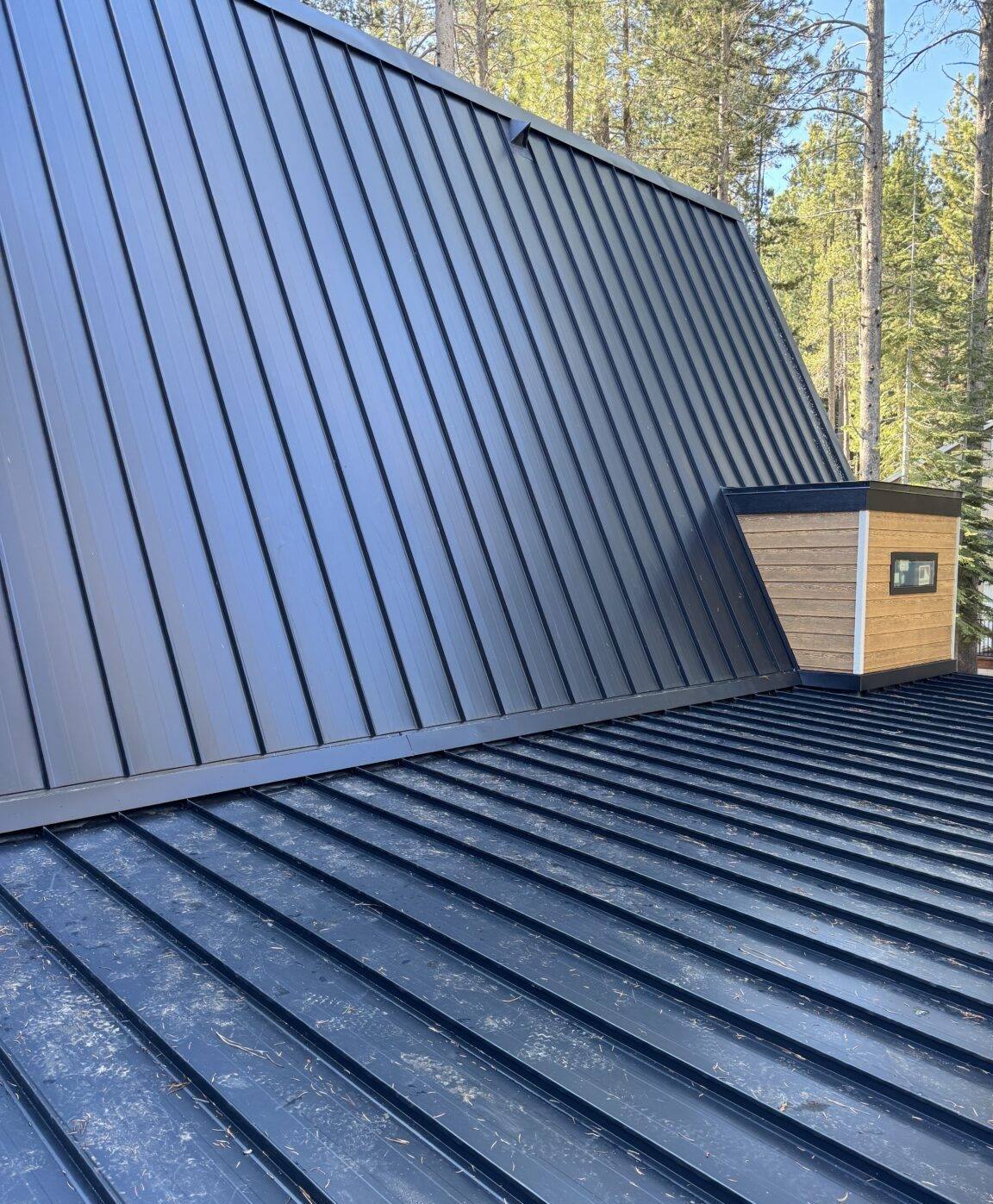
What Salt Air, Driving Rain, and Moss Actually Do to a Roof
Salt Air and Corrosion
Airborne salt accelerates corrosion on any exposed metal — nail heads, flashing, gutter fasteners, vent boots with metal collars. Once a fastener starts to corrode, it loses grip on the roofing material around it and creates a slow leak path that's easy to miss during a quick visual check. Roofs near the harbor need corrosion-resistant fasteners and flashing metals as a baseline, not an upgrade.
Driving Rain
Rain that comes in sideways off the water behaves differently than a straight downpour. It gets pushed up under shingle tabs, around chimney flashing, and into any gap in the roof-to-wall transitions that would stay dry in calmer conditions. Repairs in this area need to account for wind-driven water finding its way uphill under the roofing material, which means flashing and underlayment details matter more here than they would on a sheltered inland roof.
Moss and Prolonged Moisture
Tree cover and coastal humidity keep roof surfaces damp longer between dry spells, which is exactly what moss needs to establish. Moss holds moisture against the roofing material, lifts shingle edges as it grows, and works its way into joints and seams over a moss season that, in this part of Whatcom County, rarely gives a roof a full break to dry out completely.
Signs a Blaine Harbor Roof Needs Repair, Not Just a Cleaning
- Granule buildup in gutters or at downspout outlets — a sign shingle surfaces are wearing thin
- Moss patches thick enough to lift shingle edges, especially on north-facing slopes
- Rust streaking below metal flashing, vent boots, or exposed fasteners
- Soft or discolored ceiling spots, especially near chimneys, skylights, or wall-roof intersections
- Shingles that look cupped, curled, or have visibly lost their bond at the tabs
- Daylight visible through the roof deck from inside an attic or crawlspace
- Flashing that looks lifted, cracked, or separated from the surface it's sealed against
- A noticeably higher heating bill with no other explanation — often a sign of attic moisture or insulation compromised by a slow leak
Any one of these on its own might be minor. Two or more together, especially near the coast, usually means water has already found a way in and the repair needs to happen before the next storm cycle, not after.
What a Correct Repair Actually Involves
A roof repair that holds up in Blaine Harbor conditions is more than swapping out a few shingles. Here's what we check and address on every repair call in this area:
Diagnose the Real Source First
Water shows up inside a house at the lowest point it can travel to, which is often nowhere near where it actually entered the roof. We trace leaks back to their source — flashing, a fastener, a seam, a vent boot — before opening anything up, so the repair fixes the cause instead of the symptom.
Address the Roofing Material
Damaged, cracked, or granule-stripped shingles get replaced with matched material where possible. On composite and asphalt roofs, we check the surrounding courses too — if one section failed from age or exposure, the shingles next to it are usually not far behind.
Rebuild Flashing Correctly
Flashing around chimneys, skylights, dormers, and roof-to-wall transitions is where most driving-rain leaks originate near the water. We rebuild flashing with corrosion-resistant metal and proper step-and-counter-flashing technique rather than relying on sealant alone to bridge a gap.
Clear and Treat Moss
Where moss has taken hold, we remove it without damaging the roofing surface underneath, and address the conditions that let it grow back — usually shade, debris buildup, and slow drainage.
Check Ventilation and Underlayment
A repair is a good time to check attic ventilation and underlayment condition. Poor ventilation traps moisture against the roof deck from underneath, which works against everything a good surface repair is trying to fix.
Our Repair Process
- Inspection and diagnosis — We get on the roof (or use a close visual and interior inspection when access is limited) to identify every contributing issue, not just the obvious one.
- Honest assessment — We tell you what's actually wrong, what it will take to fix it correctly, and whether a repair makes sense versus a larger scope of work.
- Written estimate — Scope and materials laid out clearly before any work starts, so there are no surprises mid-job.
- The repair — Matched materials, corrosion-resistant fasteners and flashing appropriate for a coastal environment, and proper technique on every flashing detail.
- Cleanup and walkthrough — Debris cleared, work area checked, and we walk you through what was done and what to watch for going forward.
Repair vs. Replacement: How We Help You Decide
| Factor | Leans Toward Repair | Leans Toward Replacement |
|---|---|---|
| Age of roof | Under 12-15 years, or newer material | Nearing or past manufacturer's expected service life |
| Extent of damage | Localized — one flashing detail, one section | Widespread granule loss, multiple failed sections |
| Leak history | First occurrence, clear single cause | Recurring leaks in different spots over time |
| Deck condition | Roof deck solid, no rot found | Soft or rotted decking discovered during inspection |
| Moss/algae extent | Surface-level, hasn't compromised material | Heavy growth has degraded shingles underneath |
We'll always tell you honestly which side of this table your roof falls on. A repair that's likely to fail again within a year or two isn't a good use of your money, and we'll say so rather than patch something we know won't hold.
What This Costs
Repair costs vary widely depending on scope — a single flashing rebuild is a very different job from replacing a full damaged section after a storm. Broadly, most straightforward repairs in this area run from a few hundred dollars for a targeted fix up to a few thousand for larger sections involving flashing, decking, and multiple courses of material. We give a firm written number after inspection, not a phone-quote guess.
Why a Crew That Already Works Blaine Harbor Matters
A roofer who mostly works drier, inland conditions can still do competent work, but they may not default to the corrosion-resistant hardware, coastal flashing detail, and moss-prevention steps that a harbor-adjacent roof actually needs. We work this stretch of Whatcom County regularly, which means:
- We already know which fastener and flashing grades hold up against salt air instead of finding out the hard way
- We're familiar with how wind-driven rain off Semiahmoo Bay behaves differently than a straight-down storm
- We understand the moss cycle here and build treatment and prevention into the repair, not as an afterthought
- We can respond faster to storm damage because we're already working in the area
Keeping a Repair From Becoming a Recurring Job
Once a repair is done, a little seasonal attention keeps it from turning into a repeat call. In this climate, that means:
- Clearing gutters and downspouts before fall storm season, since clogged drainage backs water up under roof edges
- Keeping overhanging branches trimmed back to reduce shade and debris that feed moss growth
- Doing a visual check after any major windstorm off the bay for lifted shingles or displaced flashing
- Scheduling a moss treatment on a regular cycle rather than waiting until growth is heavy
- Having any new staining or soft spots inside the home checked promptly rather than waiting for it to spread
A well-executed repair, combined with reasonable seasonal upkeep, should hold up for years even this close to the water. Skipping the upkeep is usually what turns a good repair into a callback.
Let's Take a Look at Your Roof
If you're seeing granules in the gutters, moss taking hold on a north-facing slope, or a ceiling stain that wasn't there last season, it's worth having it looked at before the next storm off the bay finds the weak spot for you. We offer free, no-pressure estimates for Blaine Harbor homeowners — we'll tell you plainly what we find and what it will take to fix it right. Use the form below to get started.