 Semiahmoo Exterior
 Blaine Harbor Roofs Work Harder Than Most
Homes along Blaine Harbor sit at the edge of two demanding conditions at once: a marine environment off Semiahmoo Bay and the wet, low-sun winters typical of Whatcom County. That combination is harder on an asphalt shingle roof than most manufacturers' warranty language accounts for. Salt-laden air speeds up corrosion on exposed metal fasteners and flashing. Driving rain off the water finds its way under shingles that are only loosely sealed at the edges. And the long, shaded moss season that runs from fall through spring gives organic growth months to take hold on north-facing slopes and anywhere tree cover blocks the sun.
None of this means asphalt shingles are the wrong choice for Blaine Harbor. It means the installation details that get glossed over in drier, calmer climates matter more here, and a roof that was built to a generic spec often shows its weaknesses within a few winters instead of a few decades.
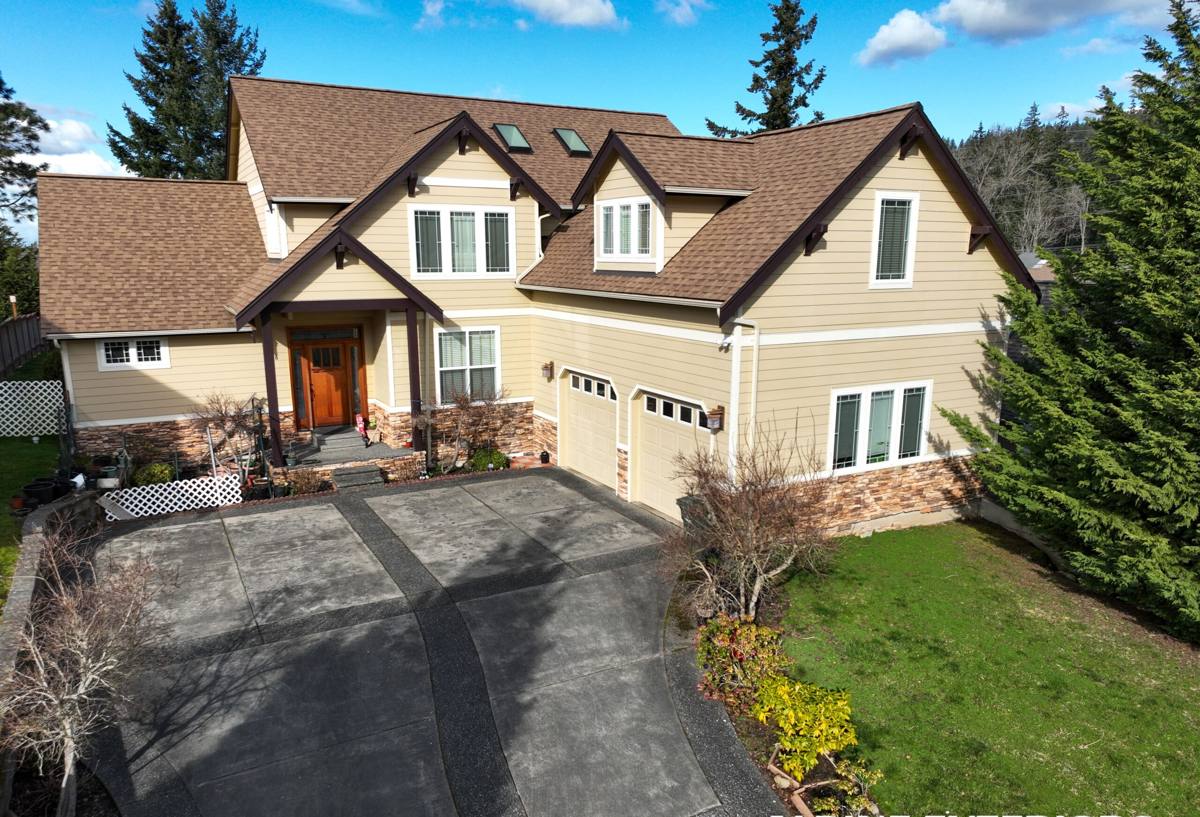
What Salt Air, Rain, and Moss Actually Do to a Roof
Salt Air and Corrosion
Salt in the air settles on every exposed surface, including roofing nails, drip edge, step flashing, and vent housings. Where a standard fastener might hold up fine inland, the same fastener near the water can start rusting years earlier. Once a nail head corrodes and loses its grip, the shingle above it is free to lift in wind, and that's usually the first domino in a leak.
Wind-Driven Rain
Rain that comes in sideways off the water behaves differently than rain that falls straight down. It gets pushed up and under shingle tabs, into open valleys, and around anything penetrating the roof deck — vent pipes, skylights, chimneys. A roof designed for calmer weather often relies on gravity and a modest overlap to keep water out. That's not enough here.
The Long Moss Season
Moss doesn't just look bad. It holds moisture against the shingle surface long after the rest of the roof has dried, which accelerates granule loss and, over time, lets moisture work into the mat underneath the shingle. Whatcom County's overcast winters and shaded lots give moss an unusually long growing window compared to drier parts of the state, so a roof that would stay clean for years elsewhere can develop a real moss problem in a single wet season if it isn't shedding water and drying out properly.
What a Correctly Built Roof Looks Like in This Climate
A shingle roof that's built for Blaine Harbor's conditions, rather than just built to code minimums, includes a few specific upgrades over a standard install:
- Ice and water shield membrane at eaves, valleys, and around every penetration — not just where code requires it
- Corrosion-resistant fasteners and flashing rated for coastal exposure, not standard galvanized
- Properly lapped and sealed step flashing at every wall intersection, not caulk substituting for flashing
- Balanced intake and exhaust ventilation, so moisture doesn't get trapped in the attic and work its way back up into the deck
- Shingles with algae-resistant granules, since standard granules do little to slow moss and algae growth in a shaded, wet climate
- Starter strip and hand-sealed edges at eaves and rakes, where wind-driven rain and gusts do the most damage
Skip any one of these and the roof will likely still pass a casual inspection. It just won't hold up the same way over a Whatcom County winter after winter of salt exposure and moss pressure.
Choosing a Shingle for a Marine, Moss-Prone Climate
Not every asphalt shingle product is built the same way, and the differences matter more here than in a dry inland climate. The table below outlines the main practical trade-offs we walk homeowners through.
| Shingle Type | Best For | Trade-Offs in This Climate |
|---|---|---|
| Standard 3-tab | Budget-driven re-roofs, rental properties | Lower wind rating, shorter lifespan under salt exposure and driving rain |
| Architectural (laminate) shingle | Most Blaine Harbor homes | Higher wind rating, thicker mat resists moisture intrusion better, longer real-world lifespan near the water |
| Algae-resistant (AR) granule shingle | Shaded lots, north-facing slopes, homes with a history of moss or streaking | Slows algae/moss growth; doesn't eliminate the need for periodic cleaning |
| High wind-rated shingle | Homes exposed directly to bay winds | Requires correct nailing pattern and starter strip installation to actually deliver the rated performance |
For most homes in the Blaine Harbor area, we recommend an architectural shingle with algae-resistant granules as the baseline, not an upgrade. Given the shading and moisture patterns typical here, that combination tends to be the difference between a roof that needs moss treatment every year and one that stays clean for a long stretch between cleanings.
Our Installation Process
A reroof or new install on a Blaine Harbor home follows the same sequence every time, because skipping steps is where coastal roofs fail early.
- Deck inspection. Old shingles come off and the deck gets checked for soft spots, rot, or prior water damage before anything new goes down. Salt air and long-term moisture exposure can hide deck damage that isn't visible from the surface.
- Repair or replace damaged sheathing. Any compromised deck sections are replaced before underlayment goes on — covering over damaged decking just hides the problem.
- Ice and water shield at vulnerable points. Eaves, valleys, and penetrations get self-adhering membrane, not just standard felt.
- Synthetic underlayment across the field. This gives a second layer of water protection under the shingles themselves.
- Drip edge and starter strip. Correctly installed at eaves and rakes so wind can't get underneath the first course.
- Shingle installation with corrosion-resistant fasteners. Nailed to the manufacturer's pattern, not a faster shortcut pattern, since proper nailing is what the wind rating actually depends on.
- Flashing at every wall, chimney, and penetration. Step-flashed and layered correctly with the underlayment and siding, not caulked as a substitute.
- Ventilation check. Intake and exhaust venting confirmed or upgraded so the attic can dry properly between rain events.
- Final walk-through. We review the completed roof with the homeowner before considering the job done.
Signs Your Roof Needs Attention
Homeowners in Blaine Harbor often catch problems early simply by knowing what to look for. Worth checking a few times a year, especially after a stretch of harsh weather:
- Dark streaking or green-black growth on north-facing or shaded slopes
- Granules collecting in gutters or at the base of downspouts
- Curling, cupping, or lifted shingle edges, particularly along eaves and rakes
- Rust staining around vent pipes, flashing, or exposed fasteners
- Visible daylight or water staining in the attic near roof penetrations
- Soft or spongy spots when walking the roof during an inspection
- Moss buildup thick enough to hold visible moisture after a few dry days
Any one of these on its own isn't necessarily an emergency, but they're the early signals worth addressing before a small issue becomes a deck repair.
Maintenance That Actually Matters Here
A shingle roof in this climate benefits from a different maintenance rhythm than the same roof would need somewhere drier and sunnier. The two things that make the biggest difference are keeping gutters and valleys clear so water doesn't pool or back up, and addressing moss before it spreads rather than after. Chemical moss treatments and gentle low-pressure cleaning (never high-pressure washing, which strips granules and shortens shingle life) can keep a roof looking and performing well between full inspections. We also recommend a yearly check of flashing and fastener condition specifically because of how much faster salt air accelerates corrosion compared to an inland home.
A Simple Maintenance Checklist
- Clear gutters and downspouts at least twice a year
- Have moss growth treated before it spreads across a slope
- Trim back overhanging branches that keep shaded areas of the roof from drying out
- Schedule a flashing and fastener check every year or two, especially after major windstorms
- Address minor leaks immediately rather than waiting for a dry season
Cost Factors for a Blaine Harbor Reroof
Every roof is priced based on its own specifics, but the factors that move the estimate up or down are consistent. This isn't a quote — it's meant to help homeowners understand what drives the number.
| Factor | Why It Affects Cost |
|---|---|
| Roof size and pitch | Steeper roofs take longer and require more safety setup |
| Deck condition | Rot or soft sheathing found during tear-off requires repair before shingles go on |
| Shingle grade chosen | Standard 3-tab vs. architectural vs. algae-resistant options carry different material costs |
| Number of penetrations and valleys | Each chimney, skylight, or vent adds flashing labor and material |
| Ventilation upgrades needed | Adding or correcting intake/exhaust venting adds labor but improves long-term performance |
| Access and site conditions | Tight lots, tree cover, or difficult staging near the water can affect labor time |
Broadly, homeowners should expect asphalt shingle reroofs in this region to fall in the range typical for the Pacific Northwest, with the specifics above pushing an individual project toward the lower or higher end of that range.
Why Hiring a Crew That Already Works Blaine Harbor Matters
A roofing crew that works across a wide range of climates tends to install to a general specification. A crew that works this specific stretch of Whatcom County coastline day in and day out already knows which slopes on a given lot tend to hold moss, how far wind-driven rain travels under a shingle edge in a coastal storm, and which flashing details fail first when salt air gets to them. That local pattern recognition is the difference between a roof that's built to pass inspection and one that's built to actually last through Semiahmoo's weather. It also means faster, more accurate repair diagnosis when something does go wrong, since the crew has already seen the same failure pattern on other roofs nearby.
If you're weighing a repair, a full reroof, or just want an honest read on how much life is left in your current roof, we're happy to take a look. Reach out for a free, no-pressure estimate using the form below.