 Semiahmoo Exterior
 Why Blaine Harbor Wears Siding Out Faster
Blaine Harbor sits right where Semiahmoo Bay meets the open water, and that location comes with a specific set of problems for exterior materials. Salt-laden air moves off the harbor and settles on everything nearby, including the walls of your house. Add driving rain that comes in sideways during winter storms, tree cover that keeps north- and west-facing walls shaded and damp for weeks at a time, and a moss season that can run from late fall through spring, and you have a climate that punishes anything less than a genuinely weather-resistant siding system.
Homes closer to the water take the worst of it — salt spray accelerates corrosion on fasteners and trim, and constant moisture exposure is exactly the condition that causes cheaper siding products to swell, delaminate, or grow mold behind the surface. Homes set back from the harbor still deal with the same driving rain and moss pressure, just with less direct salt exposure. Either way, siding in this part of Whatcom County has to handle sustained wet weather, not just occasional rain.
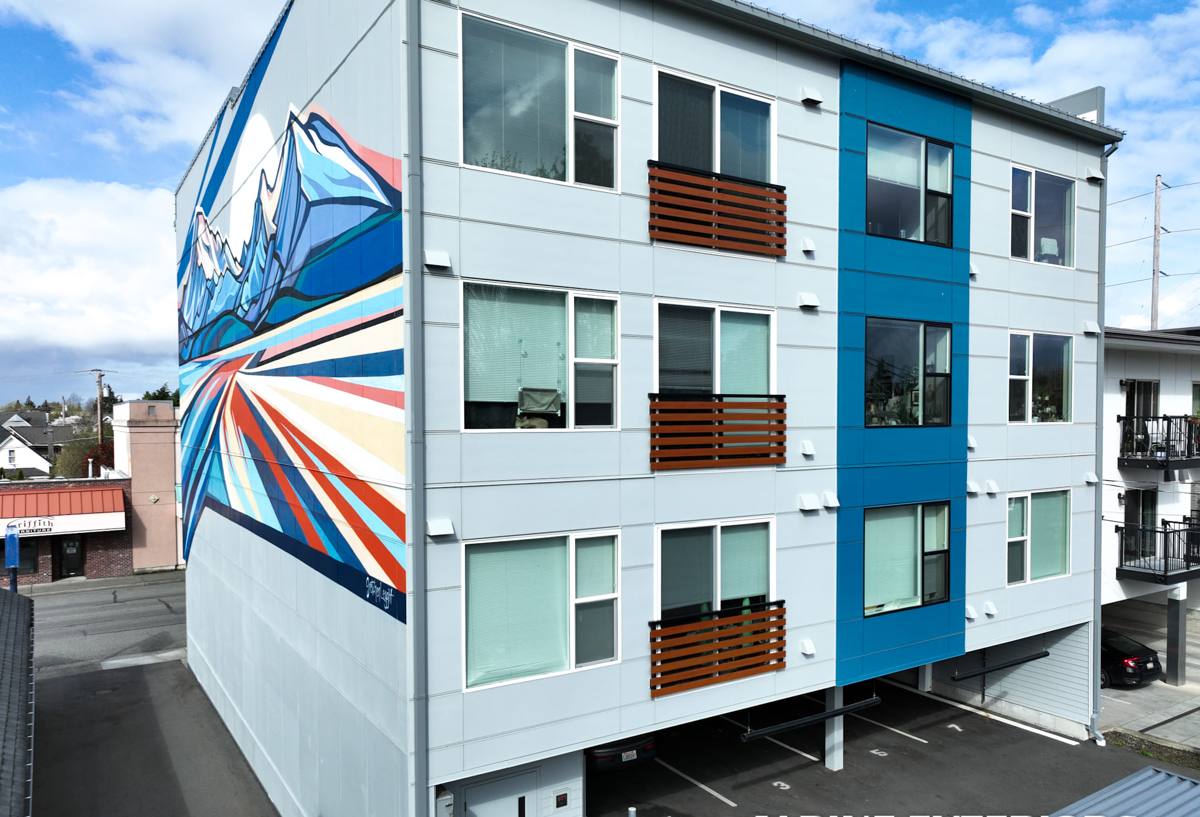
Why We Only Install James Hardie Fiber Cement
We don't install vinyl, LP SmartSide, primed wood, or other fiber cement brands. That's not a marketing position — it's a decision we made after years of servicing homes in exactly this kind of coastal, wet climate. Vinyl expands and contracts with temperature swings and can crack in cold snaps; wood-based products are organic material, and organic material in a moist, moss-prone environment is a maintenance commitment most homeowners underestimate. James Hardie fiber cement is cement, sand, and cellulose fiber — it doesn't rot, it isn't a food source for moss or mildew the way wood-based products are, and it's non-combustible.
Standardizing on one manufacturer also means our crews aren't relearning installation details, flashing details, and warranty paperwork for five different products. We know Hardie's specifications cold, which matters more in a marine climate than almost anywhere else, because installation mistakes show up as callbacks within a year or two here, not five or ten.
What Hardie Gets Right for This Climate
Fiber cement doesn't absorb water the way wood-based siding does, so it resists the swelling and warping that drives paint failure and moss growth in damp coastal air. It holds paint and factory finish far longer than wood, which matters when a repaint means scaffolding and a full weekend on a house exposed to harbor wind. And because it's dimensionally stable, the caulked joints and trim lines stay tight instead of opening up gaps that let wind-driven rain behind the siding.
The Hardie Product Lines We Use Here
James Hardie makes climate-specific formulations, and for Blaine Harbor and the rest of Whatcom County's coastal belt, we spec HZ5 — Hardie's engineered formulation for regions with freeze-thaw cycles and sustained moisture, which describes this stretch of Pacific Northwest coastline well. HZ5 boards are engineered to resist moisture-related issues that generic fiber cement can develop in exactly the wet-cold-wet cycle this area sees from November through March.
ColorPlus Factory Finish
For color, we recommend ColorPlus over field-applied paint whenever the budget allows. It's a baked-on, multi-coat finish applied under factory conditions, and it comes with a longer finish warranty than what a painted-on-site job can offer. In a salt-air environment, finish integrity is what keeps a house from needing a repaint every five to seven years — ColorPlus is built to hold up longer under exactly that kind of exposure.
Board Profiles
Most Blaine Harbor homes we work on use either lap siding (the classic horizontal board look) or a panel-and-batten style for a more modern facade. Both are available in HZ5, and the choice usually comes down to the home's existing architecture rather than performance — both hold up equally well when installed correctly.
What Correct Installation Looks Like in a Marine Environment
Fiber cement is only as good as its installation, and that's especially true here. A board that's correctly rated for this climate can still fail early if it's hung wrong. The details that matter most in a harbor-adjacent, high-moisture environment:
- A rainscreen gap or drainable house wrap behind the siding, so any moisture that does get past the surface has somewhere to go instead of sitting against the sheathing
- Correct fastener spacing and depth — over-driven nails crack the board's edge and create a moisture entry point that's invisible until it isn't
- Stainless or hot-dip galvanized fasteners and trim hardware, since standard fasteners corrode faster in salt air and rust stains bleed through paint
- Proper flashing at every window, door, and butt joint — this is where the vast majority of siding leaks actually originate, not through the field of the siding itself
- Correct clearance at the bottom of the wall — siding installed too close to grade, a deck, or a roofline wicks moisture and stays wet longer
- Caulked and painted cut edges — factory finish only protects the face of the board; any field cut needs to be sealed before it's exposed to weather
Skip any one of these and you can still end up with moisture problems behind fiber cement siding, even though the board itself is doing its job. This is where hiring based on price alone tends to backfire — the material cost is nearly identical between a careful installer and a rushed one, but the labor shortcuts are exactly where problems start.
How We Approach a Blaine Harbor Project
We start with an on-site assessment of the existing siding and wall assembly, not just a measurement for a quote. That means checking for hidden moisture damage, evaluating the current house wrap or sheathing condition, and looking at how the home is oriented relative to prevailing wind and rain — a west-facing wall near the water gets treated differently than a sheltered wall on the lee side of the house.
From there we handle removal of the old siding, repair of any damaged sheathing found underneath (which is common on older homes that have been fighting moisture for years), installation of a proper drainage plane, and then the Hardie system itself — trim, flashing, siding, and caulking, in that order, with inspection at each stage rather than just at the end.
We also walk homeowners through color and profile selection with actual HZ5 and ColorPlus samples, not just a catalog page, since color reads differently under the Pacific Northwest's grey light than it does in a showroom.
Cost Factors to Understand Before You Get a Quote
Fiber cement costs more upfront than vinyl and is comparable to or slightly more than engineered wood siding, but the comparison isn't just sticker price — it's what you're paying for over the life of the product.
| Factor | Vinyl | Engineered Wood (LP-type) | James Hardie Fiber Cement |
|---|---|---|---|
| Upfront cost | Lowest | Mid | Mid-to-higher |
| Moisture/rot resistance | Doesn't rot, but seams leak | Vulnerable if seal fails | Not organic, doesn't rot |
| Moss/mildew resistance in shaded, damp areas | Surface growth, low food source | Higher risk due to wood content | Low, non-organic surface |
| Finish longevity in salt air | Fades, can chalk | Depends on coating maintenance | ColorPlus rated for long-term coastal exposure |
| Fire resistance | Combustible | Combustible | Non-combustible |
| Typical repaint interval | N/A (rarely painted) | 5-8 years | 15+ years with ColorPlus |
The real cost factors on a specific home are wall square footage, how much trim and flashing detail is involved, whether there's existing damage under the current siding that needs repair first, and profile choice. We give a firm number after the on-site assessment, not a phone estimate, because guessing at hidden damage is how change orders happen mid-project.
Living With Fiber Cement in a Salt Air, High-Moss Climate
Hardie siding is low-maintenance, not no-maintenance. A few habits keep it performing the way it's designed to:
- Rinse salt residue and grime off the siding once or twice a year with a garden hose and soft brush — a pressure washer on high pressure can force water behind boards or strip finish, so keep it gentle
- Keep gutters clear so overflow doesn't run down the face of the siding and feed moss growth at the top of walls
- Trim back vegetation and tree branches that keep a wall shaded and damp longer than it needs to be
- Re-caulk joints if you notice cracking or gaps opening up, especially around trim and window flashing
- Touch up any chips or scrapes near the base of the wall promptly, since that's the area most exposed to splashback and standing moisture
None of this is heavy labor — it's the kind of upkeep that takes an afternoon a year and prevents the slow moisture problems that show up after a decade of neglect.
Why Local Experience in Blaine Harbor Matters
A crew that's worked this specific stretch of coastline knows which walls take the worst of the winter storms, how far moss pressure extends inland from the water, and what Whatcom County's permitting and inspection process actually requires before work starts. That local knowledge shows up in small decisions — where we add extra flashing attention, which fastener spec we use on a harbor-facing wall versus a sheltered one, how we sequence a project around the wetter months so materials aren't sitting exposed longer than necessary.
It also means we're not learning on your house. Salt air and driving rain are unforgiving of installation mistakes, and a crew that's done this work up and down the Whatcom County coastline has already made and corrected the errors that a less experienced installer might make on your project instead.
If you're weighing a siding replacement or repair in Blaine Harbor, we're happy to come take a look, walk the exterior with you, and give you a straight assessment of what your home actually needs — no pressure, no inflated scope. Reach out below for a free estimate.