 Semiahmoo Exterior
 Storm Damage Roof Repair Built for Blaine Harbor
Blaine Harbor sits close enough to the water that every roof in the neighborhood earns its keep. Winter storms roll in off the Strait of Georgia with sideways rain and gusts that find every weak seam, loose shingle, and tired flashing detail. When the wind settles down, the damage isn't always obvious from the ground — which is exactly why storm damage roof repair here has to start with a real inspection, not a guess from the driveway.
We work storm damage calls in Blaine Harbor and the rest of Semiahmoo regularly, so we already know the roof patterns this stretch of Whatcom County produces: shingle lift on the water-facing slopes, corroded fasteners from salt air, and moss intrusion in the shaded valleys that hold moisture long after a storm has passed. That local pattern recognition is what separates a fast, correct repair from a patch job that fails again next season.
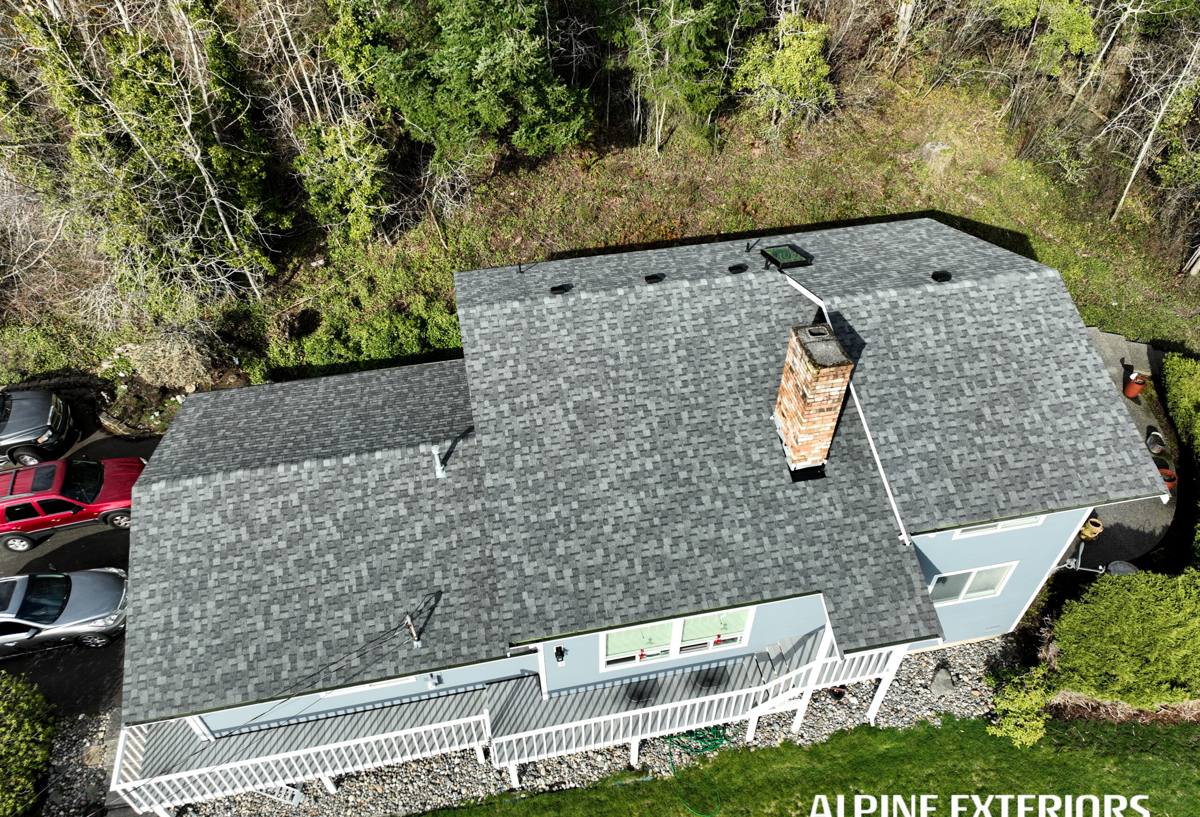
What Blaine Harbor's Climate Does to a Roof
Salt Air and Metal Fatigue
Homes near the harbor sit in a light but constant salt-air environment. Over years, that salt accelerates corrosion on exposed metal — nail heads, flashing edges, gutter fasteners, and vent boots. A roof that looks intact from a distance can have flashing that's thinned out or fasteners that have backed out just enough to let wind get underneath the shingle. Storm winds exploit exactly that kind of weakness.
Wind-Driven Rain
Straight-down rain rarely causes problems on a roof that's in decent shape. Wind-driven rain is a different story — it gets pushed sideways and even slightly upward under shingle edges, around chimney flashing, and into any gap that a calm-weather roof would shed without issue. Blaine Harbor's exposure to open water means storms here tend to bring rain at an angle more often than inland parts of Whatcom County.
A Long Moss Season
The Pacific Northwest's mild, damp winters give moss a long growing window, and shaded or north-facing roof sections in this area rarely fully dry out between storms. Moss holds water against the shingle surface, works its way under tabs, and adds weight and rot risk in valleys and along eaves. It's also one of the most common things we find already in progress when we're called out for storm damage — the storm exposes a weak spot that moss had been quietly working on for months.
Signs of Storm Damage Homeowners Should Watch For
- Shingles that look lifted, curled, or slightly out of line with the row around them
- Granules collecting in gutters or at downspout outlets after a storm
- New or worsening moss growth in valleys, along eaves, or on shaded slopes
- Water stains or discoloration on ceilings, especially near chimneys, skylights, or where two roof planes meet
- Visible gaps or movement at flashing around chimneys, vents, and roof-to-wall transitions
- Debris — branches, needles, torn shingle pieces — collected in valleys or against roof edges
- A musty smell in the attic, which often shows up before a ceiling stain does
Any one of these on its own might be minor. Two or three together, especially right after a storm, are worth a professional look before the next round of weather arrives.
What You Can Safely Check From the Ground
Homeowners can do a quick visual check after a storm without getting on a ladder: walk the perimeter and look up at the roofline from a few different angles, check gutters for granules or debris buildup, and glance at the attic (if accessible) for daylight coming through the roof deck or any damp insulation. Anything beyond that — walking the roof itself, checking flashing up close, or getting into tight valleys — is where it's worth calling in a crew rather than risking a fall.
What a Correct Storm Damage Repair Actually Involves
Inspection Before Anything Else
We start on the roof, not just from a ladder at the eave. That means checking every slope, all flashing points, valleys, and penetrations — not just the area a homeowner reports as leaking. Storm damage is rarely contained to one spot, and repairing only the visible symptom while missing a second weak point nearby is how the same call comes back in a month.
Matching the Repair to the Damage
Not every storm-damaged roof needs the same fix. A handful of lifted shingles from wind might need re-securing or spot replacement. Damaged flashing usually needs to be replaced outright rather than resealed, since sealant over corroded or bent metal is a short-term cover, not a repair. Moss-related rot in the decking underneath is a different job entirely and may require opening up a section of roof to replace damaged sheathing before any new shingle work goes down.
Sealing Against the Next Storm, Not Just This One
Because Blaine Harbor gets repeat wind-driven rain events through the fall and winter, a repair here should account for the next storm, not just resolve the current leak. That means proper underlayment at repaired sections, correctly lapped flashing, and fastening patterns that hold up to sustained wind rather than the minimum needed to pass a quick look.
Repair Approach by Damage Type
| Damage Type | Typical Cause | Repair Approach |
|---|---|---|
| Lifted or missing shingles | Wind gusts, aging fasteners | Re-secure or replace individual shingles; check surrounding tabs for hidden lift |
| Corroded or loose flashing | Salt air, age, wind stress | Remove and replace flashing rather than resealing over corrosion |
| Moss-related shingle damage | Long damp season, shade, poor drainage | Careful moss removal, treatment, and shingle repair or replacement in the affected section |
| Saturated or rotted decking | Prolonged moisture intrusion, hidden leaks | Open the roof section, replace damaged sheathing, then rebuild the roofing layers correctly |
| Clogged or damaged gutters | Storm debris, granule buildup | Clear and inspect; repair or replace sections that no longer shed water properly |
Our Process for Blaine Harbor Storm Calls
1. Same-Area Response
Because we already work in Semiahmoo and Blaine Harbor, we're familiar with the housing stock, common roof pitches, and typical storm exposure on this side of the county. That means less time spent figuring out the basics and more time on the actual assessment.
2. Full Roof Assessment
We inspect the whole roof, document what we find, and explain it in plain terms — what's storm damage, what's pre-existing wear, and what's likely to become a problem soon if left alone. No pressure to fix things that don't need fixing yet.
3. Clear Scope Before Work Starts
You'll know what the repair covers, roughly what it involves, and why, before any work begins. If we find something during the repair that changes the scope — a section of rotted decking under otherwise fine-looking shingles, for instance — we stop and talk to you before proceeding.
4. Repair Done to Hold
We use fastening, flashing, and sealing methods suited to this coastal, wind-exposed area, not just whatever's fastest. A repair that's done right the first time costs less over a few storm seasons than one that needs revisiting every winter.
5. Follow-Up Guidance
After the repair, we'll tell you what to keep an eye on — a moss-prone valley, an older section of flashing nearby, anything that's holding up fine now but worth watching. Storm damage repair works best as part of an ongoing relationship with your roof, not a one-time transaction.
Repair or Full Replacement?
Most storm damage calls in Blaine Harbor end in a repair, not a full roof replacement — and we'll tell you honestly when that's the case. But there are situations where repair isn't the responsible recommendation:
- The roof was already near the end of its service life before the storm hit
- Storm damage is spread across multiple slopes rather than isolated to one area
- Underlying decking has widespread moisture damage, not just a localized soft spot
- Previous repairs have already patched the same sections multiple times
In those cases we'll walk through the trade-offs with you — cost now versus cost over the next few storm seasons — so you can make the call with real information, not a sales pitch.
Why Hiring a Crew That Works Blaine Harbor Matters
Storm damage repair isn't just a general roofing skill — it benefits from knowing the specific conditions a roof in this area deals with. A crew that mostly works drier, inland areas may not think to check for the salt corrosion pattern on flashing fasteners, or may underestimate how much a shaded valley here holds moisture compared to a similar valley further from the water. Working Blaine Harbor and the surrounding Semiahmoo area regularly means we've already seen how storms behave on this stretch of coastline and what tends to fail first.
It also means a faster response. After a significant windstorm, roofing crews get busy fast across Whatcom County. Being already active in this specific area helps us get to local calls without the roof sitting exposed for days while a tarp does its best in the next round of rain.
After the Repair: Protecting the Work
A storm repair holds up longer when it's not fighting the same conditions that caused the damage in the first place. A few habits make a real difference in this climate:
- Keep gutters and downspouts clear so wind-driven rain has somewhere to go instead of backing up under the roof edge
- Address moss early in shaded areas rather than letting it establish through another damp season
- Have flashing and fasteners checked periodically, since salt-air corrosion is gradual and easy to miss until it fails during a storm
- Trim back branches that overhang the roof, since storm-broken limbs are a common cause of new damage right on top of an existing repair
If your roof in Blaine Harbor took a hit in the last storm, or you're just not sure whether what you're seeing is a real problem, we're happy to take a look. A free, no-pressure estimate through the form below gets you a straight answer and a clear next step, whether that's a small repair or nothing at all.