 Semiahmoo Exterior
 Why Blaine Harbor Siding Takes More Than a Standard Install
Homes near Blaine Harbor sit in one of the more demanding microclimates in Whatcom County. The harbor and the open water off Semiahmoo Bay put every exterior wall within reach of salt-laden air, and that air doesn't stay offshore — it drifts inland on prevailing winds and settles on siding, trim, fasteners, and flashing year-round. Add the region's long stretch of driving rain each fall and winter, plus a moss and algae season that can run eight months or more in shaded, north-facing exposures, and you have a combination that punishes siding materials and installation shortcuts faster than almost anywhere else in the county.
This isn't a page about siding in general. It's about what one job — installing new siding correctly on a Blaine Harbor home — actually requires when the house is fifty yards from the water instead of fifty miles. The building code doesn't change block by block, but the real-world performance of a siding system absolutely does, and a crew that treats a harbor-adjacent home the same as an inland one is setting the homeowner up for problems in five to ten years, not thirty.
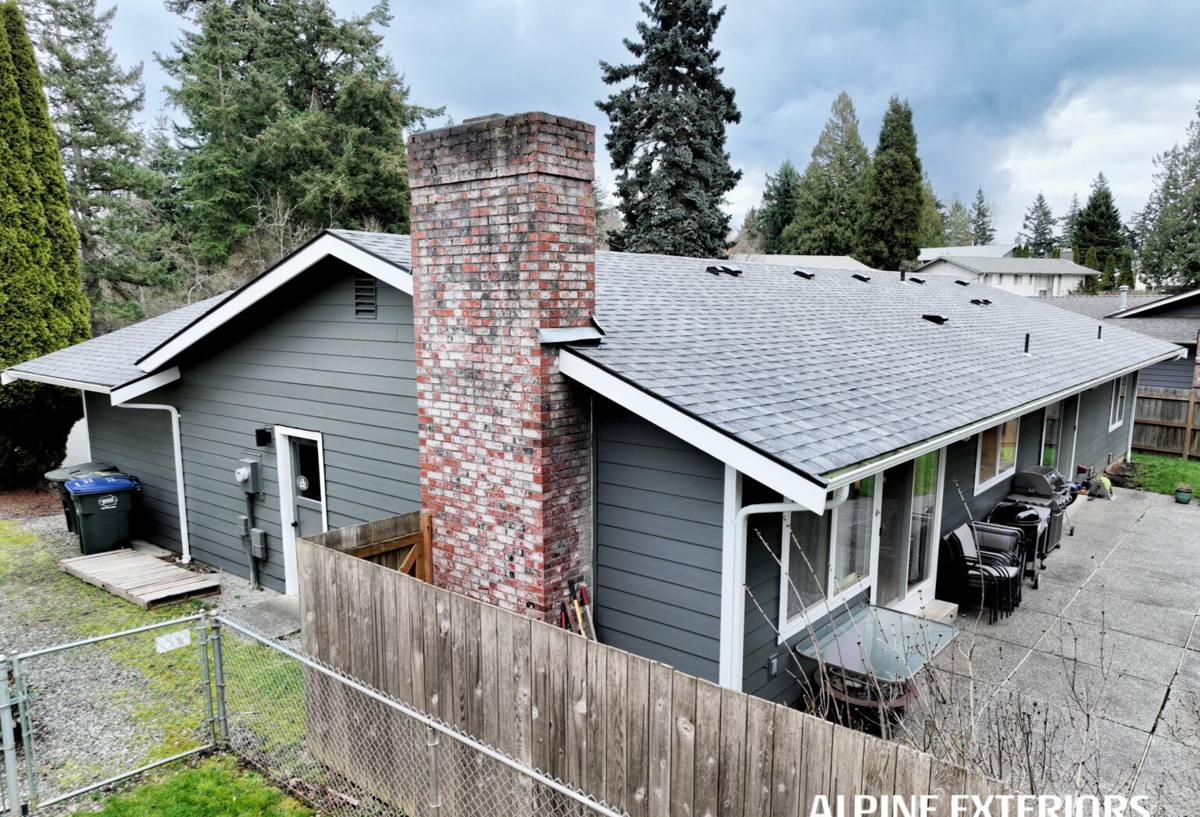
What Salt Air, Rain, and Moss Actually Do to a Wall System
Salt Air and Corrosion
Airborne salt is hygroscopic — it pulls moisture out of the air and holds it against whatever surface it lands on. On siding, that means fasteners, flashing, and any exposed metal stay damp longer than they would a few miles inland. Standard electro-galvanized nails and off-the-shelf trim flashing corrode noticeably faster in this environment, and once a fastener head starts to rust, it telegraphs a stain through paint and caulk long before it fails structurally.
Driving Rain and Wind-Driven Water
Blaine Harbor's exposure means rain rarely falls straight down — it comes in sideways during winter storms, which pushes water into laps, seams, and penetrations that would stay dry on a sheltered inland wall. A siding system here has to be judged not just on how it sheds water in a light shower, but on how it performs when wind is actively forcing water uphill against a horizontal joint.
Moss, Algae, and Extended Damp Season
Shaded elevations, tree cover, and the sheer number of overcast, damp days in a Whatcom County winter give moss and algae a long runway to establish themselves on any siding surface that holds moisture. Once organic growth takes hold on a porous or poorly finished material, it retains even more water against the wall, which accelerates whatever damage is already happening underneath.
Why We Install James Hardie Fiber Cement — And Only James Hardie
We don't offer vinyl, LP SmartSide, Cemplank, Allura, primed spruce, or raw cedar as options on this job, and that's a deliberate standard, not an oversight. Each of those products has legitimate uses somewhere, but none of them holds up to the specific combination of salt exposure, wind-driven rain, and moss pressure that a Blaine Harbor home faces as well as James Hardie fiber cement does when installed to spec.
James Hardie siding is non-combustible fiber cement, engineered in climate-specific HZ product lines — the Pacific Northwest falls under Hardie's HZ5 formulation, built specifically for regions with sustained moisture exposure. The ColorPlus factory finish is baked on under controlled conditions rather than field-applied, which means the color layer resists the fading, chalking, and peeling that field-painted or unfinished products are prone to in a wet, salt-exposed environment. Because the color is factory-cured, it also resists the kind of moisture-driven finish failure that shows up first on cheaper or job-site-finished sidings.
Fiber cement's density also matters against moss and algae. It's far less porous than wood-based or wood-composite siding, so it doesn't wick and hold surface moisture the same way — which slows how fast organic growth can get a foothold. And because it's cement-based rather than wood-based, it doesn't swell, rot, or delaminate at cut edges and joints the way wood composite products can once water finds a way in.
What a Correct Blaine Harbor Installation Actually Involves
The material is only half the job. Most siding failures we get called out to inspect — regardless of brand — trace back to installation shortcuts, not product defects. On a harbor-exposed home, the margin for error is smaller, so these details matter more than they would on a sheltered inland lot.
- Full removal of failed siding and inspection of the sheathing underneath for hidden rot before anything new goes up
- A continuous weather-resistive barrier, lapped correctly shingle-style so water is always directed outward and down
- Correctly flashed windows, doors, and every penetration — hose bibs, vents, light fixtures — with the barrier integrated over the flashing, not just caulked at the surface
- Proper drainage plane behind the siding so any incidental moisture that does get past the cladding can escape rather than sit against the wall
- Hardie boards fastened per manufacturer specification — correct fastener type, spacing, and penetration depth, not "close enough"
- Corrosion-resistant, coated fasteners appropriate for a marine-influenced environment, not standard interior-grade hardware
- Correct minimum clearance between the bottom of the siding and grade, decks, patios, and roof lines to keep splash-back and ponding water away from the cut edge
- Factory-cut edges sealed or capped, since raw fiber cement edges are the most vulnerable point on the whole installation
- Caulking limited to where Hardie's own installation guide calls for it — over-caulking traps moisture just as often as under-caulking lets it in
Every one of those steps is spelled out in James Hardie's published installation guidance. The difference between a siding job that looks good for two years and one that performs for thirty is almost entirely whether the crew actually followed that guidance on a house with this kind of exposure.
Our Process, Start to Finish
1. On-Site Assessment
We walk the exterior with you, note which elevations take the worst of the wind and salt exposure, check for existing moisture damage at trim, windows, and the base of the walls, and evaluate the sheathing condition wherever the current siding shows signs of failure.
2. Tear-Off and Sheathing Repair
Old siding comes off in sections so we can inspect as we go rather than guessing at what's underneath. Any soft, rotted, or delaminated sheathing gets replaced before anything new is installed — covering damaged sheathing with new siding just hides a problem that keeps getting worse.
3. Weather Barrier and Flashing
We install a continuous, correctly lapped weather-resistive barrier and integrate flashing at every window, door, and penetration before a single piece of siding goes up. This is the layer that actually keeps water out of your walls — the siding itself is the second line of defense, not the first.
4. Hardie Installation
Boards, trim, and any accent pieces go up to manufacturer spec: correct fastening pattern, correct clearances, correct exposure per course. We work elevation by elevation so weather-exposed sides get the same care and attention as sheltered ones.
5. Trim, Caulking, and Touch-Up
Factory-finished ColorPlus caulk and touch-up paint go on at cut ends and any field-modified edges so the factory finish stays consistent across the whole house.
6. Final Walkthrough
We walk the finished job with you, point out what we did and why, and go over the maintenance basics that matter most for a home in this location.
How Hardie Compares to the Alternatives in This Climate
| Material | Salt Air Behavior | Moss/Algae Resistance | Finish Durability |
|---|---|---|---|
| James Hardie Fiber Cement | Non-combustible, dense composition resists moisture intrusion at the material level | Low porosity slows organic growth compared to wood-based products | Factory-baked ColorPlus finish holds color and resists peeling |
| Vinyl | Can become brittle and fade under UV and salt exposure over time | Surface growth still occurs; seams can trap moisture | Color is through the material but fades and chalks with age |
| Cedar | Absorbs moisture readily; requires ongoing sealing near salt air | Higher risk — wood is an organic growth medium itself | Field-applied stain/paint needs recoating on a regular cycle |
| LP SmartSide / Wood Composite | Engineered wood strand can swell at cut edges if moisture penetrates | Moderate; edge and seam sealing is critical | Field or factory finish varies; edge treatment is installation-sensitive |
Cost Factors for a Blaine Harbor Siding Job
Every job is different, but the same handful of factors tend to move the price up or down on a harbor-area home. Understanding them ahead of time makes the estimate conversation more useful.
| Factor | Why It Matters Here |
|---|---|
| Sheathing condition | Salt-and-rain-driven moisture intrusion means hidden rot is more common; repair scope isn't known until tear-off |
| Wall complexity | More corners, dormers, and penetrations mean more flashing and cut edges to detail correctly |
| Exposure per elevation | Wind- and salt-facing walls may warrant closer fastener spacing or additional flashing attention |
| Trim and accent choices | Board-and-batten, shingle accents, or custom trim profiles add labor beyond a straight lap-siding install |
| Access and site conditions | Waterfront lots, retaining walls, and tight setbacks can affect staging and scaffolding needs |
Signs Your Current Siding Is Already Failing
If you're seeing any of the following on a Blaine Harbor home, it's worth having it looked at before it's a bigger repair:
- Dark streaking or moss growth concentrated on shaded or north-facing walls
- Soft spots or visible warping near the base of walls or below windows
- Paint or finish that's peeling, chalking, or bubbling rather than just fading evenly
- Rust staining running down from nail heads or metal trim
- Visible gaps opening up at seams, corners, or trim joints
- A musty smell or soft drywall on interior walls that back up to exterior siding
Maintenance That Matters Most in This Location
James Hardie siding is low-maintenance compared to wood or wood composite, but "low-maintenance" doesn't mean "no maintenance" in a moss-heavy, salt-air environment. A yearly rinse-down to clear moss spores and salt residue before they establish, keeping gutters clear so overflow doesn't run down the face of the siding, and trimming back vegetation that shades a wall and keeps it damp all go a long way toward protecting the finish and getting the full service life out of the installation. None of this requires resealing, restaining, or repainting the way wood siding does — that ongoing labor and cost is exactly what factory-finished fiber cement is designed to eliminate.
Why It Matters That We Already Work in Blaine Harbor
A crew that installs siding across a wide mix of inland and coastal jobs tends to default to inland habits, because that's most of what they see. A crew that regularly works Blaine Harbor and the surrounding Semiahmoo area already knows which elevations take the worst wind-driven rain on a given lot, how fast moss establishes on shaded walls this close to the water, and which fastener and flashing details are worth the extra care versus which are code minimums that quietly underperform here. That familiarity shows up in fewer callbacks, not in a different price on the estimate.
If you're weighing a siding replacement on a Blaine Harbor home, we're happy to walk the exterior with you, point out what your current siding is telling us, and put together a clear, no-pressure estimate for a James Hardie installation built for the conditions your house actually faces. There's a form below — reach out and we'll get a time on the calendar.