 Semiahmoo Exterior
 Why Blaine Harbor Decks Wear Out Faster Than You'd Expect
Homes around Blaine Harbor sit close enough to the water that salt-laden air is a daily fact of life, not an occasional storm event. Combine that with Whatcom County's long wet season and the deep shade many harbor-area lots get from mature trees and neighboring structures, and you get a deck environment that's genuinely harder on wood and hardware than a typical inland Washington yard. We've replaced enough decks in this stretch of Semiahmoo to see the same failure patterns over and over: corroded fasteners, soft ledger boards, and surface boards that look fine from a distance but are spongy underfoot.
None of that means a deck can't last here. It means the deck has to be built for these specific conditions, not just built to code minimums. That's the difference between a deck replacement that holds up for decades and one that starts showing problems again in five or six years.
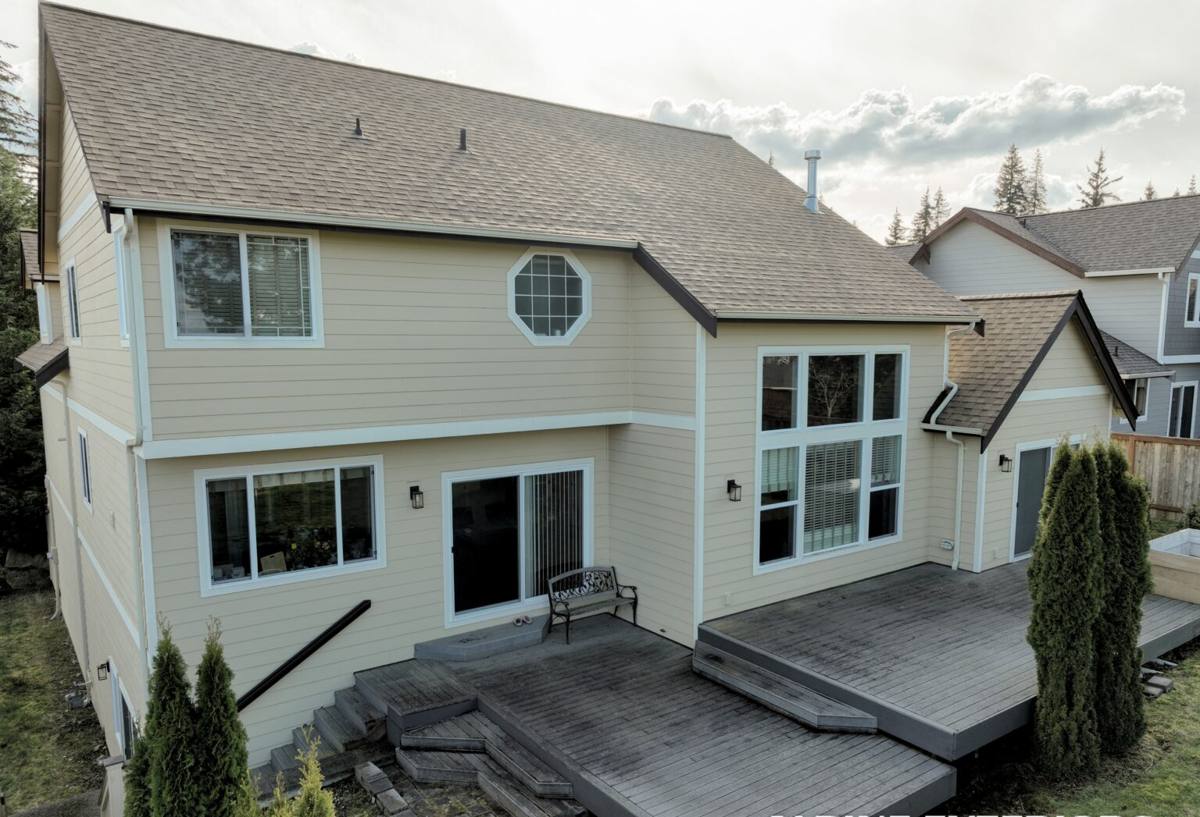
The Three Local Stressors We Design Around
Salt Air and Corrosion
Airborne salt accelerates corrosion on any fastener, bracket, or fixture that isn't rated for coastal exposure. Standard interior-grade screws and joist hangers will rust and weaken over time in a harbor-adjacent yard, even if the wood itself still looks sound. This is one of the most common hidden failure points we find when we tear out an old deck near the water — the boards get blamed, but the real problem is what's holding them together underneath.
Driving Rain and Moisture Intrusion
Wind-driven rain off the water doesn't just fall on a deck — it gets pushed sideways into ledger connections, under railing posts, and into any gap where flashing was skipped or done poorly. Over years, that moisture works into end grain and fastener holes, which is where rot almost always starts on an otherwise healthy-looking deck.
Moss and Extended Damp Season
Whatcom County's moss season runs long, and shaded or north-facing decks near Blaine Harbor can stay damp for weeks at a stretch in fall and winter. Moss holds moisture directly against board surfaces, and if it's allowed to spread across a deck year after year, it accelerates surface breakdown and makes boards dangerously slick underfoot — a real safety issue, not just a cosmetic one.
Signs a Blaine Harbor Deck Needs Full Replacement (Not Just Repair)
- Soft, spongy, or springy spots when you walk across the deck, especially near the house
- Visible rust streaking around fastener heads or joist hangers
- Gaps or separation where the deck meets the house (ledger board area)
- Persistent moss or algae that returns within weeks of cleaning
- Railing posts that wiggle or feel loose at the base
- Boards that are cupping, splitting, or have gone gray and rough despite regular use
- A deck older than 20 years that has never had structural components inspected
If a deck shows two or more of these signs, patch repairs are usually a short-term delay rather than a real fix. Once the substructure is compromised, replacing individual boards without addressing the framing and fasteners underneath just resets the clock on the same problem.
What a Correct Deck Replacement Involves Here
A proper deck replacement in this area isn't just pulling old boards and screwing down new ones. The parts that matter most are the parts you won't see once the project is done.
Ledger Board and Flashing
The connection where the deck attaches to the house is the single most important detail on any deck, and it's the one most likely to fail quietly in a driving-rain climate. Proper flashing here keeps water from tracking behind the ledger and into the house framing — a problem that can go unnoticed for years until it becomes expensive.
Framing and Fasteners
Given the salt exposure around Blaine Harbor, we treat fastener and hardware selection as a structural decision, not a finishing detail. Joist hangers, screws, and structural connectors need to be rated for the corrosive exposure this location actually sees — not just meet a generic minimum spec.
Footings and Post Bases
Post bases that sit directly on or near grade stay wetter longer in this climate. Correct footing depth and post-base detailing keep the structural posts elevated and drained, which matters more here than in drier parts of the state.
Decking Material Selection
Board choice affects how the deck handles moss, moisture, and salt air over its lifespan. We'll walk through the honest trade-offs for each option below rather than pushing one material as a cure-all.
Decking Material Comparison for Coastal Whatcom County Conditions
| Material | Moisture/Moss Behavior | Maintenance | Notes for This Location |
|---|---|---|---|
| Pressure-treated wood | Absorbs moisture, can support moss growth if not sealed regularly | Needs periodic cleaning and re-sealing | Lowest upfront cost; requires the most upkeep in a damp, shaded yard |
| Cedar | Naturally rot-resistant but still absorbs moisture over time | Regular sealing recommended, especially near salt air | Good appearance but softer surface; graying is faster near the water |
| Composite decking | Non-porous surface resists moisture intrusion into the board itself | Occasional washing to prevent surface film/moss buildup | Strong fit for shaded, damp harbor-area lots; consistent long-term performance |
| PVC decking | Fully non-porous; performs well in constant damp/shade | Low; mainly periodic washing | Higher upfront cost, best long-term option for the wettest, shadiest sites |
We don't push one product as universally "best." The right call depends on how much sun the deck gets, how close it sits to the water, and how much upkeep the homeowner actually wants to do. Our job is to lay out the real trade-offs honestly so the decision fits the property, not a sales script.
Our Deck Replacement Process
- On-site assessment. We inspect the existing deck, ledger connection, framing, and post bases to see how much of the failure is surface-level versus structural.
- Honest scope discussion. We tell you plainly whether you're looking at a repair or a full replacement, and why — no upselling a full tear-out if it isn't warranted.
- Material walkthrough. We go over decking options against your budget, sun exposure, and how much maintenance you want to take on long-term.
- Removal and structural rebuild. Old decking, framing, and hardware come out; ledger flashing, footings, and framing get rebuilt to handle this area's moisture and salt exposure.
- Decking installation. New boards, railings, and fasteners go in to spec, with attention to drainage gaps and airflow underneath to reduce future moss buildup.
- Final walkthrough. We review the finished deck with you, including basic care guidance specific to a harbor-adjacent property.
Why Local Experience in Blaine Harbor Matters
A deck built to a generic statewide spec sheet doesn't automatically hold up in a Semiahmoo-area harbor lot. Crews who haven't worked this specific stretch of coastline often underestimate how much salt exposure and shade-driven moss actually accelerate wear here. We've seen the difference firsthand between decks built with standard fasteners and generic flashing details versus ones built with the corrosion resistance and moisture management this environment actually demands.
Working locally in Whatcom County also means we're familiar with the permitting expectations and inspection process for deck work in this jurisdiction, which keeps the project moving without surprises partway through.
Maintenance That Extends the Life of a New Deck
- Clean moss and algae off the surface at least once or twice a year, more often in heavily shaded areas
- Rinse salt residue off railings and hardware periodically, especially after storms
- Check fastener heads and joist hangers annually for early signs of corrosion
- Keep gutters and downspouts clear so runoff doesn't dump directly onto or under the deck
- Re-seal wood decking on the manufacturer's recommended schedule rather than waiting until it looks weathered
None of this is complicated, but skipping it is exactly how a well-built deck starts developing the same problems years earlier than it should.
What a Deck Replacement Typically Involves Cost-Wise
Costs vary a fair amount based on deck size, material choice, framing condition, and railing style, so we won't quote a number without seeing the site. In general, pressure-treated framing with composite or PVC decking sits at a higher upfront cost than all-wood construction, but it's the trade-off many homeowners in damp, shaded harbor lots choose to reduce long-term maintenance. We'll walk through the real cost drivers for your specific deck during the estimate rather than leading with a number that doesn't reflect your property.
If your deck near Blaine Harbor is showing signs of wear, soft spots, or recurring moss problems, we're happy to take a look and give you a straightforward assessment of what it actually needs. Reach out for a free, no-pressure estimate using the form below.