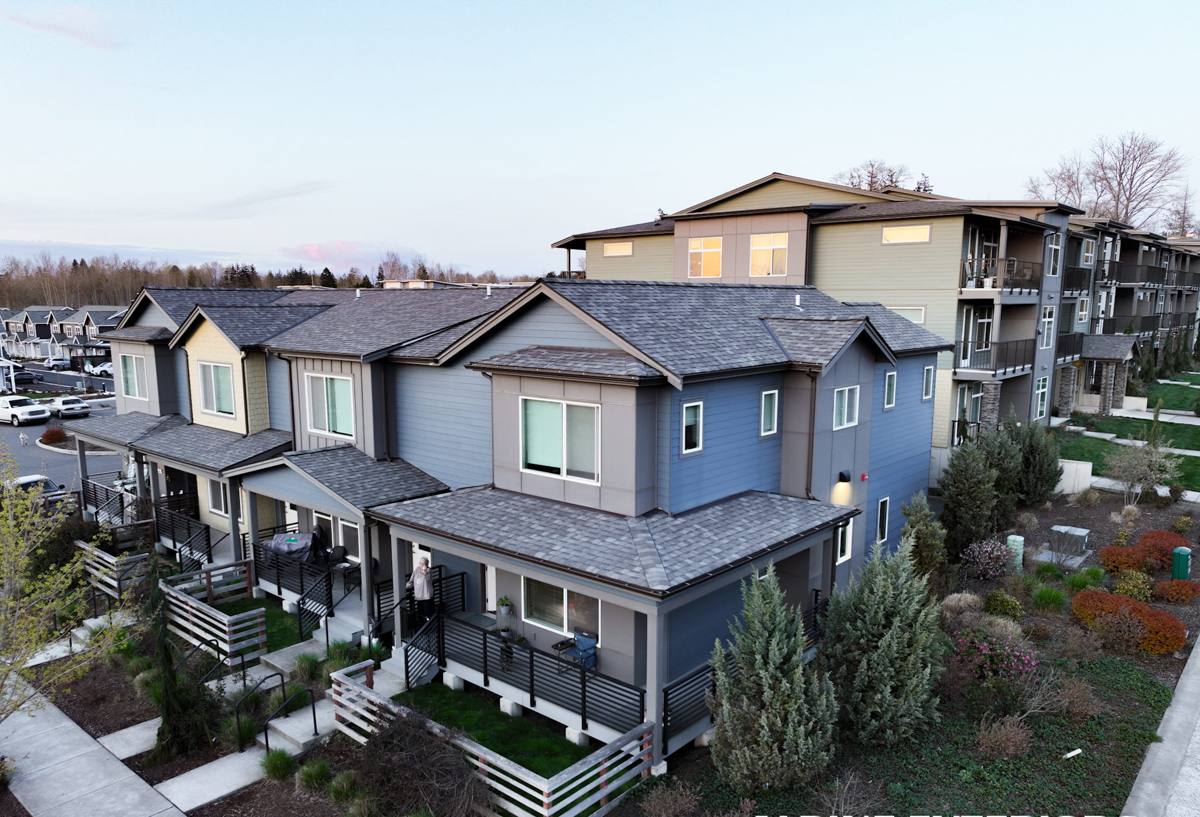
 Semiahmoo Exterior
 Why Blaine Harbor Windows Wear Out Faster Than the Manual Says
Blaine Harbor sits right where Semiahmoo Bay meets the open water, and that location comes with a specific kind of weather load most window manufacturers never test for. Salt-laden air corrodes hardware and finishes years ahead of schedule. Wind-driven rain doesn't just fall on a window, it gets pushed sideways into every gap in the flashing and trim. And the long, wet moss season here in Whatcom County keeps siding, sills, and window perimeters damp for months at a stretch, which is exactly the environment wood rot and failed sealant joints need to take hold.
None of that means windows are doomed in Blaine Harbor. It means the installation has to account for conditions a lot of window crews never see. A window that would perform fine forty miles inland can fail early here if it's set without the right flashing sequence, the right sealants, or the right attention to how water actually moves across this coastline.
Signs Your Current Windows Are Losing That Fight
Most window failures near the harbor don't show up as a cracked pane. They show up slowly, and homeowners often live with them for a year or two before calling anyone.
- Fogging or a permanent haze between the panes, meaning the seal on a double-pane unit has failed
- A draft you can feel with your hand along the frame edge, even with the window latched shut
- Wood trim or sills that feel soft, spongy, or show dark staining at the corners
- Windows that stick, bind, or need extra force to latch, which often points to a frame that's swelling with moisture
- Visible corrosion or pitting on hinges, latches, or cranks — a common early sign of salt air exposure
- Paint or finish that's bubbling or peeling specifically around the window opening rather than the wall generally
Any one of these on its own might just mean a tune-up or resealing job. Several of them together, especially on the side of the house facing the water, usually means the window itself or its installation has reached the end of its useful life.
What a Correct Window Installation Actually Involves
Setting a window is simple in concept and easy to get wrong in the details. In a marine climate like Blaine Harbor, the difference between a window that lasts decades and one that causes a rot problem in five years usually comes down to a handful of steps that are invisible once the trim is back on.
Removal and opening prep
The old window comes out and we inspect the rough opening before anything new goes in. This is the point where hidden water damage from years of driving rain often turns up — soft sheathing, degraded house wrap, or framing that's been quietly absorbing moisture. Any of that gets addressed before a new window is set, because installing a good window into a compromised opening just hides the problem for a while.
Flashing and the water management path
This is the step that matters most in this climate. Flashing tape and sill pans need to be layered so that any water that does get past the exterior finish has a clear path back out, never toward the framing. In a location that takes driving rain off the water as often as Blaine Harbor does, sloppy flashing is the single most common cause of window-related rot we see.
Setting, shimming, and fastening
The window has to be plumb, level, and square, and shimmed correctly so the frame isn't under stress that will eventually crack a seal or bind the sash. Fasteners go through the manufacturer's specified nailing points, not wherever is convenient.
Sealing and insulation
Low-expansion foam or backer rod and sealant fill the gap between the window frame and the rough opening for insulation and air sealing. Exterior sealant beads get tooled properly so they shed water instead of holding it against the frame — a small detail that matters a lot in a place with as much sustained damp weather as this one.
Trim and finish
Interior and exterior trim get reinstalled or replaced, and any exterior wood trim gets primed and painted on all sides, including cut ends, before it goes back up. End grain that isn't sealed is one of the fastest ways moisture gets into trim on the coast.
Choosing the Right Window Material for a Marine Climate
There's no single "best" window material for every home, but some perform more predictably than others in salt air and constant damp. Here's an honest comparison of what we typically see used in this area.
| Material | How it handles salt air and moisture | Maintenance |
|---|---|---|
| Vinyl | Doesn't corrode or rot; performs consistently near the water | Low — occasional cleaning, no painting |
| Fiberglass | Very stable dimensionally, resists corrosion, holds up well to temperature swings | Low — durable finish, minimal upkeep |
| Aluminum | Strong but prone to pitting and corrosion from salt exposure over time unless well-coated | Moderate — finish needs monitoring |
| Wood, unclad | Attractive but the most vulnerable to the region's moss-season dampness and driving rain | High — regular painting and sealing |
| Wood, clad (vinyl or aluminum exterior) | Good compromise — protected exterior face, wood interior warmth | Moderate — cladding protects the exposed side, interior still needs normal care |
For homes directly exposed to wind off the bay, we generally steer clients toward vinyl or fiberglass, or a well-clad wood window if the look matters more than minimizing maintenance. We're not against wood-frame windows as a category — it's a matter of matching the material to how much upkeep a homeowner actually wants to take on, given what this coastline does to unprotected wood and untreated metal.
Our Installation Process for Blaine Harbor Homes
- On-site assessment — we look at each window opening individually, not just the window unit, since rot and flashing problems vary window to window even on the same house
- Material and product selection — matched to the home's exposure, the specific wall (water-facing walls often warrant a different spec than a sheltered side), and your budget
- Opening repair — any water-damaged framing or sheathing found during removal is repaired before the new window goes in, not patched around
- Installation — flashing, setting, sealing, and insulating following the sequence above
- Finish work — trim, paint or caulk touch-up, and a final check that the window operates smoothly and seals tight
- Walkthrough — we show you how the window operates and what basic upkeep looks like for your specific material choice
What Drives the Cost of a Window Installation
Every project is different, but the following factors are what usually move the price up or down for a Blaine Harbor job.
| Factor | Why it affects cost |
|---|---|
| Number of windows | Per-window costs typically drop somewhat on multi-window projects due to shared setup and labor efficiency |
| Material (vinyl, fiberglass, clad wood) | Material cost varies significantly, and it's often the single biggest line item |
| Extent of rot or framing repair | Openings with hidden water damage need more labor before a new window can even go in |
| Window size and configuration | Larger units, custom shapes, or multi-panel configurations cost more than standard sizes |
| Access and story height | Second-story or hard-to-reach windows take more time and sometimes equipment |
| Exterior finish work | Repainting or resealing trim, especially on older wood-trimmed homes, adds to the scope |
We give a firm, itemized quote after the on-site assessment so you know exactly what you're paying for before work starts, not a vague range you have to guess your way around.
Why Hiring a Crew That Already Works Blaine Harbor Matters
Window installation isn't a one-size-fits-all trade, and the harbor is a good example of why. A crew that mostly works inland jobs may not think twice about flashing detail that would be adequate there but marginal here, where driving rain off the water hits window openings at angles and pressures inland homes rarely see. A crew that's worked this specific stretch of Whatcom County knows which walls take the worst of it, what moss-season moisture does to unsealed trim over a winter, and how salt air shortens the working life of cheaper hardware.
That local pattern recognition is what keeps a window installation from becoming a callback in two years. It's also why we take the time on-site to actually assess the opening rather than just measuring for a replacement unit and moving on.
Keeping New Windows Performing Long-Term
A correct installation is most of the battle, but a little regular attention extends the life of any window in this climate considerably.
- Rinse salt residue off frames and glass periodically, especially on water-facing sides of the house
- Check exterior caulk lines once a year for cracking or separation and touch up before winter rains set in
- Keep gutters and downspouts clear so runoff isn't sheeting directly across window openings
- Wipe down hardware — hinges, cranks, locks — to prevent salt-driven corrosion from setting in
- Watch for moss or algae buildup on sills and trim during the wet season and clean it off before it holds moisture against the surface
- Address any new drafts, sticking, or soft trim promptly rather than waiting for it to worsen
If you're dealing with drafty, foggy, or aging windows in Blaine Harbor, or planning ahead for a home that's about to face another wet Whatcom County winter, we're happy to take a look and walk you through your options. Fill out the form below for a free, no-pressure estimate.