 Semiahmoo Exterior
 Salt Air, Rain, and Moss: What Blaine Harbor Decks Are Up Against
Decks near Blaine Harbor live a harder life than decks a few miles inland. The combination of salt-laden air off the water, near-constant winter rain, and long stretches of shade and moisture that never quite dry out creates conditions that wear on wood, fasteners, and finishes faster than most homeowners expect. Salt air accelerates corrosion on anything metal, driving rain finds its way into every seam and joint that isn't properly flashed or sealed, and moss season in this part of Whatcom County can run from late fall clear through spring, holding moisture against decking boards the entire time.
We see the pattern often: a deck that looks fine from a distance but has soft framing underneath, corroded fasteners that are one storm away from failing, or a ledger connection that's been quietly taking on water for years. None of that is unusual for a harbor-side property — it's just what the climate does here. The goal of a proper repair isn't to fight that reality, it's to build the deck back so it can handle it.
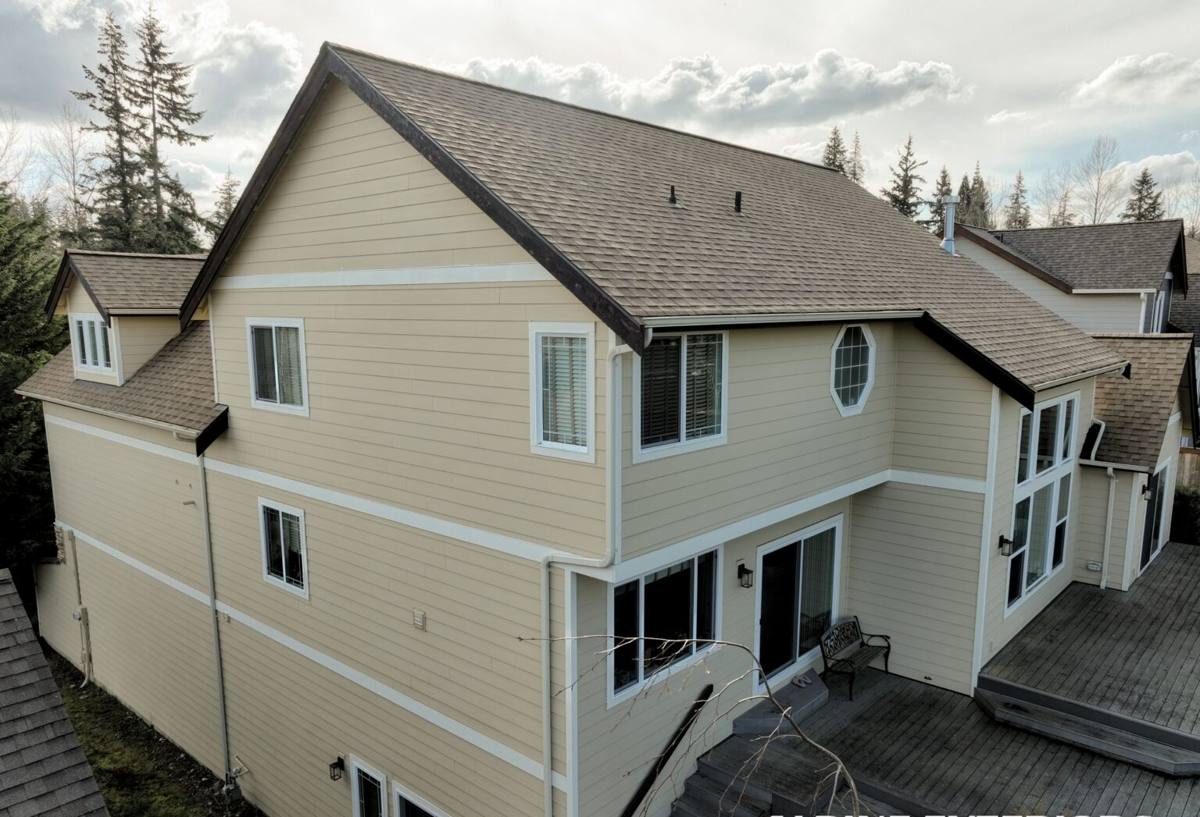
Signs Your Deck Needs Repair
Most deck problems don't show up as one dramatic failure — they show up as a handful of small warning signs that add up. Walking your deck a couple of times a year and checking for the following can catch problems while they're still repairs, not replacements.
- Soft, spongy, or bouncy spots underfoot, especially near the house or stair landings
- Rust streaks running down from screws, joist hangers, or bolts
- Gaps opening up where the deck meets the house (ledger board separation)
- Persistent moss or dark green-black staining that comes back within weeks of cleaning
- Railings or stair posts that wiggle when pushed
- Boards that are cupping, splitting, or have visible checking (deep surface cracks)
- A musty smell coming from underneath the deck, which usually means trapped moisture
Any one of these on its own might be minor. Several together, or anything involving the ledger board connection to the house, is worth having looked at before the next wet season.
What a Correct Deck Repair Actually Involves
Structural Framing and the Ledger Board
The ledger board — where the deck attaches to your house — is the single most important connection on the entire structure, and it's also the spot most prone to hidden water damage in a climate like this. A correct repair means pulling back decking or flashing where needed to actually inspect the ledger and the rim joist behind it, not just tightening what's visible. If flashing is missing, undersized, or was never properly integrated with the house's water barrier, that gets corrected as part of the repair, not left for next time.
Fasteners and Hardware
Salt air is hard on standard fasteners. Galvanized screws and joist hangers that would last decades inland can show real corrosion within a handful of years this close to the water. Part of doing this repair right is replacing failed hardware with fasteners and connectors rated for coastal or marine-grade exposure, so the fix isn't just cosmetic — it's addressing the reason the original hardware failed in the first place.
Decking Boards and Surface
Individual board replacement only works if the framing underneath is sound. We check joist spacing and condition before replacing surface boards, because installing new decking over compromised framing just hides the real problem for a season or two. Where moss and moisture staining are recurring issues, we also look at airflow underneath the deck — poor ventilation is often the reason one section stays wet long after the rest has dried.
Repair or Replace? How We Help You Decide
Not every deck problem calls for a full rebuild, and not every deck is worth repairing piecemeal. The honest answer usually comes down to how much of the structure is still sound. Here's a general breakdown of how we think through it:
| Factor | Leans Toward Repair | Leans Toward Replacement |
|---|---|---|
| Framing condition | Joists and beams are solid, only surface boards affected | Widespread soft or rotted framing members |
| Ledger board | Sound connection, isolated flashing issue | Long-term water intrusion, separation from house |
| Age of deck | Under 15-20 years, built to a decent standard | Older deck nearing the end of its practical service life |
| Extent of damage | Localized to one section or a handful of boards | Damage spread across most of the deck surface |
| Code and railing compliance | Structure meets current safety standards | Railings, stairs, or spans don't meet current code |
We'll always tell you plainly which side of that line your deck falls on, including when a repair is the right call even if a replacement would be more profitable for us. A deck with sound bones doesn't need to be torn out.
Materials That Actually Hold Up Near the Water
What you rebuild or repair with matters as much as the workmanship. In a harbor environment, we generally steer away from materials or fastening methods that create long-term maintenance burdens or hide moisture problems, and toward options with a track record of handling wet, salty conditions.
| Material | Behavior in Salt Air / Wet Climate | Maintenance Load |
|---|---|---|
| Pressure-treated lumber | Good performance if properly sealed and maintained; needs attention at cut ends and fasteners | Moderate — periodic sealing recommended |
| Cedar | Naturally resists rot and insects but still needs finish maintenance in coastal exposure | Moderate to high |
| Composite decking | Resists moisture absorption and moss staining well; some products handle coastal humidity better than others | Low, with periodic cleaning |
| Standard galvanized fasteners | Prone to corrosion this close to salt air over time | Higher risk of failure, harder to inspect once installed |
Whichever direction fits your budget and the scope of the repair, our standard is to use fasteners and hardware rated for coastal exposure regardless of what decking material sits on top of them — that connection is what fails first, and it's not worth cutting corners on.
Our Deck Repair Process
- On-site assessment. We walk the full deck, check the ledger, probe framing for soft spots, and look underneath, not just at the surface.
- Honest scope and estimate. You get a clear picture of what's actually needed — repair, partial rebuild, or full replacement — with reasoning you can follow.
- Structural work first. Any framing, ledger, or flashing issues get corrected before cosmetic work starts, since surface repairs over bad framing don't hold up.
- Hardware and fastener upgrades. Corroded or undersized hardware is replaced with coastal-rated connectors.
- Surface repair or replacement. Boards, railings, and stairs are repaired or replaced as needed and checked for level, spacing, and drainage.
- Final walkthrough. We go over the work with you, point out anything worth watching, and talk through maintenance for your specific setup.
Why a Crew That Already Works Blaine Harbor Matters
A contractor who mainly works drier, inland jobs can still do competent carpentry, but they may not think to check for the specific failure points that show up on harbor-adjacent decks — corroded hardware hidden under intact-looking boards, ledger flashing that was never built for this much sustained moisture, or shaded sections that never fully dry between rains. Crews who regularly work Blaine Harbor and the surrounding Semiahmoo area know which parts of a deck tend to fail first in this exposure, because they've opened up enough of them to see the pattern repeat.
That local familiarity also shapes how we scope a job. We're not guessing at how Whatcom County's wet season will treat a repair — we've seen how it plays out on decks just like yours, and we build the fix around that reality instead of a generic checklist.
Keeping Your Deck Repair Lasting
A well-done repair still needs some ongoing attention in this climate. A little regular upkeep goes a long way toward protecting the investment.
- Rinse or sweep debris off the deck surface regularly, especially in fall when leaves and needles accumulate
- Treat moss growth early in the season rather than waiting for it to spread
- Check and clear gaps between boards so water can drain instead of pooling
- Inspect visible fasteners and hardware once or twice a year for early rust signs
- Keep vegetation trimmed back to allow airflow and sunlight under and around the deck
- Reseal or refinish wood surfaces on the schedule appropriate to the product used
If you're noticing soft spots, rust stains, or recurring moss on a deck near Blaine Harbor, we're happy to come take a look and give you a straight assessment of what it needs. Fill out the form below for a free, no-pressure estimate.