 Semiahmoo Exterior
 Point Roberts' Marine Climate and What It Does to Siding
Point Roberts sits at the tip of a peninsula bordered by the Strait of Georgia and Boundary Bay, which means homes here take a steady diet of salt-laden marine air on top of the driving rain and long, damp winters that define Whatcom County generally. That combination is harder on exterior siding than most homeowners expect. Salt air accelerates corrosion of fasteners and trim metal, holds moisture against wall surfaces longer than dry inland air does, and finds its way into any gap in a siding system faster than a rushed installation can account for.
Add in the region's extended moss season — cool, wet, low-sun months that can stretch from fall well into spring — and you get siding that spends a large share of the year staying damp on north-facing and shaded walls. Wood-based products swell, cup, and eventually rot under that kind of sustained moisture load. Vinyl can hold its shape reasonably well but does nothing to stop water once caulking and seams start to fail. Siding installed in Point Roberts needs to be chosen and installed for this specific environment, not just installed to a generic regional standard and hoped along.
The Exclave Factor: Why Siding Work Here Takes Extra Planning
Point Roberts is a U.S. exclave — the only practical land route in and out runs through Canada, since the community is physically separated from the rest of Washington State by Boundary Bay and the international border. That geography doesn't change the building code or the permitting process; Point Roberts is unincorporated Whatcom County, so the same county permitting and inspection rules apply here as anywhere else in our service area. What it does change is how a siding job actually gets staged and run.
Material deliveries, crew scheduling, and any mid-project supply run all have to account for the border crossing. A crew that doesn't plan for that can end up with delays that have nothing to do with the actual installation work. We build Point Roberts jobs around that reality: staging full material loads before crossing, batching site visits, and avoiding the kind of piecemeal scheduling that works fine closer to Blaine or Ferndale but falls apart out here.
What a Correct Siding Installation Actually Involves
Tear-Off and Sheathing Inspection
Old siding comes off down to the sheathing so we can see what's actually underneath. In a marine climate this step matters more than it does in drier parts of the state — we're checking for soft or delaminated sheathing, corroded old fasteners, and any sign that moisture was already working its way in behind the previous siding.
Weather-Resistive Barrier and Flashing
A properly lapped weather-resistive barrier, correctly integrated window and door flashing, and properly flashed penetrations — hose bibs, vents, light fixtures — are what actually keep bulk water out of the wall assembly. Siding is the first line of defense against wind-driven rain, but the barrier and flashing behind it are what stop water that gets past the siding from reaching the framing. Given the volume of driving rain Point Roberts sees off the water, this layer is not optional detail work; it's the difference between a wall that dries out between storms and one that slowly rots from the inside.
Fastening and Clearances
James Hardie fiber cement has specific fastening patterns, nailing zones, and minimum clearances from grade, roof lines, and decks, all spelled out in the manufacturer's installation instructions. Getting these wrong is one of the most common ways a siding job voids its warranty or fails early — especially the ground clearance and roof-to-wall clearance requirements that keep splashback and standing moisture away from the bottom courses.
Trim, Caulking, and Paint Lines
Butt joints, trim intersections, and any field-cut edges need to be properly sealed and, where required, field-painted to match the factory finish. Skipping this step is a common shortcut that shows up as staining and moss growth at the joints within a couple of seasons — exactly the failure point this climate will find first.
Why We Install Only James Hardie Fiber Cement Here
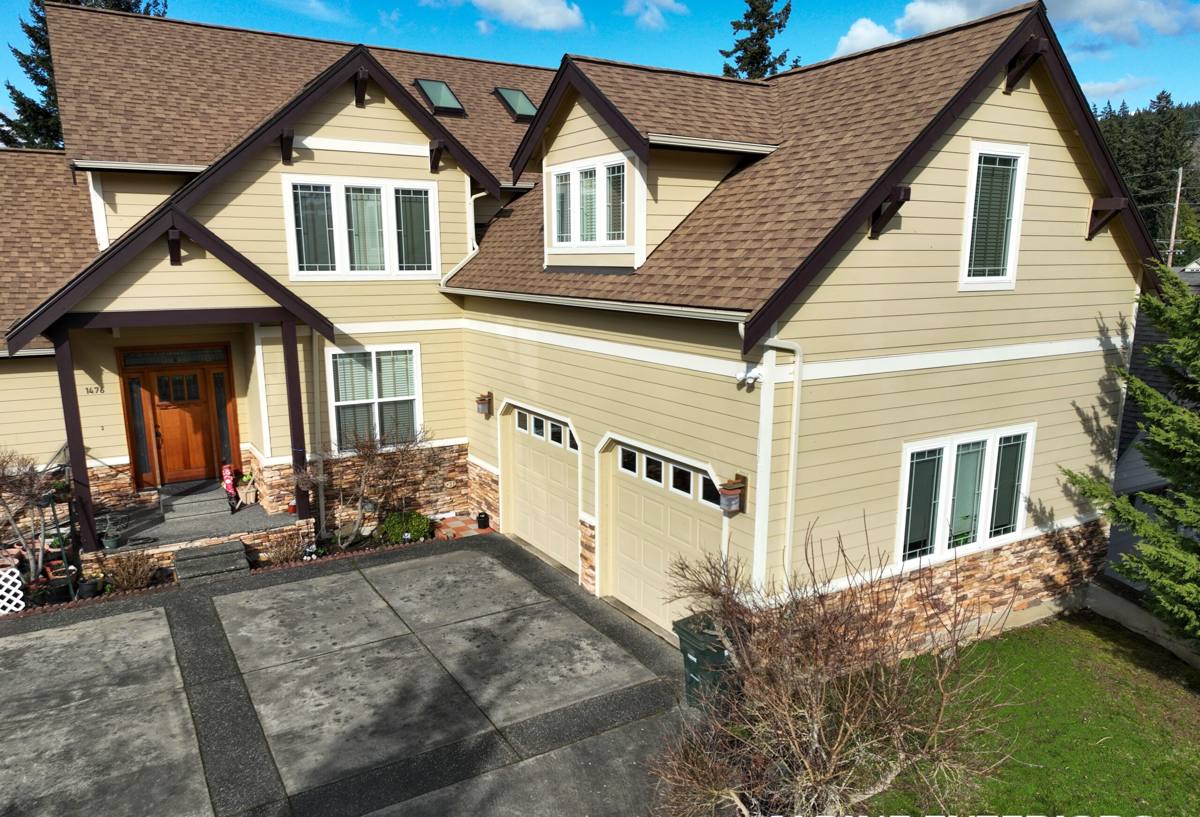
We don't install vinyl, LP SmartSide, cedar, or primed spruce siding — not because those products have no place in the market, but because we've made James Hardie our standard for the climate we actually work in. Fiber cement is non-combustible, doesn't offer the food source that wood-based products give to moss and mold, and holds its dimensions through the wet-dry, salt-air cycling Point Roberts sees year-round. James Hardie's ColorPlus factory finish is baked on rather than site-applied, which gives it noticeably better resistance to fading and moss staining than field-painted wood trim, and the HZ5 product line is engineered specifically for cold, wet, high-moisture exposure like this part of Whatcom County gets.
That's a real trade-off, not a sales pitch: fiber cement is heavier and less forgiving to install than vinyl, and it costs more up front than most engineered wood options. We've made the call that the reduced long-term maintenance and the manufacturer's transferable warranty are worth it for homeowners planning to stay in a marine-climate home for years, not just a season.
| Siding Material | Salt Air / Moisture Behavior | Moss & Mildew Resistance | Long-Term Maintenance |
|---|---|---|---|
| James Hardie Fiber Cement | Dimensionally stable; HZ5 line engineered for cold, wet exposure | ColorPlus factory finish resists staining better than field-painted surfaces | Low — no rot risk; periodic washing and caulk checks |
| Vinyl | Can warp or grow brittle with temperature swings and UV exposure | Seams and J-channels trap moisture and organic growth | Moderate — prone to cracking and fading over time |
| Cedar / Primed Spruce | Absorbs moisture readily in marine air; prone to swelling and rot | Highest risk — wood is a direct food source for moss and mildew | High — regular repainting and rot repair |
| LP SmartSide / Engineered Wood | Better than raw wood but still moisture-sensitive at cut edges and seams | Moderate — depends heavily on caulking and finish upkeep | Moderate — edge sealing and finish maintenance required |
Our Installation Process for Point Roberts Homes
- On-site assessment. We walk the exterior, check current siding and trim condition, and pay particular attention to the walls taking the most weather — usually the north- and west-facing sides exposed to the water.
- Detailed estimate. You get a clear, itemized estimate covering tear-off, any sheathing repair, the specific Hardie product and profile, and trim work — no vague allowances.
- Material staging. Because of the border crossing, we bring full material loads to the site in as few trips as possible instead of staging incrementally, which keeps the job moving instead of stalling on a supply run.
- Tear-off, sheathing repair, and barrier installation. Any compromised sheathing gets replaced before the new weather-resistive barrier and flashing go on.
- Siding installation to manufacturer spec. Fastening patterns, clearances, and joint treatment follow James Hardie's published installation requirements, which is also what keeps the manufacturer's warranty intact.
- Final walkthrough. We go over the finished job with you before calling it complete, including caulk lines, trim, and touch-up paint on any field cuts.
Signs Your Point Roberts Home May Need New Siding
A lot of siding problems in this climate develop quietly on the shaded side of a house before they show up somewhere obvious. Worth checking for:
- Dark streaking or green-black moss growth concentrated on north- or shade-facing walls
- Soft spots, bubbling, or visible warping in wood-based siding panels
- Caulk that has pulled away from trim boards or window edges
- Rust staining running down from nail heads or metal flashing
- Faded, chalky paint that no longer sheds water cleanly
- Interior signs — peeling paint, a musty smell, or soft drywall near exterior walls
Cost Factors for Siding Installation in Point Roberts
Every estimate is specific to the house, but a few factors consistently move the number for jobs out here. Total wall area and the number of corners, gables, and trim details drive labor time the most. Whether sheathing needs repair matters a lot in older homes that have been carrying wet siding for a while without anyone noticing. The Hardie product line and profile you choose — lap siding versus shingle-style panels, standard versus premium ColorPlus colors — affects material cost. And because of the border-crossing logistics described above, jobs that require multiple separate site visits cost more in scheduling overhead than ones we can plan and stage as a single mobilization.
Why Hiring a Crew That Already Works Point Roberts Matters
A siding crew that's never worked this exclave will plan the job the same way they'd plan one in any mainland Whatcom County neighborhood — and that assumption costs time and money once the border crossing, ferry-dependent supply options, and limited local material access come into play. We already know how to stage a Point Roberts job so it doesn't stall out. Just as important, we already know what this specific stretch of coastline does to siding over a few winters, so the installation choices we make — flashing details, clearance heights, joint treatment — are built for the walls that actually take the worst of the weather here, not a generic textbook wall.
Caring for Hardie Siding After Installation
Correctly installed James Hardie siding is low-maintenance, not no-maintenance. A periodic soft wash keeps salt residue and early moss growth from building up, especially on shaded walls. Caulk lines at trim and joints are worth a visual check every year or two, since caulk is the first thing to fail even on an otherwise sound installation. Any field-cut edges that were painted on-site should be checked for coverage over time, since that's the one part of the system that isn't protected by the factory ColorPlus finish.
If your Point Roberts home is showing any of the signs above, or you're simply due for new siding and want it done right for this climate the first time, we're happy to come take a look. The estimate is free, there's no pressure, and you can use the form below to get started.