 Semiahmoo Exterior
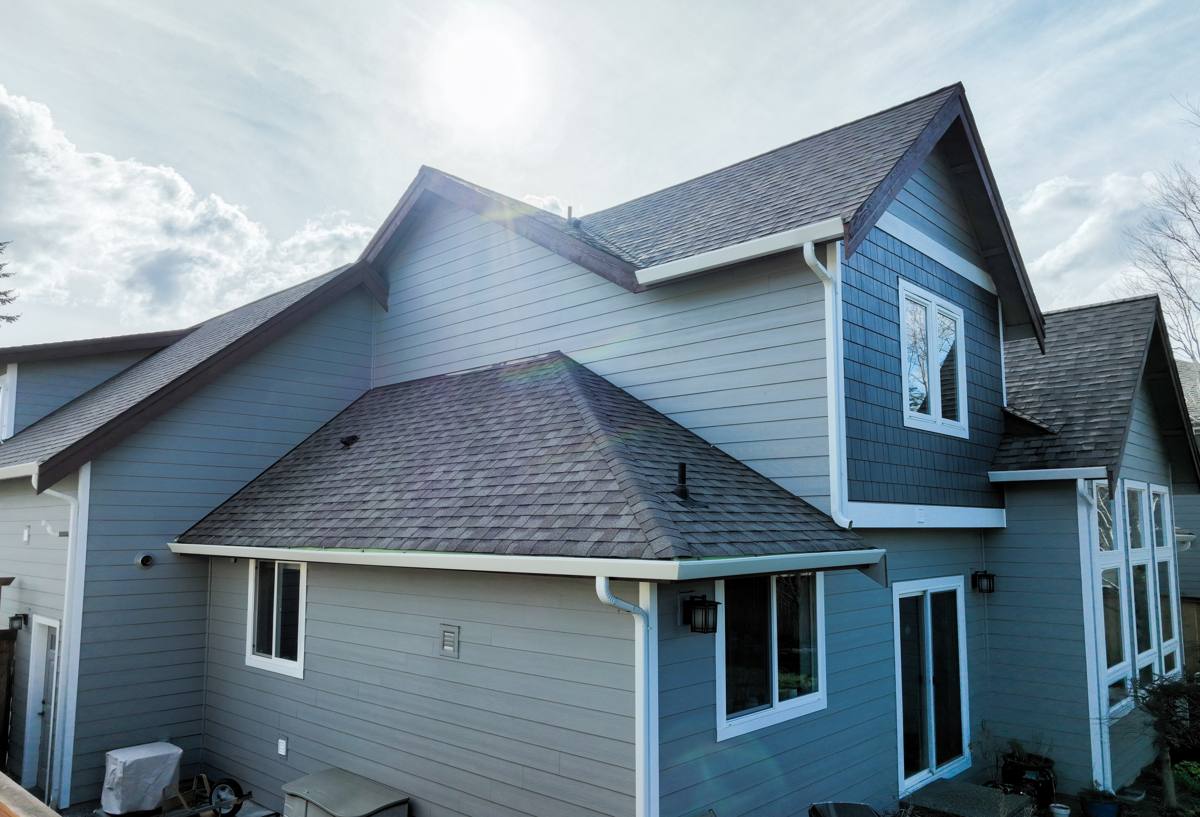
 Siding Replacement Built for Point Roberts
Point Roberts sits on its own peninsula at the far northwest corner of Whatcom County, surrounded by Boundary Bay and the Strait of Georgia on three sides. That geography means almost every home here gets some degree of direct salt air exposure, not just the ones facing open water, and it means the weather moving through has very little land to slow it down first. For siding specifically, that combination of salt, wind-driven rain, and a moss season that barely takes a break adds up to faster wear than most inland Whatcom County homes ever see.
Replacing siding on a Point Roberts home isn't the same job as replacing siding on a sheltered lot twenty miles inland. The material has to tolerate more, the flashing and drainage details have to be tighter, and the installation has less room for shortcuts before problems show up. This page covers what siding replacement on this peninsula actually requires, what a correct job looks like from tear-off to finish, and why we install one product system rather than offering whatever's cheapest.
What This Climate Does to Old Siding
Salt Air From Multiple Directions
Because Point Roberts is bordered by water on three sides, homes here don't get salt air from one prevailing direction the way a lot of coastal properties do — it comes in from wherever the wind is blowing that day. Salt accelerates corrosion in fasteners, flashing, and any exposed metal trim, and it breaks down lower-grade paints and factory finishes faster than a drier site would. By the time siding on a Point Roberts home starts looking chalky or faded, the salt exposure has usually already been working on the fasteners and flashing behind it for a while.
Driving Rain With Nothing to Block It
With open water on most sides and little in the way of a windbreak, storms here push rain sideways into wall assemblies instead of just dropping it straight down. That sideways load finds its way into laps, joints, and butt seams that a calmer inland site would never test. Siding that's starting to separate at the seams, or trim that's staying damp longer than it should after a storm, is often a sign that wind-driven rain has been getting behind the material for longer than it looks from the outside.
A Moss Season That Runs Most of the Year
Mild temperatures and near-constant humidity keep moss and mildew active across most of the year on this peninsula, especially on shaded, north-facing walls and anywhere landscaping keeps a wall damp longer after rain. Any siding material with even a little surface porosity gives moss something to hold onto, and once it establishes itself it tends to keep spreading into seams and fastener heads. On older siding, persistent moss staining is often less about cleaning and more about a material that's simply reached the end of what it can shed.
Signs a Point Roberts Home Needs Siding Replacement — Not Just Repair
- Boards or panels that are visibly cupping, warping, or separating at seams and corners
- Paint or factory finish that's chalking, peeling, or fading unevenly across different wall exposures
- Soft or spongy spots when siding is pressed, a sign moisture has reached the substrate underneath
- Moss or mildew staining that returns within a season or two of cleaning
- Visible rust streaking from fasteners or trim, especially on walls facing open water
- Rising heating or cooling costs that track with an aging, less-sealed exterior wall system
One or two of these on their own might point to a targeted repair. Several at once, especially on a home that's had the same siding for a couple of decades, usually means the material has reached the point where patching individual boards just delays the same problem showing up somewhere else on the wall.
Why We Install Only James Hardie Fiber Cement
We used to install a broader range of siding products. We stopped, and that decision came directly from what we kept finding during tear-offs on exposed, salt-air properties like the ones on this peninsula — not from a supplier deal or a marketing push.
- Non-combustible core: Fiber cement doesn't feed a fire the way wood-based siding products can, which matters for both safety and, in many cases, insurance underwriting.
- Factory-applied ColorPlus finish: The color is baked on under controlled factory conditions instead of brushed on in the field, and it holds up far longer against fading, chalking, and moisture intrusion than site-applied paint.
- Climate-engineered HZ product lines: Hardie's HZ5 formulation is built for regions with sustained moisture exposure and freeze-thaw cycling, which describes this stretch of coastal Whatcom County well.
- Dimensional stability: Fiber cement doesn't swell, cup, or warp the way engineered wood products can after repeated wetting from wind-driven rain off open water.
- Strong transferable warranty: Hardie backs the product with one of the more substantial warranty structures in the industry, provided installation follows their published spec.
We won't install LP SmartSide, vinyl siding, Cemplank, Allura, primed spruce, or cedar. Each has a place in the market and plenty of homeowners elsewhere who are satisfied with them. But on a peninsula that takes this much direct salt and moisture exposure, we've made a professional call to stand fully behind one system rather than offer something cheaper that quietly shifts long-term maintenance risk back onto the homeowner.
Comparing Siding Materials in This Climate
| Material | Salt Air Behavior | Moisture Behavior | Maintenance Here |
|---|---|---|---|
| James Hardie fiber cement | Resists corrosion-driven finish breakdown | Dimensionally stable, resists swelling and cupping | Low; factory finish holds up over time |
| Vinyl siding | Can chalk and become brittle under UV and salt exposure | Prone to warping in heat, seams are exposure points | Low upfront, but seam and fastener issues surface over time |
| LP SmartSide / engineered wood | Cut edges and fastener points are vulnerable to salt-driven moisture | Wood-based core swells if edges aren't well sealed | Moderate; requires ongoing edge and caulk maintenance |
| Cedar / primed wood | Absorbs salt-laden moisture readily | Absorbs and releases moisture with weather cycles | High; regular refinishing needed in this climate |
What a Correct Siding Replacement Involves
Replacing siding on a Point Roberts home is more than swapping old boards for new ones. The details that go on underneath and around the new siding are what determine whether it performs for decades or starts showing problems within a few wet seasons.
Tear-Off and Wall Inspection
Once the old siding comes off, we inspect the sheathing and framing underneath for rot, soft spots, or existing moisture damage before anything new goes on. Covering up a compromised wall with new siding just hides the problem rather than fixing it, and it's the one part of a replacement job that can't be skipped or done from the outside after the fact.
Weather-Resistive Barrier and Flashing
A correctly installed weather-resistive barrier, with properly lapped flashing at every window, door, and roof-to-wall transition, is what actually keeps wind-driven rain out of the wall assembly — the siding itself is the second line of defense, not the first. On a peninsula with this much open-water exposure, we treat this layer as the part of the job that matters most, not an afterthought behind the finish material.
Fastening and Clearance
Hardie siding only performs the way it's engineered to when it's fastened according to spec — the right fastener type, spacing, and depth, with proper clearance from grade, roof lines, and decking. Corrosion-resistant fasteners matter more here than in a drier, inland climate, since salt air will find and accelerate any weak point in the hardware over the life of the siding.
Joints, Trim, and Finish Details
Factory-mitered corners and properly caulked or capped joints keep water from tracking into seams, and trim details around windows and doors need the same attention as the field siding itself. A Hardie installation that's loose on these details will still develop moisture problems in this climate — the material is only as good as the installation behind it.
Our Process for a Point Roberts Siding Job
We start with an on-site assessment of the existing siding and wall assembly, looking specifically at how the current material has handled salt exposure and moisture over time. From there we put together a clear, written scope and timeline before any work begins, including material quantities, colors, and any trim or flashing detailing the project needs. Fastener corrosion resistance, proper weather barrier installation, and correct flashing are treated as standard practice on every job here, not optional upgrades priced separately.
What to Expect During the Project
- On-site assessment and written scope of work
- Material ordering and scheduling, accounting for weather windows on an exposed site
- Tear-off and inspection of the existing wall assembly
- Weather-resistive barrier and flashing installation
- Hardie siding installation to manufacturer spec
- Trim, caulking, and finish detail work
- Final walkthrough and cleanup
Why a Crew That Already Works Point Roberts Matters
Point Roberts is a peninsula that's part of Washington State but geographically cut off from the rest of the U.S. mainland by land — reaching it by road means crossing the Canadian border twice. That's not just a geography trivia point; it's a real logistical factor for any exterior project here. Material deliveries, crew scheduling, and timing all have to account for that border crossing in a way that a job in Ferndale or Blaine simply doesn't. A contractor who doesn't already work this peninsula regularly can end up building that learning curve into your project's timeline and cost.
Beyond logistics, a crew that's spent time on Point Roberts specifically has already seen how salt air, open wind exposure, and a long moss season behave on this particular stretch of coastline — not a generalized version of "coastal Washington." That familiarity shows up in the small decisions: which fastener grade to spec, how much extra attention a north-facing wall needs, where drainage detailing earns its keep. Those are exactly the details that separate a siding job that lasts one wet season from one that lasts several decades.
A Checklist Before Hiring for Siding Replacement Here
- Ask whether the contractor regularly works on Point Roberts, or if this would be their first project on the peninsula
- Confirm they carry current Washington contractor licensing and active liability insurance
- Ask what siding material they install and why, and whether they stand behind it with a written warranty
- Ask how material deliveries and crew logistics are planned around the border crossing
- Get a written scope of work, including flashing and fastener details, before signing anything
Maintenance After Replacement
Correctly installed Hardie siding needs far less upkeep than most alternatives, but "low maintenance" isn't "no maintenance," especially in this climate. A periodic rinse to clear salt residue and organic buildup, prompt attention to any caulking that starts to separate at joints, and keeping landscaping trimmed back from shaded walls all help the siding perform for the long haul. None of that changes the underlying case for Hardie — it just keeps a good installation looking and performing the way it's designed to for the decades it's built to last.
If your Point Roberts home's siding is showing its age, we're happy to walk the exterior with you and give an honest read on whether it needs full replacement or targeted repair. Reach out below for a free, no-pressure estimate.