 Semiahmoo Exterior
 Point Roberts Is a Different Climate Than "Coastal Washington" on a Map
Point Roberts sits on its own peninsula, cut off from the rest of Whatcom County by water and border, and that geography matters more than most homeowners realize when it comes to siding. Wind off Boundary Bay and the Strait of Georgia carries salt spray onto exterior walls almost daily, even on homes several blocks from the water. Add in long stretches of driving rain through fall and winter, plus a tree canopy that keeps north- and west-facing walls shaded and damp for weeks at a time, and you get a wall assembly environment that punishes anything less than a correctly built, moisture-managed siding system. Board & batten siding, with its exposed vertical seams and pronounced shadow lines, either handles that environment well or fails at it visibly — there isn't much middle ground.
We work Point Roberts regularly as part of our Semiahmoo-area service territory, and the pattern we see on service calls is consistent: siding failures here are almost never about the style choice being wrong. They're about installation details that were fine for a drier, less exposed lot but were never adequate for this one.
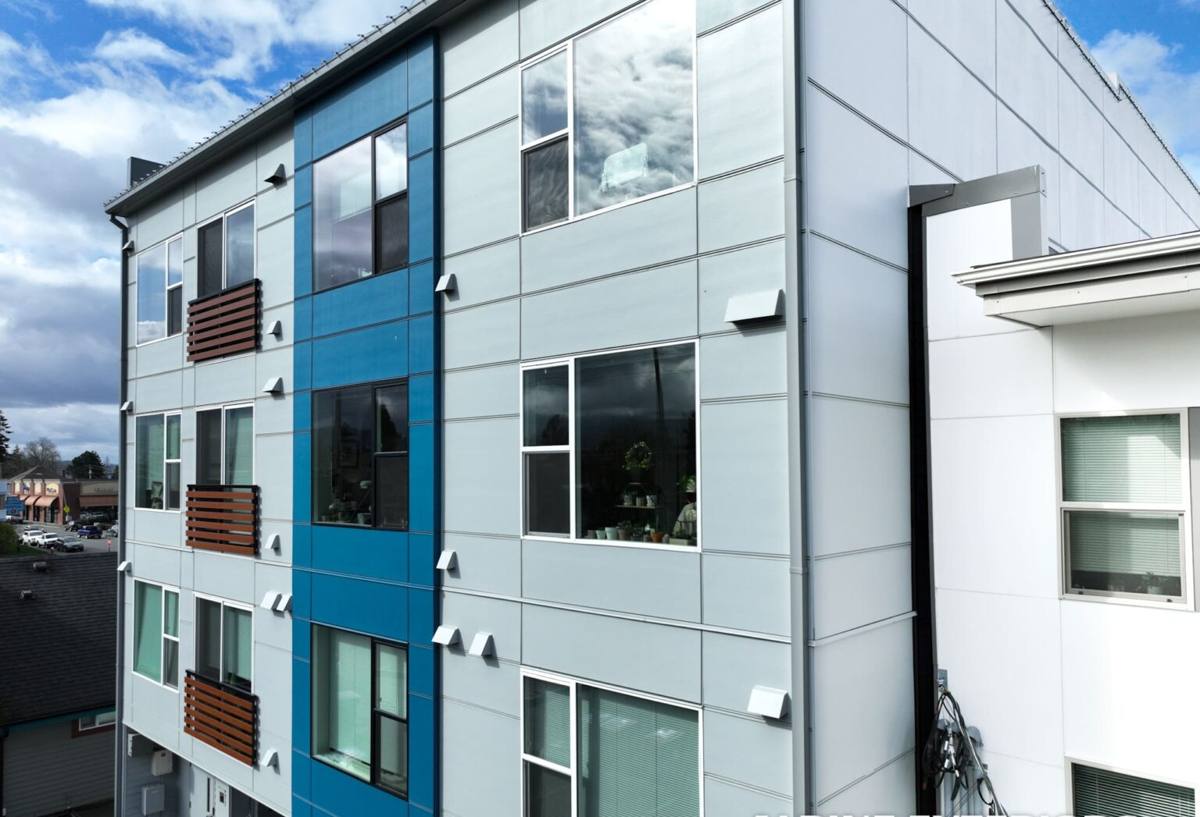
Why Board & Batten Suits Point Roberts Homes — With Conditions
Board & batten has real advantages in a wet, wind-driven climate when it's built correctly. The vertical panel-and-batten profile sheds water down the face of the wall rather than collecting it along horizontal laps, and the deep shadow lines hide the kind of minor surface staining that salt air and moss spores eventually leave on any exterior. It also reads well on the mix of cabin-style and newer builds common in Point Roberts, giving a clean, vertical look that holds up architecturally whether the home is a full-time residence or a seasonal property.
The condition is the installation. Board & batten depends on every seam, batten, and panel edge being flashed and fastened correctly, because there are more vertical joints than a standard lap siding job and each one is a potential water entry point. In a climate that delivers wind-driven rain from multiple directions across a season, sloppy batten spacing or missed caulking at joints shows up as staining, soft trim, or moss colonization within a few years — not decades.
Where It Doesn't Make Sense
We'll tell homeowners honestly when board & batten isn't the right call for a specific wall. Heavily shaded, north-facing walls that stay damp for extended periods sometimes do better with a product profile that sheds water even faster, and additions or repairs on homes with mixed original siding sometimes call for matching what's there rather than introducing a new profile. Part of an honest estimate is telling you where board & batten is the right fit on your home and where a different Hardie profile might serve you better.
What a Correct Board & Batten Job Actually Involves
Board & batten looks simple from the street — vertical panels, battens over the seams — but the assembly behind the wall is where the job succeeds or fails. On a Point Roberts install, we treat these details as non-negotiable:
- Drainage plane and rainscreen gap: a water-resistive barrier plus a vented gap behind the siding so any moisture that gets past the face can dry out instead of sitting against the sheathing
- Correct fastening pattern: panels and battens fastened per manufacturer spec, not "close enough," since under-fastened battens are the most common failure point we find on service calls
- Flashed penetrations: every window, door, hose bib, and vent properly flashed and integrated with the water-resistive barrier before siding goes on
- Consistent batten spacing: even reveals that shed water predictably rather than creating low spots where it can pool or wick
- Bottom clearance: proper gap and flashing at the foundation line so splash-back and standing water don't wick into the lowest courses
- Factory-finished edges kept sealed: cut ends and field edges primed or sealed per Hardie spec so the fiber cement core is never left exposed to moisture
None of this is exotic. It's standard fiber cement installation practice — but it's also exactly what gets shortcut when a crew is used to easier climates or is moving fast on volume work. On a peninsula that gets sustained wind-driven rain, there's very little tolerance for skipped steps.
Why We Install Only James Hardie Board & Batten Siding
We standardized on James Hardie fiber cement for every siding job we do, board & batten included, and we don't install LP SmartSide, vinyl, Cemplank, Allura, primed spruce, or cedar board & batten. That's a deliberate professional standard, not a knock on every alternative in every situation — each of those products has homeowners who are happy with them. Here's the honest reasoning behind our standard:
Fiber cement doesn't feed moss the way wood-based or wood-fiber products can, which matters directly in a region with a long moss season and persistent shade. It's non-combustible, holds paint and factory finish far longer than primed wood substrates, and doesn't swell, delaminate, or rot the way engineered wood products can if a seam ever does take on water. James Hardie's ColorPlus factory finish is baked on and warrantied against fading and chipping, which is a meaningful advantage over field-applied paint that has to survive salt air and UV without the benefit of a factory cure.
Hardie also engineers specific product lines — HZ5 in this region — for climate zones with more moisture exposure, which is a level of climate-specific engineering that not every competing product offers. Combined with a strong transferable warranty, that gives homeowners a system built for exactly the conditions Point Roberts throws at it, rather than a general-purpose product that happens to be used here.
Board & Batten Profile Options
James Hardie offers board & batten in a couple of configurations — factory-assembled panel-and-batten systems and individual board-and-batten component installs — along with reveal widths and batten spacing that can be adjusted to match the look you want. We'll walk through the specific profile and reveal options during your estimate rather than assuming one look fits every home.
Comparing Board & Batten Material Options
| Material | Moisture/Moss Resistance | Finish Durability | Long-Term Maintenance |
|---|---|---|---|
| James Hardie fiber cement | Strong — doesn't feed moss or rot; engineered for wet climates (HZ5) | Factory ColorPlus finish, warrantied against fade/chip | Low — periodic cleaning, no repainting cycle in most cases |
| Cedar board & batten | Natural rot resistance but feeds moss/mildew in shade and moisture | Field-applied stain/paint, needs recoating | Higher — regular refinishing and moss treatment |
| Primed spruce/wood | Vulnerable to swelling and rot at joints if moisture gets in | Field-applied paint over primer | Higher — repainting and joint inspection |
| LP SmartSide (engineered wood) | Treated wood strand product; sensitive to sustained moisture at cut edges/seams | Factory finish varies by product | Moderate — edge sealing and seam maintenance matter |
| Vinyl board & batten | Won't rot but can trap moisture behind panels; can crack in cold snaps | Color molded through, but fades over time and isn't repaintable easily | Low labor, but limited repair/upgrade options |
This isn't a claim that every alternative fails — it's why our crew, working this specific climate, standardized on one system we can install to spec and stand behind.
Our Process for Point Roberts Projects
Point Roberts' geography adds real logistics that a crew unfamiliar with the area won't have planned for. Material deliveries, dumpster and disposal logistics, and crew scheduling all need to account for the peninsula's access, and a crew that already works here has that built into how we bid and schedule a job rather than discovering it mid-project. Our process on a board & batten job looks like this:
- On-site assessment: we walk the exterior, check for existing moisture damage, moss buildup, and trim condition, and identify which walls take the most weather exposure
- Written estimate: scope, product line, reveal/batten spacing, and a clear cost range — no pressure, no surprise add-ons hidden in vague language
- Prep and tear-off: removal of failing siding, inspection of sheathing for hidden rot before anything new goes on
- Water-resistive barrier and flashing: the unglamorous layer that determines whether the finished wall actually performs in wind-driven rain
- Hardie board & batten installation: installed to manufacturer fastening and clearance specs, not shortcuts
- Final detailing: caulking, touch-up, and a walkthrough so you know exactly what was done and why
Signs Your Point Roberts Home Needs Attention Now
Because moisture problems on this peninsula tend to build slowly behind the wall before they show on the surface, it's worth checking your home for these signs before a small issue becomes a sheathing repair:
- Dark green or black staining that returns quickly after cleaning, especially on shaded or north-facing walls
- Soft or spongy trim around windows, doors, or at the base of the wall
- Visible gaps or separation at siding seams or batten joints
- Paint that's peeling or bubbling rather than just fading
- Persistent moss growth at the base of walls or in shaded corners
- Any bulging or wavy sections in existing board & batten, which usually signals moisture or fastening failure underneath
Living with Board & Batten in a Salt Air, Moss-Prone Climate
Correctly installed James Hardie board & batten is genuinely low-maintenance, but "low-maintenance" doesn't mean "no attention." We recommend an annual rinse to clear salt residue and organic buildup before it has a chance to establish, especially on walls facing prevailing wind and shaded walls where moss gets a foothold fastest. Keeping gutters clear and grading water away from the foundation matters just as much as the siding itself — even the best-installed wall assembly can be undermined by water that's allowed to pool at the base of the house. None of this is a repainting cycle or a recoating schedule; it's basic upkeep that protects a system already engineered for this exposure.
Why Hiring a Crew That Already Works Point Roberts Matters
Siding failures we get called out to repair are rarely a case of "the wrong product." They're a case of a correct product installed by a crew that didn't build in the flashing, drainage, and fastening detail this specific climate demands — often because that crew's usual work is in a drier, less exposed part of the region. A crew that already services Point Roberts homes has already priced in the access logistics, already knows which wall orientations take the worst weather, and already installs to the moisture-management standard this peninsula requires as a baseline, not an upgrade.
If your Point Roberts home needs new siding, a repair, or you're simply not sure whether your current siding is holding up the way it should, we're glad to take a look. Reach out for a free, no-pressure estimate using the form below.