 Semiahmoo Exterior
 Siding on an Exclave: Point Roberts' Unique Exposure
Point Roberts sits on the tip of a peninsula that dips south from the Canadian mainland into the Strait of Georgia, cut off from the rest of Whatcom County by an international border. The only way to reach it by land is through two border crossings, which makes it part of Washington on paper but functionally its own small world day to day. That isolation matters for a lot of reasons, but for a homeowner thinking about siding, the one that matters most is exposure: this is a low-lying spit of land with water on more than one side and almost nothing to slow down wind or salt air before it reaches a house.
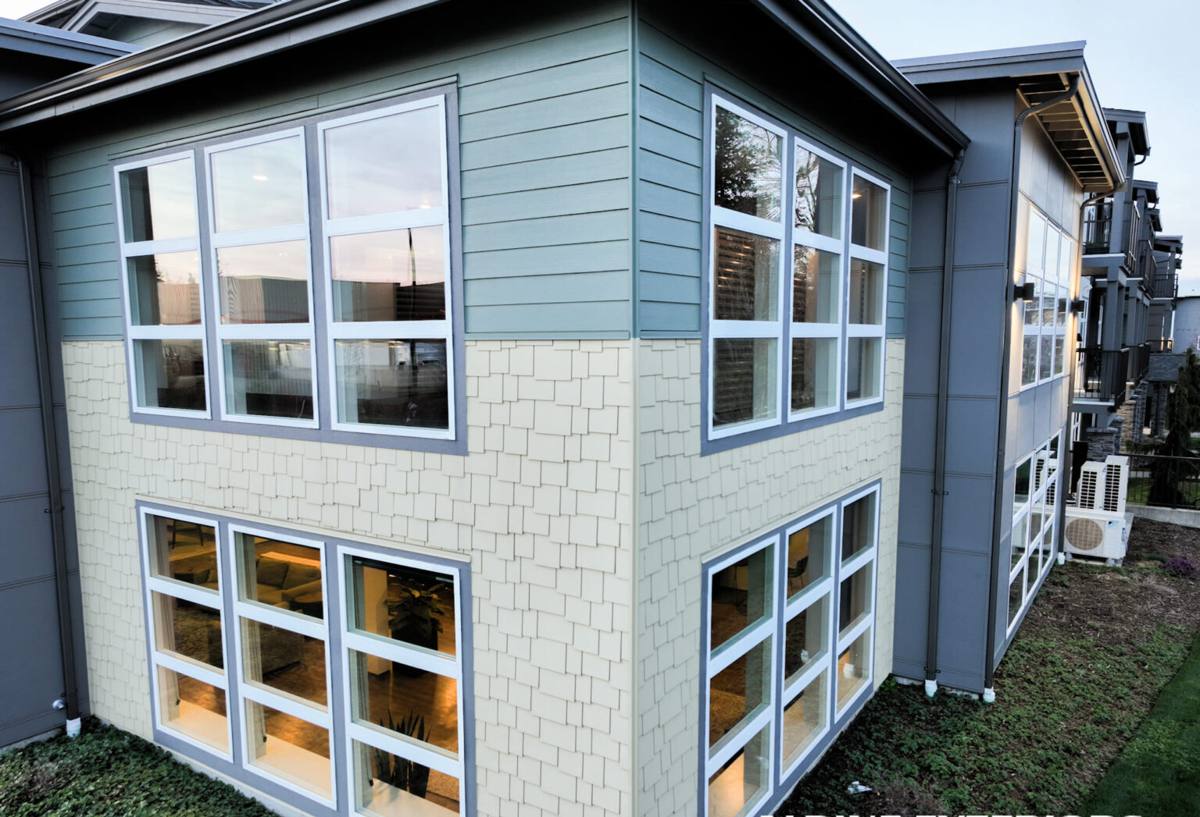
We install James Hardie fiber cement siding, and only James Hardie fiber cement siding, for homes in Point Roberts. That's not a preference we picked at random — it's a standard we hold to because of what we've seen happen to other materials on exposed, salt-air peninsulas like this one, and because Point Roberts homes need a siding system that's engineered for the punishment this specific location hands out.
What This Climate Does to Siding Here
Salt Air From More Than One Direction
Because Point Roberts is surrounded by water on most sides, homes here don't get a single prevailing wind exposure the way an inland property does — they get salt-laden air moving in from multiple directions depending on the season and the storm track. Salt accelerates corrosion in fasteners, flashing, and trim, and it wears down lower-grade paints and finishes faster than a sheltered site ever would. Any siding material or hardware choice made for a Point Roberts home has to account for that corrosion load from day one, not as an afterthought once rust or fading shows up.
Driving Rain With Nothing to Break It
Point Roberts is flat and open compared to much of the surrounding coastline, which means wind-driven rain arrives sideways as often as it falls straight down, pushing water into joints, laps, and window and door flashing with more force than a typical inland Whatcom County lot ever sees. Siding details that hold up fine on a more sheltered street can fail here specifically because the water pressure driving against the wall assembly is higher than what those details were ever tested against.
A Moss Season That Runs Most of the Year
Mild temperatures, near-constant humidity, and the shade thrown by mature trees and close-set homes add up to a moss and mildew season that's long even by Pacific Northwest standards, and a peninsula this exposed to moisture doesn't get a shorter version of it. Porous or moisture-retentive siding materials are usually the first place it takes hold, especially on north-facing walls that don't get much direct sun through the wetter months.
Why James Hardie Is the Siding System We Install Here
We used to install a wider range of siding products. We stopped, and the decision came from what we kept finding on service calls and tear-offs on exposed, salt-air properties — not from a supplier relationship or a sales push.
- Non-combustible core: Fiber cement doesn't feed a fire the way wood-based products can, which matters for safety and often for insurance underwriting as well.
- Factory-applied ColorPlus finish: The color is baked on under controlled conditions rather than brushed on in the field, and it resists fading, chalking, and moisture intrusion far longer than site-applied paint.
- Climate-engineered HZ formulation: Hardie's HZ5 product line is built specifically for regions with heavy moisture exposure and freeze-thaw cycling, which describes a waterfront Whatcom County peninsula well.
- Dimensional stability: Fiber cement doesn't swell, cup, or warp the way engineered wood products can after repeated wetting over a long, damp season.
- A strong transferable warranty: Hardie backs its product with one of the more substantial warranty structures in the industry, provided installation follows their published spec.
We don't install LP SmartSide, vinyl siding, Cemplank, Allura, primed spruce, or cedar. Each of those products has a place in the market and homeowners who are satisfied with them in other settings. But on an exposed peninsula like Point Roberts, we've made a professional call to stand fully behind one system rather than offer a cheaper option that quietly shifts long-term maintenance risk onto the homeowner.
What a Correct Hardie Installation Involves Out Here
Fiber cement only performs the way it's engineered to when it's installed to Hardie's published specifications, and that matters more in a high-exposure location than almost anywhere. Correct installation means the right fastener type and spacing for the wind and moisture load, proper clearance from grade and roof lines, drainage or rain-screen detailing behind the panels where the wall assembly calls for it, and factory-mitered or properly sealed joints at every corner and penetration. A Hardie product installed loosely will still develop moisture problems in a climate like this — the material is only as good as the crew putting it up.
Details That Matter Most on a Point Roberts Home
- Flashing that ties correctly into window and door openings, since that's where wind-driven rain finds its way in first
- Fastener corrosion resistance appropriate for a salt-air, marine environment
- Rain-screen or drainage-plane detailing behind the siding to let incidental moisture escape rather than sit against the wall
- Proper caulking and sealant at trim, corners, and penetrations, inspected and maintained over time
- Clearance from grade, decks, and roof lines to keep the bottom edge of the siding from sitting in standing moisture
Our Process for a Point Roberts Siding Project
We start with an on-site assessment of the existing siding and wall assembly, looking specifically for how the current material has handled salt exposure and driving rain over time — that tells us as much as a visual inspection of the surface does. From there we put together a clear, written scope and timeline before any work begins, and we account upfront for the realities of working on an exclave: material deliveries and crew scheduling have to work around the border crossing, so we plan for that instead of treating it as a surprise mid-project. Permitting still runs through Whatcom County even though the property sits south of the border on the ground, and we handle that coordination as part of the job rather than leaving it to the homeowner.
Throughout the project, flashing, drainage detailing, and corrosion-resistant fastening are standard practice on a property this exposed, not optional upgrades priced separately.
Timing a Point Roberts Siding Project Around the Weather
Point Roberts is not a place where siding work happens on a random schedule dictated by whoever is available. The wetter months bring the heaviest wind-driven rain and the fewest reliable dry stretches for proper installation, while the drier summer window gives fiber cement panels — and their joints and caulking — the best chance to cure and seal correctly before the rain returns. We plan Point Roberts projects around that seasonal reality rather than squeezing them in whenever a crew has an open day, recognizing that starting a tear-off without a real weather window can leave a wall assembly exposed to the exact driving rain that's hardest on this peninsula.
Scheduling around the border crossing adds another layer to that planning. Deliveries of siding panels, trim, and fasteners need to clear customs before a crew can start, and a well-planned project builds that lead time in rather than discovering it mid-job. A contractor unfamiliar with Point Roberts often underestimates this and either delays the start or rushes the finish to make up time — neither of which serves the homeowner well.
Why Hiring a Crew That Already Works Point Roberts Matters
A fair number of contractors avoid Point Roberts jobs altogether because of the border-crossing logistics for crew and materials, which narrows the field of options for homeowners out here more than it would in a typical Whatcom County neighborhood. That's a real problem, because a crew that only takes the occasional job here tends to treat the trip as a one-off inconvenience — showing up under-supplied, rushing the schedule, or skipping the detailing that this climate actually demands in order to get off the peninsula sooner. A crew that already works Point Roberts regularly has the logistics figured out, understands how the local exposure differs from a more sheltered inland lot even a few miles away, and doesn't cut installation corners just to shorten the trip.
Comparing Siding Materials for This Exposure
| Material | Moisture Behavior | Maintenance in Salt Air | Typical Longevity Here |
|---|---|---|---|
| James Hardie fiber cement | Dimensionally stable, resists swelling and warping | Low; factory finish resists fading and chalking | 30+ years with correct installation |
| Vinyl siding | Can warp or distort with heat and settle over time | Low upfront, but seams and fasteners remain exposure points | Variable; shorter in high-wind, waterfront settings |
| LP SmartSide / engineered wood | Wood-based core is moisture-sensitive at cut edges and joints | Moderate; ongoing edge-sealing and caulk upkeep required | Depends heavily on installation quality and upkeep |
| Cedar / primed wood | Absorbs and releases moisture readily | High; regular refinishing needed in salty, wet air | Shorter without consistent, ongoing maintenance |
A Checklist Before Hiring for Siding Work in Point Roberts
- Ask what siding material they install and why, and whether they stand behind it with a written warranty
- Confirm current Washington contractor licensing and active liability insurance
- Ask directly how they plan crew and material logistics around the border crossing
- Ask how they detail flashing at windows, doors, and roof-to-wall transitions for wind-driven rain
- Get a clear, written scope of work and timeline before any contract is signed
Long-Term Care for Hardie Siding in a Marine Exposure
Even the right material benefits from a little attention in a climate like this. A periodic rinse to clear salt residue and organic buildup, a visual check of caulking at trim and penetrations, and prompt attention to any moss creeping onto north-facing walls all go a long way toward getting the full lifespan out of a Hardie installation. None of that is heavy maintenance — it's closer to routine upkeep — but skipping it on an exposed peninsula property tends to catch up with a house faster than it would somewhere more sheltered.
If you're weighing siding options for a home in Point Roberts, we're glad to walk the exterior with you and give an honest read on what it actually needs. Reach out below for a free, no-pressure estimate.